

Summary
- The original iPhone launched in 2007 with a simple 2MP rear camera, while iPhone 3GS introduced autofocus and native video recording.
- iPhone 7 Plus introduced a second rear camera with a telephoto lens and brought Portrait mode.
- iPhone 11 established the ultra-wide camera, Night mode and Deep Fusion.
- iPhone 14 Pro introduced the first 48MP main sensor and sensor cropping for optical-quality zoom options.
- iPhone 17 Pro brought three 48MP rear cameras, 8x optical-quality zoom, ProRes RAW, Apple Log 2 and genlock.
- iPhone 18 Pro introduces true variable aperture from f/1.48 to f/4 and increased manual control in the Camera app.
- 2007–2009: From a simple 2MP camera to autofocus and video
- 2010–2013: BSI sensors, FaceTime and the move to HD
- 2014–2016: Focus Pixels, OIS, 4K and the first telephoto camera
- 2017–2018: TrueDepth, dual OIS and Smart HDR
- 2019: The ultra-wide camera and Night mode
- 2020: LiDAR, ProRAW, Dolby Vision and sensor shift
- 2021: Macro, Cinematic mode and ProRes
- 2022: 48MP changes the meaning of zoom
- 2023: 48MP reaches the standard lineup and 5x telephoto arrives
- 2024: 48MP reaches the ultra-wide camera
- 2025: Two 48MP cameras on iPhone 17 and three on the Pro models
- Parallel paths: SE, 16e, 17e and iPhone Air
- 2026: iPhone 18 Pro physically changes aperture for the first time
- Pro controls and increased manual control
- Apple Reference Image and photographic authenticity
- iPhone Duo: a different direction in the same generation
- Correctly understanding 0.5x, 1x, 2x, 4x and 8x
- Video evolution: from VGA to ProRes RAW and genlock
- The front camera: from VGA to 18MP Center Stage
- Availability and pricing of iPhone 18 Pro
- What we think
- Frequently asked questions
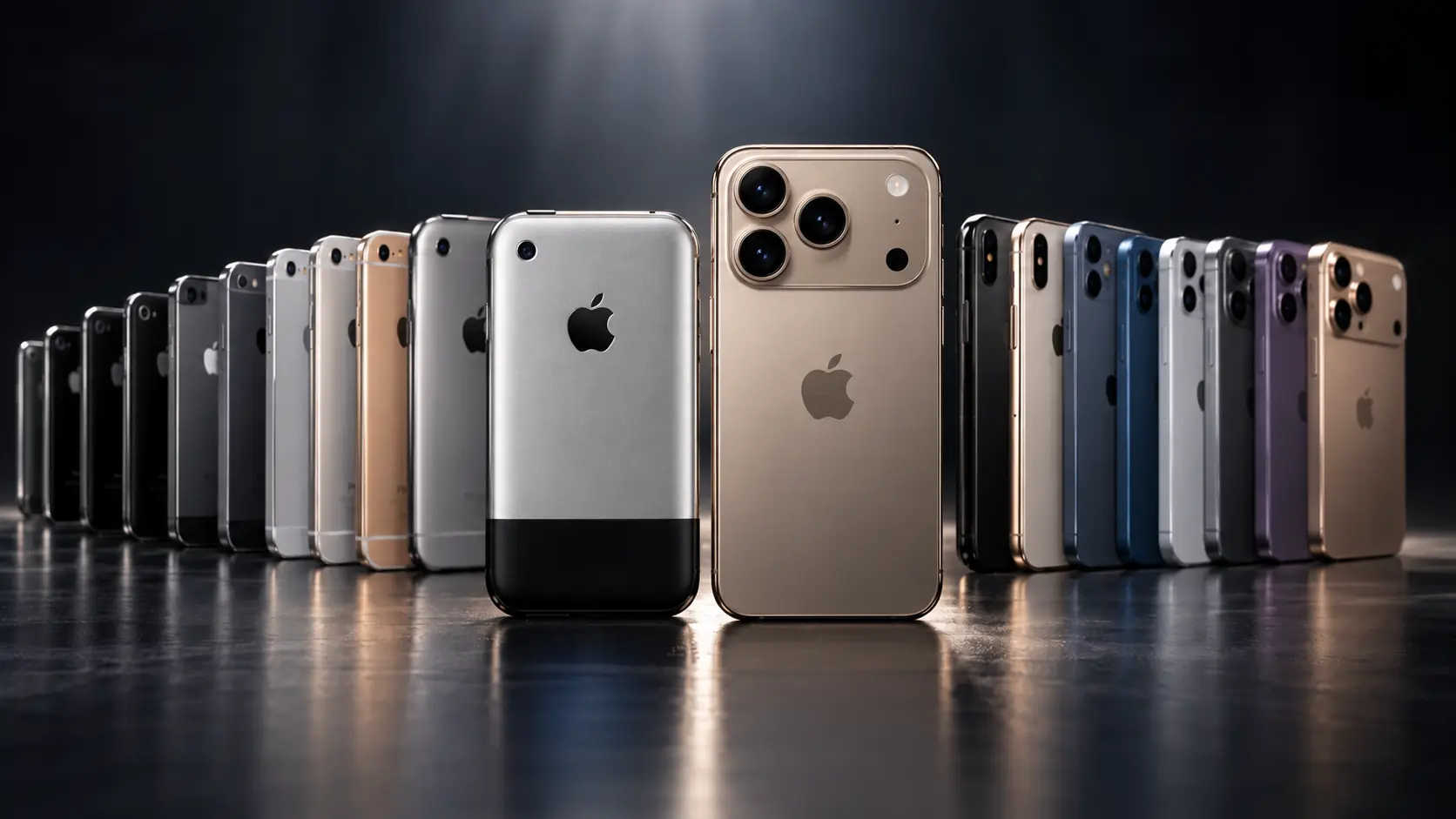
From a single 2MP rear camera without autofocus or native video recording in 2007, the iPhone has reached the iPhone 18 Pro generation in 2026 with three 48MP cameras, multiple physical lenses, computational photography, ProRes RAW and true mechanical variable aperture.
Apple introduced the iPhone 18 Pro and iPhone 18 Pro Max on September 9, 2026, adding another important milestone to a 19-year evolution. The 48MP main camera with a wide-angle lens now offers true variable aperture at f/1.48, f/1.8, f/2.8 and f/4.
The significance of this development goes far beyond the move from 2MP to 48MP. Larger sensors, brighter lenses, optical stabilization, ultra-wide and telephoto cameras, depth information, multi-frame processing, RAW and advanced video formats gradually transformed the phone into an integrated imaging system where optics and software can no longer be considered separately.
2007–2009: From a simple 2MP camera to autofocus and video
The original iPhone in 2007 had a single 2MP rear camera and none of the capabilities now considered standard on a modern smartphone. There was no front-facing camera, optical stabilization or native video recording through the Camera app. Photography was more of an additional device function than a technology around which an entire product generation could be built.
The iPhone 3G in 2008 brought no major camera development, with attention focused on 3G, GPS and the app ecosystem. The first meaningful imaging leap arrived with the iPhone 3GS in 2009, when resolution increased to 3MP and autofocus with tap-to-focus allowed users to select a focus point inside the frame.
The 3GS also became the first iPhone with native video recording, capturing VGA footage at up to 30 fps with audio and supporting basic trimming directly on the device. From that point onward, iPhone camera development effectively followed two parallel paths: photography and video.
2010–2013: BSI sensors, FaceTime and the move to HD
The iPhone 4 in 2010 was significantly more ambitious as a camera. Its rear camera increased to 5MP and gained an LED flash and a backside-illuminated, or BSI, sensor architecture that allowed incoming light to reach the photosensitive surface more efficiently. On the small sensors used in smartphones, improving light efficiency was particularly important.
The same generation introduced 720p HD video and the first front-facing iPhone camera, closely associated with FaceTime. For the first time the device had two cameras, although not yet in the modern sense of an integrated multi-camera imaging system.
The iPhone 4S in 2011 increased the main camera to 8MP and combined higher resolution with a brighter f/2.4 lens, redesigned optics and a hybrid infrared filter. Video moved to Full HD 1080p, showing that camera development was becoming a combination of sensor, optics, processing and video rather than a simple megapixel race.
The iPhone 5 in 2012 remained at 8MP, but the camera module became smaller, the lens gained a sapphire crystal cover and panorama capture reached roughly 28MP. The front FaceTime HD camera increased to 1.2MP with 720p video, while users could also take still photos during video recording.
In 2013, the iPhone 5s demonstrated even more clearly that megapixels were not Apple’s only target. Resolution stayed at 8MP, but the sensor became larger with 1.5 μm pixels and the lens became brighter at f/2.2. True Tone flash, Burst mode and 120 fps slow motion were also introduced, emphasizing light collection and speed over a simple resolution increase.
2014–2016: Focus Pixels, OIS, 4K and the first telephoto camera
The iPhone 6 and 6 Plus in 2014 retained 8MP resolution but introduced Focus Pixels for faster autofocus. The iPhone 6 Plus also became the first iPhone with optical image stabilization on its main wide-angle camera, reducing the impact of small hand movements and improving low-light capture.
Video reached 1080p at 60 fps and slow motion at up to 240 fps, while continuous autofocus and stronger stabilization improved moving-subject capture. Resolution had not changed, but the camera had become significantly faster and more reliable.
The move to 12MP came with the iPhone 6s and 6s Plus in 2015. The front camera increased to 5MP and Live Photos appeared, while video made a major leap to 4K. In only six years, iPhone had moved from VGA footage to 4K recording.
In 2016 came one of the most important architectural changes. The iPhone 7 gained a 12MP main camera with an f/1.8 wide-angle lens and optical stabilization, while the iPhone 7 Plus added a second 12MP camera with a telephoto lens. The second physical focal length delivered true 2x optical zoom and provided a more suitable perspective for portraits and distant subjects.
More importantly, the two cameras formed the basis of Portrait mode. Their data could be used to estimate scene depth, separate subject from background and generate computational bokeh. The iPhone had evolved from a single camera and lens into a multi-camera system where different physical optics could feed a shared computational imaging pipeline.
2017–2018: TrueDepth, dual OIS and Smart HDR
The iPhone 8 and 8 Plus in 2017 remained at 12MP but gained faster sensors and a newer ISP. Portrait Lighting expanded depth processing from simple background blur to computationally simulated lighting effects, while video reached 4K at up to 60 fps and 1080p slow motion at up to 240 fps.
The iPhone X used a 12MP main camera with an f/1.8 wide-angle lens and a second 12MP camera with an f/2.4 telephoto lens. Both rear cameras featured optical stabilization, which was particularly valuable on the telephoto camera because camera shake becomes more visible at narrower angles of view.
TrueDepth arrived on the front as a system far more complex than a conventional selfie camera. An infrared camera, dot projector and flood illuminator generated depth information for Face ID, with the same information also enabling front-camera Portrait mode and Portrait Lighting.
The iPhone XS and XS Max in 2018 introduced Smart HDR and more advanced scene analysis through the A12 Bionic and Neural Engine. Depth Control enabled post-capture changes to simulated depth of field, while the iPhone XR showed the growing power of computational photography by delivering Portrait mode from a single rear wide-angle camera.
2019: The ultra-wide camera and Night mode
The iPhone 11 family changed the camera architecture again. The iPhone 11 gained a 12MP main wide-angle camera and a second 12MP ultra-wide camera, effectively establishing 0.5x as a new fundamental perspective. For landscapes, architecture, interiors and situations where the photographer could not physically step farther back, the new camera offered something digital zoom could not reproduce.
The iPhone 11 Pro and Pro Max combined three rear cameras for the first time: a main wide-angle camera, an ultra-wide camera and a telephoto camera. The most important technological shift of the generation, however, was arguably Night mode, as the iPhone began combining multiple exposures and aligning frames computationally to produce cleaner low-light images.
Deep Fusion also arrived, processing images at the pixel level for better texture and detail. The front TrueDepth camera increased to 12MP and gained 4K video at up to 60 fps. From this generation onward, computational photography was no longer an additional feature but a central part of the capture process itself.
2020: LiDAR, ProRAW, Dolby Vision and sensor shift
The iPhone 12 and 12 mini gained a brighter f/1.6 main wide-angle camera, while Night mode and Deep Fusion expanded across additional cameras. Dolby Vision HDR recording also arrived, bringing more advanced dynamic-range processing directly into the smartphone.
The iPhone 12 Pro and Pro Max combined main wide-angle, ultra-wide and telephoto cameras with a LiDAR Scanner. Depth information helped improve autofocus in very low light and enabled Night mode portraits.
Apple ProRAW also appeared, combining increased flexibility for exposure, color and white balance adjustments with elements of Apple’s computational imaging pipeline. The iPhone 12 Pro Max introduced sensor-shift optical image stabilization, moving the sensor itself to compensate for camera movement.
2021: Macro, Cinematic mode and ProRes
With the iPhone 13 family, sensor-shift stabilization reached standard models and larger main sensors improved real light gathering. Cinematic mode also arrived, using depth information for automatic focus transitions and allowing focus changes after recording.
The iPhone 13 Pro and Pro Max significantly upgraded the ultra-wide camera. Autofocus enabled focusing from around two centimetres and brought macro photography and macro video to the iPhone for the first time, while the telephoto camera moved to 77 mm or 3x. Night mode was now available across all three rear cameras.
Pro models also gained ProRes video, a major step for more demanding post-production workflows. The change was not simply about resolution, but about retaining more usable image information for editing and color work.
2022: 48MP changes the meaning of zoom
The iPhone 14 and 14 Plus retained a 12MP main wide-angle camera but gained a brighter f/1.5 aperture, Photonic Engine and a front TrueDepth camera with autofocus. Action mode arrived for video and Cinematic mode moved to 4K.
The biggest camera leap came with the iPhone 14 Pro and Pro Max, where the main wide-angle camera moved to a 48MP sensor for the first time. The quad-pixel sensor could combine groups of four adjacent pixels for lower-resolution output with improved light efficiency, while Apple ProRAW could use the full 48MP resolution.
Those extra pixels were also used for a new purpose. The central portion of the sensor could produce a 12MP image with framing equivalent to 48 mm, creating an optical-quality 2x option without a separate physical 2x telephoto camera. High sensor resolution had therefore become a tool for focal-length flexibility as well as detail.
2023: 48MP reaches the standard lineup and 5x telephoto arrives
The iPhone 15 and 15 Plus brought a 48MP main camera to the standard lineup. The system provided 0.5x through the dedicated ultra-wide camera and 1x or optical-quality 2x through the main wide-angle camera, with 2x created from the central part of the sensor. Apple also established 24MP output for many everyday photographs.
On the iPhone 15 Pro and Pro Max, the 48MP main camera could use default framing equivalent to 24, 28 and 35 mm. The major change came on the Pro Max, where the telephoto camera moved to 120 mm or 5x through a tetraprism optical design. Multiple internal reflections increased the effective optical path without requiring a correspondingly thicker phone.
The same generation was critical for video. USB-C enabled external ProRes recording at up to 4K/60p, while Log encoding and ACES support were introduced. Spatial Video later used two rear cameras to capture material containing stereoscopic depth information.
2024: 48MP reaches the ultra-wide camera
The iPhone 16 and 16 Plus retained a 48MP Fusion Main with a wide-angle lens and 1x and optical-quality 2x options. The ultra-wide camera gained autofocus, bringing macro photography to the standard lineup, while Camera Control offered a physical way to launch the camera and adjust parameters such as zoom and exposure.
On the iPhone 16 Pro and Pro Max, the second rear camera moved from 12MP to 48MP, increasing resolution for both ultra-wide and macro images. The 120 mm, 5x telephoto camera became available on both Pro models.
The largest video leap was 4K Dolby Vision at up to 120 fps from the main camera. With external ProRes and Log recording, the device was increasingly functioning as a production tool rather than simply a phone with a strong camera.
2025: Two 48MP cameras on iPhone 17 and three on the Pro models
The iPhone 17 made 48MP standard across both physical rear cameras on the base model. The 48MP Fusion Main provides 1x and optical-quality 2x, while the second 48MP Fusion camera with an ultra-wide lens handles 0.5x and macro photography. Default output for many everyday images is 24MP.
The front camera also changed significantly. The up-to-18MP Center Stage camera uses a square sensor, enabling portrait or landscape framing without always requiring the device to be rotated. The system can also adjust framing for group selfies and support Dual Capture from the front and rear cameras.
On the iPhone 17 Pro and Pro Max, all three rear cameras moved to 48MP. The main camera uses a wide-angle lens, the second an ultra-wide lens and the third a 100 mm, 4x telephoto lens with a tetraprism design.
The 8x option does not come from a second physical 200 mm telephoto lens. The physical telephoto system sits at 100 mm or 4x, while the 200 mm, 8x optical-quality option uses the central area of the 48MP sensor to create a final 12MP image. This distinction is important because optical-quality zoom does not always imply a separate physical lens.
The iPhone 17 Pro also introduced ProRes RAW, Apple Log 2 and genlock. Genlock enables precise frame timing synchronization across different cameras or video sources, making iPhone easier to integrate into professional multi-camera production.
Parallel paths: SE, 16e, 17e and iPhone Air
iPhone camera development did not always depend on adding more physical cameras. The second-generation iPhone SE had one 12MP wide-angle rear camera, but the A13 Bionic enabled Portrait mode, Portrait Lighting and Smart HDR. The third-generation SE retained similar optics while the A15 added Deep Fusion, Smart HDR 4 and Photographic Styles.
The same principle became even clearer on the iPhone 16e and 17e. One 48MP main camera with a wide-angle lens could provide both the standard 1x and an optical-quality 2x option from the central portion of the sensor, demonstrating that a single physical camera can provide more than one practical framing option.
The iPhone Air followed a similar philosophy for a different reason, using a single 48MP Fusion rear camera to maintain an extremely thin design. High sensor resolution and computational processing provide multiple useful framings without separate ultra-wide or telephoto cameras.
2026: iPhone 18 Pro physically changes aperture for the first time
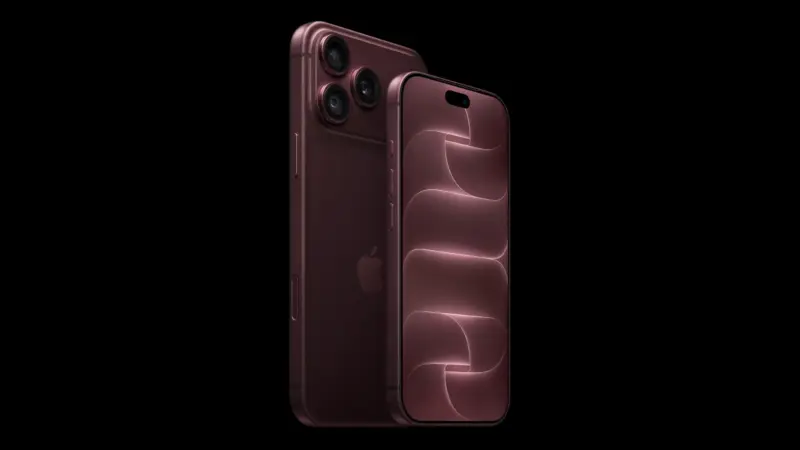
Apple officially introduced the iPhone 18 Pro and iPhone 18 Pro Max on September 9, 2026, with a triple 48MP Pro Fusion camera system. The main camera uses a 24 mm wide-angle lens, the second uses a 13 mm ultra-wide lens and the third uses a 100 mm, 4x telephoto lens with a tetraprism design. The central portion of the telephoto-camera sensor also provides a 12MP 200 mm, 8x optical-quality option.
The genuinely new technology is found in the 48MP main camera with its wide-angle lens, which introduces true mechanical variable aperture with four settings: f/1.48, f/1.8, f/2.8 and f/4. The aperture physically changes before light reaches the sensor and should not be confused with the simulated aperture values used in Portrait mode.
At f/1.48, more light reaches the sensor, improving low-light potential. At f/2.8 and especially f/4, real depth of field increases, which can be useful when subjects at different distances need to remain acceptably sharp.
The feature does not make a smartphone sensor behave like a full-frame camera. Real depth of field is still heavily influenced by sensor size, actual focal length and subject distance, but physical aperture control adds a genuine optical parameter that previous iPhones lacked.
Pro controls and increased manual control
Variable aperture is accompanied by new Pro controls in the Camera app. Official specifications include manual control over aperture, shutter speed and white balance, as well as histogram viewing, bringing tools traditionally associated with third-party camera applications into Apple’s native capture experience.
Manual shutter-speed control has creative as well as technical value. A faster shutter can freeze motion, while a slower shutter can deliberately introduce motion blur. Combined with real variable aperture, photographers gain direct control over two fundamental physical exposure parameters before computational processing begins.
This does not mean Apple is moving away from computational photography. The iPhone 18 Pro combines its optical controls with a new computational imaging pipeline, bringing traditional photographic control and smartphone multi-frame processing closer together than before.
Apple Reference Image and photographic authenticity
Another new capability on iPhone 18 Pro is Apple Reference Image, designed around image provenance and authenticity. The system uses signed sensor data to create a reference image that can be compared with the final file to help identify later changes.
The idea is particularly relevant to photojournalists, news organizations and environments where image integrity is critical. Capture availability is limited in the European Union at launch, directly affecting users in Greece.
iPhone Duo: a different direction in the same generation
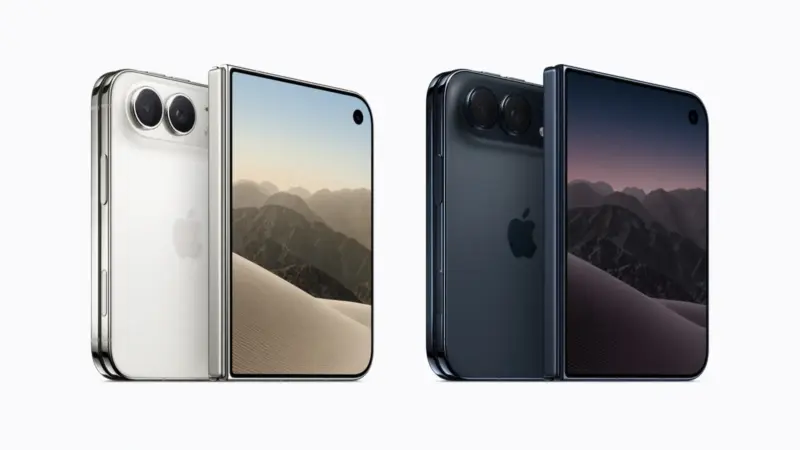
Apple also introduced iPhone Duo in 2026, its first foldable iPhone, with a different camera philosophy. It uses two 48MP rear cameras: a 26 mm f/1.6 main wide-angle camera and a 13 mm f/2.2 ultra-wide camera. The main camera also provides optical-quality 2x framing from its sensor without a separate physical telephoto camera.
The foldable design also creates new ways to preview and capture images. It does not follow the same camera strategy as the iPhone 18 Pro, but demonstrates how device form factor itself can influence photographic use.
Correctly understanding 0.5x, 1x, 2x, 4x and 8x
On the iPhone 18 Pro, 0.5x comes from the physical 48MP camera with a 13 mm ultra-wide lens and 1x comes from the 48MP main camera with a 24 mm wide-angle lens. The 2x option does not come from a separate physical telephoto camera, but from the central portion of the main-camera sensor and provides optical-quality framing equivalent to 48 mm.
The 4x option comes from the physical 48MP camera with a 100 mm telephoto lens. The 8x option uses the central portion of that same camera’s 48MP sensor to create a 12MP image with framing equivalent to 200 mm.
This is why “optical zoom” and “optical-quality zoom” should not be treated as perfect synonyms. The latter can use a portion of a high-resolution sensor rather than a separate physical lens.
Video evolution: from VGA to ProRes RAW and genlock
The video story is almost as significant as still photography. The iPhone 3GS began with VGA at 30 fps, the iPhone 4 moved to 720p and the iPhone 4S to 1080p. The iPhone 6 brought 1080p at 60 fps and slow motion at up to 240 fps, while the iPhone 6s became the first to record 4K.
The iPhone 8 and X reached 4K/60p, the iPhone 12 generation added Dolby Vision HDR, and the iPhone 13 generation introduced Cinematic mode and ProRes. The iPhone 15 Pro added external ProRes 4K/60p, Log and ACES, while the iPhone 16 Pro reached 4K Dolby Vision at 120 fps.
The iPhone 17 Pro introduced ProRes RAW, Apple Log 2 and genlock, pushing the device further into professional multi-camera workflows. The iPhone 18 Pro builds on that foundation with variable aperture and Pro controls, giving creators control not only over codec, frame rate and color pipeline, but also fundamental physical capture parameters.
The front camera: from VGA to 18MP Center Stage
The front camera appeared on the iPhone 4 as a VGA solution primarily intended for FaceTime. It moved to 1.2MP and 720p on the iPhone 5, 5MP on the iPhone 6s and 7MP on the iPhone 7. The major change arrived with the iPhone X and TrueDepth, adding real depth information, Face ID, Portrait mode and Portrait Lighting.
The iPhone 11 generation increased TrueDepth to 12MP with 4K video, while the iPhone 14 generation added autofocus. The iPhone 17 introduced an up-to-18MP Center Stage camera with a square sensor, providing more flexible framing and landscape output without always rotating the phone.
On the iPhone 18 Pro, the 18MP Center Stage camera retains its f/1.9 aperture and autofocus but adds Pro controls for shutter speed, white balance and histogram viewing, along with support for ProRAW, Apple Log 2 and ProRes RAW in compatible modes. The front camera has therefore evolved from a simple video-calling tool into a complete photography and video system.
Availability and pricing of iPhone 18 Pro
The iPhone 18 Pro and iPhone 18 Pro Max were announced on September 9, 2026, with pre-orders beginning September 12 and initial availability on September 18 in more than 65 countries and regions. Storage options include 256GB, 512GB, 1TB and 2TB.
In Spain, Apple’s official European pricing starts at €1,469 for the iPhone 18 Pro and €1,619 for the iPhone 18 Pro Max, both with 256GB. At the latest check, an equivalent official Greek retail page had not yet appeared, so no estimate is presented as confirmed Greek pricing.
What we think
The most important development in the history of the iPhone camera is not the move from 2MP to 48MP, but the way the image itself is now created. Multiple physical lenses, larger sensors, optical stabilization, depth information and multi-frame computational processing have gradually transformed a simple mobile camera into a complete imaging system.
Some generations represent especially clear turning points. The iPhone 3GS brought autofocus and video, the iPhone 7 Plus added a second rear camera with a telephoto lens and Portrait mode, the iPhone 11 introduced the ultra-wide camera and Night mode, the iPhone 12 Pro brought LiDAR and ProRAW, while the iPhone 14 Pro turned the 48MP sensor into part of the zoom architecture. The iPhone 17 Pro moved all three rear cameras to 48MP and added ProRes RAW and genlock.
The iPhone 18 Pro matters for a different reason. For the first time after years of sensor and software-driven development, Apple has introduced a substantial physical control into the lens itself. Variable aperture does not turn an iPhone into a full-frame camera and does not replace computational photography, but it brings traditional optical photography and computational processing closer together than ever before.
Frequently asked questions
Which was the first iPhone with autofocus and video recording?
The iPhone 3GS in 2009. Its camera increased to 3MP, gained autofocus and tap-to-focus and became the first iPhone with native VGA video recording at up to 30 fps.
Which was the first iPhone with a second rear camera and a telephoto lens?
The iPhone 7 Plus in 2016. It combined a 12MP main camera with a wide-angle lens and a second 12MP camera with a telephoto lens, delivering 2x optical zoom and enabling the first Portrait mode.
Which was the first iPhone with a 48MP main camera?
The iPhone 14 Pro and Pro Max in 2022. Their main camera with a wide-angle lens gained a 48MP quad-pixel sensor and full-resolution Apple ProRAW capture.
Is the iPhone 18 Pro’s 8x option a separate physical 8x telephoto lens?
No. The physical camera with a telephoto lens uses a 100 mm, 4x optical system. The 200 mm or 8x optical-quality option uses the central portion of the same camera’s 48MP sensor and produces a 12MP final file.
Which is the first iPhone with true variable aperture?
The iPhone 18 Pro and iPhone 18 Pro Max. Their 48MP Fusion Main camera with a 24 mm wide-angle lens offers true aperture settings at f/1.48, f/1.8, f/2.8 and f/4.