Summary
- Jaap Buitendijk photographed Robert Pattinson’s first official image as James Bond.
- He described the assignment as unusually secretive.
- Denis Villeneuve wanted 007 to emerge from darkness.
- A Fresnel fixture gave the photographer control over the beam of light.
One portrait was enough to introduce Robert Pattinson as James Bond, but behind the dark image lies an unusually secretive assignment, an idea from Denis Villeneuve and tightly controlled Fresnel lighting.
Dutch film still photographer Jaap Buitendijk was responsible for the image that introduced the new 007 on 16 November 2026. He said that in three decades of photographing film productions, he had never experienced that level of secrecy.
The official announcement of Robert Pattinson as the new James Bond also delivered the first publicity image, before its photographer explained how it had been made.
A photoshoot with 007-level secrecy
Buitendijk described the assignment on social media with the words “I felt like a spy!” The identity of the new Bond had to remain under wraps until the official reveal, and the photographer was part of that carefully managed process.
The commission was personal too. He recalled being twelve, lying on the carpet to find the best camera angle for his toy James Bond car, complete with rockets and an ejector seat. He could never have imagined that he would one day photograph the actor introducing the next era of the character.
Villeneuve’s idea and a Fresnel light
Denis Villeneuve’s visual direction was simple: Bond should emerge from darkness. Buitendijk chose a Fresnel fixture because he has always liked the narrow, controllable beam it can produce. Pattinson’s eyes and face emerge into the light while much of his body and a large part of the frame remain in shadow.
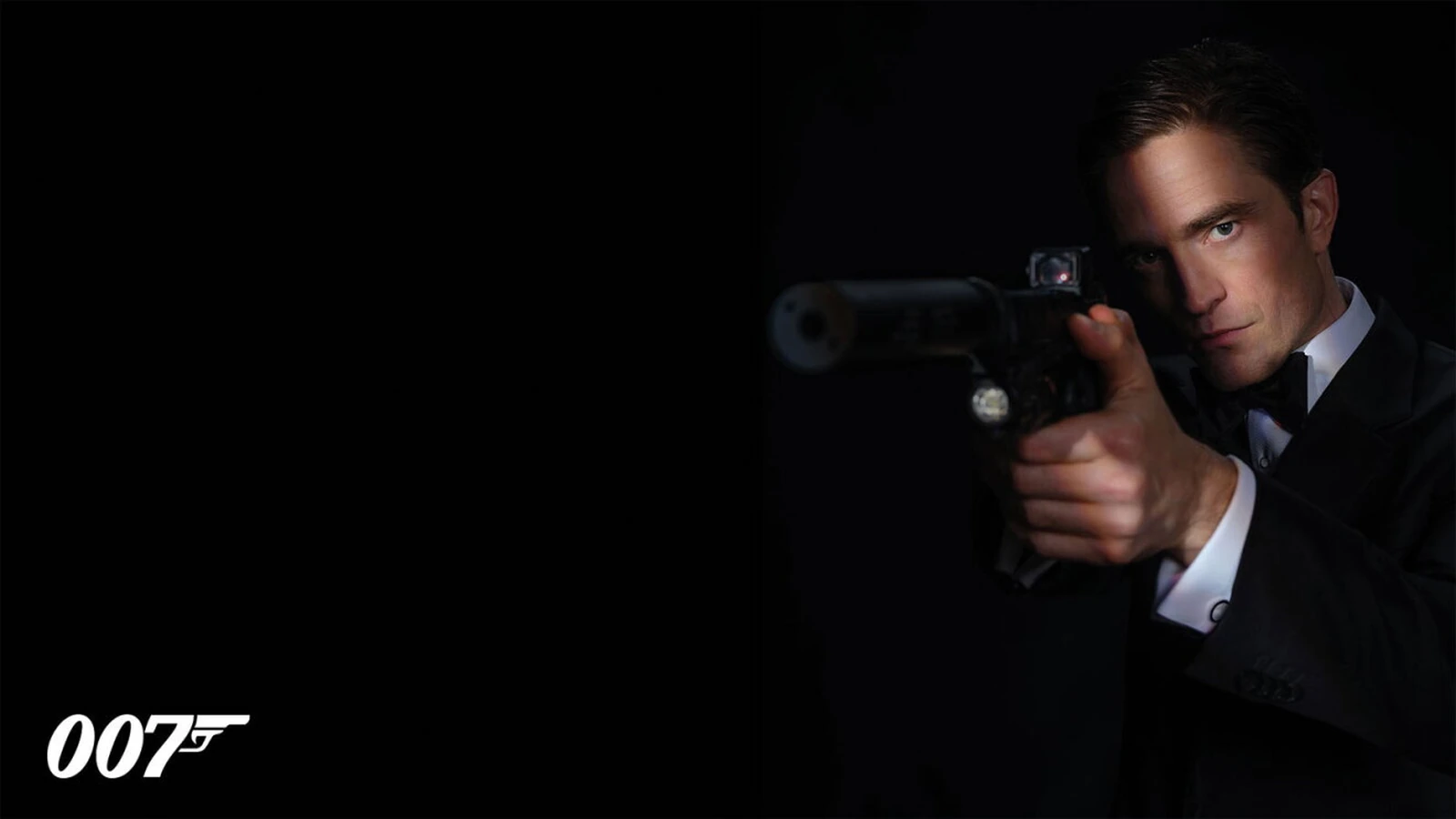
A Fresnel uses a specially designed optical element in front of a light source, allowing the beam to be adjusted from relatively narrow to broader coverage. For a portrait, this gives the photographer a way to light a face selectively without illuminating the entire set. In this image, that choice works with the large area of negative space on the left and the weapon pointing towards the viewer.
The finished frame is almost graphic in its restraint: a black tuxedo, a dark background, a little light on the face and a white 007 logo near the lower-left corner. The layout leaves room for the portrait to serve as an official publicity image without losing its dramatic impact.
A personal dedication behind the photograph
The photographer also recalled how going to see new James Bond films with his father had been among the highlights of his childhood. He ended his post in Dutch: “Deze is voor jou, Papa” — “This one is for you, Dad.”
Buitendijk has worked on major film productions including Harry Potter, Barbie and Gladiator. This assignment was different from capturing a still during filming: his photograph became the public’s first official photographic introduction to a new Bond.
What we think
What works for me is that this is not a ten-light, complicated setup. The direction is clear: show us Bond, but do not reveal everything. A Fresnel gives the photographer the control to let black areas play an active role in the frame.
For portrait photographers, it is a useful reminder that negative space is not wasted space. Here it holds our attention on the face, makes room for the 007 mark and lets the horizontal image breathe without squeezing the subject.
The other lesson is the collaboration between director and photographer: one clear idea from Villeneuve, one precise lighting decision from Buitendijk. For an introduction this iconic, visual discipline does more work than excess.