

Summary
- The 12th Mangrove Photography Awards received 5,258 entries from 87 countries.
- Gaurav Patil was named Mangrove Photographer of the Year 2026.
- Mangroves are coastal forests adapted to salt water, tidal flooding, and low-oxygen soils.
- They protect coastlines, store carbon, and provide shelter for numerous species.
- The winning image was created using ultraviolet light and a 13-second exposure.
- The photographs document pollution, illegal logging, coastal development, and rising sea levels.
- What Are Mangroves?
- The Overall Winning Photograph
- Wildlife: Birds Winner
- Wildlife: Mammals Winner
- Wildlife: Other Species Winner
- Landscape: Black and White Winner
- Landscape: From the Air Winner
- Landscape: On the Ground Winner
- Underwater Winner
- Threats Winner
- People: Livelihoods Winner
- People: Conservation and Restoration Winner
- Portfolio Stories Winner
- Young Mangrove Photographer of the Year
- A Competition for Photography and Conservation
- What We Think
- Frequently Asked Questions
The winners of the Mangrove Photography Awards 2026 reveal the beauty, biodiversity, and growing threats facing mangrove ecosystems.
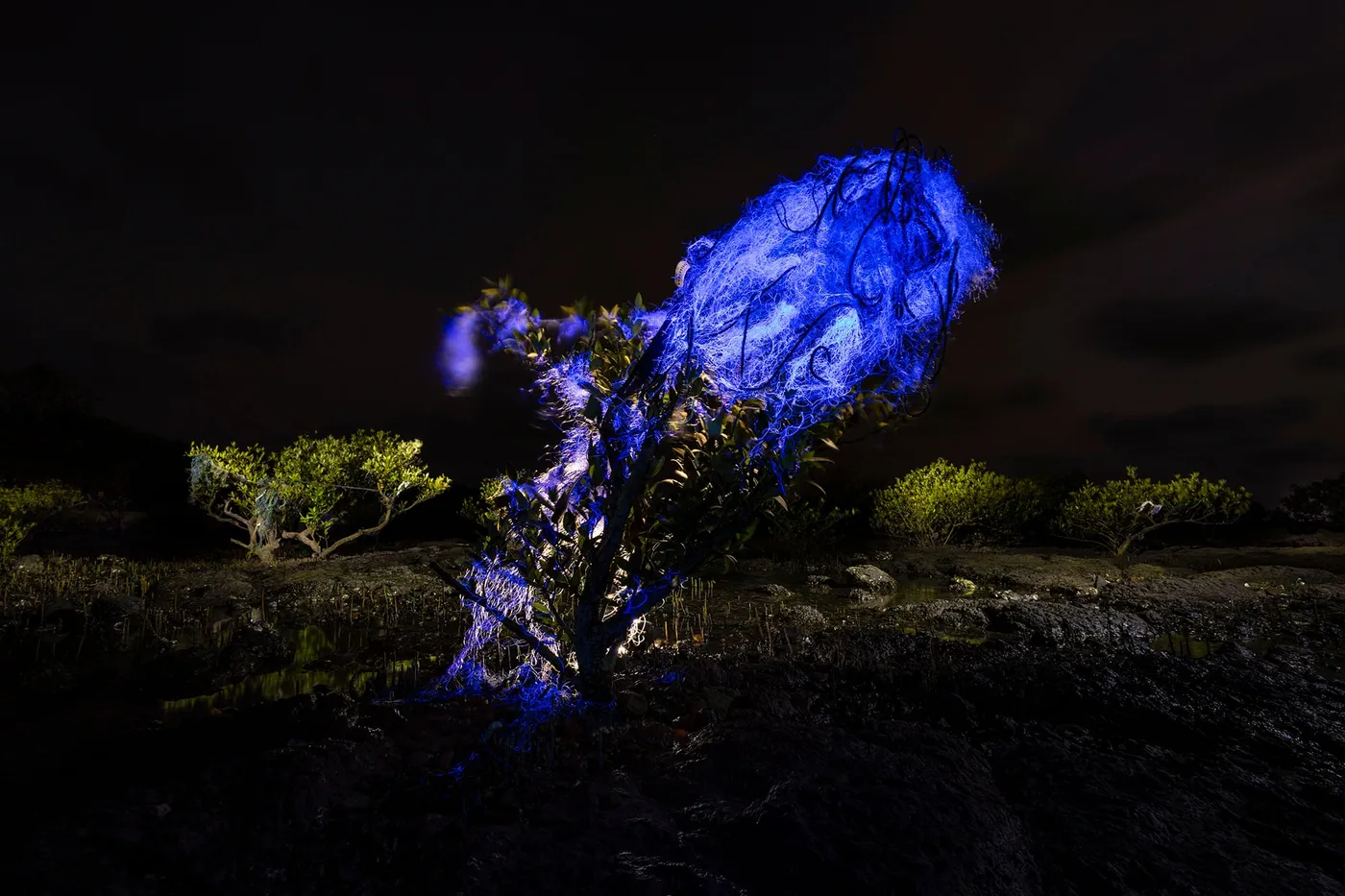
The 12th edition of the international competition received 5,258 entries from photographers across 87 countries. The overall award went to Indian photographer Gaurav Patil for “Tangled Glow: When Life Meets the Ruins,” an image of a discarded fishing net glowing under ultraviolet light after becoming trapped in a mangrove in Maharashtra, India.
The awarded photographs are important because they present mangroves not only as spectacular photographic subjects but also as essential ecosystems that protect coastlines, store carbon, and provide shelter for countless species. They also document pollution, illegal logging, rising sea levels, and pressure from major development projects.
What Are Mangroves?
Mangroves are coastal forests that grow in tropical and subtropical regions where seawater meets rivers, lagoons, and muddy shorelines. They consist of trees and shrubs adapted to high salinity, tidal flooding, and soils with very little oxygen. Their characteristic roots rise above the water or spread through the mud, creating a complex natural habitat.
These ecosystems act as natural barriers against waves, storms, erosion, and flooding. They also provide breeding and nursery grounds for fish, crabs, sea turtles, birds, reptiles, and mammals. Many coastal communities depend on them for fishing, food, and income.
Mangroves also store significant amounts of carbon in their vegetation and soil, helping to limit climate change. However, they are threatened by deforestation, aquaculture, urban development, pollution, overexploitation, and rising sea levels.
The Overall Winning Photograph
Gaurav Patil was named Mangrove Photographer of the Year 2026 for “Tangled Glow: When Life Meets the Ruins.”
The photograph was created on the shore of Nandgaon village in Maharashtra, south of Mumbai. A discarded fishing net had been carried by ocean currents and trapped in the branches of a mangrove during high tide.
Patil used ultraviolet light and a 13-second exposure, causing the net to glow in the darkness. The technique transformed an often invisible pollution problem into a powerful photographic image.
The photographer had watched ghost nets accumulate in the region’s mangroves for several years and wanted to document the issue in an artistic way that would attract public attention.
Ghost nets continue to trap animals after they have been abandoned and eventually break down into microplastics that contaminate coastal ecosystems.
Wildlife: Birds Winner
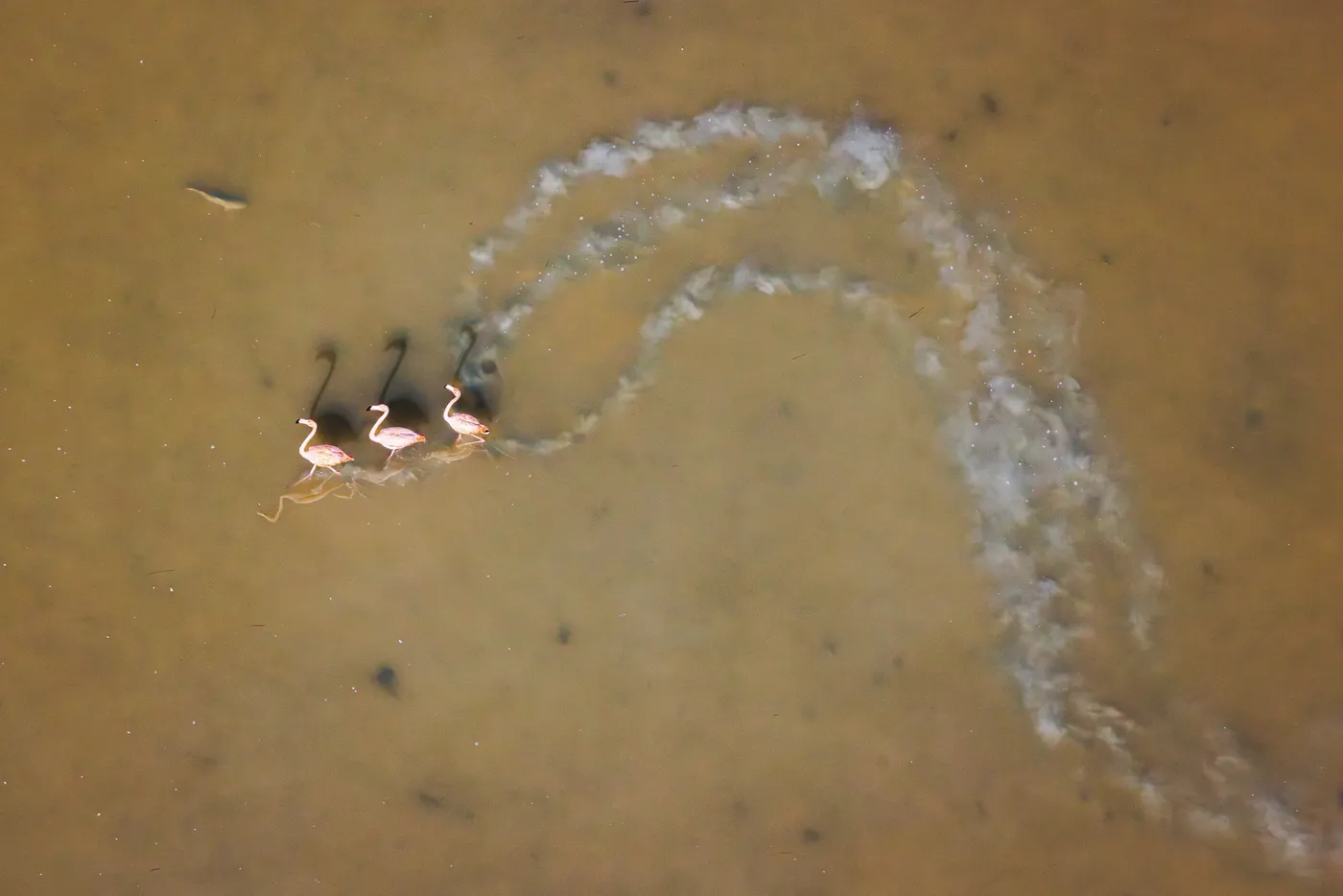
“March of the Flamingos” by Mark Ian Cook of the United States won the Wildlife: Birds category.
The photograph shows a small group of American flamingos looking at a juvenile lemon shark while searching for suitable feeding habitat in the shallow waters of Florida Bay.
The scene demonstrates how different species coexist within waterways surrounded by mangroves.
Wildlife: Mammals Winner
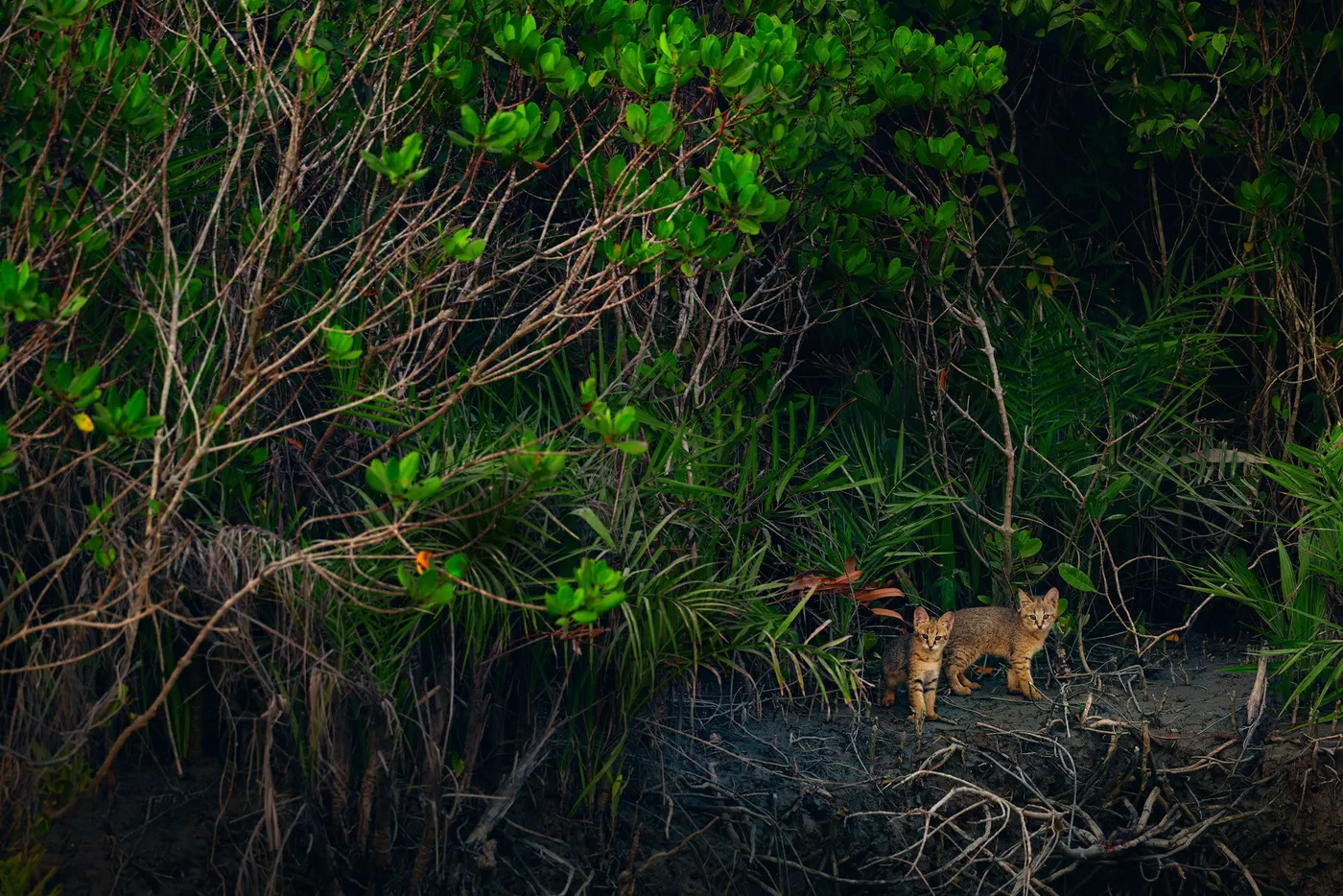
Kallol Mukherjee of India won the Wildlife: Mammals category for “Where the Mangroves Begin.”
The image shows two jungle cat kittens emerging from the dense mangrove forest of the Sundarban Tiger Reserve.
It offers a rare view of the smaller and lesser-known animals sharing the tidal landscape with the region’s tigers. These species must survive shifting mud, saline water, and daily tidal flooding.
Wildlife: Other Species Winner
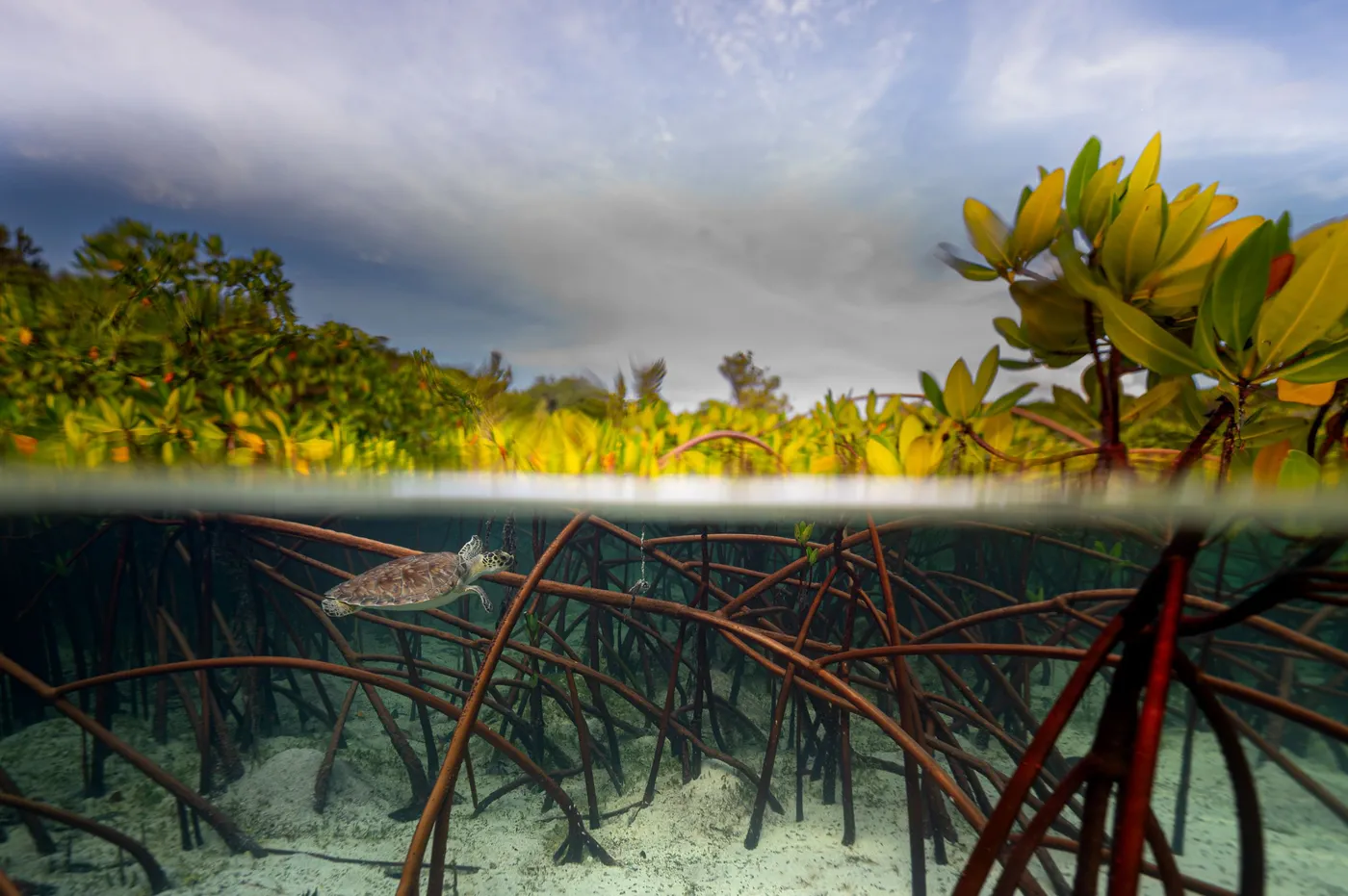
Evan Cooper of the Bahamas won the Wildlife: Other Species category with “Seeking Refuge in the Mangroves.”
The photograph features a juvenile green sea turtle in a shallow Bahamian mangrove forest near sunset and during high tide.
As water levels rise, mangrove roots become a rich habitat for turtles, crustaceans, fish, and many other species.
Based on its size, the turtle was believed to have recently arrived from the Sargasso Sea. The mangrove forest provides protection from tiger sharks and other predators.
Landscape: Black and White Winner
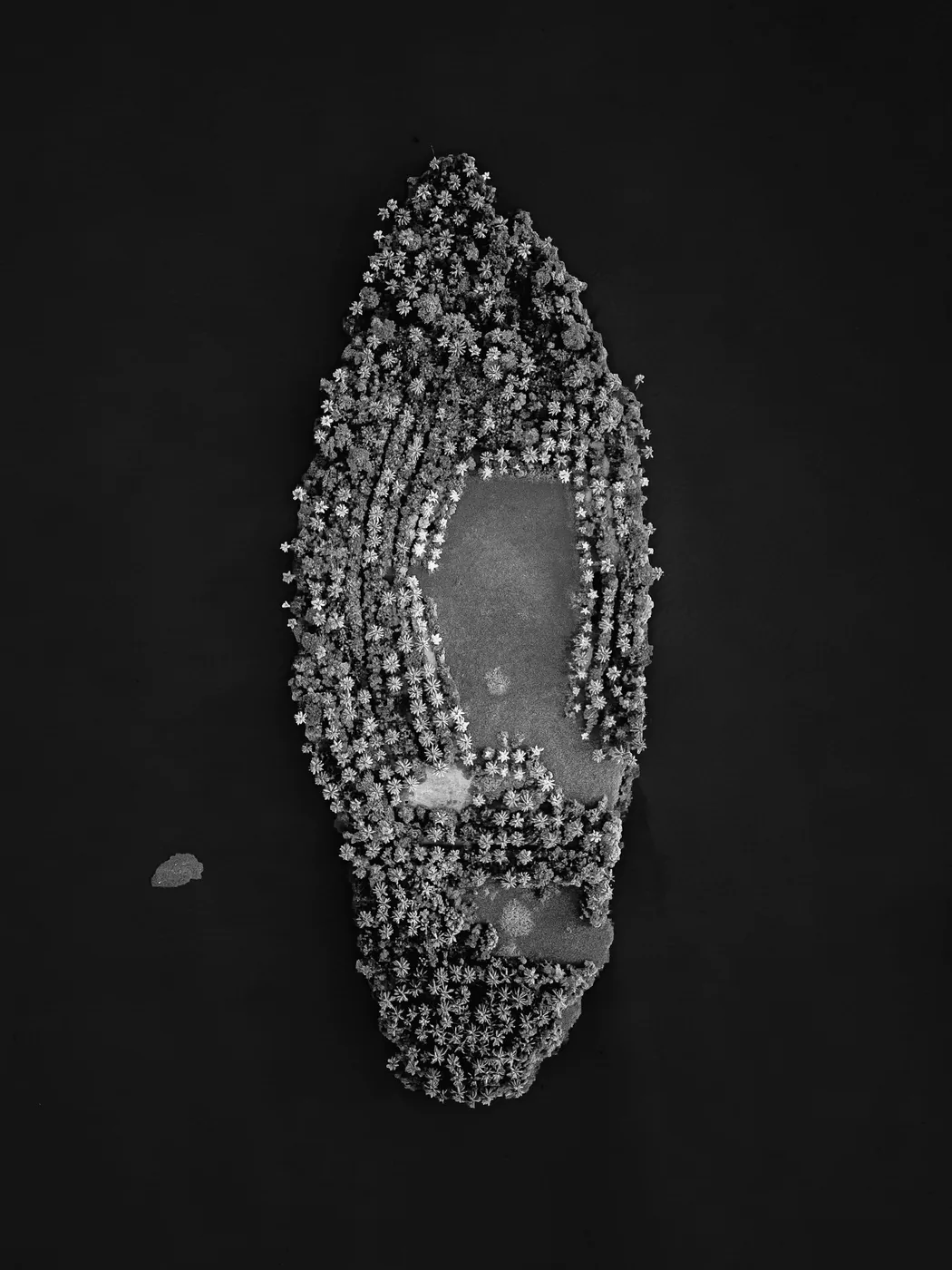
Abijith Soman of India won the Landscape: Black & White category with “Footprint of the Earth.”
The aerial photograph shows an island in Kerala’s backwaters shaped like a human footprint. Mangroves form the toes and sole of the natural shape.
Many islands in the region were once covered by mangroves before being cleared for coconut plantations. In some areas, the mangroves are now beginning to reclaim the land.
Landscape: From the Air Winner
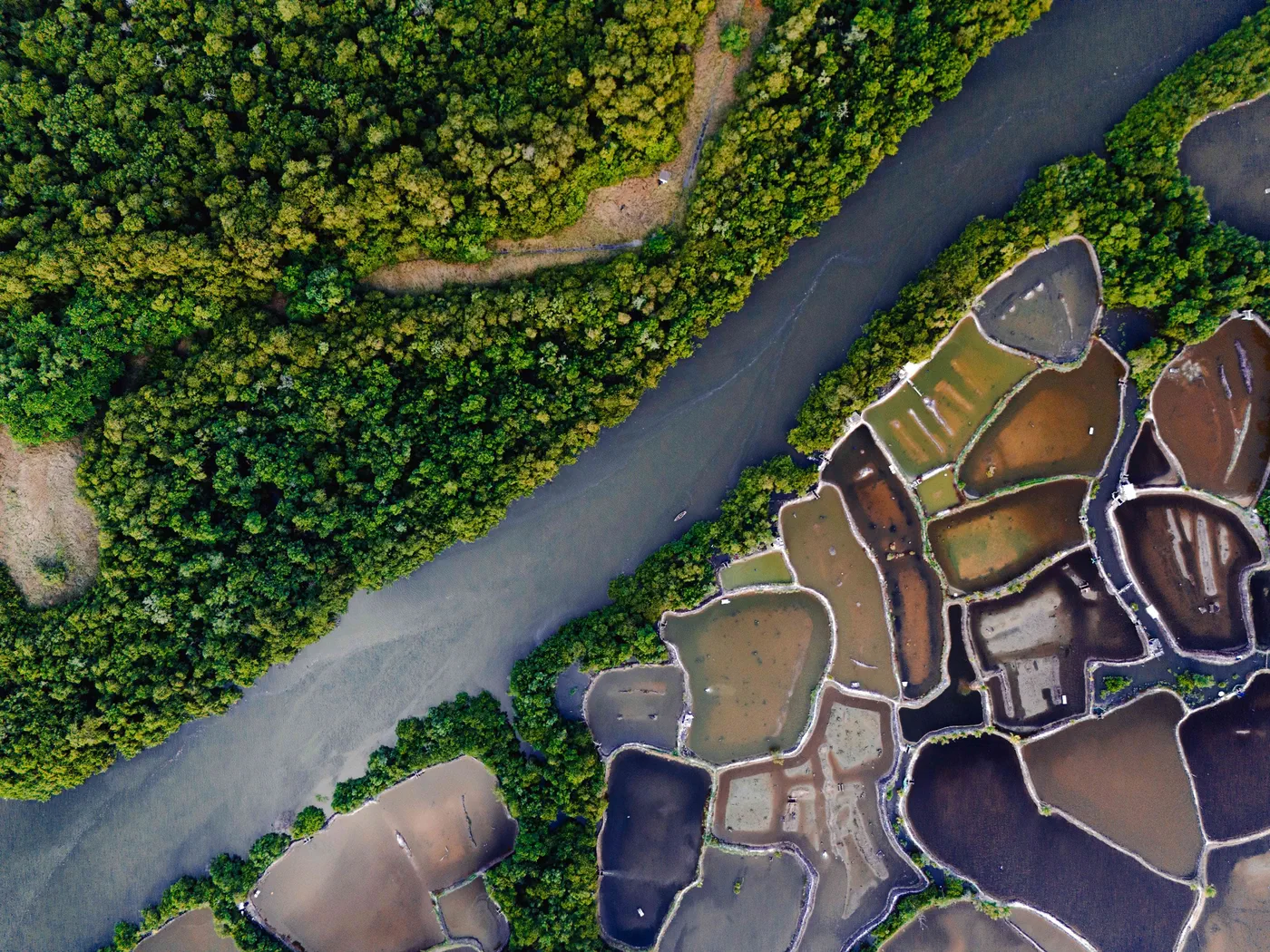
“MangueBeat” by Brazilian photographer Lucas Gonçalves Garcias won the Landscape: From the Air category.
The photograph shows the Tejipió River in Recife dividing shrimp ponds from an area of mangrove forest.
The ponds are maintained by residents of Ilha de Deus, many of whom depend on the health of the ecosystem for their livelihoods. On the opposite side, part of the mangrove area has been filled in for a Navy zone.
The different colours of the ponds reveal different stages and depths of shrimp farming.
Landscape: On the Ground Winner
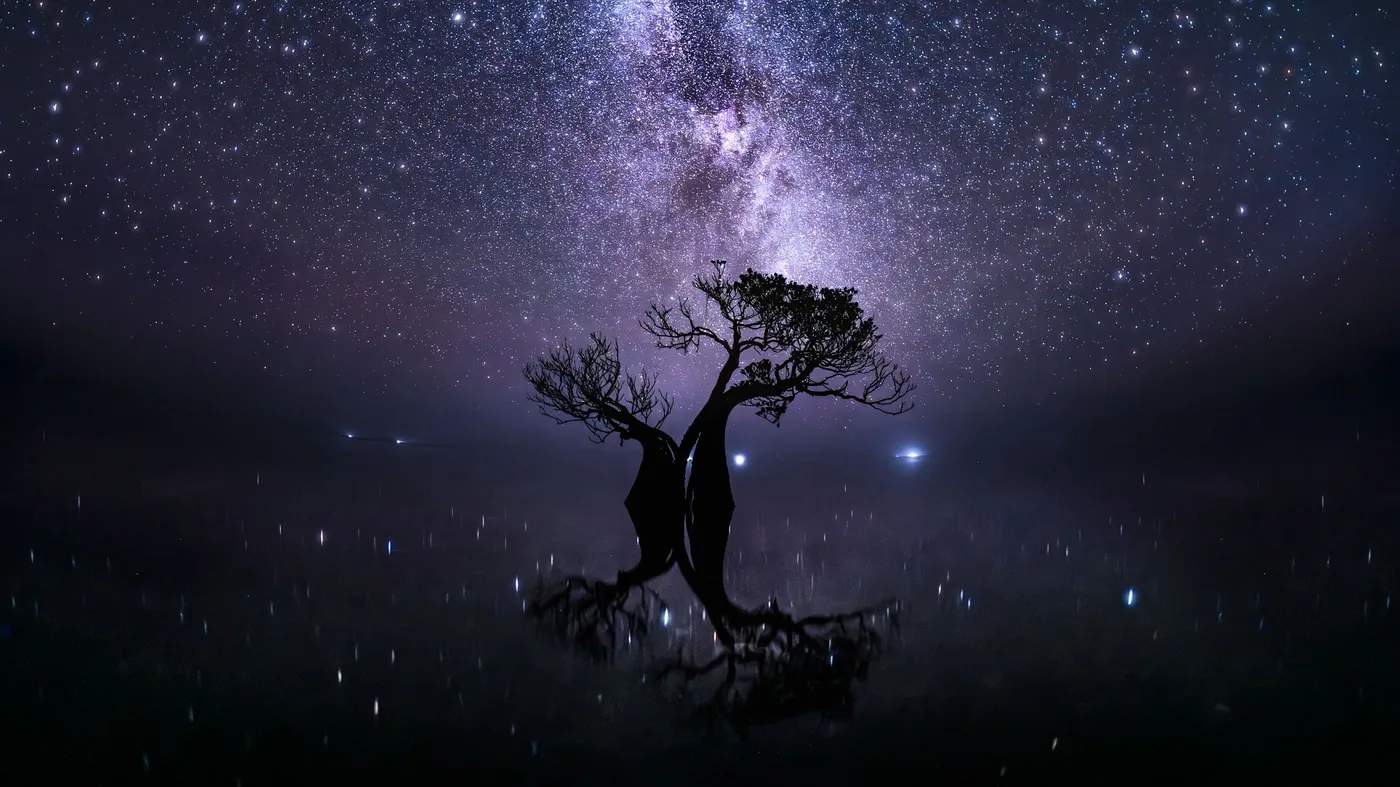
Ryuhei Suguri won the Landscape: On the Ground category with “Beneath Ancient Light,” photographed in Indonesia.
Under the Milky Way, a solitary mangrove stands in shallow tidal water. Its reflection remains almost motionless during low tide, creating a connection between ancient starlight and one of Earth’s most important coastal ecosystems.
Underwater Winner
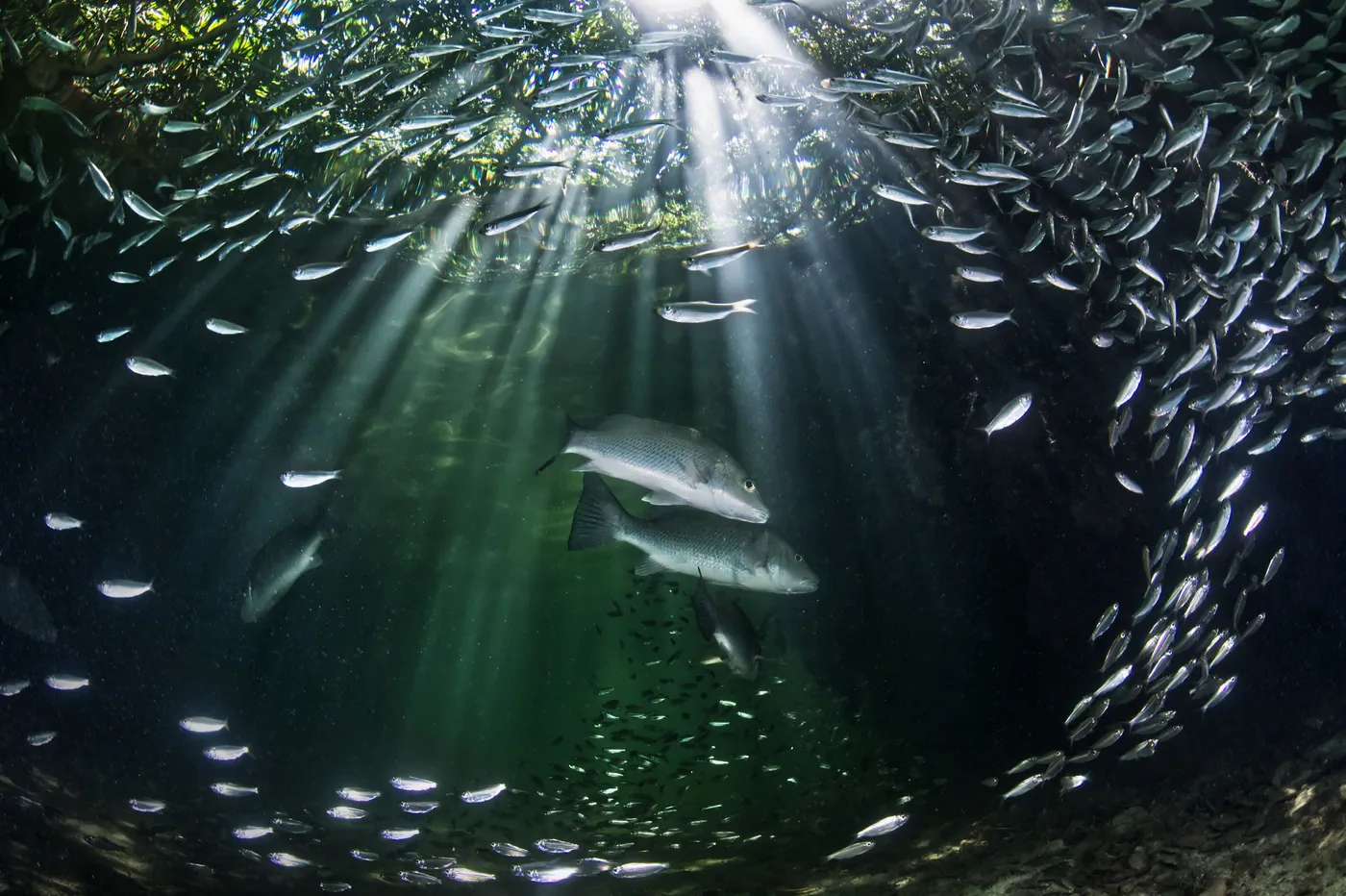
“Feeding Grounds Under the Canopy” by Ewan Tregarot won the Underwater category.
The photograph was taken in Lac Bay, Bonaire, in the Netherlands Antilles, during a fish monitoring survey.
Grey snappers hunt through a school of baitfish beneath the mangrove canopy. Shafts of midday light reveal a predator-prey interaction normally hidden within the submerged forest.
The image highlights how Bonaire’s famous coral reefs depend on mangroves for food and shelter.
Threats Winner
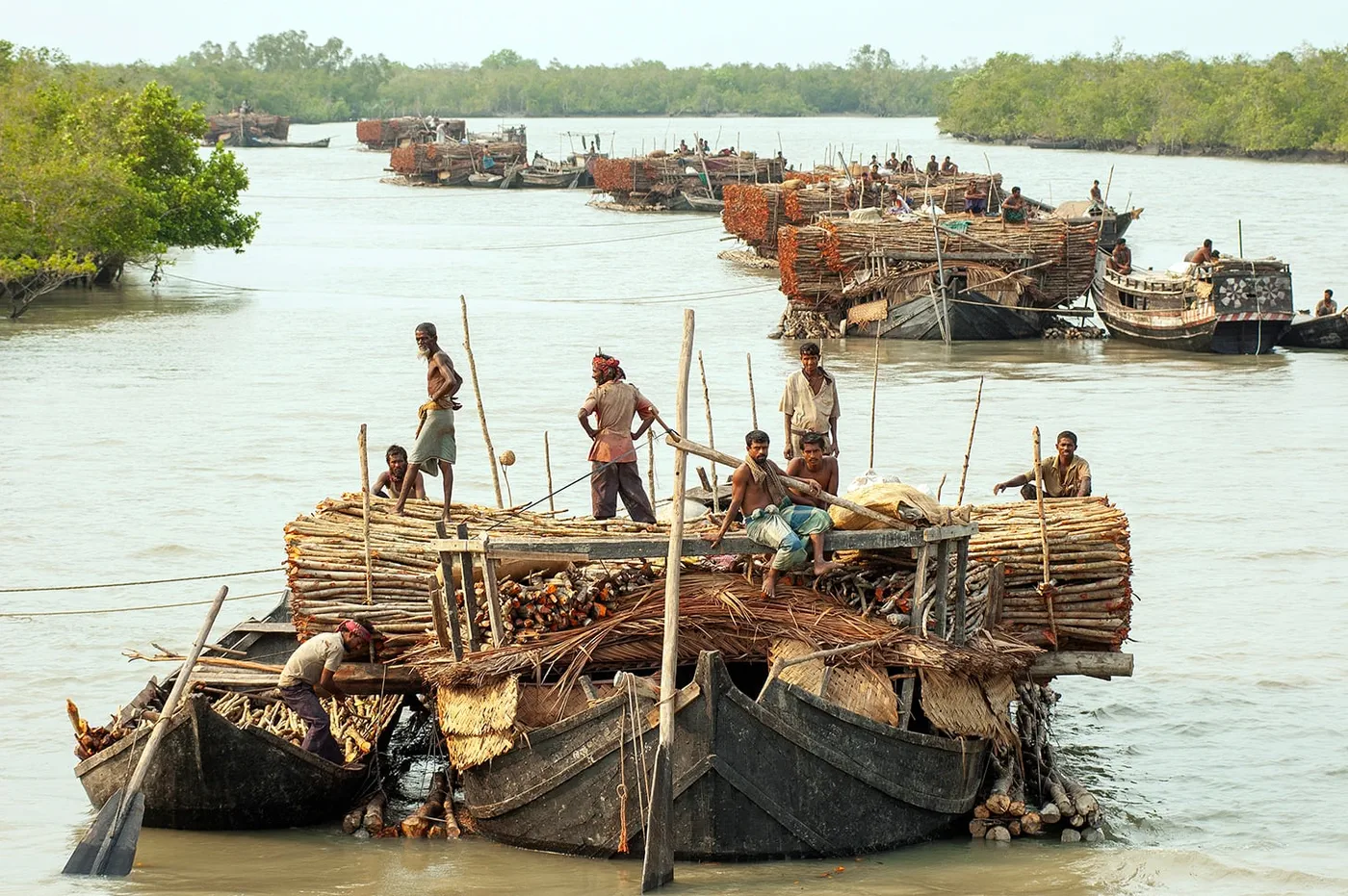
Zafer Kizilkaya won the Threats category with “Red Mangrove Harvest,” documenting illegal red mangrove harvesting in the Sundarbans of Bangladesh.
The area is a UNESCO World Heritage Site and is home to approximately 125 Bengal tigers.
Weak enforcement allows the illegal timber trade to continue, supporting local charcoal production and accelerating deforestation.
The activity also contributes to human-tiger conflict as wood collectors move deeper into the animals’ habitat.
People: Livelihoods Winner
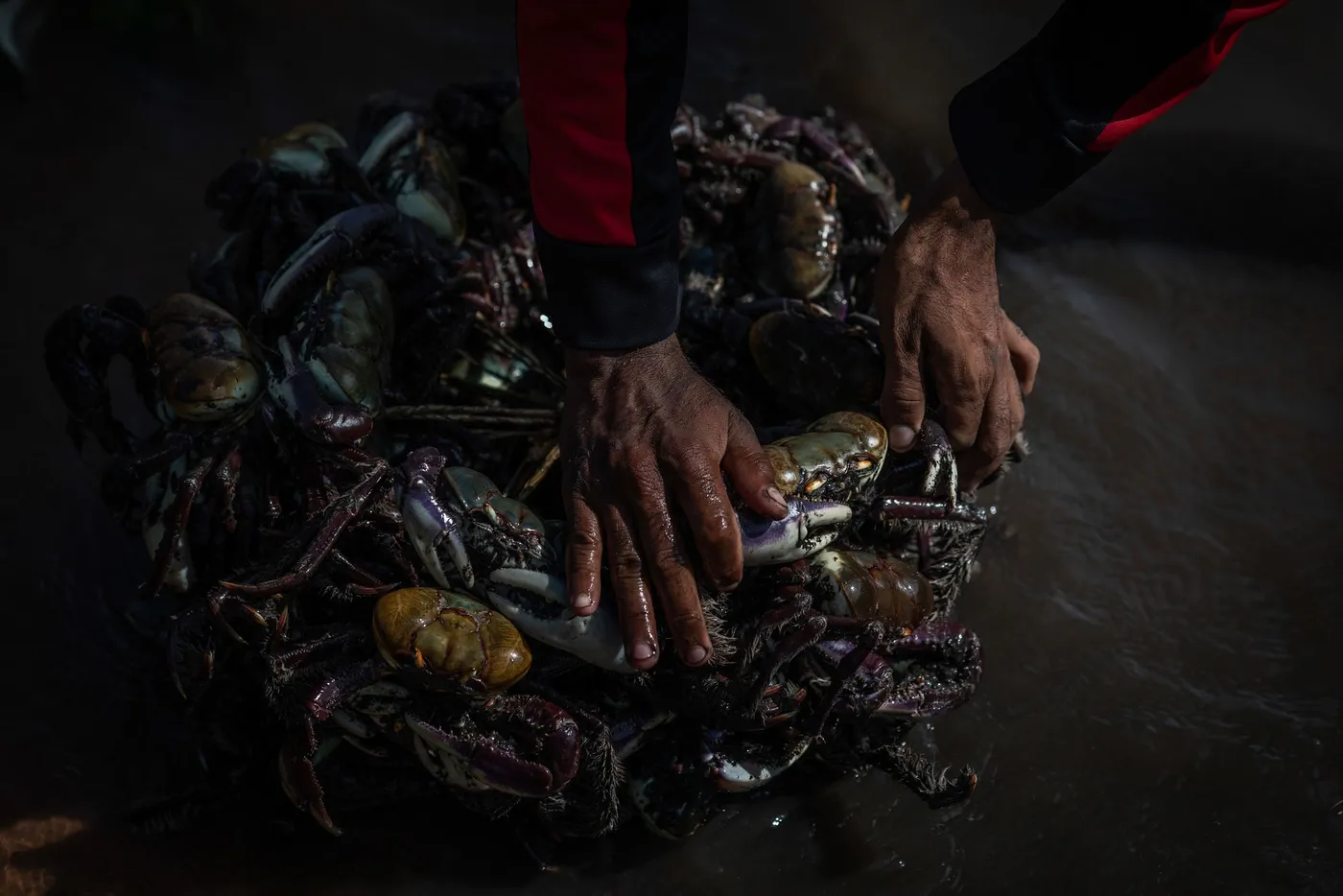
“String of Crabs” by Roosevelt Cassio of Brazil won the People: Livelihoods category.
The image shows a fisherman presenting the day’s catch, a string of crabs locally known as a “corda.”
The catch sells for approximately 20 Brazilian reais, highlighting the direct financial dependence of coastal communities on healthy mangrove ecosystems.
People: Conservation and Restoration Winner
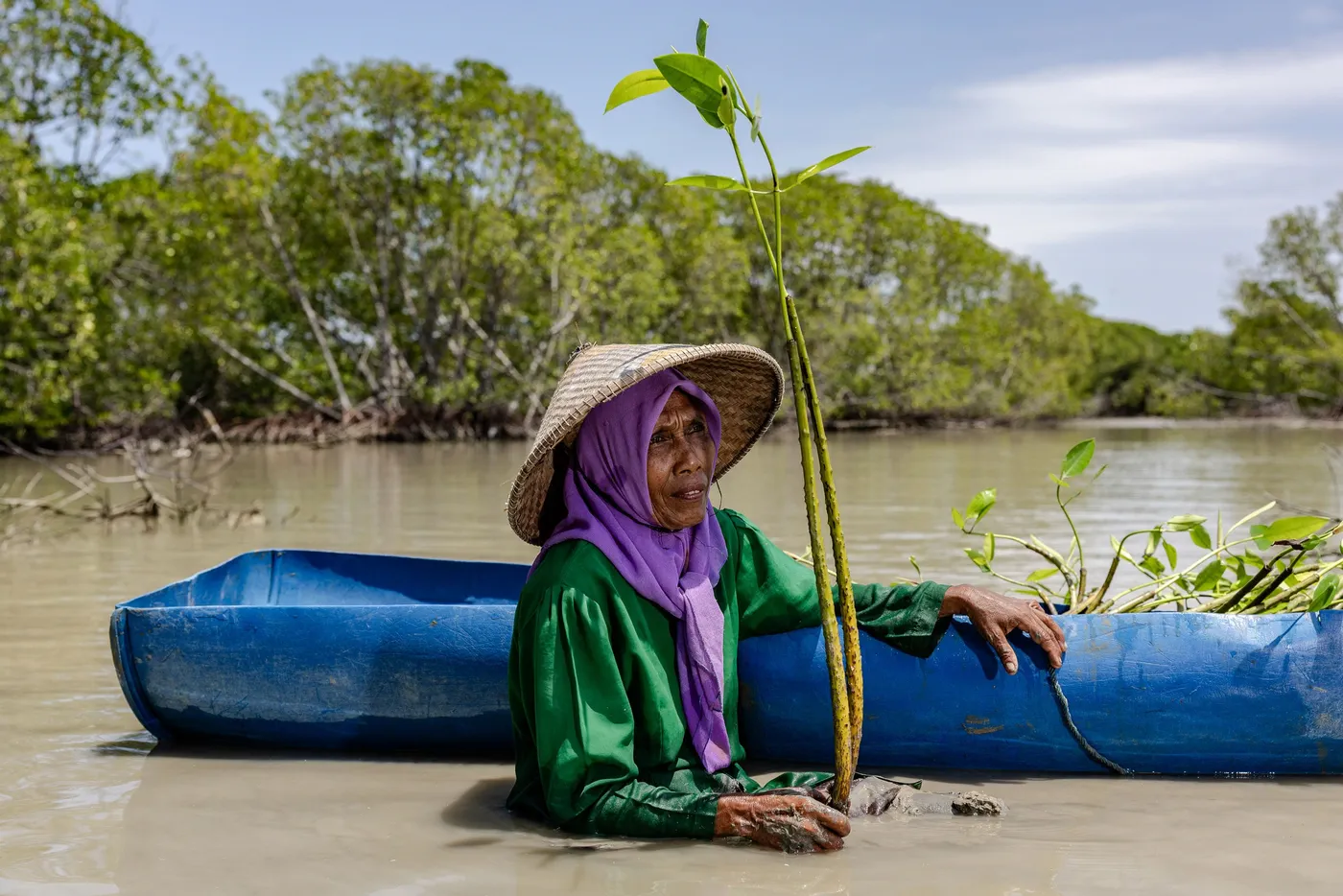
Garry Lotulung of Indonesia won the People: Conservation and Restoration category with “Seeds of Hope from a Coastal Village.”
The image shows 56-year-old Pasijah planting mangrove seedlings beside her flooded home in Bedono, Demak, Central Java.
Pasijah is one of the village’s last remaining residents after more than 200 families left because of rising seas and land subsidence.
She has planted mangroves since 2000 and has watched her family’s rice fields turn into ponds before disappearing beneath the water.
In 2021, she and her son planted 15,000 seedlings in a single day. By the following morning, the waves had washed them all away.
Portfolio Stories Winner
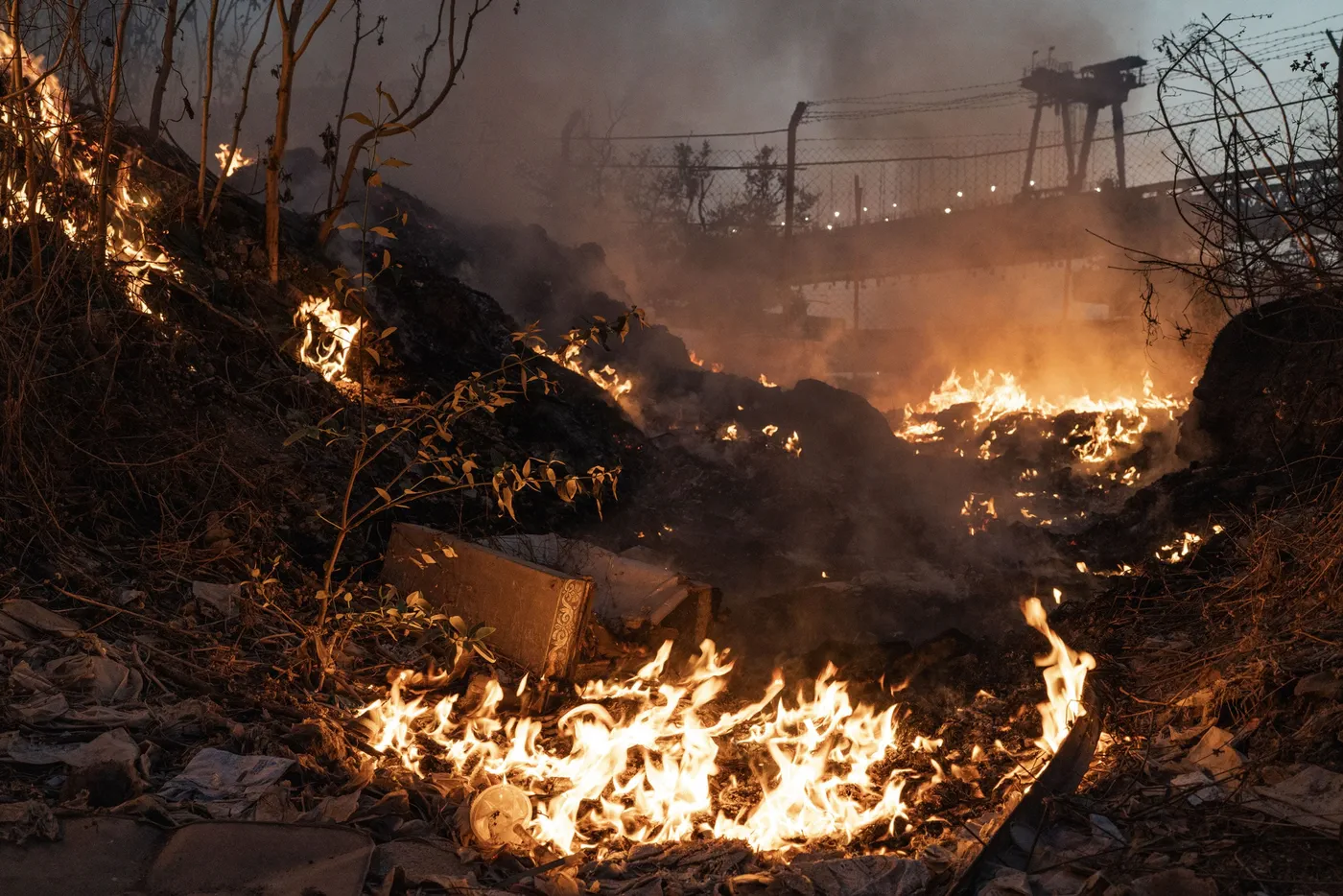
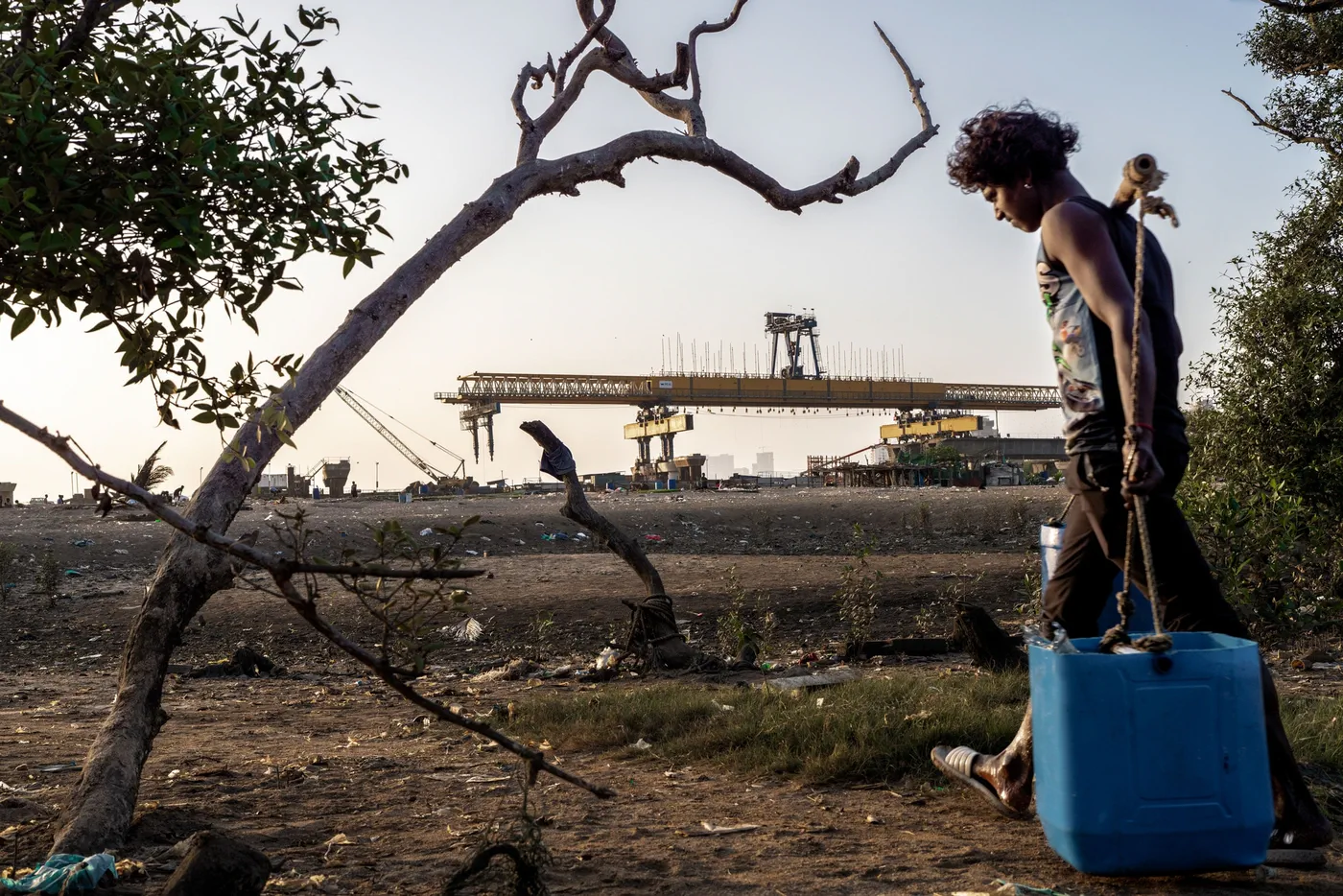
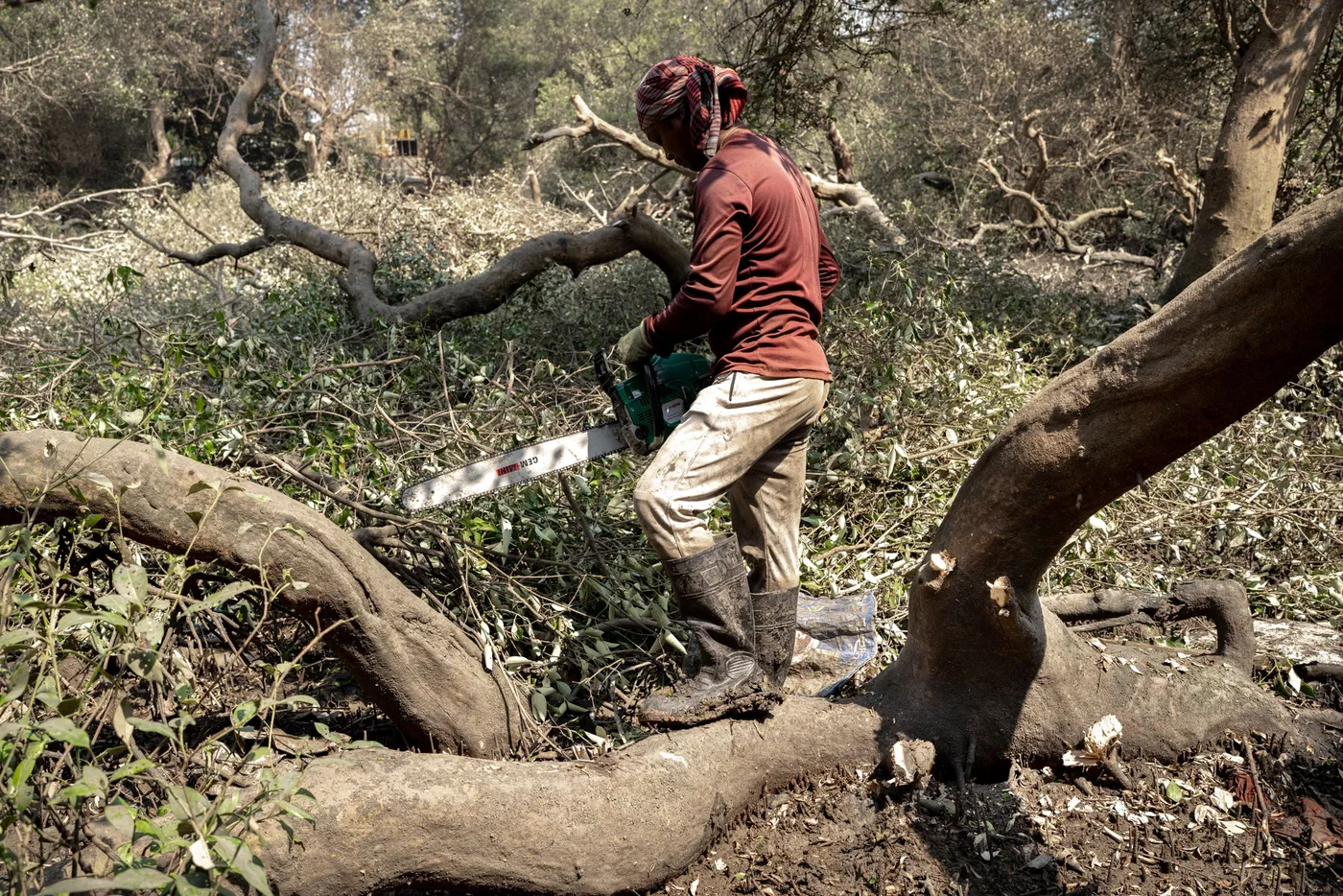
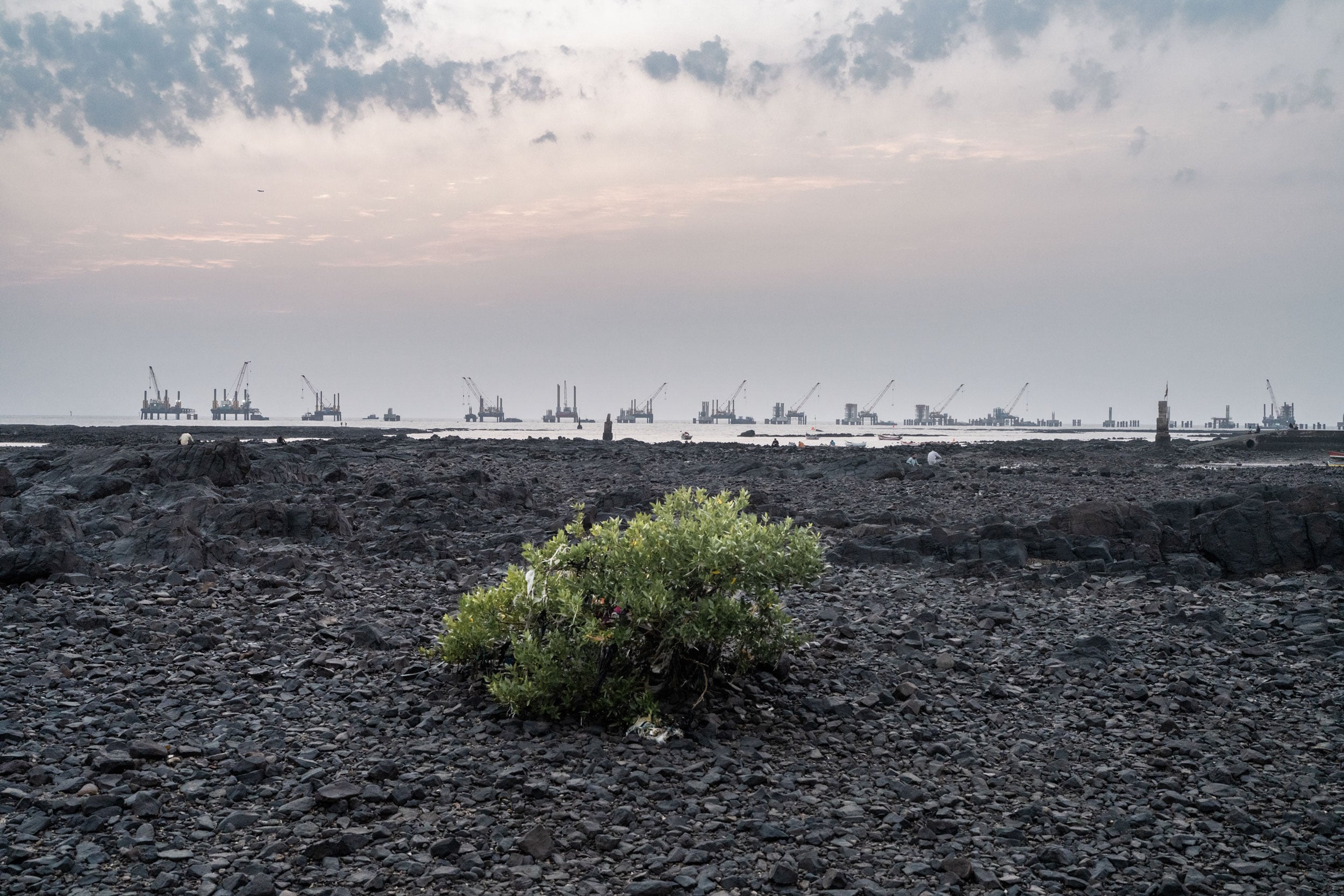
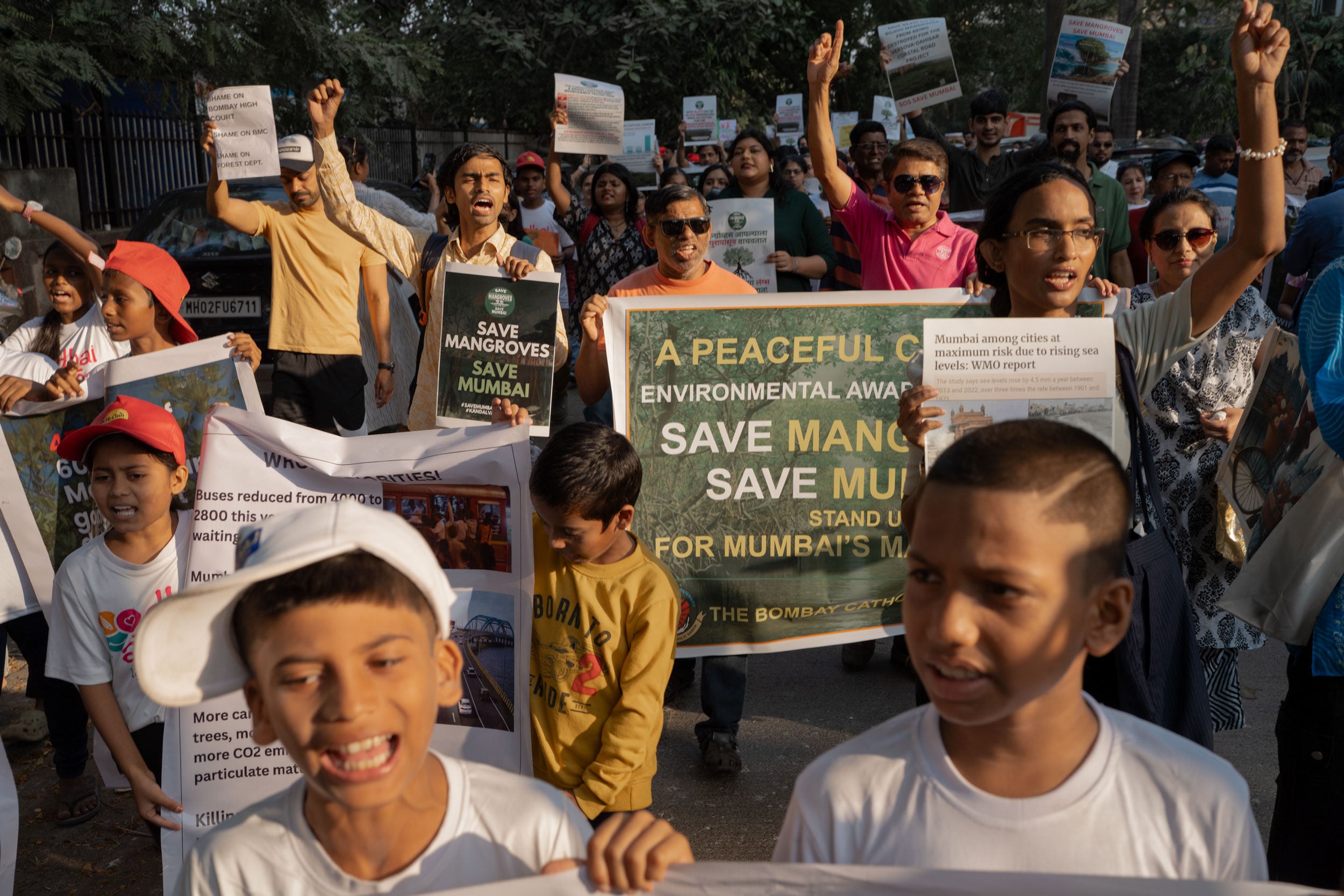
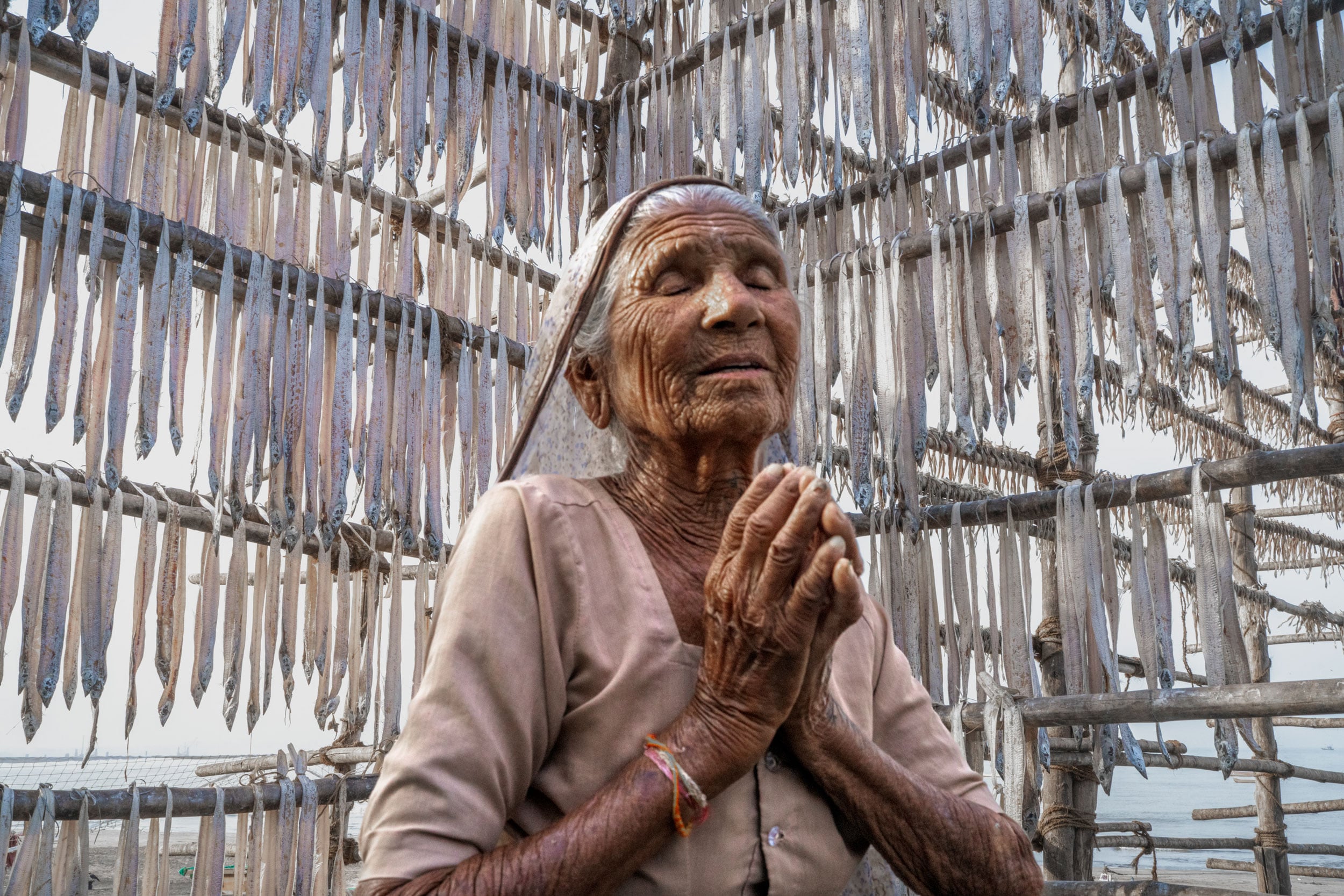
Nicolò Brugnara won the Portfolio Stories category with “Pillars in the Sea,” documenting the conflict between urban development, local communities, and Mumbai’s mangroves.
The city’s new €1.4 billion coastal road, built primarily for private cars, has become a major example of the tension between development and climate action in India.
The project threatens 75% of the mangrove forest at Manori Creek and displaces members of the Koli community, Mumbai’s Indigenous coastal population, in a city where most residents still rely on public transport.
A decade of restoration work between 2012 and 2022 failed at 52% of the sites despite investment exceeding $5 million. People documenting the destruction have also faced threats.
Young Mangrove Photographer of the Year
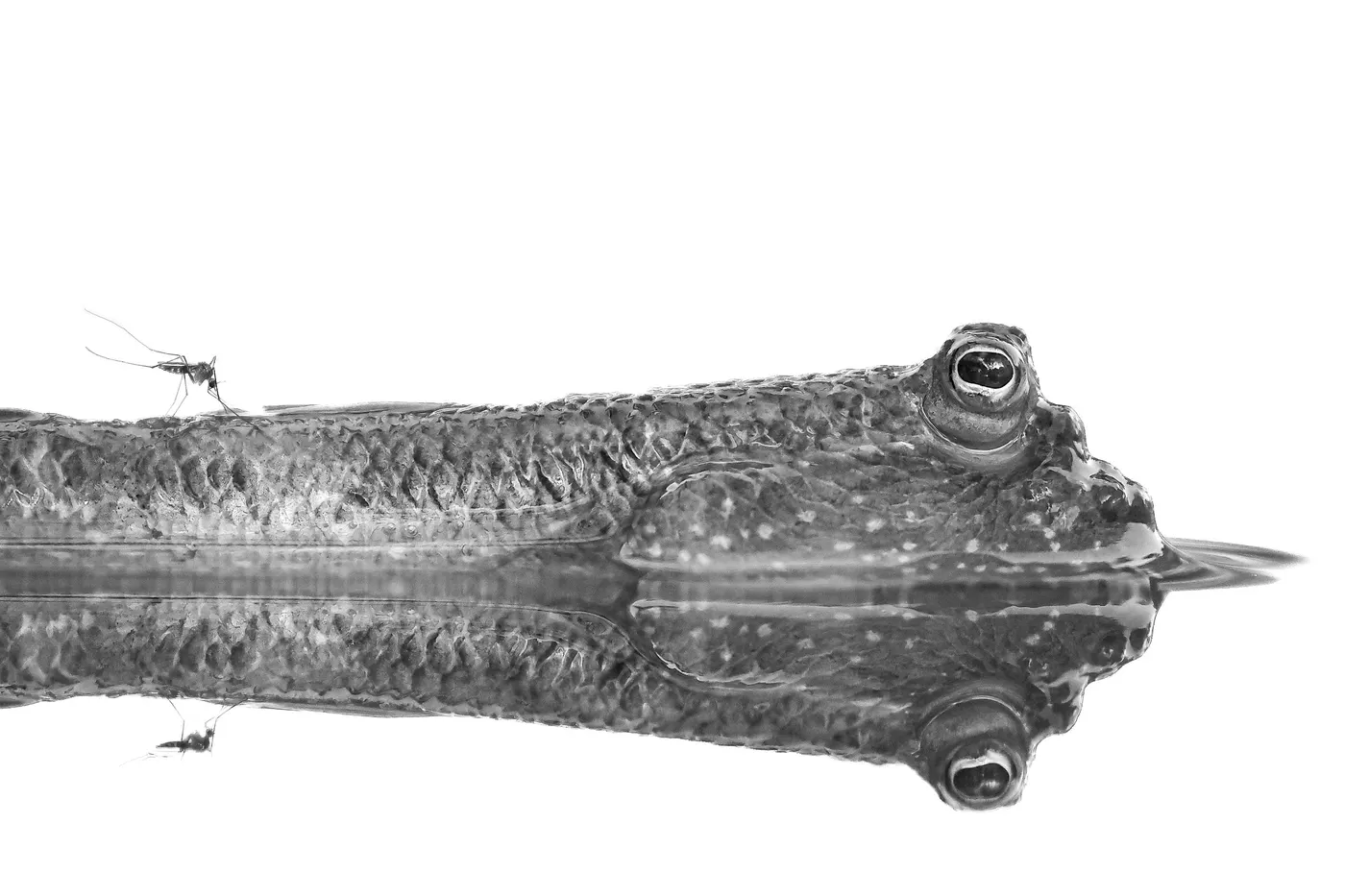
Katanyou Wuttichaitanakorn of Thailand was named Young Mangrove Photographer of the Year for “Adaptation.”
The image shows a mosquito feeding on a mudskipper.
In mangrove forests where warm-blooded prey is scarce, some mosquitoes have adapted to feed on cold-blooded animals. The young photographer investigated what sustained the forest’s unusually large mosquito population and documented the rare behaviour.
A Competition for Photography and Conservation
The Mangrove Photography Awards are organised by the Mangrove Action Project to highlight mangrove biodiversity, the people who depend on these environments, and the pressures threatening their survival.
The competition includes categories for wildlife, landscapes, underwater photography, environmental threats, communities, restoration, portfolio stories, and young photographers.
Find all winners here.
What We Think
The competition’s images demonstrate how effectively photography can combine visual beauty with documentation. Each awarded work is not only a striking picture but also evidence of a natural world that protects millions of people and species while facing increasing pressure.
Frequently Asked Questions
What are mangroves?
Mangroves are coastal forests in tropical and subtropical regions. They grow in salty or brackish water and are adapted to tides, mud, and high salinity.
Who won the Mangrove Photography Awards 2026?
Indian photographer Gaurav Patil won the overall prize with “Tangled Glow: When Life Meets the Ruins.”
How many entries were submitted?
The 2026 competition received 5,258 entries from photographers in 87 countries.
How was the winning photograph created?
It was created with a 13-second exposure and ultraviolet light, which caused a discarded fishing net to glow in the darkness.
Why are mangroves important?
Mangroves protect coastlines, store carbon, and provide breeding, feeding, and shelter areas for many species.