

Summary
- McGetchin crater formed on the Moon between April 11 and May 22, 2024.
- It measures about 222 metres across and about 43 metres deep.
- The object that created it had not been detected before impact.
- There is no evidence that this specific object would otherwise have hit Earth.
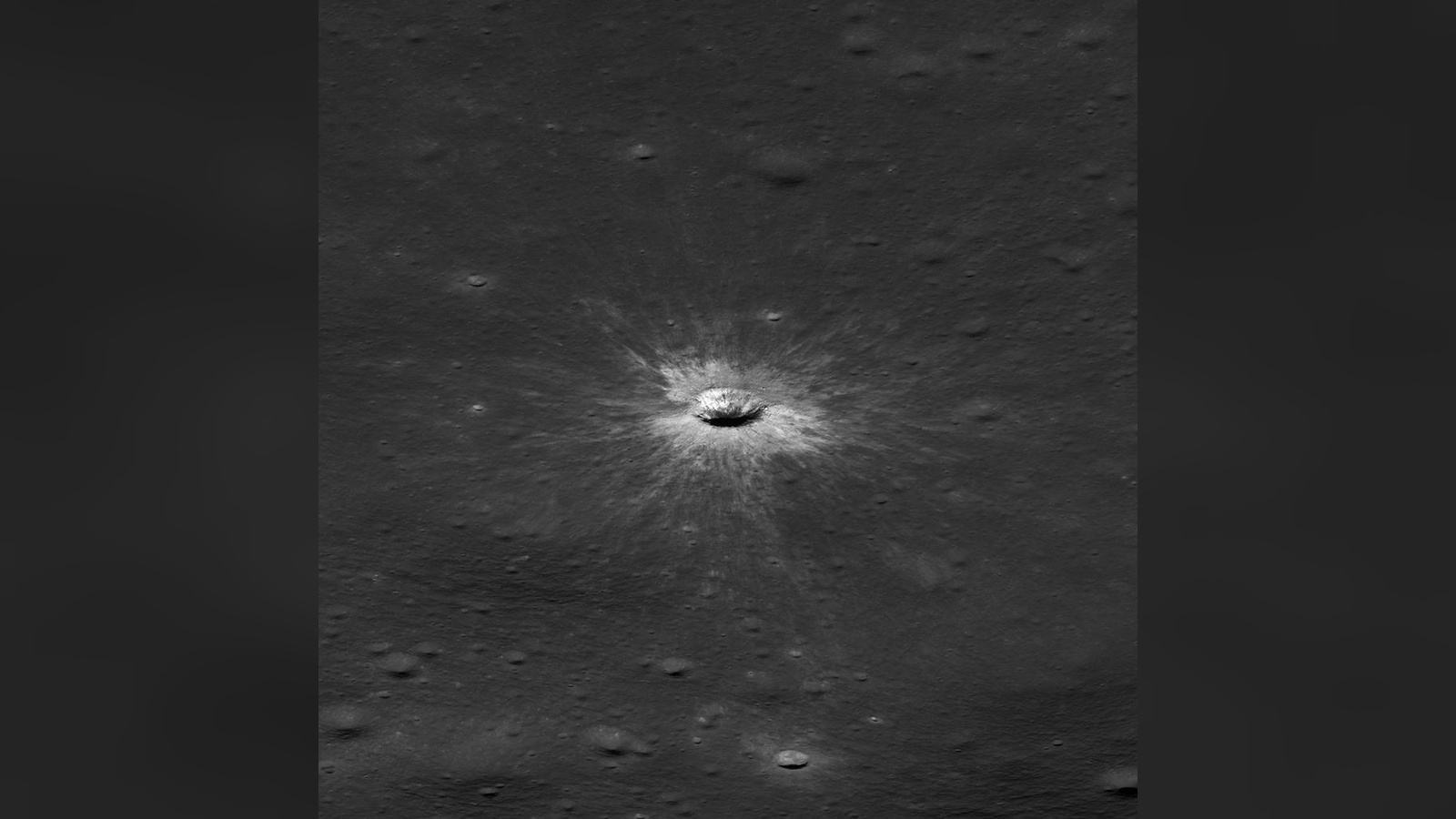
A 222-metre-wide crater that formed on the Moon in 2024 without being detected in real time has been revealed in data from NASA’s Lunar Reconnaissance Orbiter.
The crater, named McGetchin, lies on the eastern edge of the Moon’s near side. NASA says the impact occurred sometime between April 11 and May 22, 2024, when a comet or asteroid roughly the size of a three- to six-storey building struck the lunar surface.
The discovery came later, when Robert Wagner of the Lunar Reconnaissance Orbiter Camera team compared images of the same region taken at different times. The event underlines how difficult it remains to detect smaller bodies before impact, but it does not show that this particular object would otherwise have hit Earth.
A 222-metre crater, 43 metres deep
LROC measurements give an average diameter of 222 metres and a depth of about 43 metres. The walls have an average slope of roughly 24°, reaching close to 40° in places, while the rim rises by an average of about 8 metres above the pre-impact surface.
NASA describes the event as exceptionally rare: impact-cratering models estimate that an event on this scale occurs on the Moon about once every 132 years. McGetchin is the largest newly formed crater identified during the LRO mission.
The object that produced the crater had not been detected before impact, and the collision itself was not observed in real time by telescopes on Earth or in space. The crater was identified later through systematic comparison of lunar-surface imagery.
This is where claims that the Moon “saved” Earth need qualification. The Moon is indeed struck by objects moving through the inner Solar System, but there is no evidence that this specific object would have collided with Earth had it not hit the Moon.
Effects detected more than 100 kilometres away
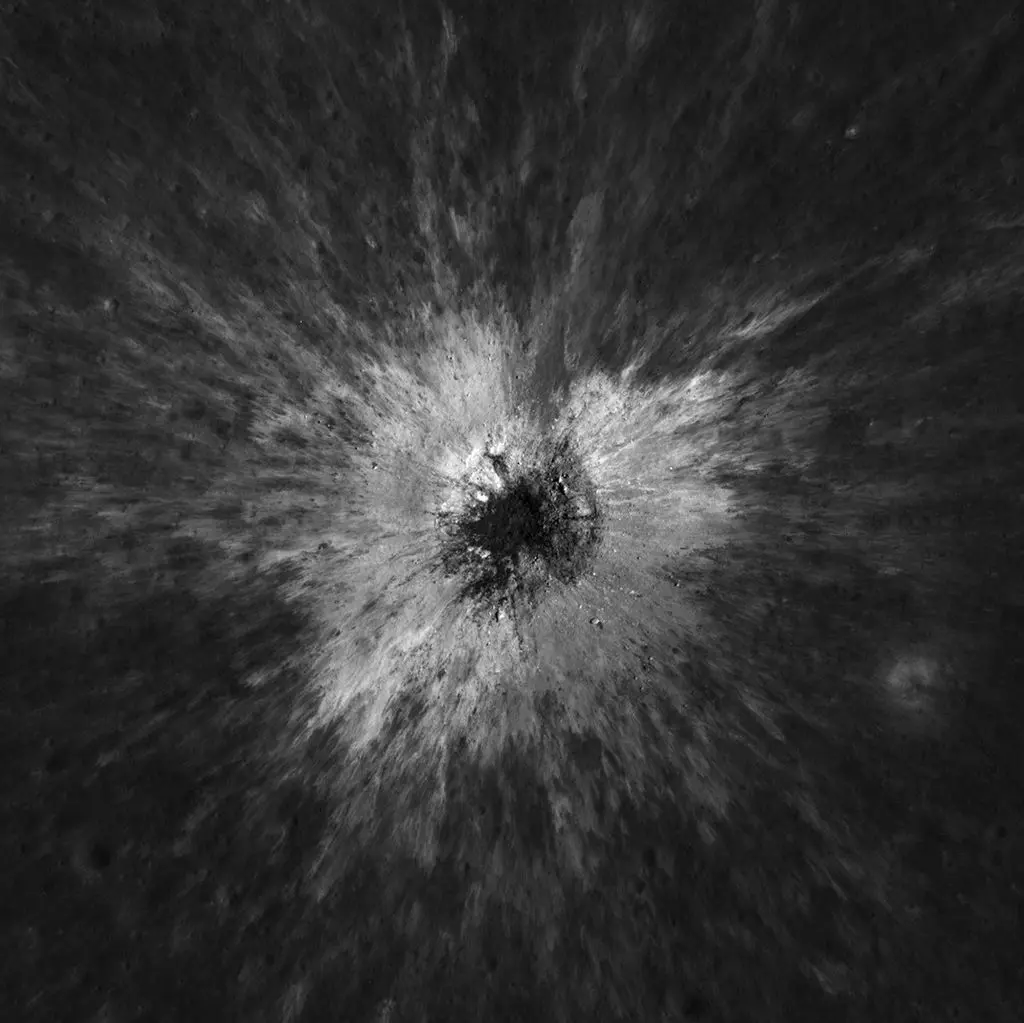
The importance of the discovery extends well beyond the crater itself. The LROC team detected surface disturbances more than 100 kilometres away, while the data indicate that ejecta behaviour was more complex than simplified impact models suggest.
LRO’s Diviner thermal instrument also detected an area roughly 6.4 kilometres across around the crater that is about 9 °C cooler at night than its surroundings. NASA attributes this “cold spot” to impact-driven loosening and overturning of the lunar regolith.
Why it matters for future lunar missions
The observations have direct practical value for planning long-lived infrastructure on the Moon. Debris from a major impact can affect areas far from the crater, a factor that must be considered for bases, vehicles and other surface assets.
McGetchin also offers a rare natural experiment: researchers have before-and-after imagery, high-resolution views of the fresh crater, topographic data and thermal measurements. Together these can test models of how craters form and evolve immediately after impact.
What we think
The key point is not that the Moon “saved” Earth, but that an object large enough to excavate a 222-metre crater reached the lunar surface without being detected in time. The discovery highlights both the value of LRO’s long-term monitoring and the limits of current small-body detection systems.
Frequently asked questions
When did McGetchin crater form?
NASA places the impact between April 11 and May 22, 2024.
How large is it?
It has an average diameter of about 222 metres and a depth of about 43 metres.
Was the impactor detected before it hit the Moon?
No. The impact went unnoticed in real time, and the crater was identified later through LRO image comparisons.
Did NASA prove that the Moon saved Earth?
No. There is no evidence that this specific object would have hit Earth. The Moon is a natural target for objects in the Solar System, but not every lunar impact represents an avoided Earth impact.