Summary
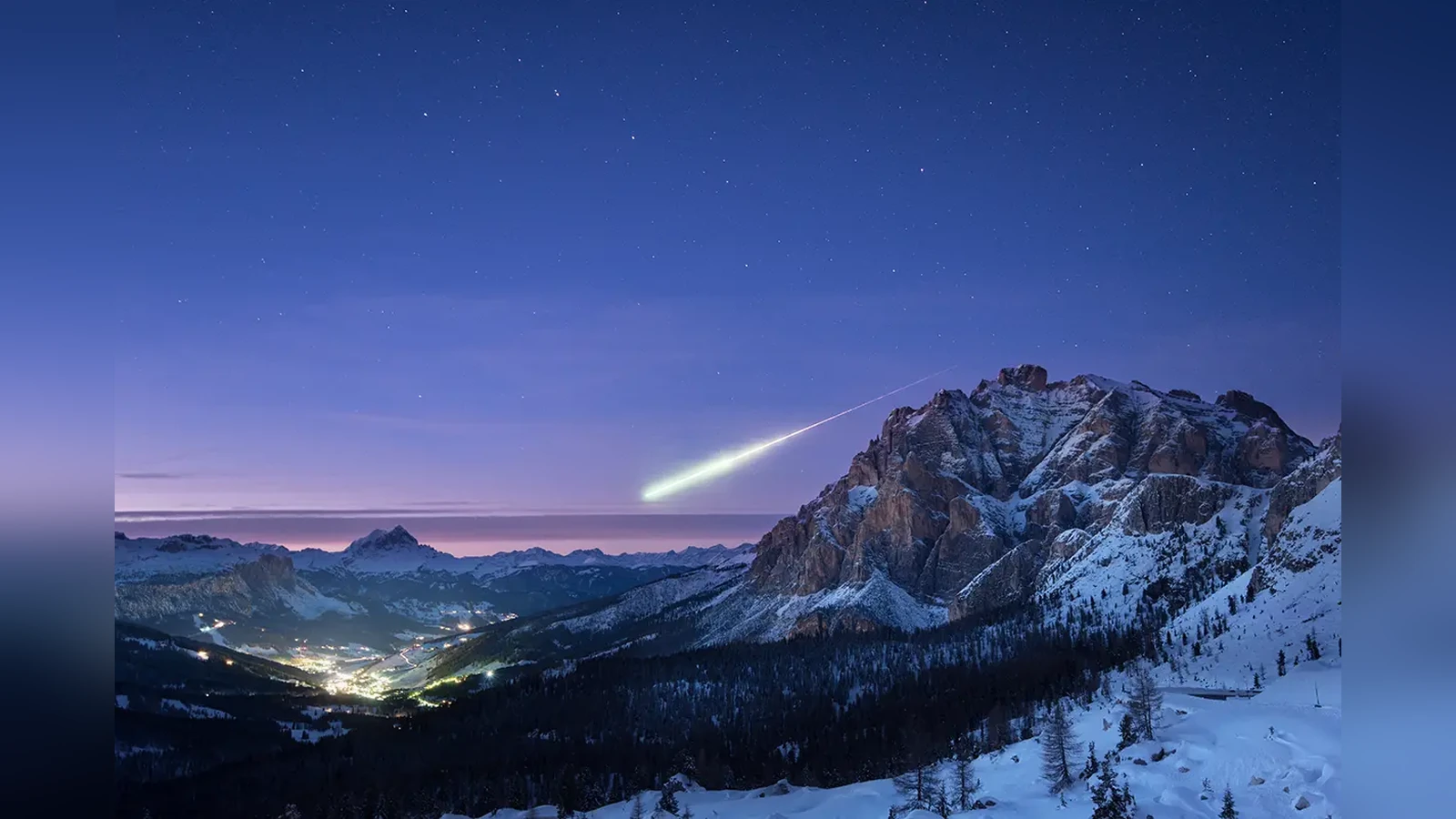
A brilliant fireball streaking over the snow-covered Dolomites is the subject of NASA’s image of the day, thanks to a perfectly timed accident captured by photographer Ollie Taylor.
NASA selected the photograph for Astronomy Picture of the Day (APOD) on November 8, 2026, but Taylor took it on November 14, 2017. Today’s selection brings renewed attention to an extraordinary moment in night-landscape photography.
A well-prepared frame and an unexpected visitor
The British photographer was at Italy’s Passo Falzarego, at roughly 2,200 metres, in temperatures of −6°C. He had framed the snow-covered peaks, the lights of La Villa in Alta Badia and Ursa Major above the horizon, aiming to preserve the pink tones of twilight.
As he reached for another camera with a longer lens, he left the first camera exposing. At that moment the fireball crossed the sky, leaving a bright trail below the familiar Big Dipper asterism and above the mountain landscape.
A fireball seen across several European countries
According to the European Space Agency (ESA), at approximately 16:45 GMT on November 14, 2017, a football-sized meteoroid entered the atmosphere northeast of Darmstadt, Germany. The fireball was seen from Germany, France, Switzerland, Austria and Luxembourg.
ESA estimated a speed of at least 70,000 km/h and reported that the object burned up at an altitude of about 50 km over Luxembourg. More than 1,150 sightings were submitted to the International Meteor Organization in the first days. NASA notes that its track is consistent with a possible origin in the Northern Taurid meteor shower, associated with debris from comet Encke.
The event was also recorded on video from Dresden:
What we think
This photograph is a good reminder that luck is only part of making a remarkable image. Taylor had already chosen the location, horizon, composition with the village and the point in twilight when colour still lingered in the sky. The unexpected fireball entered a carefully prepared frame.
For astrophotographers, that has a practical lesson: arrive early, compose deliberately and keep shooting while the light and conditions are good, even without a specific event in mind. Nobody can schedule a fireball like this, but choosing where to be when something unexpected happens is very much within our control.
Just a few days earlier, another NASA image showing a comet and a colourful meteor offered a reminder of how fleeting phenomena can transform a thoughtfully planned astrophotograph.