Summary
- Sony unveiled the Through Their Lens collection by Paralympian and photographer Zak Skinner.
- Ten images explore athletics, light and portraits of female athletes.
- The photographs were shot with the Sony α7 V and α7R V.
- Menu enlargement and screen-reading features supported Skinner’s camera workflow.
Ten photographs by British Paralympian Zak Skinner explore how his partial sight shapes his relationship with light, movement and image-making.
Sony Europe unveiled Through Their Lens on 4 November 2026, highlighting an athlete who also works as a photographer and videographer. This is the second year of the initiative, following an earlier collaboration with Gary Williamson.
Zak Skinner also belongs behind the camera
Skinner was born without sight and gained some vision at the age of two. He has ocular albinism, which in his case involves reduced visual acuity, nystagmus — involuntary eye movements — and photophobia, or sensitivity to bright light. He represented Great Britain at the Tokyo Paralympics and the 2023 World Para Athletics Championships, and works in sports photography and videography through his company Blind Man Visuals.
For this project, he began in the familiar environment of an athletics track before moving to staged portraits. Light and movement do more than create an aesthetic: they connect the photographs to aspects of his own shooting experience.
All ten images: from the track to the studio
The first five photographs explore sport, the experience of light and physical motion. The next five focus on four British athletes and on the person behind the sporting results and television coverage.
Long jumper in Madeira. A long jumper in Madeira’s Ribeira Brava valley connects Skinner’s Paralympic career with his photographic practice.

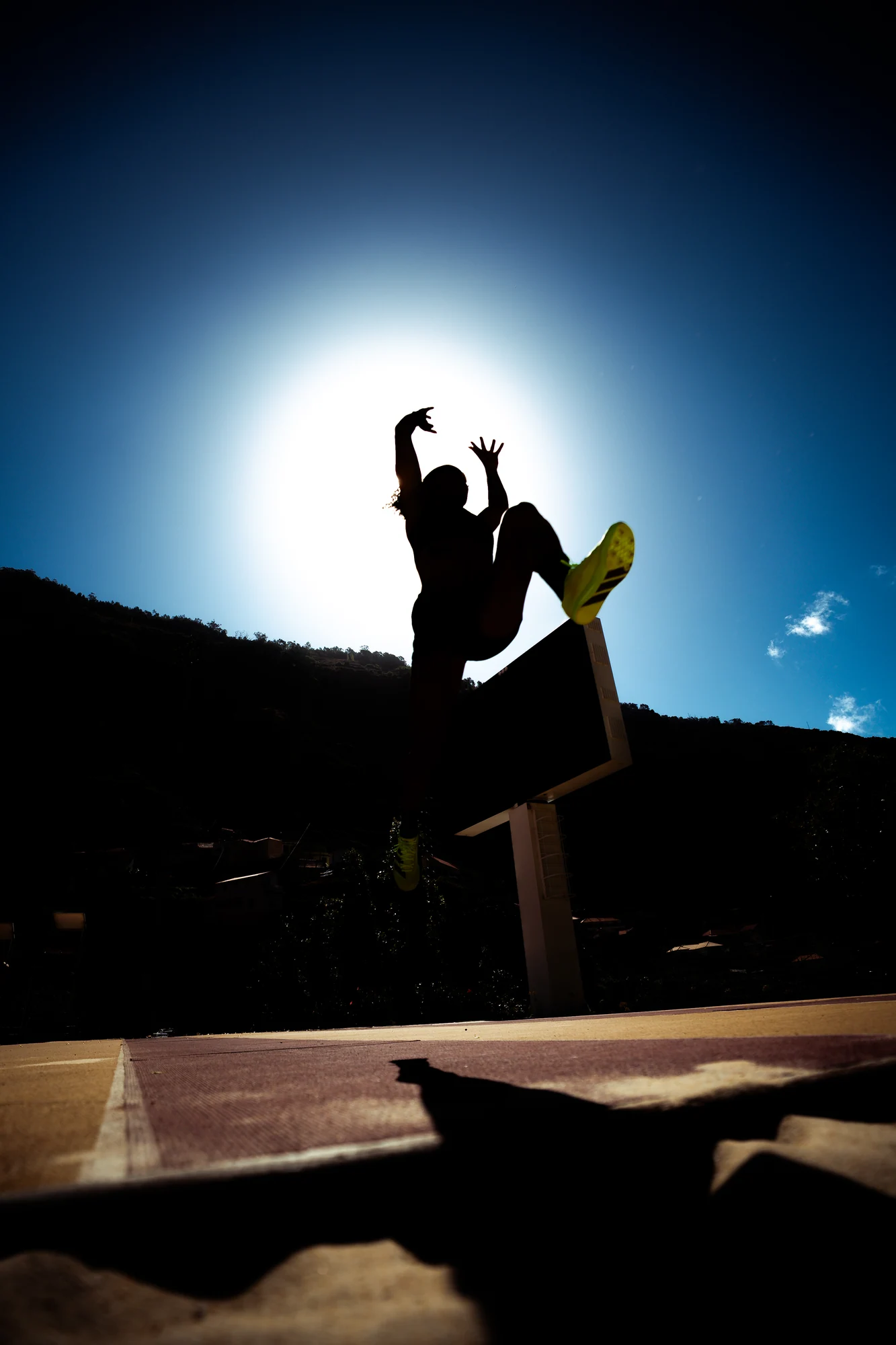
Silhouette against a bright sun. A long jumper silhouetted against an overexposed sun interprets the photographer’s sensitivity to bright light.
Interpreting nystagmus. A track photograph shot from behind an athlete uses a slow shutter, motion blur and tilted lines to interpret nystagmus.

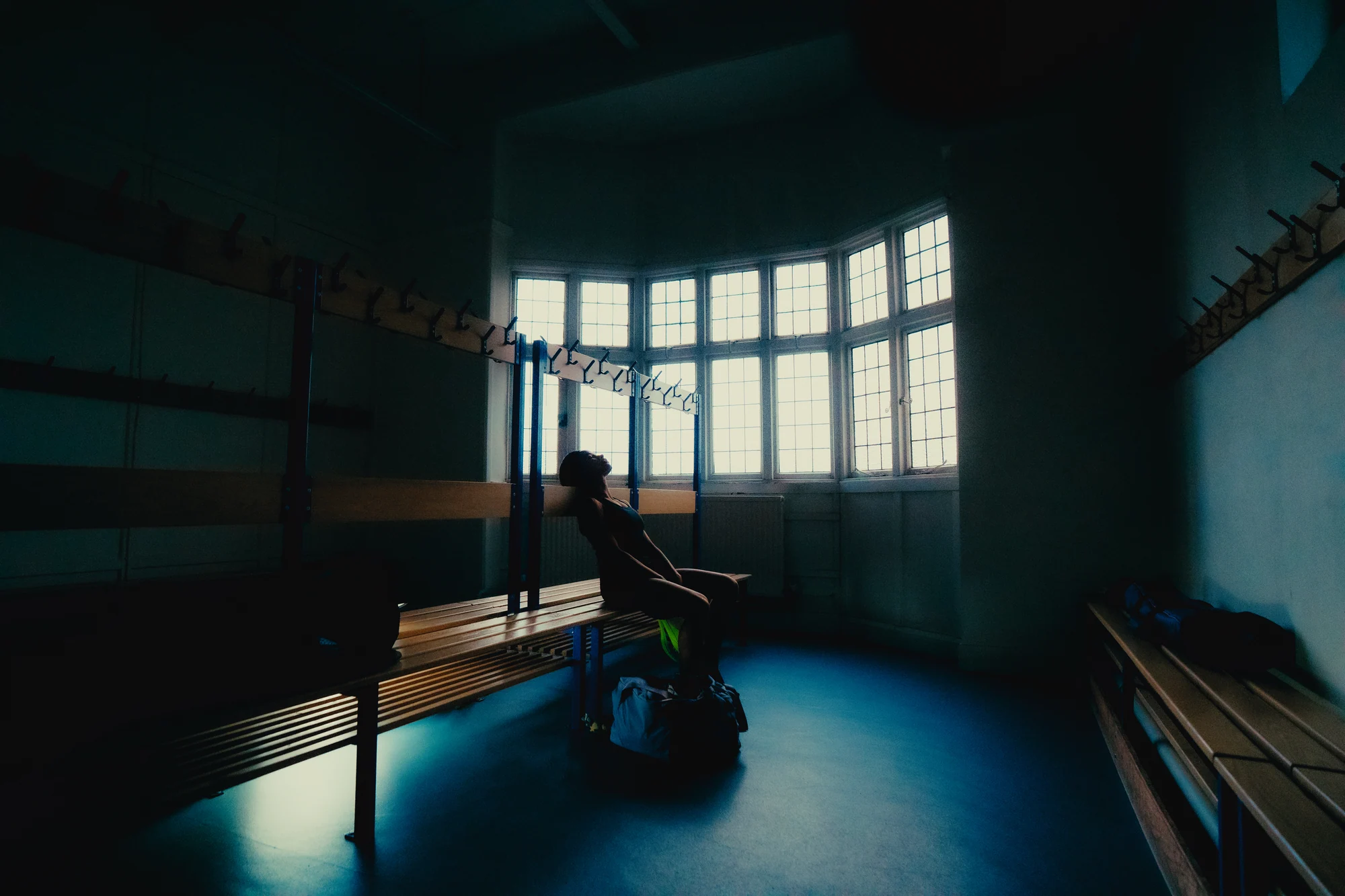
Bright windows and silhouette. Bright windows and a dark athletic figure provide another visual interpretation of photophobia.

The empty changing room. An empty changing room evokes the isolation that can accompany individual elite sport, as Skinner describes it.
Four athletes in the studio. Katarina Johnson-Thompson, Morgan Lake, Jazmin Sawyers and Imani-Lara Lansiquot in a group portrait that opens the collection’s second half.

Morgan Lake beyond the screen. Morgan Lake appears beside a static-filled television, suggesting that an athlete’s identity extends beyond their televised image.
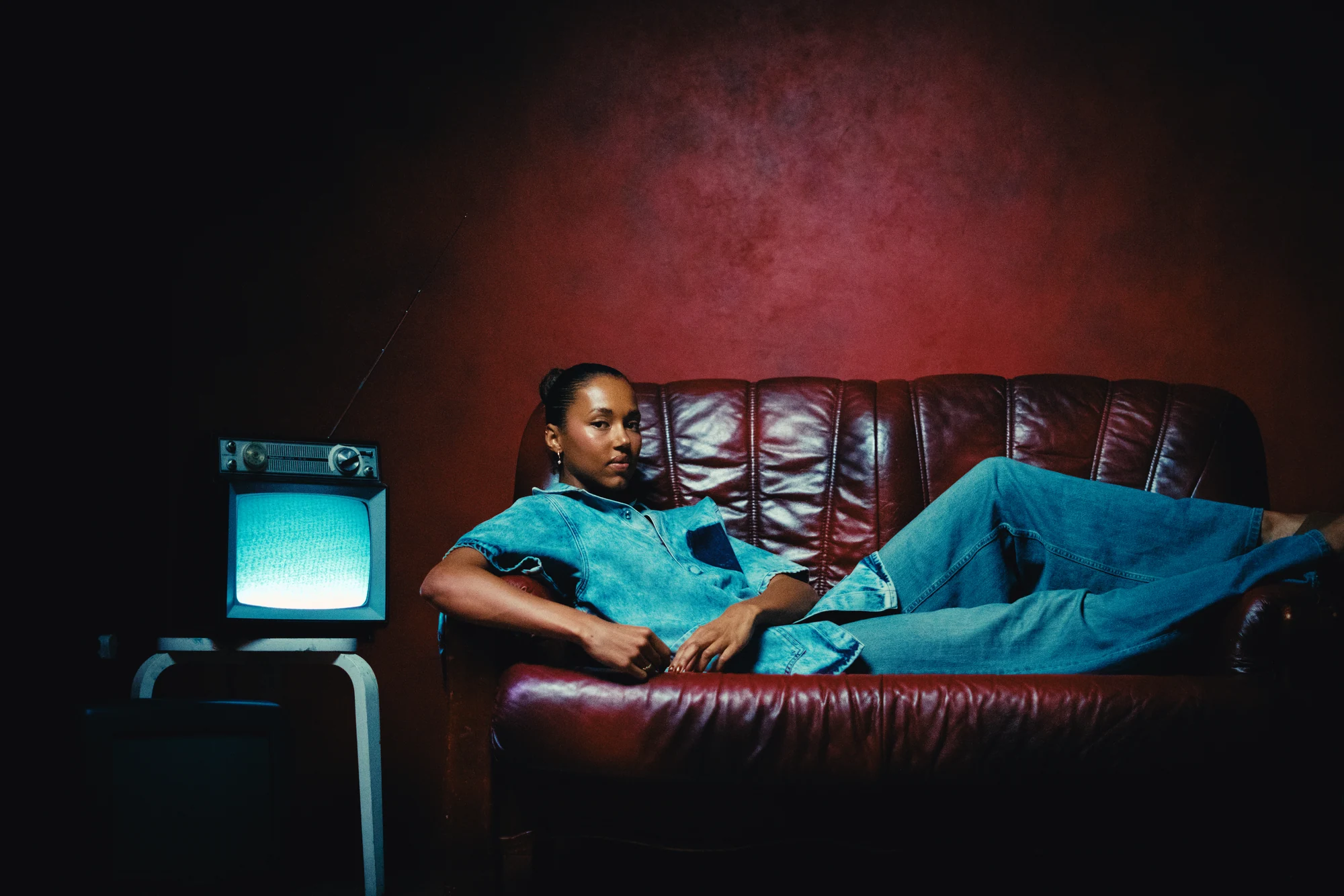
Katarina Johnson-Thompson in the spotlight. A halo of light around Katarina Johnson-Thompson represents the attention surrounding elite athletes.

Jazmin Sawyers against bright glass. Strong contrast in Jazmin Sawyers’ portrait returns to the experience of photophobia.

Imani-Lara Lansiquot beneath a mirror. Imani-Lara Lansiquot looks towards the light beneath a mirror in a dark, warmly lit room.

How he used the Sony α7 V and α7R V
Skinner shot the series with his own Sony α7 V and a Sony α7R V. Rather than repeatedly adapting his process to the menu system, he assigned Enlarge Screen to a custom button. A single press makes on-screen settings easier for him to read and adjust.
Outdoors, background noise can make audio feedback difficult to hear, so screen enlargement is his main accessibility tool. In a quieter studio, he also uses Screen Reader to hear menu information. Customisable buttons and dials, together with tactile controls, let him rely on touch and familiar control positions instead of visually checking every setting.
Sony α7 V — More information here.
Sony α7R V — More information here.
These ideas extend beyond this particular photography project. Comparable screen-reading and menu-enlargement features also appear in the Sony FX5, a cinema camera designed for a different type of creative workflow.
Sony also describes working with blind and partially sighted people and organisations such as the UK’s Royal National Institute of Blind People (RNIB) to improve access to imaging technology. Robin Spinks, the RNIB’s Head of Inclusive Design, points to enlarged menus and screen readers as tools that can make a practical difference to camera operation.
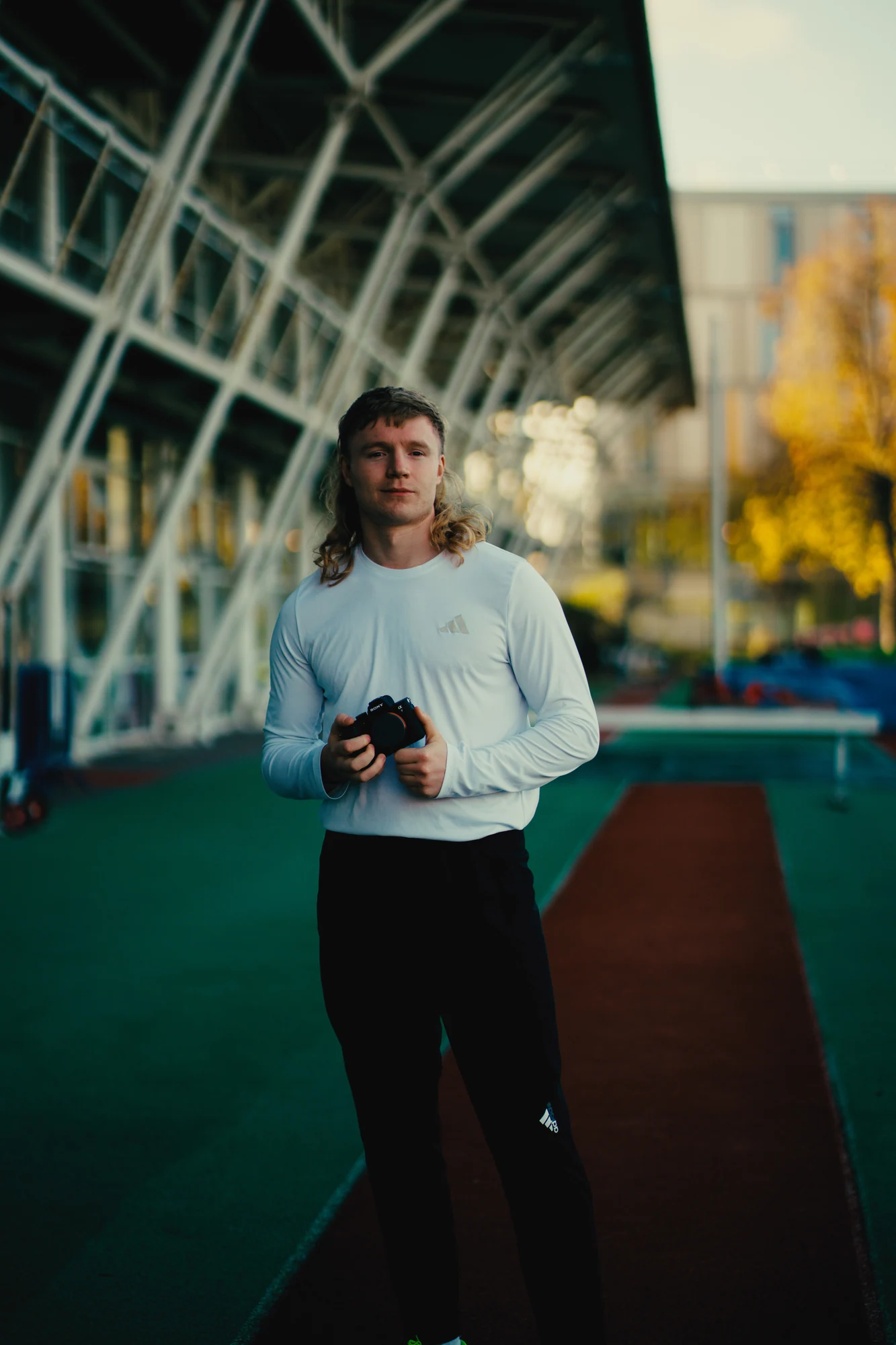
The full official collection includes ten photographic works and an additional portrait of Skinner himself. That portrait is not one of the ten images.
What we think
The blurred track photograph is probably the clearest reason to look at the series as a whole. Skinner does not simply ask the viewer to recognise a visual difficulty. He uses shutter speed, camera position and composition to make an image that communicates something on its own terms.
We also like that the second half does not stay confined to questions of sight. The portraits of Morgan Lake, Katarina Johnson-Thompson and the other athletes pursue different ideas: the static-filled television comments on public identity, while the spotlight suggests the pressure of attention. This is a photographer developing his own ideas, not just demonstrating a menu feature.
There is, however, a very practical lesson for camera makers: give creators a quick way to enlarge controls, hear information when useful, and assign essential functions to a physical button. No single feature works equally well in every environment or for every person. Skinner’s different choices on a noisy track and in a quiet studio explain what meaningful accessibility looks like much better than a marketing slogan.
Frequently asked questions
Why does the gallery show eleven photographs if the series contains ten?
Ten images are photographic works by Skinner. Sony also published a separate portrait showing him holding his camera, which serves as accompanying material rather than part of the ten-image series.
How do these accessibility features help during a shoot?
Menu enlargement helps users read settings, Screen Reader provides spoken menu information, and custom buttons give quick access to frequently used functions. Skinner favours enlargement on a noisy track and also uses spoken feedback in quieter settings.