

Summary
- Justin Thomas filed a copyright lawsuit on August 20, 2026
- The case concerns a 1995 photograph of Liam and Noel Gallagher
- Elizabeth Peyton created the painting in 1996
- Sotheby’s sold it in May 2026 for $1.92 million
- The allegations have not been adjudicated
- The photograph from Earl’s Court
- How Sotheby’s brought the two works into the same story
- The painting and its path through the art market
- What Justin Thomas specifically alleges
- Why similarity alone does not decide the case
- Oasis’s earlier dispute over photographers’ rights
- What the complaint seeks and what comes next
- What we think
- Frequently asked questions
Photographer Justin Thomas has filed a lawsuit alleging that Elizabeth Peyton used his photograph of Liam and Noel Gallagher without permission to make a painting that Sotheby’s sold for $1.92 million.
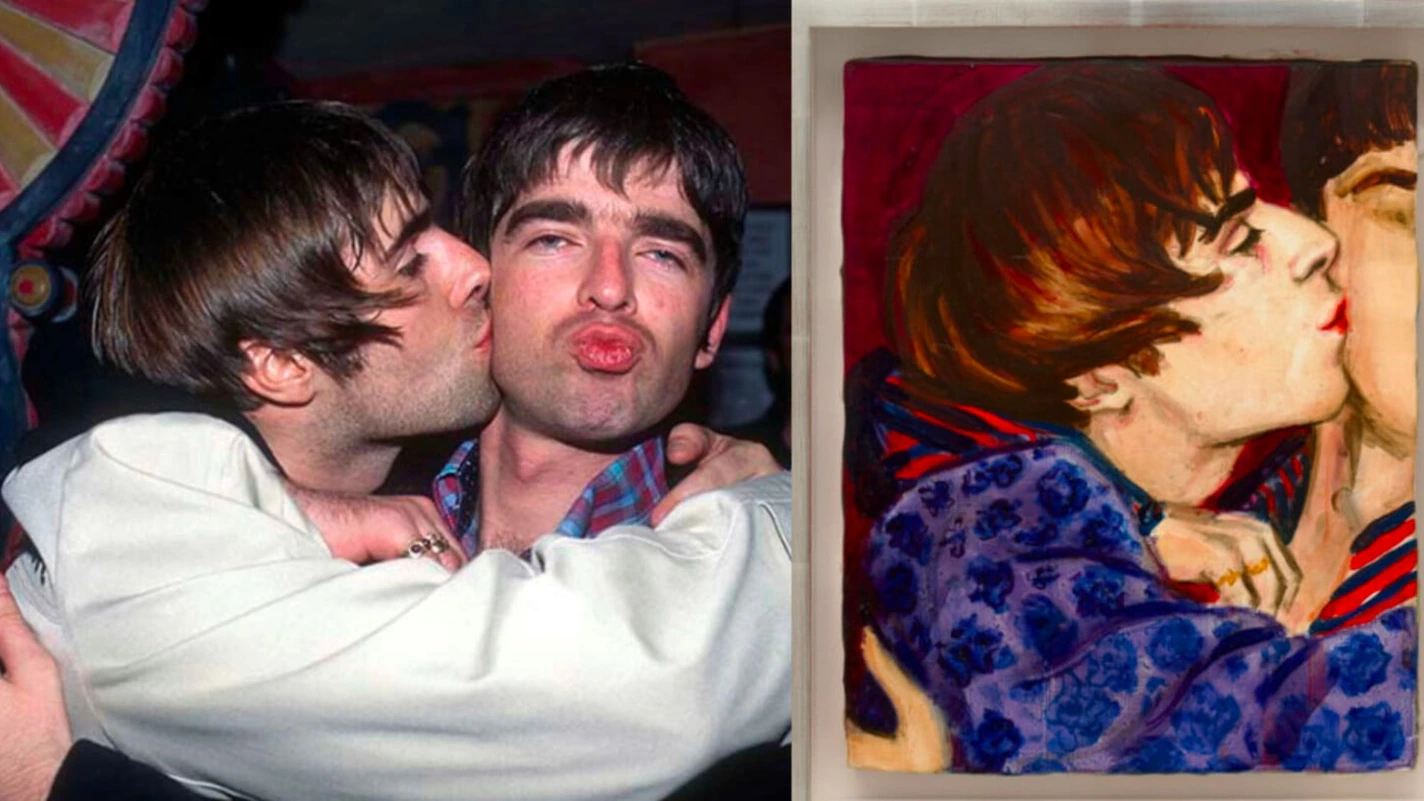
Thomas v. Peyton was filed on August 20, 2026, in the US District Court for the Southern District of New York. Peyton, Sotheby’s, David Zwirner Gallery and unnamed parties are listed as defendants. Thomas asks the court to find that Earl’s Court (Liam + Noel) is an unauthorized derivative of his photograph and alleges further infringement through reproduction, display and distribution by the other defendants.
These are allegations in a complaint only. The public docket currently records the complaint and requests for summonses, not a judgment of infringement or a substantive response from the defendants. The similarity between the two images is the visible starting point, but the legal analysis will depend on which parts of the photograph are protected and whether their use was unlawful.
The photograph from Earl’s Court
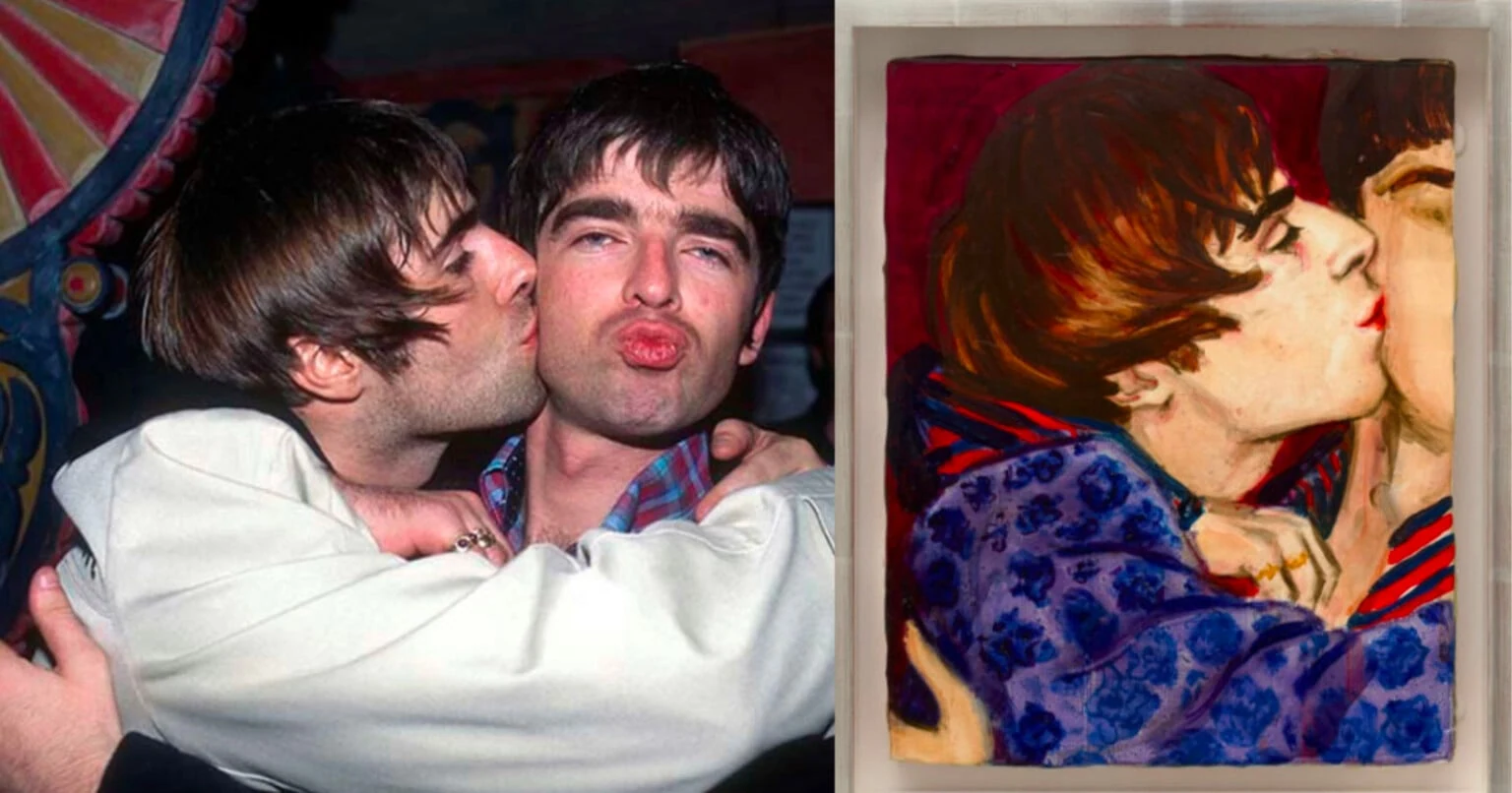
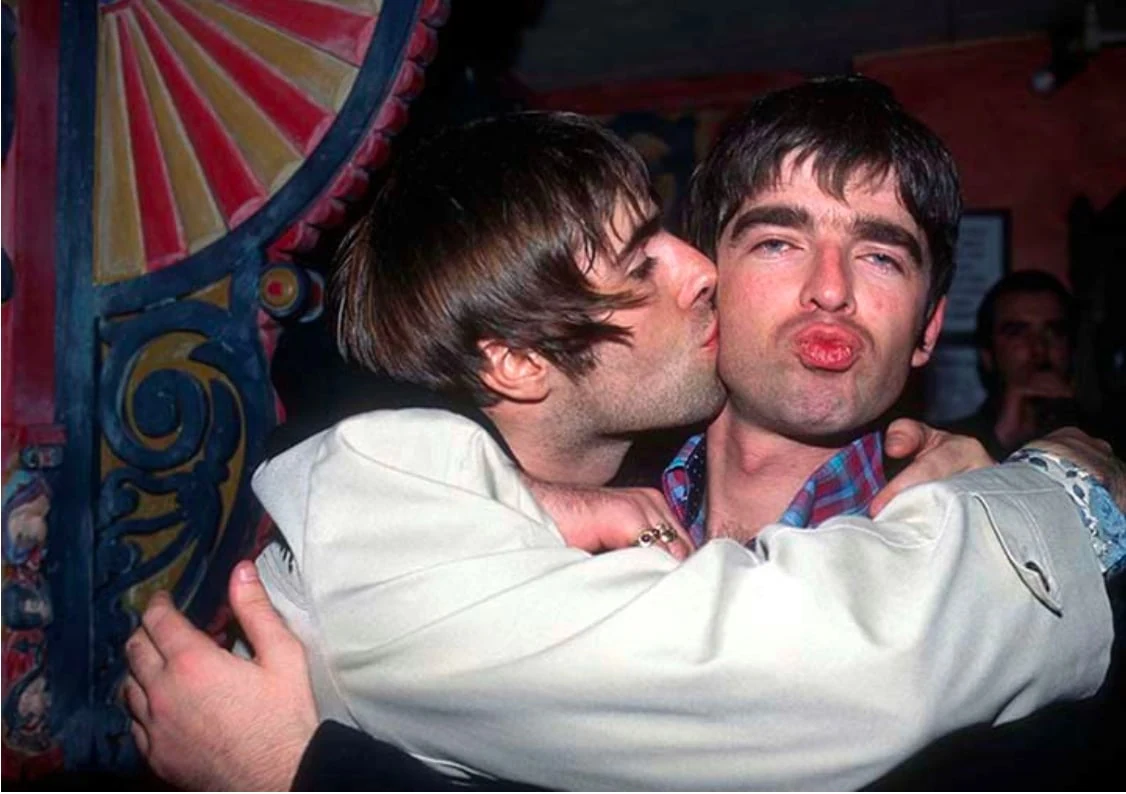
Thomas took the photograph at an Earl’s Court afterparty in London in 1995. It shows Liam Gallagher kissing Noel on the cheek as the brothers embrace. The rare tender moment carries particular tension because it contrasts with the public image of their famously combative relationship.
A black-and-white version was later used on the cover of Thomas’s photo book How Does It Feel? – Oasis 1995/2002. In the complaint, he says he was unaware for almost three decades that Peyton had painted the image in 1996.
How Sotheby’s brought the two works into the same story
According to the complaint, Thomas learned about the painting after a Sotheby’s representative contacted him in April 2026. The auction house was preparing its Now & Contemporary Evening Auction in New York and sought permission to use the photograph as a comparative illustration in an online catalogue essay and a printed lot card.
The photographer agreed to a $2,000 fee covering one year of online use and two weeks in print. Roughly a week later, he alleges, Sotheby’s removed the photograph at the request of the artist’s representative and asked for a reduced fee because the planned use had been curtailed. Thomas ultimately accepted $1,500.
The complaint interprets the removal as an effort to hide the painting’s source. That is the plaintiff’s characterization, not an established fact. The sale proceeded without the comparative photograph and, according to the court filings and reporting, the work sold for $1.92 million including fees.
The painting and its path through the art market
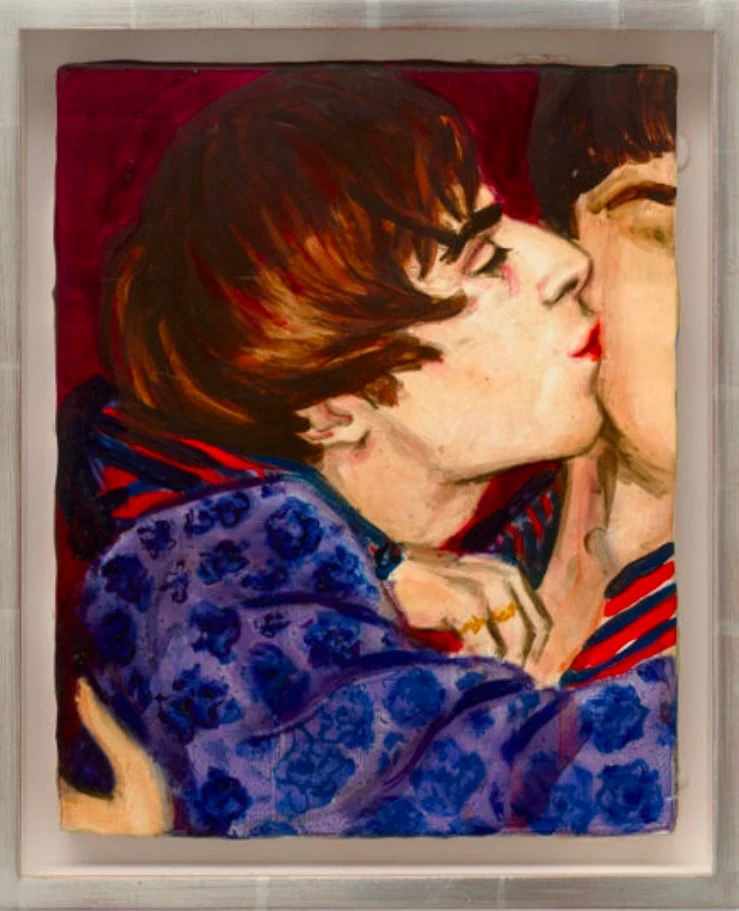
Sotheby’s official lot describes Earl’s Court (Liam + Noel) as a 10 × 8-inch, or 25.4 × 20.3cm, oil-on-board work executed in 1996. Its estimate before the May 14, 2026 auction was $1.5 million to $2 million.
The work had been acquired from Greene Naftali in 1998 and remained in the same private collection. It had also been shown at the Museum of Modern Art in 1997; in the Live Forever retrospective that travelled to venues including the New Museum, Walker Art Center and Whitechapel Gallery; and in David Zwirner’s Circa 1995 exhibition in 2025.
What Justin Thomas specifically alleges
Thomas does not limit his complaint to the fact that the painting shows the same people or moment. He says it copied particular creative choices: the arrangement of the brothers, facial angles, head tilts, expressions, hair, hands, lighting and even the position of Liam’s ring near Noel’s collar.
In his account, the material changes are tighter cropping, the shift from photography to painting, the colour palette and brushwork. The complaint calls the result an unauthorized derivative work and separately challenges online and commercial reproductions by the gallery and auction house.
Why similarity alone does not decide the case
US copyright law does not protect the idea of a photograph, the Gallagher brothers’ faces or the kiss as an event. It may protect the photograph’s particular expression: framing, angle, timing, lighting and other creative decisions. The court will need to isolate protectable elements and decide whether the similarity is legally substantial.
Fair use may also become an issue. Changing the medium from photograph to oil painting or adding a different style is not automatically sufficient. Following the US Supreme Court’s Andy Warhol Foundation v. Goldsmith decision, each challenged use must be assessed according to its purpose, character and commercial context. Creating the painting, exhibiting it in a museum, displaying it on a gallery website and reproducing it for an auction may be evaluated separately.
Oasis’s earlier dispute over photographers’ rights
The new lawsuit concerns a different period and different parties, but it meets an already sensitive photographic chapter surrounding the band. In 2025, major agencies staged a photographic boycott of the Oasis tour over terms limiting how long their images could be used. That conflict concerned access contracts and future use of new photographs; this lawsuit concerns an allegation that an existing work was used without permission.
What the complaint seeks and what comes next
The case is numbered 1:26-cv-07120 and has been assigned to Judge John G. Koeltl. Thomas seeks damages, an accounting of profits he attributes to the challenged uses, injunctive relief and other remedies the court considers appropriate. The scope of any award or injunction cannot be assumed before the defendants respond and the claims are tested.
The painting’s age may also prompt limitations questions, while Thomas says he only discovered it in 2026. When each claim accrued or could reasonably have been discovered may become significant later in the proceedings.
What we think
The side-by-side explains the lawsuit’s powerful visual hook, but not why its outcome should be considered predetermined. The case will test the boundaries between artistic reference, derivative work and commercial use of a photograph. For photographers, the essential point is that attribution, permission and payment remain separate questions — and none should be assumed simply because the final work uses a different medium.
Frequently asked questions
Has Elizabeth Peyton been found to have infringed copyright?
No. A complaint containing those allegations has been filed, but there is no judgment on the merits.
When was the Oasis photograph taken?
Justin Thomas took it at an Earl’s Court afterparty in London in 1995.
How much did the painting sell for?
According to the complaint and related reporting, Sotheby’s sold the painting in May 2026 for $1.92 million including fees.
Why is visible similarity not enough?
Copyright protects specific creative expression rather than the event or people themselves. The court must determine which protected elements were used and whether a defense such as fair use applies.
Who are the named defendants?
The complaint names Elizabeth Peyton, Sotheby’s Holdings, David Zwirner Gallery and unnamed parties.