

Summary
- Sigma is rumoured to be preparing a full-frame autofocus 65mm faster than f/1.2.
- The lens may appear in a September presentation involving up to three new models.
- An f/1.0 aperture, mounts, price and specifications have not been confirmed.
- The already announced 85mm F1.2 DG Art is not the new element of the report.
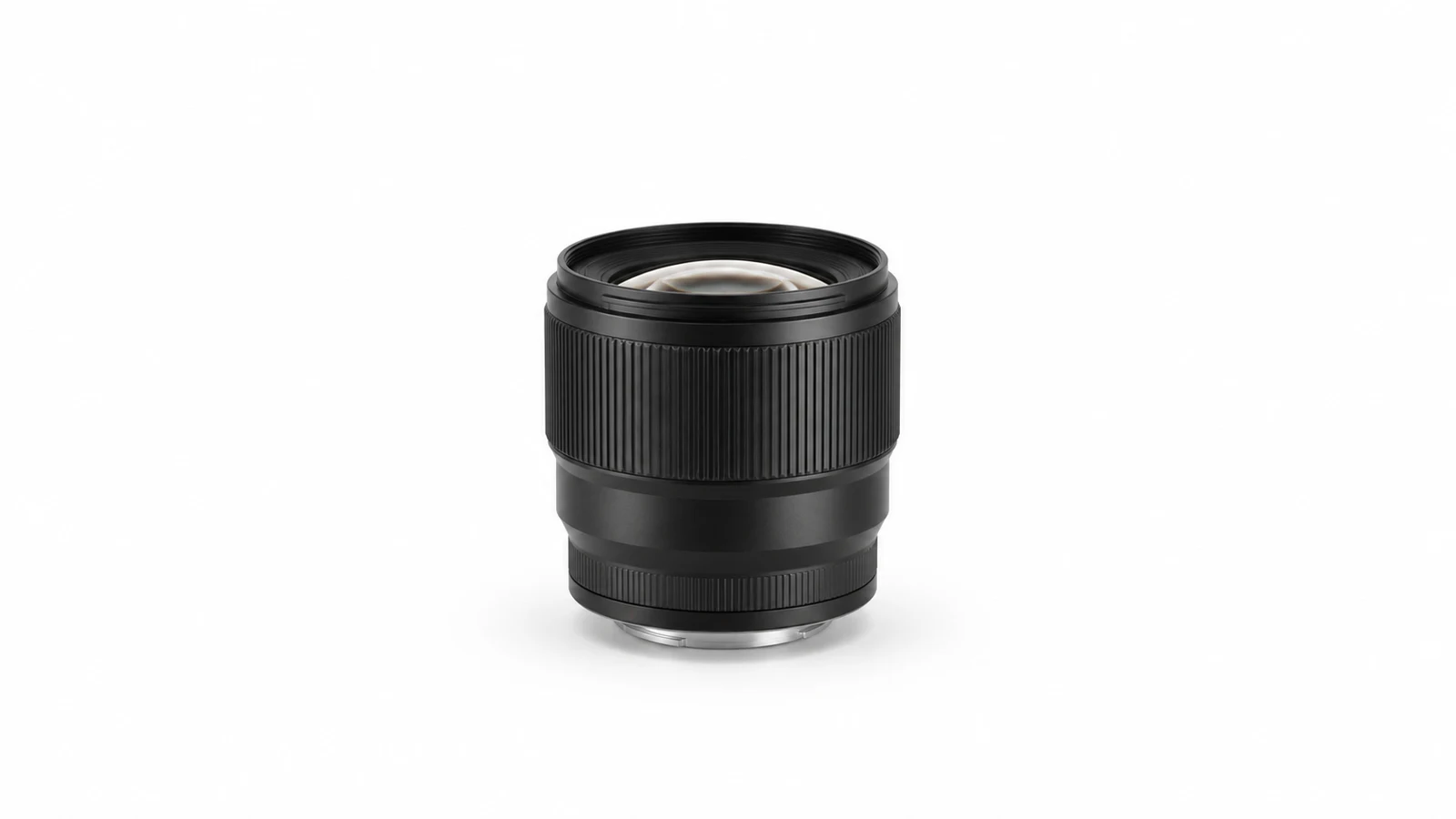
A new rumour claims Sigma is preparing a full-frame autofocus 65mm lens with a maximum aperture faster than f/1.2, an unusual product that could become the real news of the company’s next presentation.
Reports say Sigma may introduce as many as three new lenses in September 2026. The group includes the already announced 85mm F1.2 DG Art, an unidentified zoom and possibly the new 65mm. Only the 85mm has been officially confirmed; the other two remain unverified information.
Attention is focused on the 65mm because it combines a rare focal length with extreme speed. The description “faster than f/1.2” does not confirm an f/1.0 aperture and reveals nothing about mounts, optical construction, size, weight, price or an exact announcement date.
What the rumour actually says
The initial information appeared in April and described an ultra-fast autofocus 65mm with a September release target. A newer report about a major Sigma presentation brought the lens back into focus, this time alongside as many as two other models.
Rumour sources mainly connect the presentation with Sony E-mount and L-Mount, but Sigma has confirmed neither the lens nor its versions. Availability in both mounts is plausible based on the company’s current strategy, but it is not an official specification.
Why 65mm differs from 50mm and 85mm
The 65mm focal length sits between the classic standard 50mm and the traditional portrait 85mm. On a full-frame body, it provides a narrower field than a 50mm without requiring the same working distance and perspective compression as an 85mm.
This may be useful for environmental portraits, weddings, low-light photography, compact video productions and scenes where the photographer wants strong subject separation but cannot step far back. Sigma already knows the focal length through its 65mm F2 DG DN Contemporary, but a lens faster than f/1.2 would be an entirely different product in size, cost and use.
What “faster than f/1.2” really means
The wording leaves values such as f/1.1 or f/1.0 open, but neither has been confirmed. If the final aperture were f/1.0, it would transmit approximately 44% more light than f/1.2 under equivalent conditions, a difference slightly greater than half a stop.
The benefit is not limited to low light. At portrait distance, such a wide aperture can create extremely shallow depth of field and strong background separation. It also increases demands on autofocus accuracy, spherical and chromatic aberration correction, bokeh quality and resolution at maximum aperture.
The technical challenges of a 65mm f/1.0
A full-frame autofocus lens in this class requires large optical elements and a powerful focusing mechanism. Diameter, weight and autofocus power consumption may rise considerably, while the focusing group must move quickly and accurately within very shallow depth of field.
For video, focus breathing, motor noise, manual-focus smoothness and highlight rendering would be especially important. For stills, the key question would be whether wide-open performance justifies the additional size and potentially high price.
The confirmed 85mm is not the new revelation
Sigma has already announced development of the 85mm F1.2 DG Art for Sony E-mount and L-Mount, with availability planned for September 2026. Its presence at a future event would not be unexpected.
The genuinely new element is therefore the 65mm and, secondarily, the unidentified zoom. The appearance of all three lenses at one presentation is also unconfirmed and may change before an official announcement.
Price and availability
There is no official European or Greek price, preorder date or confirmed availability for the rumoured 65mm. September is described as a possible announcement or release window, not a committed Sigma timetable.
Until an official product page appears, neither its series name —Art or Contemporary— nor its aperture and mounts can be treated as certain.
What we think
An autofocus 65mm faster than f/1.2 would be a genuinely distinctive lens rather than another minor variation on an established focal length. That is precisely what makes the rumour interesting and also demands strict caution. Its final value would depend not on an impressive aperture number alone, but on optical performance, weight, autofocus and price.
Frequently asked questions
Has the Sigma 65mm been officially announced?
No. The lens is unconfirmed information and has no official product page.
Will it definitely be f/1.0?
No. The rumour only says it will be faster than f/1.2. An f/1.0 aperture is a possible interpretation, not a confirmed specification.
Which mounts will be available?
Reports point toward Sony E-mount and L-Mount, but Sigma has not confirmed any versions.
When is it expected?
Rumours mention September 2026. There is no official announcement or availability date.