

Summary
- Wolfgang Zurborn digitized hundreds of analogue colour negatives from the 1980s and 1990s.
- Crowds observes relationships, gestures and behaviour within public gatherings.
- The pictures gain new relevance today without becoming a simplistic nostalgia for life before smartphones and social media.
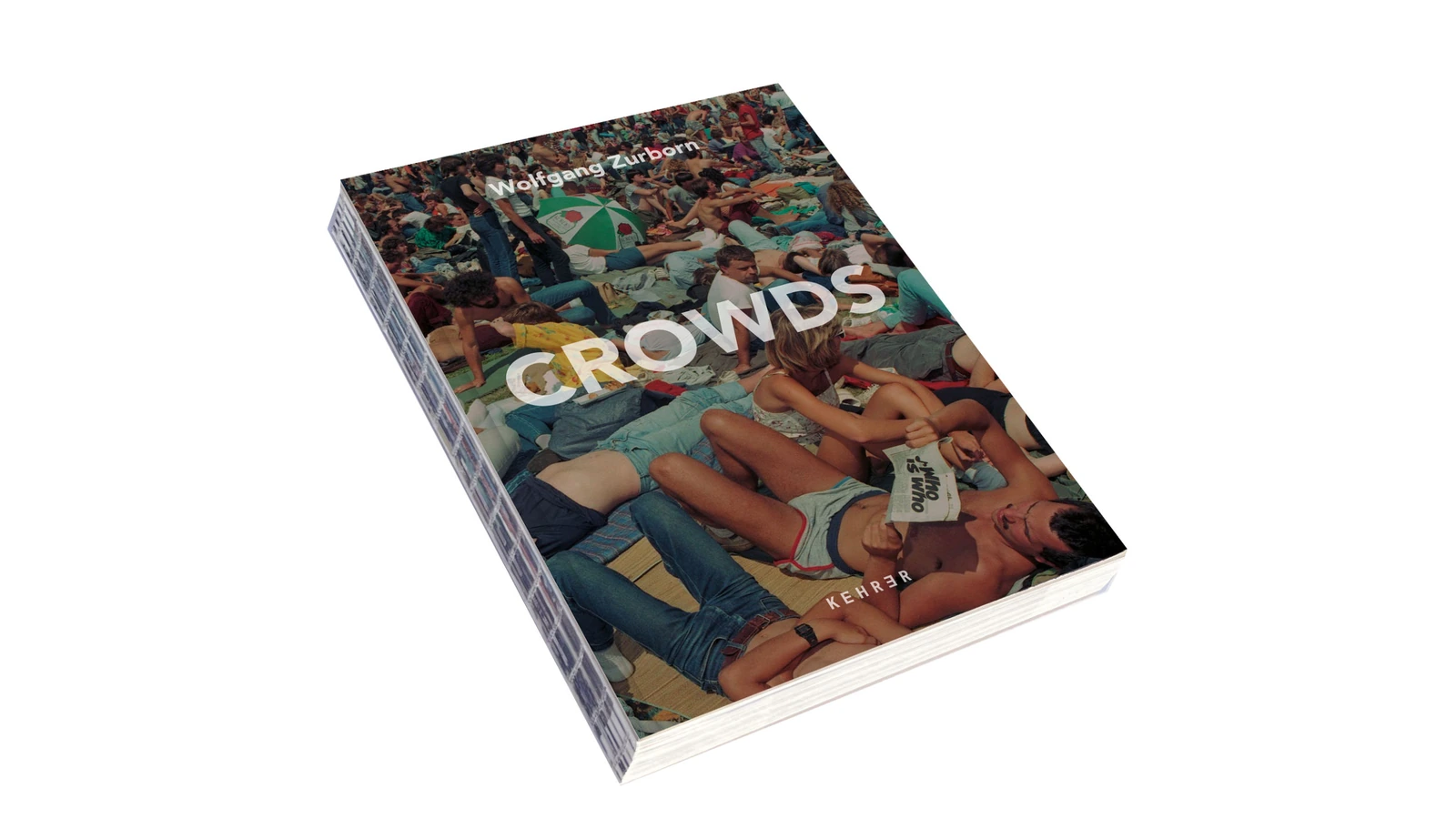
- The 272-page book is published by Kehrer Verlag.
Wolfgang Zurborn turns his attention to crowds of the 1980s and 1990s through hundreds of digitized analogue colour negatives brought together in the book Crowds.
The German photographer began revisiting his archive during the pandemic and scanned hundreds of colour negatives. The result is not simply a nostalgic return to a time before smartphones and social media, but a study of how people occupy public space and relate to one another inside groups.
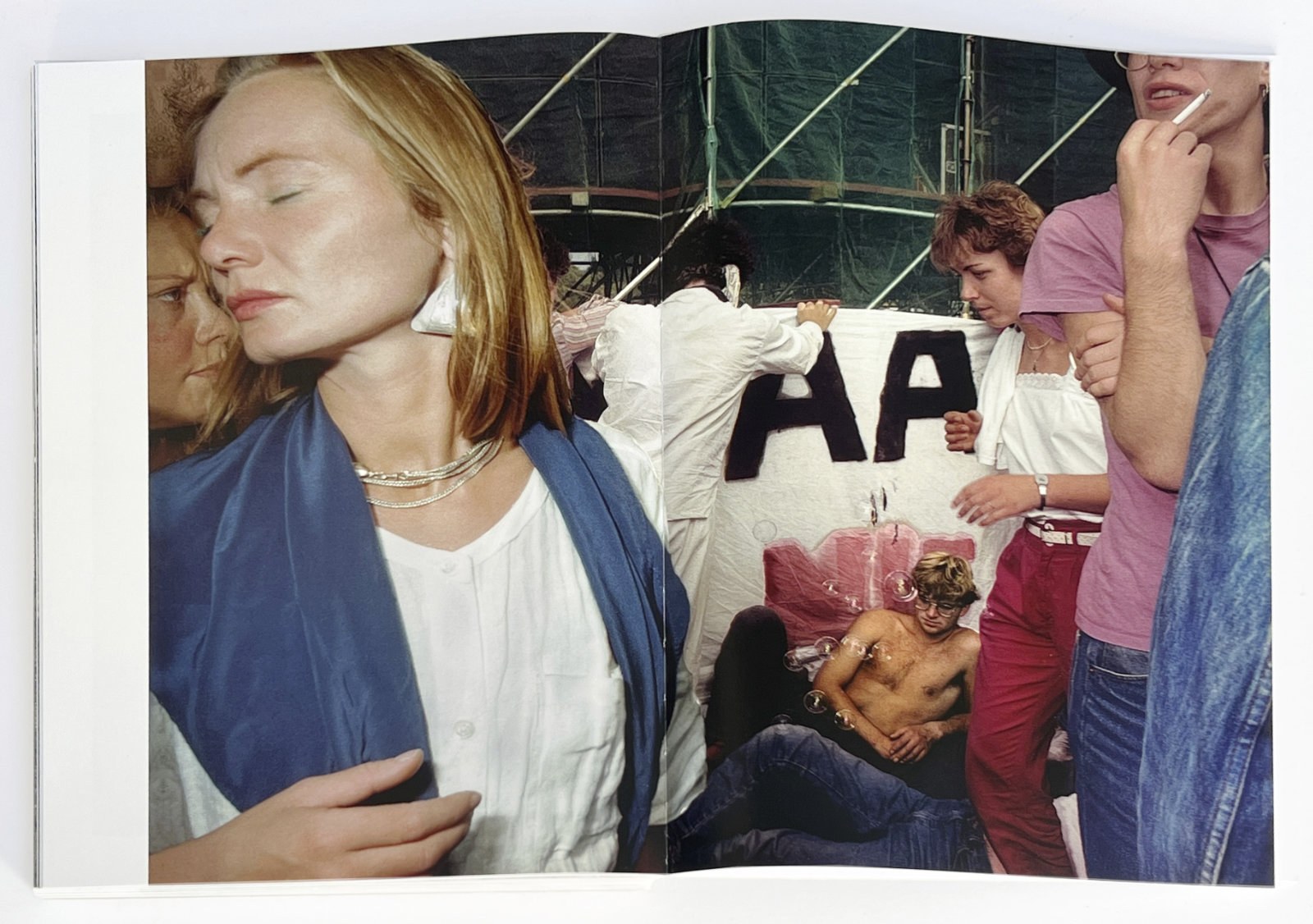
The photographs come from political, sporting and religious gatherings, tourist sites and entertainment venues. Zurborn does not treat the crowd as an anonymous mass; he looks for gestures, glances, distances and small relationships that remain visible within a collective experience.
The individual does not disappear into the crowd
In the official presentation of the project, Zurborn explains that he is interested in people together with their social conditioning, collective ties and media influences. His protagonists therefore neither vanish into the crowd nor appear detached from their surroundings.
Street photography becomes a way of observing relationships. Bodies, signs, colours, glances and momentary reactions coexist within the same frame. The point is often not the event itself but what happens around it: how people wait, look, touch one another or respond to the intensity of a place.
Analogue colour photography as a dense visual archive
Crowds is also notable as an example of analogue colour photography. Zurborn works from within the crowd and uses colour, proximity and dense composition to hold several layers of information in a single frame.
An earlier text about his work, republished on his official website, describes his style as combining documentary photography with a strongly subjective way of seeing, including the use of a wide-angle lens at close range. The result places the viewer inside the scene rather than at a distance from it.
Before smartphones, without idealising the past
Seen today, the photographs inevitably gain another layer because most were made before smartphones and modern social platforms became a near-constant presence at public gatherings. Attention in the frames is directed toward the event, other people and the surrounding space, without the recurring visual presence of screens that marks many contemporary images of crowds.
That does not prove that people were “more social” or that public space worked better. These are documents of particular places and moments. Their value lies in allowing us to compare visible behaviour and body language across periods without turning the comparison into a simplistic story of decline or nostalgia.
A book that organises chaos rather than explaining it away
The book is published by Kehrer Verlag in 272 pages, in a large format of about 19.8 × 28 cm with open binding. The official presentation lists 129 colour illustrations and an interview between Zurborn and Alasdair Foster.
The sequence does not follow a linear order of place and time. Zurborn instead uses a rhythmic arrangement that foregrounds body language and sensory overload. As he explains, the aim is to create visual order without removing the chaos that gives these scenes their vitality.
More information is available on the official Kehrer Verlag page and the Crowds project website.
What we think
The strength of Crowds is that it does not need a simplistic “then versus now” argument. The pictures matter because they observe crowds from close range while allowing individuals to remain visible inside the collective scene. At the same time, the return to decades-old analogue colour negatives demonstrates how important a personal photographic archive can become when revisited with new questions.
Frequently asked questions
What is Crowds?
It is a book and photographic project by Wolfgang Zurborn bringing together crowd photographs from his analogue colour archive, mainly from the 1980s and 1990s.
How was the project created?
During the lockdown period Zurborn revisited his archive and scanned hundreds of analogue colour negatives, which became the basis for the book and related exhibitions.
What kinds of scenes did he photograph?
Political, sporting and religious events, tourist locations, festivals and other forms of public entertainment.
Is the book simply a nostalgic look at life before smartphones?
Not necessarily. The photographs invite comparison with contemporary public behaviour, but the project is primarily concerned with relationships between individuals, crowds and their surroundings.