

Summary
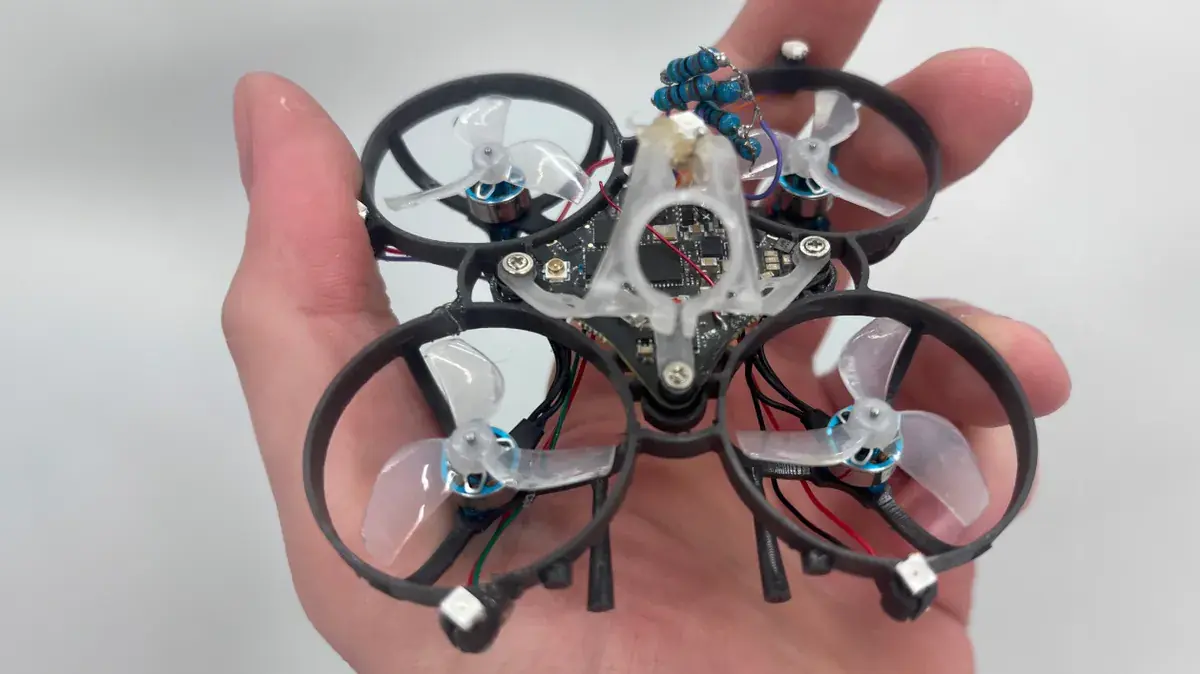
- A 40-gram autonomous drone uses AI and sonar to detect mosquitoes.
- It identifies insects by their wingbeat signatures.
- The system eliminates insects without chemical sprays.
- The technology is still under development.
- Researchers also highlight potential ecological concerns.
A new autonomous micro-drone uses artificial intelligence and sonar to detect and eliminate mosquitoes without relying on chemical insecticides.
A startup has introduced a prototype weighing just 40 grams that can autonomously detect and intercept flying insects. The system combines ultrasonic sonar, microphones and AI algorithms to recognize the unique wingbeat signatures of mosquitoes. As a proof of concept, the team successfully demonstrated its first autonomous mid-air interception of a flying moth.
The long-term goal is to provide an alternative to insecticides and sprays while helping reduce mosquito-borne diseases such as malaria, dengue and Zika. However, the technology is still in its early development stage and has not yet been validated in real-world conditions.
How it works
Instead of cameras, the drone relies on phased-array sonar and microphone arrays to build a 3D map of its surroundings. By analyzing Doppler signatures and wingbeat frequencies, it can distinguish mosquitoes from other flying insects.
The drone neutralizes insects mechanically using its propellers rather than chemicals.
Current status
The prototype is still under development. At present, some processing is performed using external computing hardware, although the company plans to move all processing onboard.
The company intends to launch the product first in the United States, with a price of around $1,100 or through a subscription model, subject to further development and approvals.
Extremely excited to announce our first air-to-air kill of a flying moth by an autonomous micro-drone. This is a big step towards completely eradicating mosquitoes. pic.twitter.com/UhtNqwXCQI
— Alex Toussaint (@alextoussss) July 14, 2026
Concerns
Scientists note that widespread mosquito eradication could have ecological consequences because mosquitoes play roles in food chains and aquatic ecosystems.
The system will also require extensive real-world testing before its effectiveness and selectivity can be confirmed.
What we think
The concept of an autonomous drone that controls mosquitoes without chemicals is promising and showcases the potential of AI and robotics. Nevertheless, it remains an experimental technology until its performance is demonstrated at scale.
Frequently Asked Questions
How does it detect mosquitoes?
It uses sonar, microphones and AI algorithms that recognize mosquito wingbeat signatures.
Does it use insecticides?
No. It physically intercepts insects without chemical sprays.
Is it commercially available?
Not yet. The technology is still under development.
Can it eradicate mosquitoes?
That is the company’s long-term ambition, but it has not been scientifically demonstrated in real-world conditions.