

Summary
- Yorgos Lanthimos chose VistaVision for «Bugonia» despite the noise made by older cameras.
- Robbie Ryan used a rebuilt Wilcam W11 for dialogue scenes.
- The choice reflected the director’s preference to avoid ADR dialogue replacement.
- Its 2,000-foot magazines provided approximately ten minutes of recording.
Yorgos Lanthimos wanted to shoot «Bugonia» in VistaVision, but one obstacle had little to do with image quality: the loud mechanics of vintage film cameras could end up on the dialogue tracks.
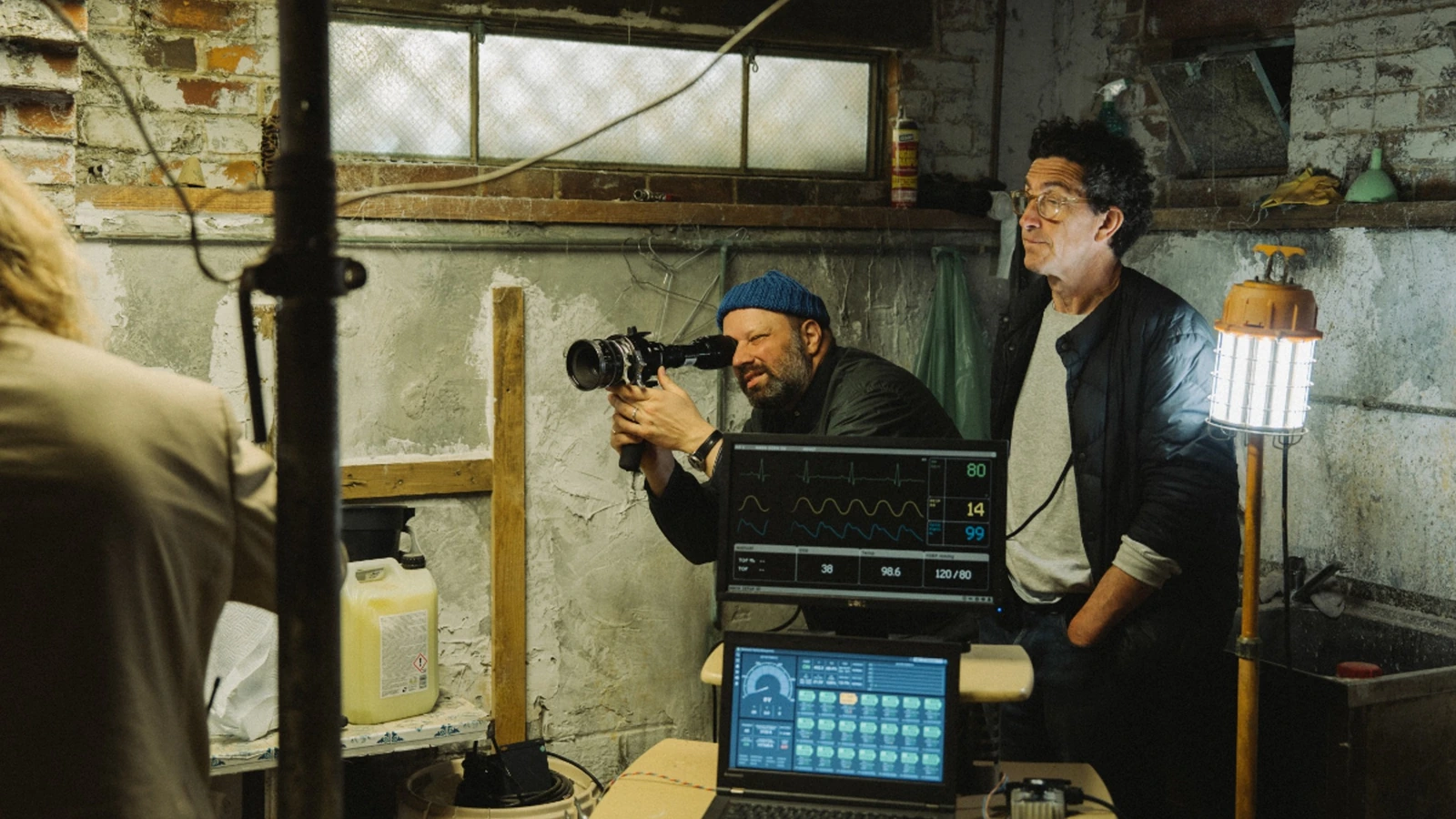
Cinematographer Robbie Ryan explained at The Hollywood Reporter’s cinematographers roundtable why the production turned to a rare, rebuilt Wilcam W11. Recording usable dialogue on set mattered because Lanthimos prefers not to rely on ADR, the process of replacing dialogue after filming. The relevant exchange starts at approximately 11:55 in the video.
Why VistaVision presented a sound problem
VistaVision uses regular 35mm film, but transports it horizontally through the camera. Each frame occupies eight perforations (8-perf) instead of the four used in conventional vertical 35mm photography. This produces approximately twice the negative area, supporting fine detail and a less conspicuous grain structure.
The trade-off is the complex mechanism needed to move the film rapidly. Older VistaVision cameras are noisy enough to interfere with dialogue recording, especially in enclosed spaces. On «Poor Things», the crew used a noisy Beaumont VistaVision for a sequence without synchronized dialogue. «Bugonia», by contrast, places much of its action in a basement, with characters talking at close range.
The filmmakers’ approach to gear can also be seen in Robbie Ryan’s lens choices for «Poor Things», where a distinctive optical look called for demanding equipment.
What ADR is and how the process works
ADR stands for Automated Dialogue Replacement: recording a line again with the original actor in a controlled studio after principal photography. It is not foreign-language dubbing. The goal is to replace or supplement production dialogue that suffers from camera noise, wind, traffic or another sound problem, or to change a line after shooting.
- Identify the lines: the dialogue editor and sound team mark the exact words or phrases that need rerecording.
- Play back the scene: the actor watches the picture, often with timecode cues or beeps to indicate when a line should begin.
- Perform new takes: the actor repeats the line, matching the visible lip movements and trying to recover the emotion and rhythm of the original performance.
- Edit and sync: the dialogue editor selects takes, aligns them to picture and corrects timing differences.
- Blend into the scene: the mixing team matches tonal character, reverberation and room ambience so that the newly recorded line fits the location sound.
ADR is a standard and often indispensable filmmaking technique. Yet repeating a line in another room and at another time can alter the breathing, pacing and intensity of a performance. On this production, Lanthimos wanted to preserve as much as possible of what the actors delivered and the sound team captured during the take.
The rebuilt Wilcam W11
Ryan worked with Scott Smith and Marty Mueller, specialists experienced in restoring large-format film cameras. The Wilcam W11 had undergone electronic and motor upgrades to make it more workable and quieter, along with a 2K video tap and a Panavision lens mount. It was substantially quieter than the Beaumont, though not completely silent.
The camera offered another important advantage: 2,000-foot film magazines. A 1,000-foot load in conventional 35mm photography runs for roughly ten minutes at 24 fps. In VistaVision, twice as much film is used for each frame, cutting that duration to about five minutes. A 2,000-foot load restored approximately ten minutes per magazine, reducing interruptions.
The practical difficulties did not vanish. Ryan has described reloads taking about five minutes, cumbersome horizontal magazines and limitations on fast camera moves: a rapid whip pan could jam the transport mechanism.
Using a large negative for intimate portraits
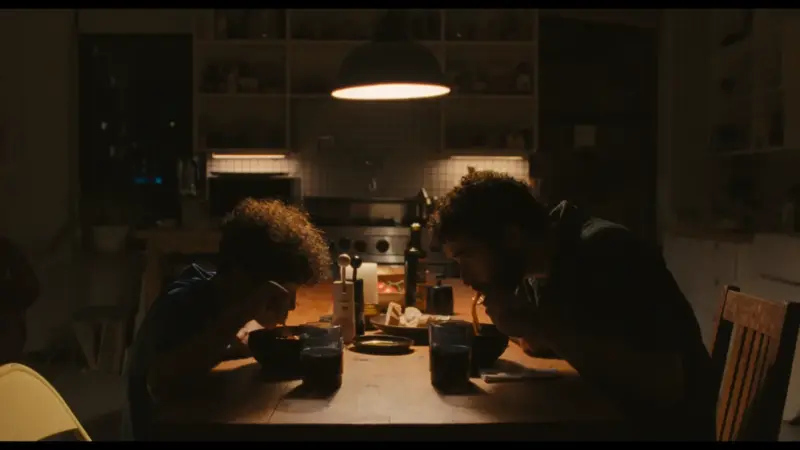
VistaVision may be associated with sweeping cinematic spectacle, but Lanthimos and Ryan used it on «Bugonia» for intimate work: close-ups and faces in the tight basement set. The larger negative let them preserve facial detail while using shallow depth of field where it served the scene.
They did not rely on a single camera for every situation. The Wilcam W11 principally served dialogue scenes, while the louder Beaumont could be used when dialogue was not being recorded. The camera choice therefore followed the needs of each scene as well as the film’s intended look.
What we think
This is a good reminder that image and sound cannot be planned in isolation. A camera may produce a spectacular negative, but when its mechanism masks an actor’s voice, the problem moves straight into post-production. Choosing the Wilcam was not merely an exercise in film nostalgia. It was a practical compromise between the image the director wanted and the sound a scene required.
That does not make ADR a bad technique; it can save a scene when production sound is unusable or a story needs a revised line. But anyone who has worked on a set knows how difficult it can be to ask an actor, weeks later, to recreate the timing and energy of a particular moment. Lanthimos’ preference puts continuity of performance first, even when that makes the production technically harder.
Frequently asked questions
Is VistaVision the same as 70mm film?
No. VistaVision uses 35mm-wide film with horizontal transport and a larger eight-perforation frame. Its negative is larger than conventional 35mm, but the camera does not run 70mm film.
Does avoiding ADR mean there is no sound post-production?
No. Production dialogue can still be cleaned, edited and mixed, with ambience and sound effects added. That is different from bringing actors into a studio to rerecord their dialogue.