

Summary
- A cameraman stepped onto the field during a rugby match.
- Cheslin Kolbe collided with him after taking a kick.
- The South African player suffered a cut near his eye.
- The incident raised concerns about safety rules in sports coverage.
- Camera operators must remain in designated areas while the ball is live.
A cameraman is facing strong criticism after stepping onto the field during a rugby match and colliding with a South African player.
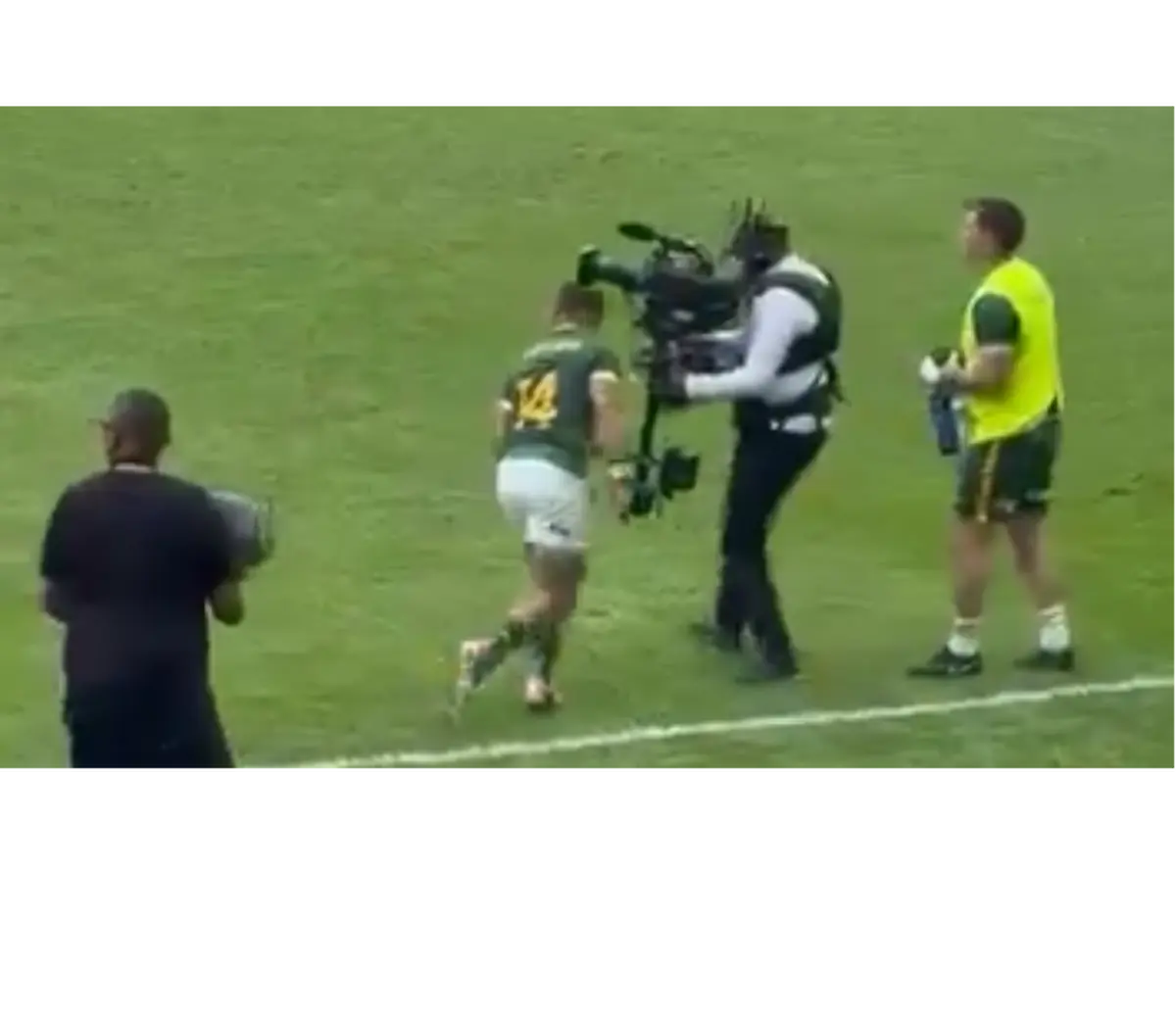
The incident happened during South Africa’s match against the Barbarians at Nelson Mandela Bay Stadium, when the cameraman entered the field immediately after a kick. Cheslin Kolbe had just sent the ball between the posts and, while continuing his run, collided with the cameraman and his equipment.
The incident matters because it once again highlights the boundaries that must be respected in sports coverage, especially in high-intensity matches where players do not expect third parties to be present on the field.
Cheslin Kolbe’s injury
Kolbe suffered a cut near his eye from the collision and required medical attention from the team staff.
After the incident, the player asked for his scrum cap, the protective headgear used in rugby to help reduce cuts and abrasions.
Footage of the collision triggered strong reactions on social media, with many criticizing the cameraman’s decision to cross into an area where he should not have been.
Why the move is considered a serious mistake
According to reports from the rugby world, television crews and field-side cameramen are not allowed to step onto the grass while the ball is live.
The reason is simple: players move at high speed and focus entirely on the game, their opponents, and their teammates. The sudden presence of a cameraman carrying heavy equipment can immediately create a risk of injury.
In this case, the cameraman appears to have wanted to follow the ball after the kick. However, the attempt to capture a better shot resulted in a dangerous collision.
Reactions from the media world
The incident was also criticized by people working in sports coverage. The main criticism was not only that the cameraman entered the field, but also that, according to those who watched the video, he did not appear to immediately stop and check on the player’s condition.
The case serves as a reminder that sports photography and video coverage require experience, discipline, and strict respect for safety rules. A good shot can never come before the physical safety of athletes.
What we think
The incident shows how delicate the balance is between dynamic broadcast coverage and safety on the field. Cameramen and photographers often work very close to the action, but boundaries exist for a reason. When they are crossed, the result can be dangerous both for athletes and for media professionals themselves.
Frequently Asked Questions
Which player was injured?
Cheslin Kolbe of South Africa was injured after colliding with a cameraman on the field.
Where did the incident happen?
The incident happened at Nelson Mandela Bay Stadium, during a match between South Africa and the Barbarians.
What injury did the player suffer?
Kolbe suffered a cut near his eye and required medical attention.
Are cameramen allowed to enter the field during a match?
No, field-side cameramen must remain in their designated positions while the ball is live.
Why did the incident cause reactions?
Because the cameraman’s entry onto the field created a dangerous situation and led to a player being injured.