

Summary
- Canon uses deep learning for subject recognition and tracking
- Its technology covers noise reduction, demosaicing and optical correction
- The goal is a more faithful capture rather than invented content
- This is not a blanket rejection of every form of generative AI
- The distinction concerns AI’s role in the photographic process
Canon is positioning artificial intelligence primarily as a tool for recording the real world more effectively: recognising subjects, reducing noise, reconstructing colour and correcting optical imperfections.
In comments from Go Tokura and Canon’s official technical material, deep learning works before or during image processing. The distinction matters: the system attempts to recover capture information more accurately rather than adding people, objects or scenes that were never in front of the lens.
Three areas of application
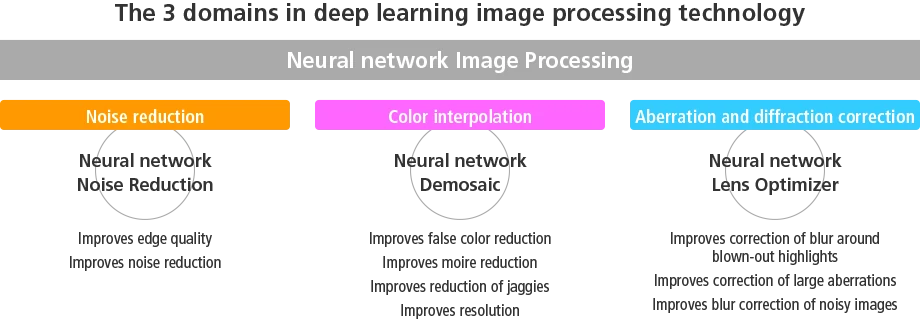
Canon groups its technology into recognition and detection, image optimisation and optical correction. In autofocus, deep-learning models help a camera identify people, animals and vehicles and maintain tracking.
Noise reduction and colour reconstruction
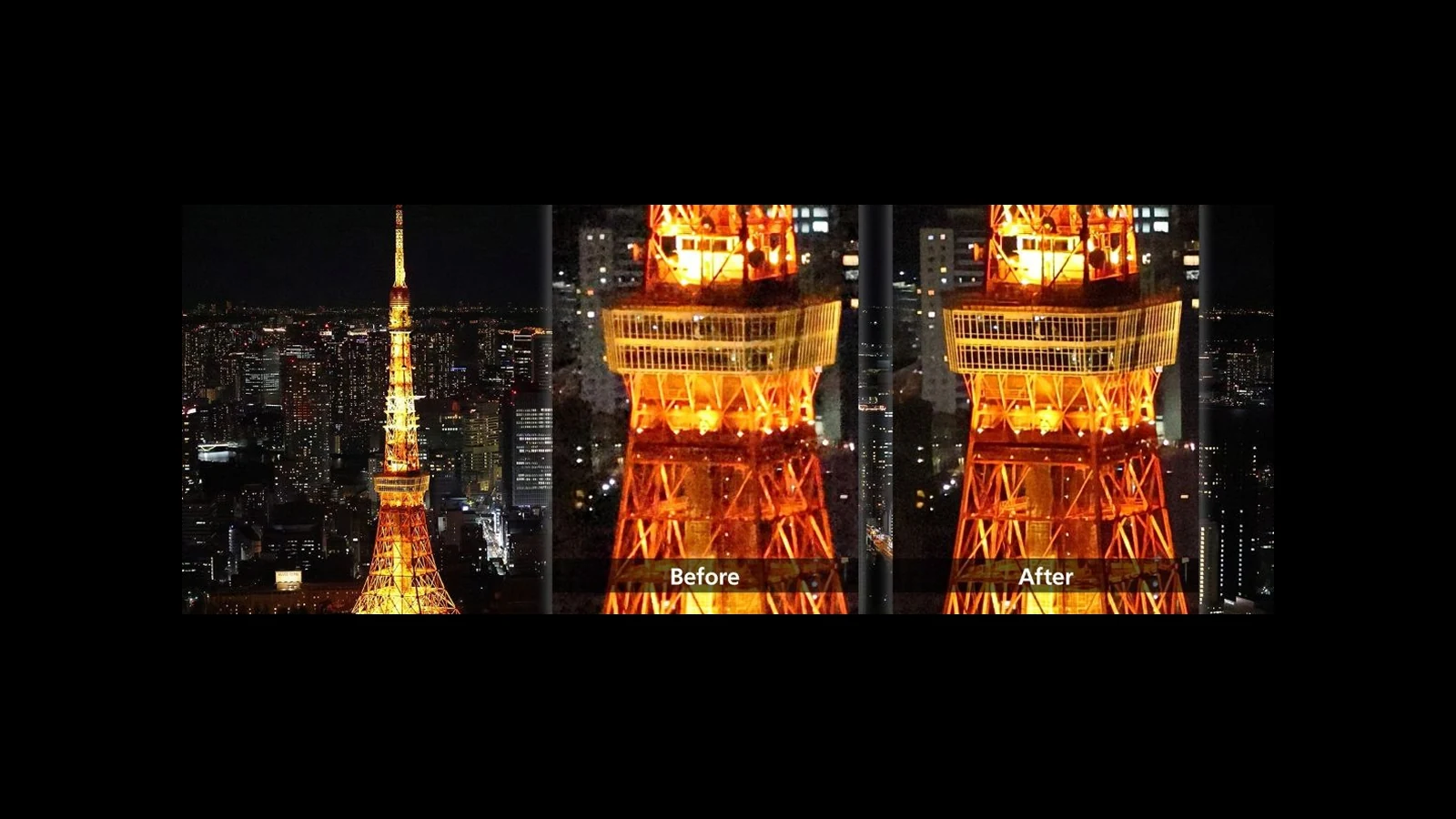
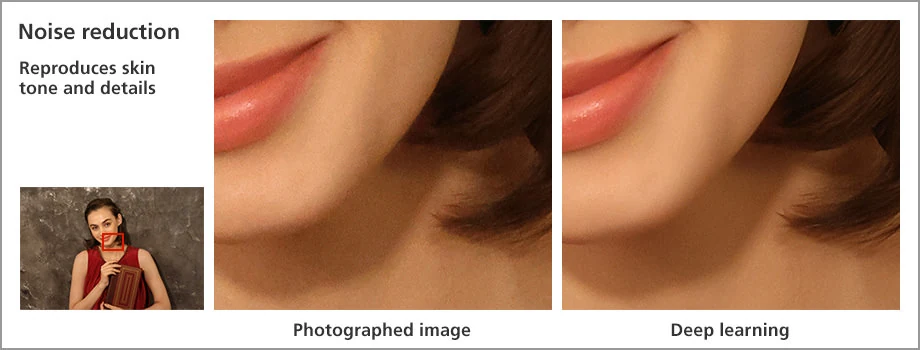
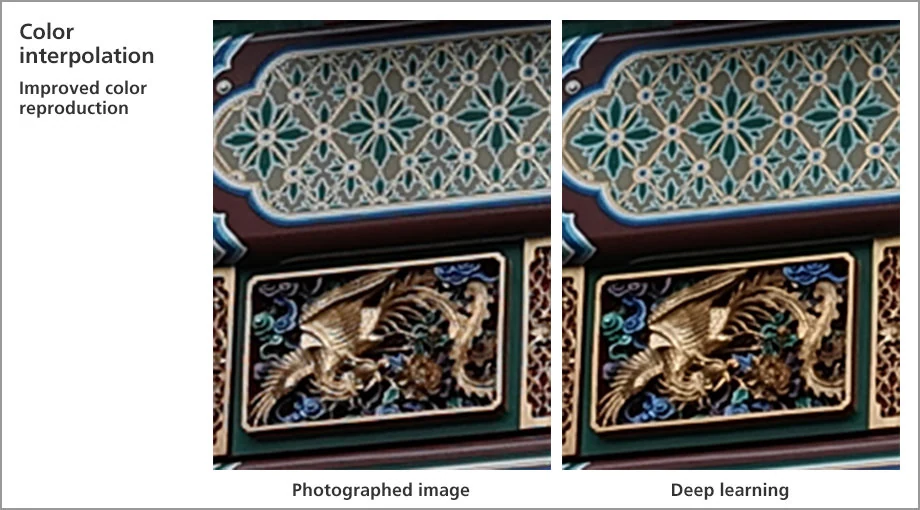
For noise reduction, the challenge is separating unwanted information from real detail, particularly at high ISO settings. In demosaicing, which reconstructs full colour information from sensor data, deep learning can reduce false colour and jagged edges.
Lens and diffraction correction
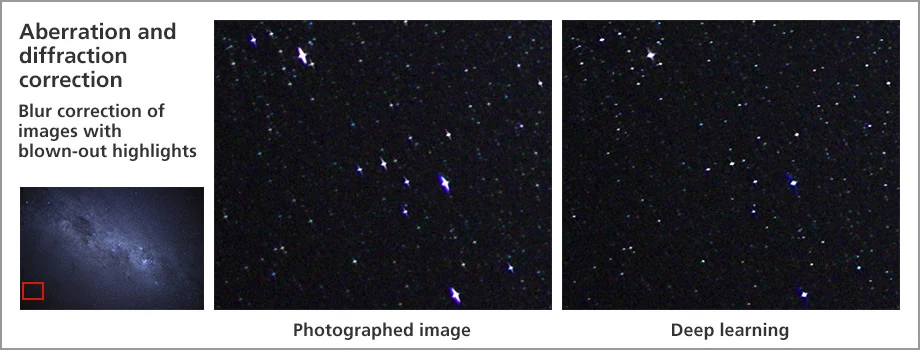
A third area addresses lens aberrations and detail lost to diffraction. The camera or software combines knowledge of the optical system with trained models to restore information altered during image formation.
Not a blanket rejection of generative AI
The position should not be read as a promise that Canon will never use generative AI. It describes the company’s current imaging priorities: tools that serve the photographer and improve fidelity or capture efficiency. The line between correction and invention remains central to photographic trust.
What we think
AI is already an invisible part of modern cameras. The useful question is not whether it exists but what it changes: whether it helps find focus and recover real detail or manufactures new content. Transparency about that distinction will matter increasingly.
Frequently asked questions
Where does Canon use AI?
In subject recognition and tracking, noise reduction, demosaicing and optical correction.
Has Canon rejected every form of generative AI?
No. The available material describes current imaging priorities, not a universal ban.