

Summary
- Two award-winning Capture the Dark 2026 images used different focal lengths
- The published rules prohibit merging images shot at different focal lengths
- “The Chasm” lists 20mm and 40mm lenses
- “A dialogue between space and human light” combines 20mm and 10mm captures
- DarkSky acknowledged inconsistencies in applying the rules but is standing by the winners
- PTTL has already published all Capture the Dark 2026 winners and their technical details
- PTTL had already covered this year’s winners in detail
- What the rules actually prohibit
- The case of “The Chasm”
- A second awarded image used different focal lengths
- DarkSky acknowledges inconsistencies but keeps the winners
- What happened to the social media comments
- Why the case matters to every entrant
- Photo contest credibility is becoming increasingly important
- What we think
- Frequently asked questions
Two award-winning images from Capture the Dark 2026 do not comply with a clear technical rule of the competition, with DarkSky International acknowledging inconsistencies in how the rules were applied while leaving the results unchanged.
DarkSky International’s Capture the Dark 2026 nighttime photography contest has come under scrutiny after it emerged that two awarded images combined photographs made at different focal lengths, a practice prohibited by the published rules. Technical information accompanying the winning images in the official gallery confirms the use of different lenses.
The case is particularly significant because it does not involve disputed AI detection or hidden technical information. The details revealing the issue were publicly available alongside the work, shifting attention to the competition’s verification process and the consistent application of its rules across more than 2,200 entries from over 30 countries.
PTTL had already covered this year’s winners in detail
PTTL published its detailed coverage of the Capture the Dark 2026 results and all the awarded photographers on August 15, including the technical information for their images. That report records 2,288 entries from more than 30 countries and covers the winners of the individual categories.
Those technical details are now especially important because the two disputed entries clearly list different focal lengths for parts of the final images.
What the rules actually prohibit
Capture the Dark allows techniques widely used in astrophotography, including stacking, tracking, panoramas, and blending multiple exposures.
For blends, however, the rules specify that the images must have been made from the same tripod position, during the same night, in the same shooting direction, and at the same focal length. For panoramas, the individual images must likewise be captured on the same night, from the same tripod position, and at the same focal length.
The prohibited techniques explicitly include merging images from different tripod positions or viewing directions, from different nights, at different focal lengths, or combining daylight foregrounds with night skies. The different-night restriction has an exception only for the Deep Sky category.
The case of “The Chasm”
Tom Rae’s “The Chasm” won first place in the Creatures of the Night category.
DarkSky’s official results page describes the photograph as a “Tracked Panorama” and lists two Nikon camera bodies, the Z8 and Z7IIA, together with two lenses of different focal lengths: a Nikkor 20mm f/1.8 and Sigma 40mm f/1.4. The same information appeared in PTTL’s original coverage of the results.
The image was created in Waitomo, New Zealand, following a descent into a cave, and combines the starry sky with glow worms. The issue is not the visual quality or technical difficulty of the photograph, but that the published technical information does not appear compatible with the same-focal-length rule.
A second awarded image used different focal lengths
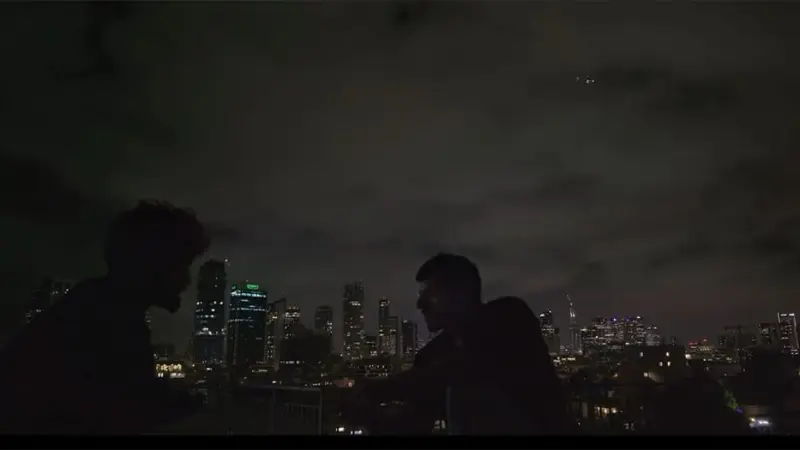
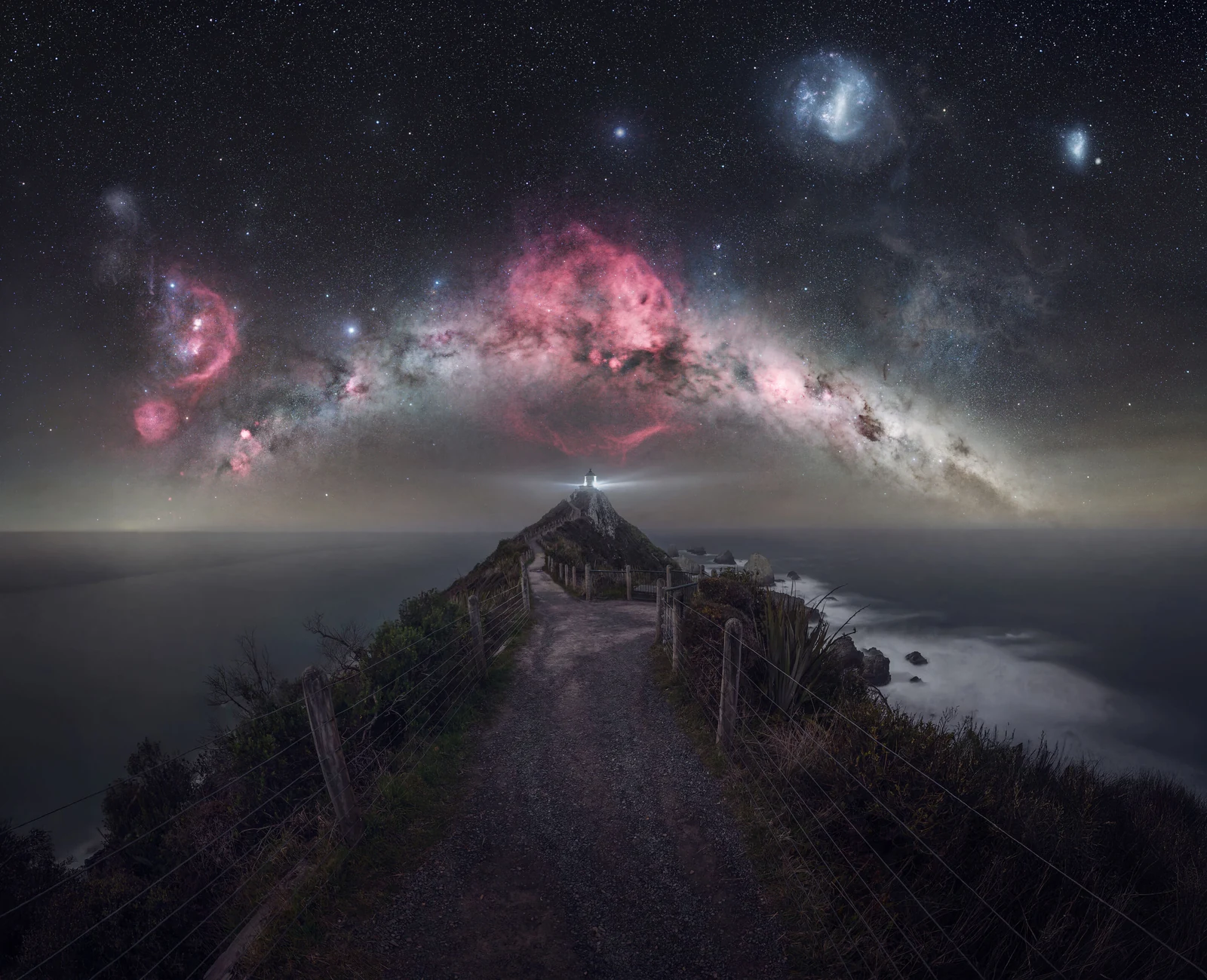
A similar issue affects Mikel Iraeta’s “A dialogue between space and human light,” which finished second in The Impact of Light Pollution category.
The image is listed as blended. DarkSky says a Nikon Z6a with a Nikkor Z 20mm f/1.8 was used for the sky, while a Nikon Z8 with a Laowa 10mm f/2.8 was used for the ground. The final image therefore combines 20mm and 10mm captures even though the published blend rule requires the same focal length.
Importantly, neither this image nor “The Chasm” appears to involve an attempt to hide the equipment used. The different lenses were openly declared and published by the organizer. That makes pre-award eligibility checking the central question.
DarkSky acknowledges inconsistencies but keeps the winners
In a statement to PetaPixel, DarkSky International acknowledged that there had been inconsistencies in how the rules were interpreted and applied during judging. At the same time, the organization said it stands by the selected winners and considers the 2026 decisions final.
DarkSky argued that human judgment remains an important element when evaluating the creativity and nuance of each entry and said it would seek ways to improve its processes and guidelines for future contests.
This is also where much of the criticism is focused: using different focal lengths is not a subjective aesthetic judgment but a technical detail that can be directly checked against a written rule.
What happened to the social media comments
Part of the controversy also moved to social media, where complaints were made about comments relating to the results being disabled or removed.
DarkSky told PetaPixel that its moderation actions were prompted by aggressive and harassing behavior toward staff, judges, and winning photographers, while maintaining that constructive criticism remains permitted. PetaPixel said it did not find a large number of specific critical comments on the Instagram post it examined and that corresponding Facebook posts showed no public comments.
Criticism of how the rules were enforced is separate from personal attacks against the photographers. Based on the available evidence, there is no indication that the two creators attempted to conceal how their images were made.
Why the case matters to every entrant
Capture the Dark is an international competition with thousands of entries and multiple categories. DarkSky reports more than 2,200 submissions from over 30 countries, while PTTL’s detailed coverage of this year’s results records a total of 2,288.
In a competition of this scale, technical restrictions do not affect only the eventual winners. They also influence the decisions of everyone who reads the terms before creating or selecting an image to submit.
A photographer who avoids a particular combination of captures because the rules prohibit it may deliberately restrict their creative options. That is why consistent rule enforcement is a fundamental part of fair competition.
Photo contest credibility is becoming increasingly important
This case differs from several recent photography competition controversies because it does not concern generative AI.
PetaPixel notes that 2026 has already seen competitions dealing with AI or other rule violations, including Hasselblad Masters, a National Wildlife Federation contest, and a Tokina competition.
The Capture the Dark case is different and, from a verification standpoint, simpler: the relevant technical information had already been declared. No forensic analysis or AI detection system was necessary, only a comparison between the technical data and the published rules.
What we think
The two images remain impressive photographic works, and the available evidence does not establish an intention by the photographers to deceive the competition. The main problem lies in how the organizer applied its own rules.
When a requirement is as specific as using the same focal length, inconsistent enforcement understandably raises questions about equal treatment of entrants. DarkSky’s acknowledgment that inconsistencies occurred is significant, but its decision to leave the results unchanged keeps open the question of how binding a contest rule really is when it is later found not to have been applied.
Frequently asked questions
Which rule is at the center of the controversy?
Capture the Dark’s rules prohibit merging images shot at different focal lengths. For blends and panoramas, the use of the same focal length is also explicitly required.
Which awarded images are affected?
They are Tom Rae’s “The Chasm,” the winner of Creatures of the Night, and Mikel Iraeta’s “A dialogue between space and human light,” which finished second in The Impact of Light Pollution.
Were the awards withdrawn?
No. DarkSky acknowledged inconsistencies in applying the rules but said it stands by the selected winners and considers the 2026 decisions final.
Are the disputed images AI-generated?
There is no indication that they are. This controversy concerns combining captures made at different focal lengths, not the use of generative AI.
Where can all the Capture the Dark 2026 winners be found?
PTTL has already published a detailed report covering all Capture the Dark 2026 winners, categories, and technical details.
Featured Image filename