

Summary
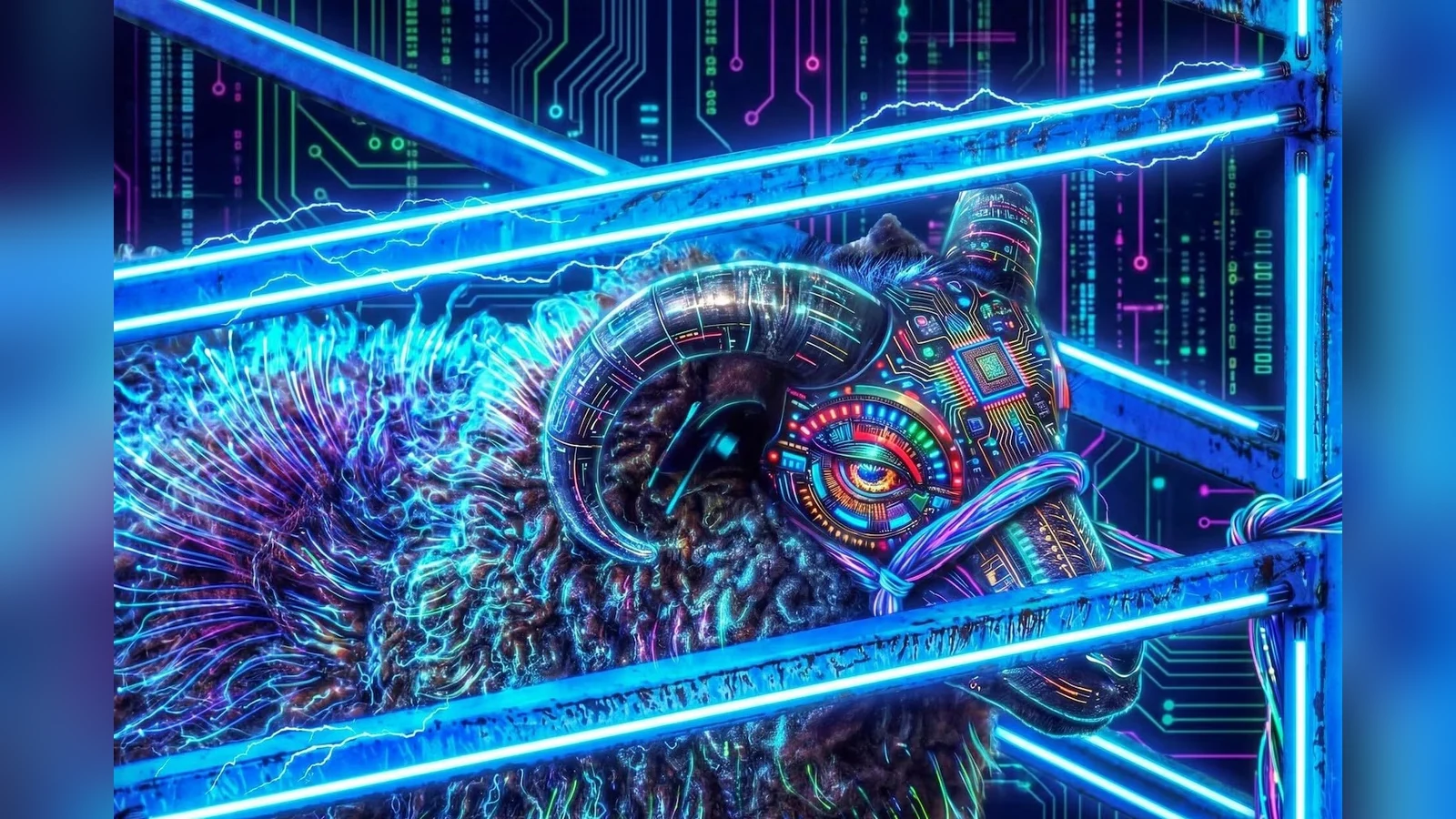
- Guy Alston’s “The R.A.M.” won the special “Neon Lights” category at the 2026 Maryland State Fair.
- The image started as Alston’s own photograph and was transformed with Nano Banana and other tools.
- The 2026 rules allowed embellishment in H42 and did not explicitly prohibit AI.
- The award triggered strong reactions from photographers and a debate over the boundary between editing and generation.
- For 2027, the competition added an explicit ban on AI-generated and AI-manipulated content.
An image that began as a real photograph but was extensively transformed with generative AI won first place in a Maryland State Fair photography category, triggering backlash and a rules change for 2027.
Guy Alston’s “The R.A.M.” won the H42 “Neon Lights” special category in Open Class Home Arts. Alston said he had photographed the ram several years earlier at an agricultural fair and later used Google’s Nano Banana, through Photoshop and other tools, to transform the original capture.
The case is notable because the 2026 rulebook did not explicitly ban artificial intelligence. H42 stated that entries “may be embellished,” while the general rules gave much broader freedom to Photoshop embellishment classes.
What the 2026 rules actually allowed
The official Photography section contained 40 standard classes and two special contests. For ordinary entries it said “Photoshop: Less is more,” giving red-eye removal, cropping and angle corrections as examples. In Photoshop embellishment classes, however, the same rulebook explicitly allowed far more experimentation.
“Neon Lights” was one of those special classes and specifically said “May be embellished.” First prize was $11. That wording helps explain why organizers maintained that the entry fit the rules as they were written for 2026.
The image was not created from scratch
Alston said he did not submit an image created entirely from a text-to-image prompt. His own photograph served as the base, followed by extensive AI editing. That distinction sits at the center of the debate: at what point does an edited photograph stop functioning as a photograph and become newly generated visual content?
The issue is practical rather than theoretical. Nano Banana has already raised questions about image credibility because it can radically alter the content of an existing photograph. In a photography competition, the word “editing” now needs more precise boundaries than it did in the era of conventional retouching.
Backlash and the 2027 rule change
The award sparked strong discussion on Reddit and among photographers who entered or followed the contest. Photography superintendent Sam Chamelin said volunteers handling hundreds of submissions cannot easily know the exact workflow behind every image and that the AI use was not known when the image was initially submitted.
The competition has now closed that gap for its next rulebook. For 2027, it added an explicit prohibition covering AI-generated images, generative fill, AI-created or replicated subjects and backgrounds, and other forms of AI-based image manipulation. Entries that violate the new rule will be disqualified.
The decision echoes other recent cases in which photography competitions have had to define generative AI more clearly. PTTL also covered Tokina withdrawing a winning image after AI-related complaints.
What we think
This case shows that the generic term “editing” is no longer sufficient for a photography competition. Removing an object, correcting color, and generating new subjects or backgrounds are materially different interventions and need different, explicit rules. The key point is that the organizers did not retroactively disqualify an entry that fit the 2026 wording; instead, they rewrote the framework for the following year.
Frequently asked questions
Which image won?
Guy Alston’s “The R.A.M.” won the H42 “Neon Lights” special category at the 2026 Maryland State Fair.
Was it fully AI-generated?
No. According to Alston, the base was his own photograph of a ram, which was then extensively transformed using Nano Banana and other tools.
Did the 2026 rules ban AI?
Not explicitly. The “Neon Lights” class allowed embellishment, and the general rules gave wider freedom to Photoshop embellishment classes.
What changes in 2027?
The new wording bans AI-generated images, generative fill, AI-created or replicated subjects and backgrounds, and other AI-based image manipulation.
How much was the first-place prize?
The official H42 program listed an $11 first-place prize.