

Summary
- “The Eye of Science” was produced in 1966 for Nippon Kogaku Kogyo, today’s Nikon.
- The 30-minute film shows optical-glass production, shaping, polishing and lens assembly.
- The process combined heavy industry, precision machinery and extensive manual work.
- The film received an Encouragement Award at the 1967 Japan Industrial Film Contest.
A 1966 industrial film shows how Nippon Kogaku Kogyo — today’s Nikon — turned optical glass into photographic lenses at a time when skilled human work remained central to almost every stage of production.
The 30-minute The Eye of Science, produced by Tokyo Cinema and planned for Nippon Kogaku Kogyo, follows the process from glass melting and selection through shaping, polishing and final optical assembly. Shot in Eastman Color, the film received an Encouragement Award at the Japan Industrial Film Contest in 1967.
From the furnace to an optical element
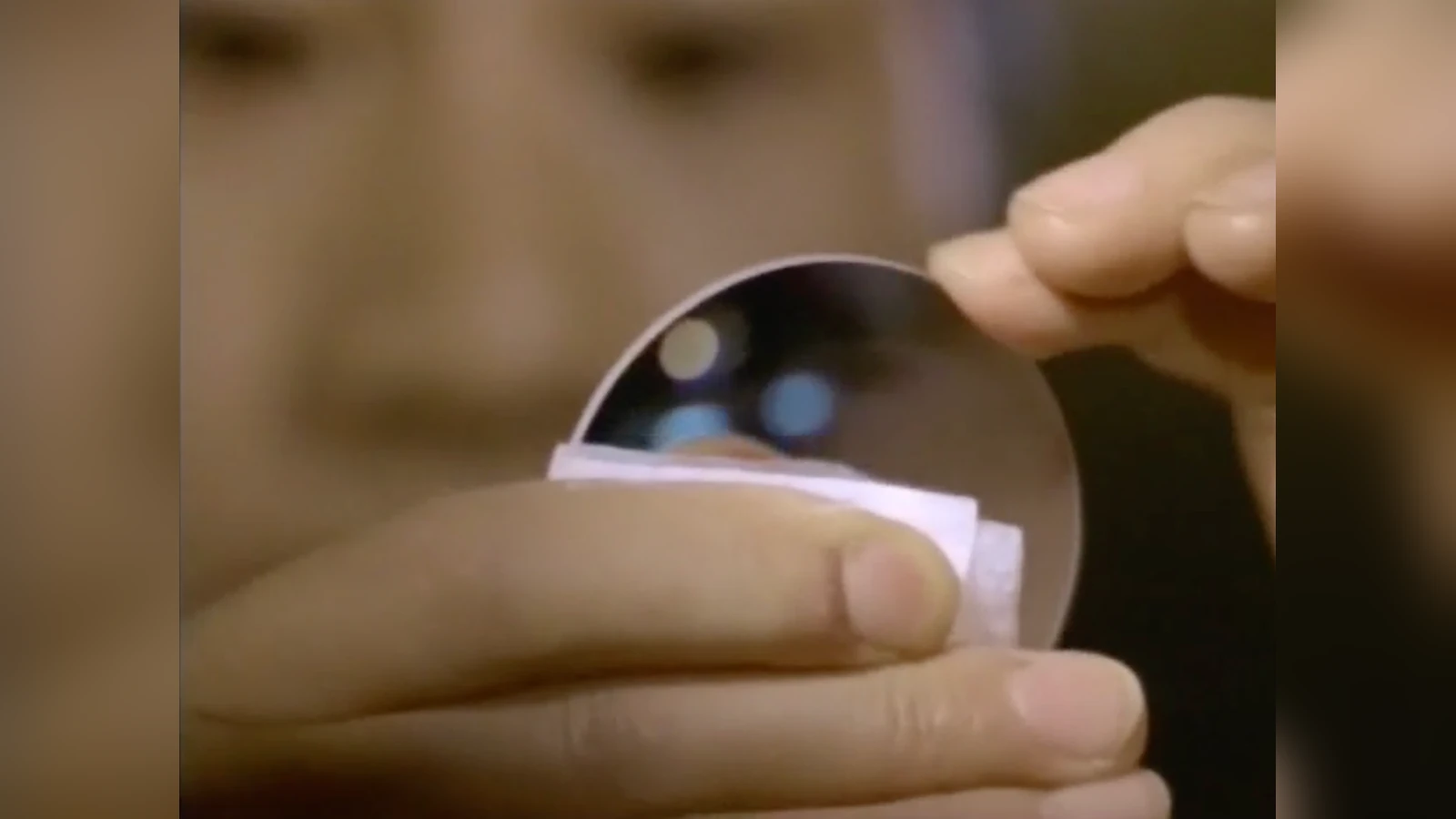
The most striking part of the film appears before anything resembles a finished lens. Production begins with the raw materials for optical glass and large masses of material removed from high-temperature crucibles. Suitable pieces are selected, reheated and pressed into the basic forms that will become optical elements.
Grinding and polishing follow. According to the material accompanying the film’s renewed circulation, the finishing process reached tolerances of only a few micrometers, requiring precision machinery, repeated inspection and substantial manual intervention.
Assembly was done by hand
The glass was only half the job. The film shows rows of workers placing optical and mechanical parts into metal lens barrels. Correct alignment was critical, because even a very small deviation could affect final image quality.
The production floor looks very different from today’s highly computer-controlled manufacturing. Here, industrial precision comes from a combination of machinery, measurement procedures and specialized human labor.
The film also shows cameras of the period
Although lens manufacturing is the most relevant part of the film for this story, the documentary also moves through Nippon Kogaku camera assembly. The Nikon F and Photomic variants appear, revealing the mechanical complexity behind a professional SLR of the period.
The value of the footage is not simply nostalgic. It is a rare visual record of how precision imaging equipment was produced before computer-aided design, automated measurement and modern machining systems transformed lens manufacturing.
What we think
The Eye of Science is most interesting to photographers and filmmakers as a record of the manufacturing process itself. It lets viewers follow the physical path from an irregular mass of glass to the component that ultimately determines how light reaches the image.
Frequently asked questions
When was The Eye of Science produced?
The film was made in 1966 by Tokyo Cinema for Nippon Kogaku Kogyo.
How long is it?
Its running time is approximately 30 minutes.
What does it show about lens manufacturing?
It shows optical-glass production and selection, reheating and shaping, grinding and polishing, and the hand assembly of optical elements into lens barrels.
Why is it interesting today?
Because it provides a direct visual record of optical manufacturing before the widespread use of modern computer-controlled design and production systems.