

Summary
- The Nikon F was released in June 1959 as Nikon’s first interchangeable-lens SLR
- It offered 100% viewfinder coverage, interchangeable finders and focusing screens
- Its stainless-steel F mount had a 44mm inner diameter and was designed to support heavy telephoto lenses
- The body weighed approximately 685 grams and was tested for 100,000 shutter cycles
- Sales exceeded 200,000 units in November 1965
- The Nikon Photomic FTN, based on the Nikon F, was used on Apollo 15 in 1971
- When the rangefinder reached its limits
- A new camera built on the Nikon SP’s foundations
- The 100% viewfinder and modular design
- The F mount and a decision that lasted for decades
- Durability, speed and industrial design
- From camera body to complete professional system
- Its arrival in photojournalism and the Olympics
- From Apollo 15 to Skylab
- What we think
- Frequently asked questions
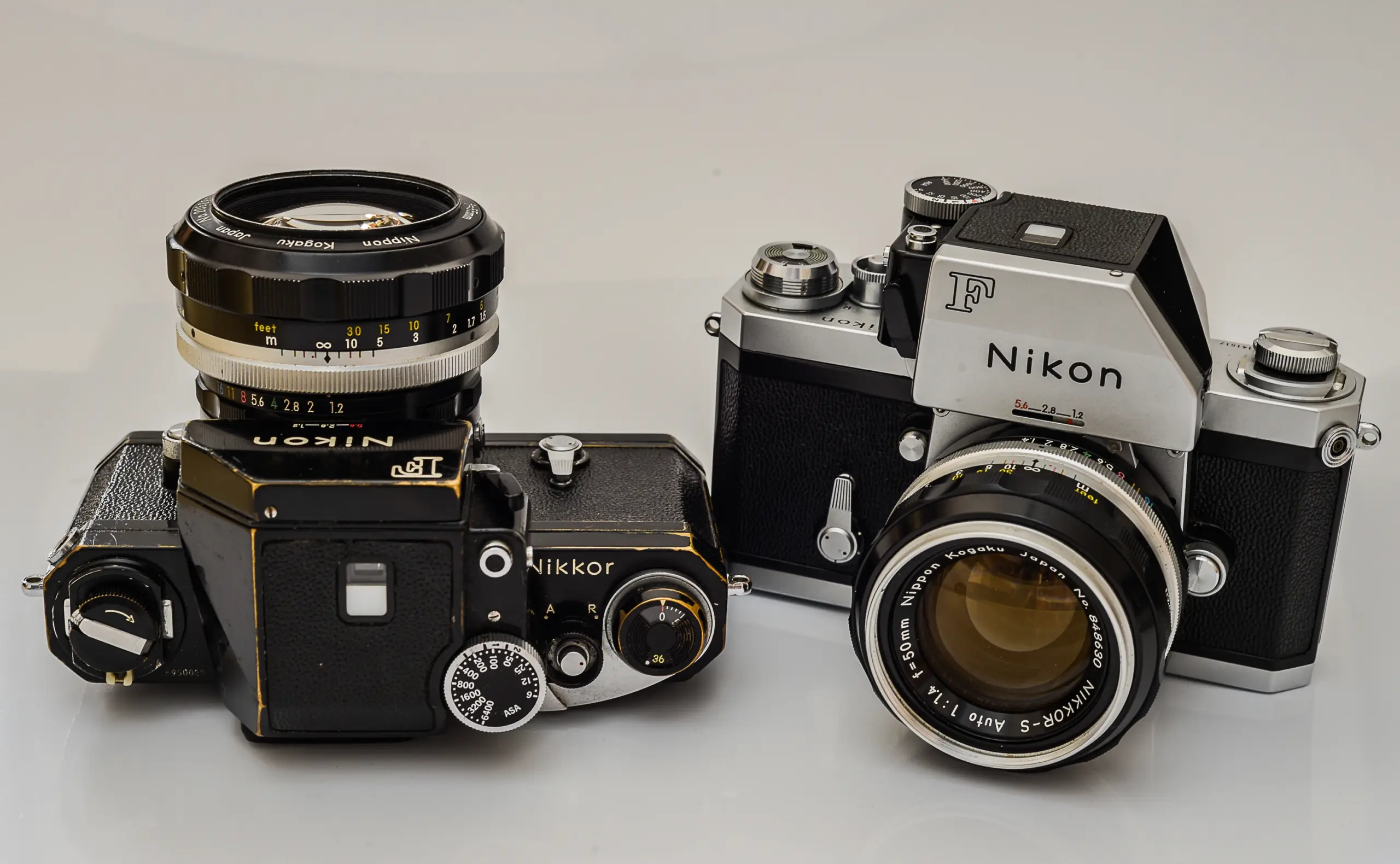
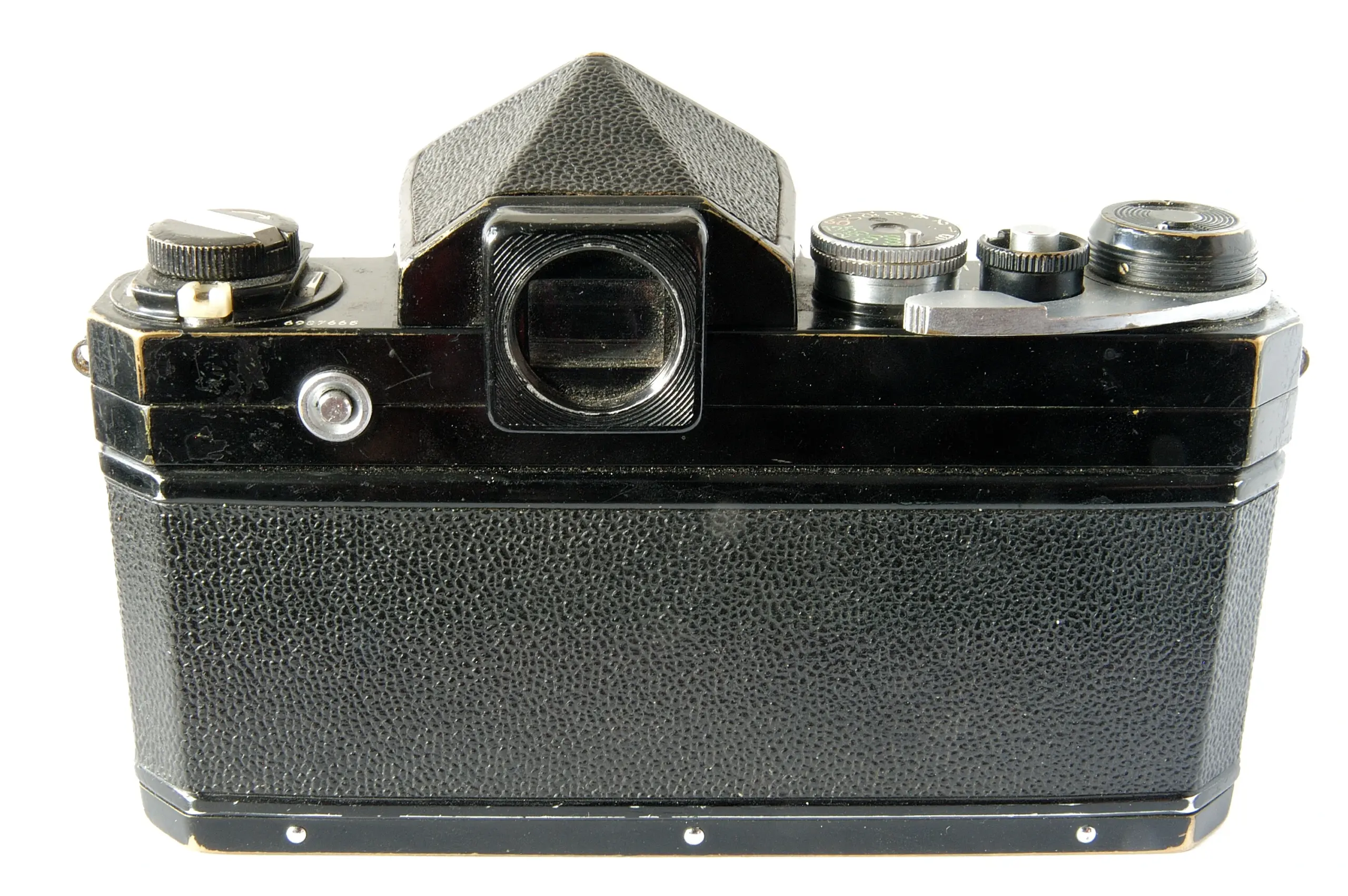
The Nikon F was released in June 1959 and, although it was not the first 35mm single-lens reflex camera, it brought together the features professional photographers needed in one durable and expandable system.
Nikon’s first interchangeable-lens SLR offered a viewfinder with 100% coverage, interchangeable prisms and focusing screens, an instant-return mirror, automatic diaphragm, titanium-foil shutter and motor-drive support. It remained in production for approximately 15 years, until 1973, while the F mount introduced with it would become one of the longest-lived system foundations in photographic history.
The Nikon F’s importance does not rest on a single “first.” It lies in the way Nikon combined technologies that had already begun to appear on the market with lenses, accessories, metering, motorized film advance and the reliability required for daily professional use. This complete ecosystem helped the small 35mm SLR move from being a flexible alternative to becoming a primary tool for photojournalism, sports and scientific photography.
When the rangefinder reached its limits
The Nikon F was not the first 35mm SLR. The Kine Exakta had appeared as early as 1936, while other manufacturers introduced individual solutions such as the pentaprism, instant-return mirror and automatic diaphragm during the 1950s. Nikon, meanwhile, had earned international recognition with its Nikon S, S2, SP and S3 rangefinders.
Rangefinders, however, had practical limitations. With long telephoto lenses, the photographer was not looking through the taking lens, while accurate framing, focusing and depth-of-field control became more difficult. Nikon offered a reflex housing for lenses beyond 135mm, but it was a bulky and complex solution. A true SLR was the logical next step.
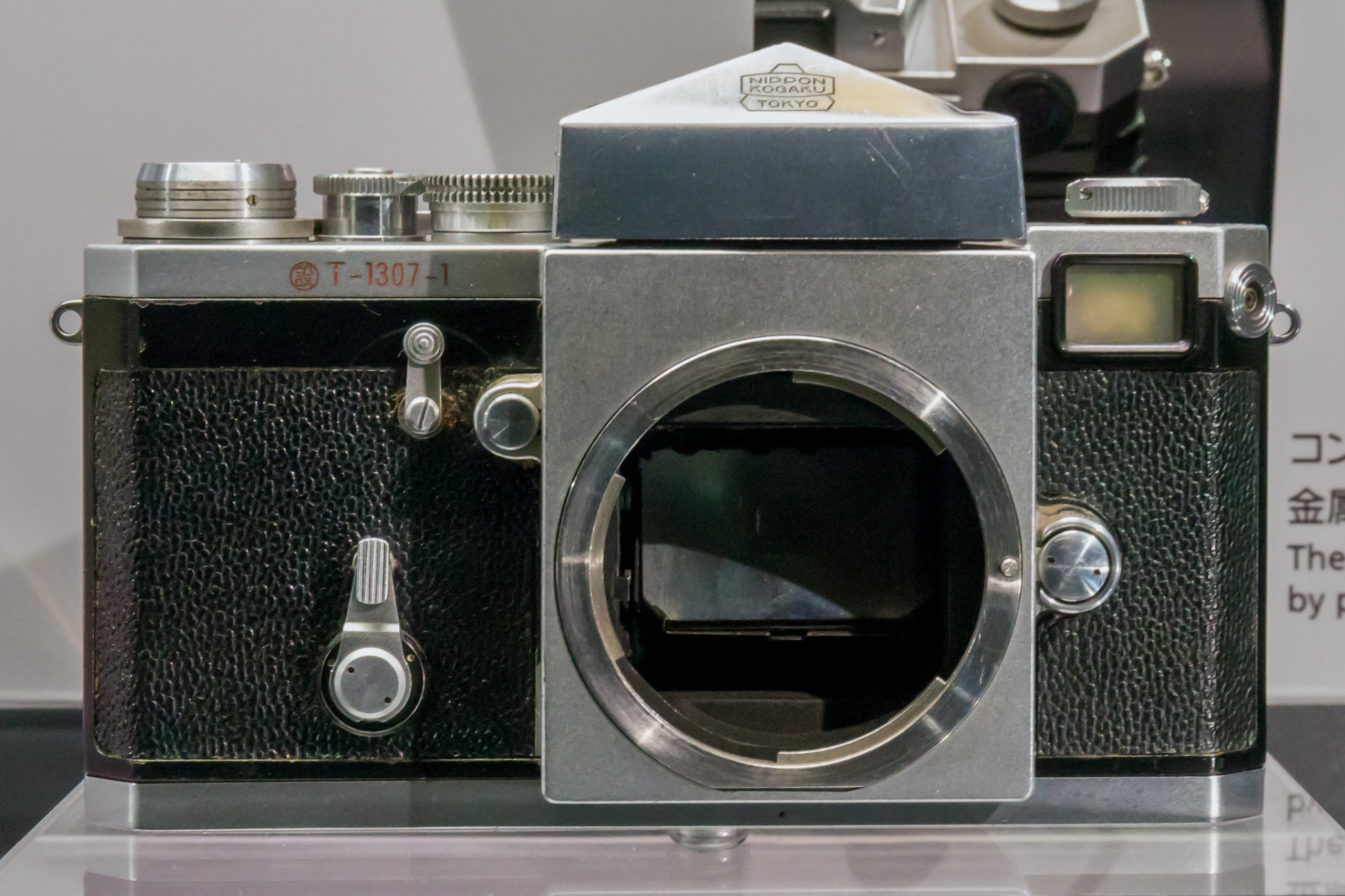
A new camera built on the Nikon SP’s foundations
Nikon began systematically studying SLR development around 1955 and ordered three prototypes in February 1957. To reduce development time and risk, it reused much of the manufacturing logic of the Nikon SP and S3. The shutter position, film-advance mechanism and several controls were retained, while the mirror box, pentaprism and new mount were designed from scratch.
The name “F” came from the word Re-Flex. According to Nikon’s official history, the letter R was considered difficult to pronounce in some languages, so F was chosen instead. The visual continuity with the Nikon SP remains evident today, but adding the mirror and prism transformed the body into an entirely different tool.
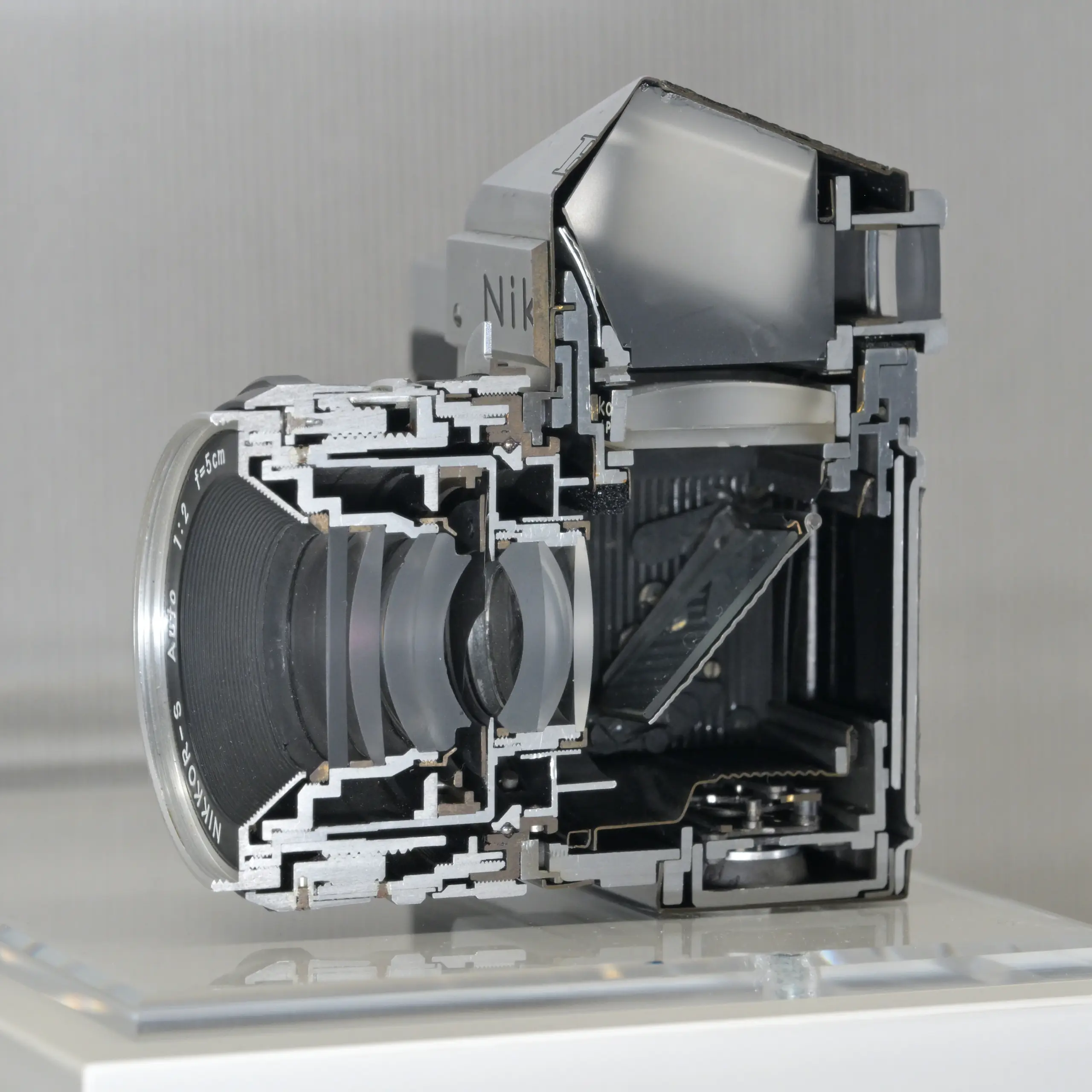
The 100% viewfinder and modular design
The Nikon F’s central advantage was that photographers viewed through the lens exactly what the film would record. Viewfinder coverage reached 100%, a particularly valuable feature for transparencies, photojournalism and any assignment where the frame had to be composed accurately at its edges.
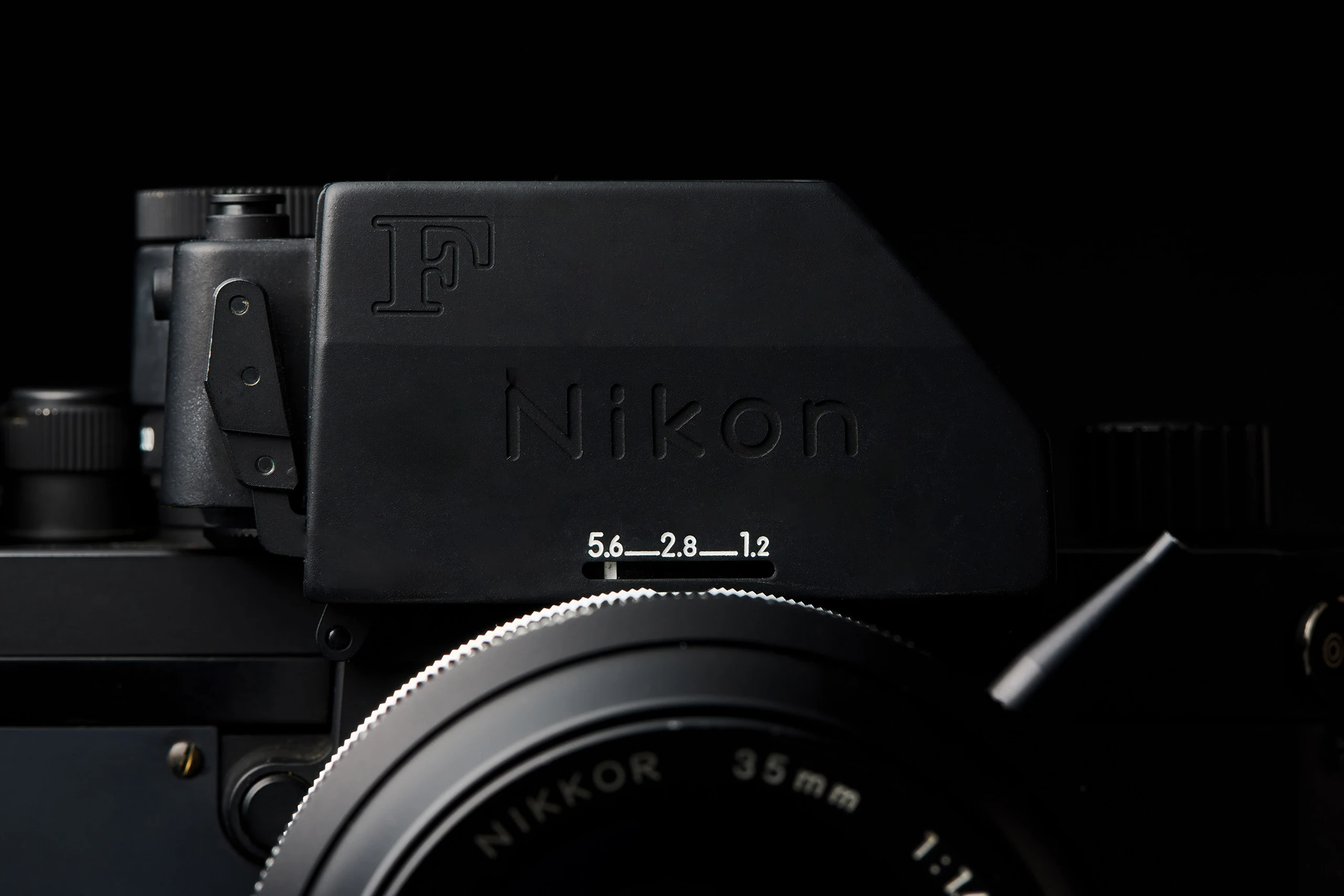
The pentaprism could be removed and replaced with a waist-level finder or, later, prisms with built-in metering. Focusing screens were also interchangeable, allowing the same body to adapt to different lenses and applications. The mirror returned immediately after exposure, the diaphragm reopened automatically, and mirror lock-up was available for special applications and certain ultra-wide lenses.
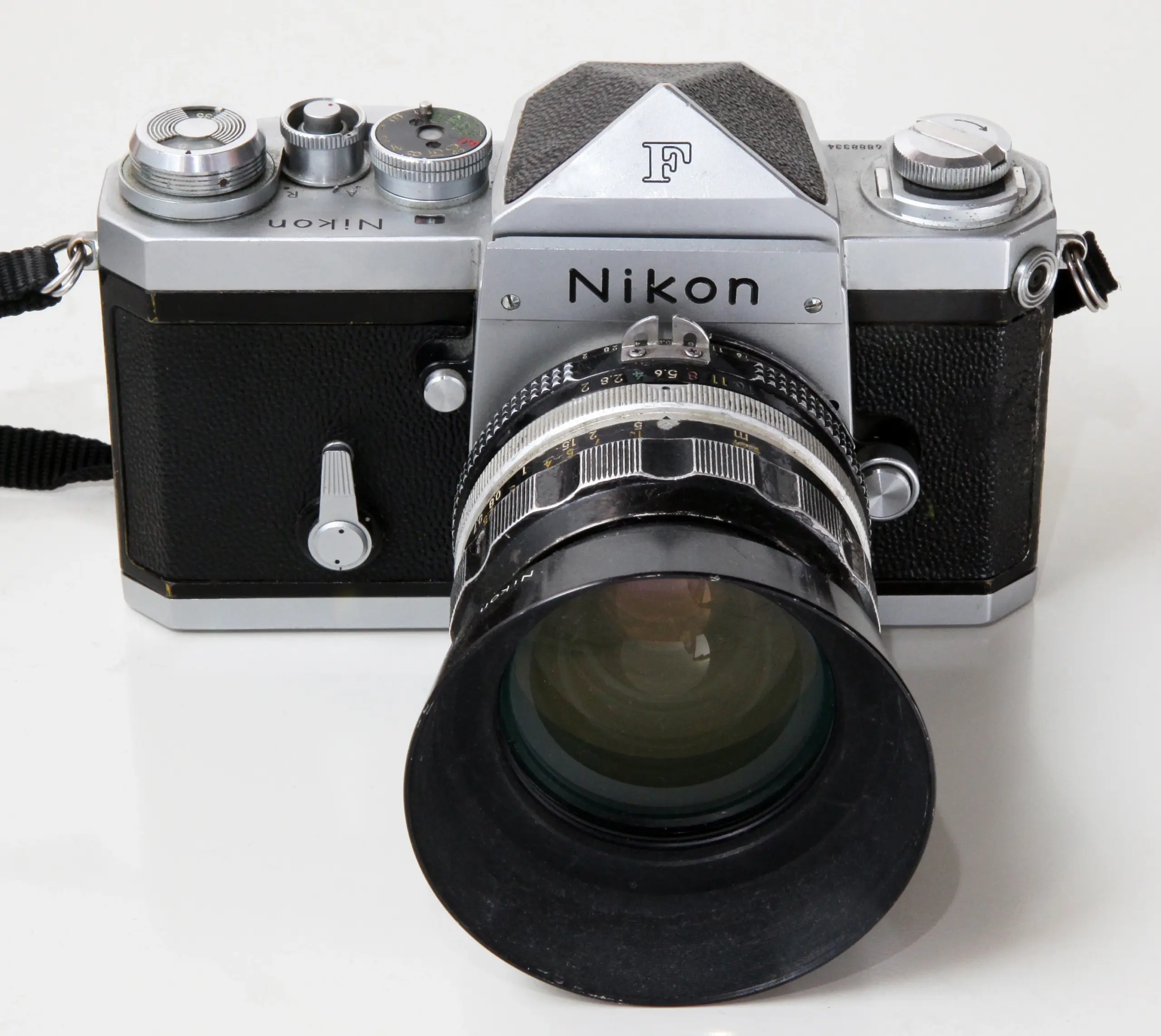
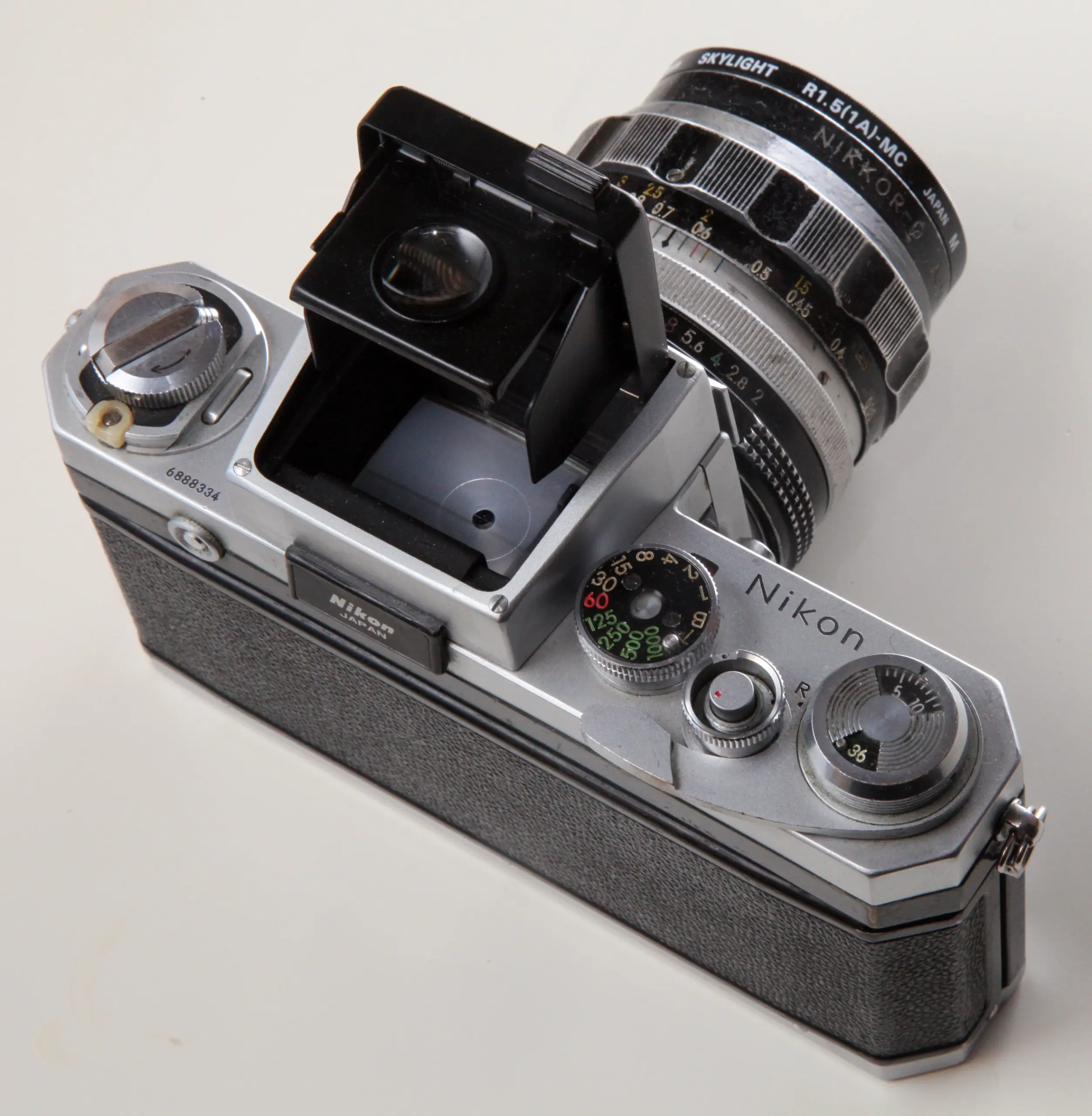
The F mount and a decision that lasted for decades
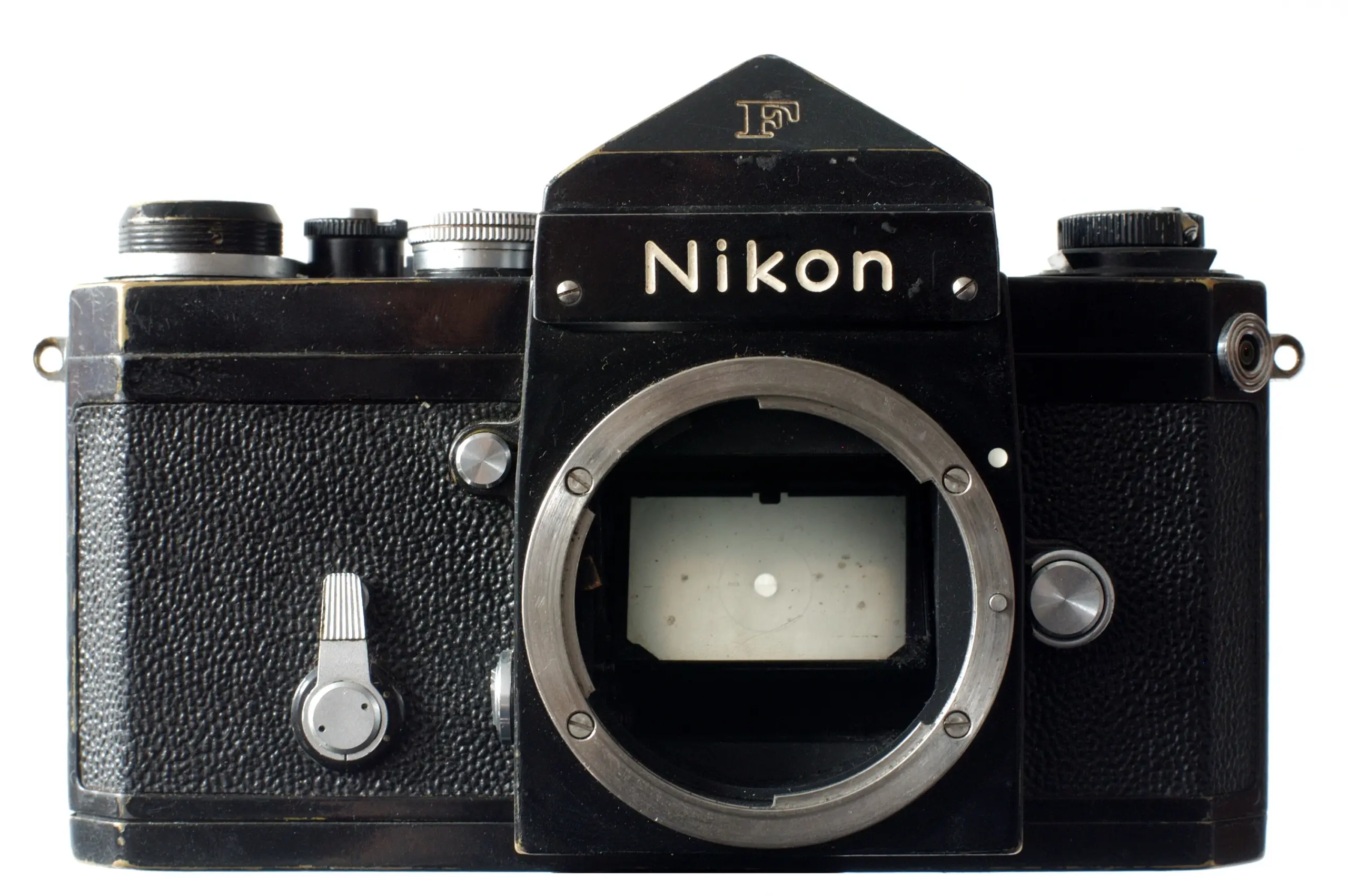
The new stainless-steel bayonet mount had a 44mm inner diameter. Nikon built it to support heavy telephoto lenses and leave room for fast optics, while providing a connection robust enough for professional use. The F mount’s basic mechanical structure continued through successive generations of film and digital SLRs, even as new functions and electronic contacts were added over time.
This continuity did not mean that every lens was fully compatible with every body without restrictions. It did mean that, from 1959, Nikon treated the camera as a long-term system rather than a standalone product. For professionals investing in expensive lenses, that consistency had real financial and practical value.
Durability, speed and industrial design
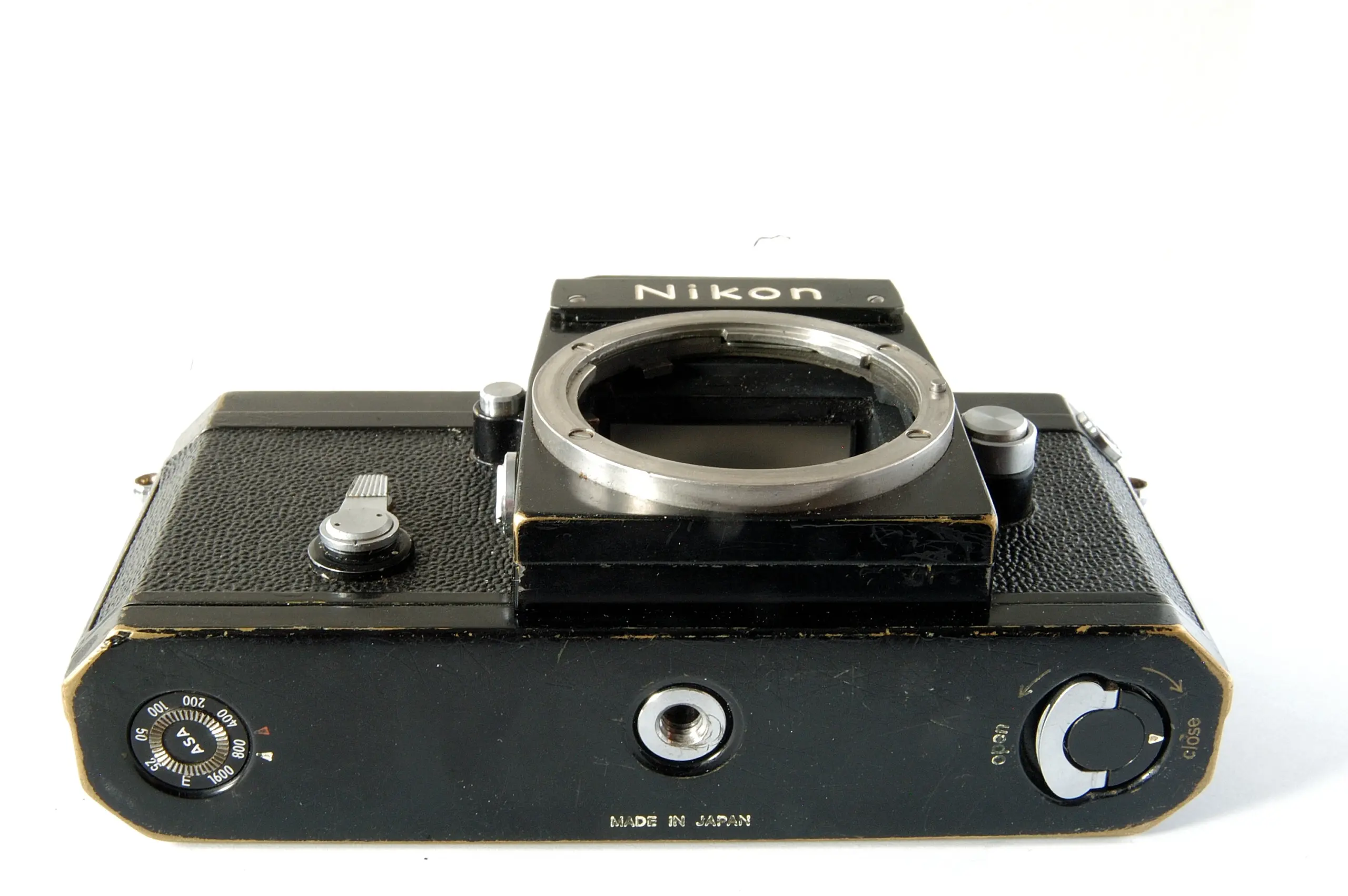
With a 5cm f/2 lens, the Nikon F measured approximately 147 × 98 × 89mm, while the body weighed about 685 grams. Its focal-plane shutter used titanium-foil curtains, combining low weight with durability. The mechanism was tested for 100,000 shutter cycles, while the camera underwent heat, cold and vibration tests.
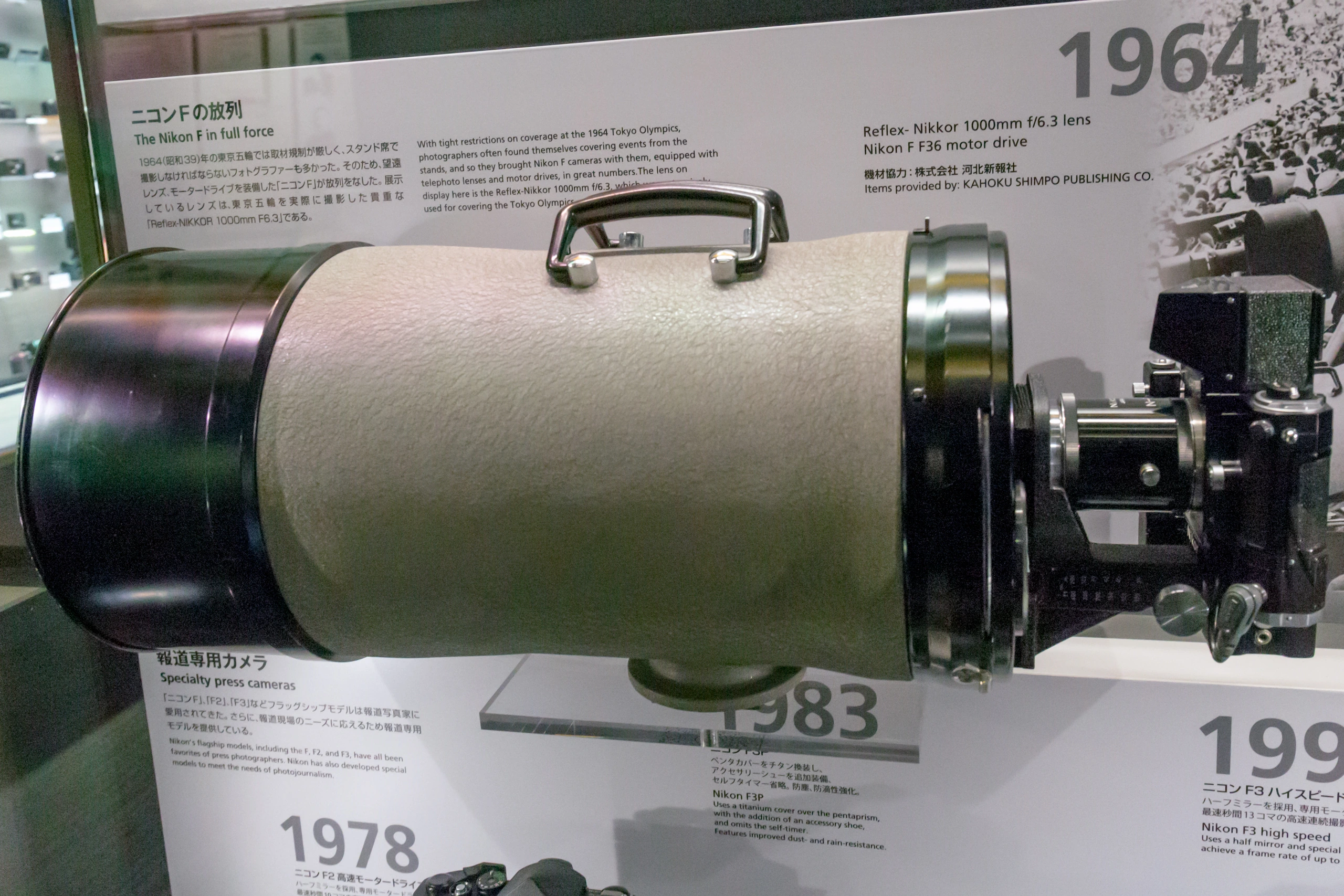
With a motor drive it could reach approximately 3.6 frames per second, a particularly important speed for sporting events and action sequences in the film era. The exterior was created by Yusaku Kamekura, a major figure in Japanese graphic design, and in 1966 the Nikon F became Nikon’s first product to receive a Good Design Award.
From camera body to complete professional system
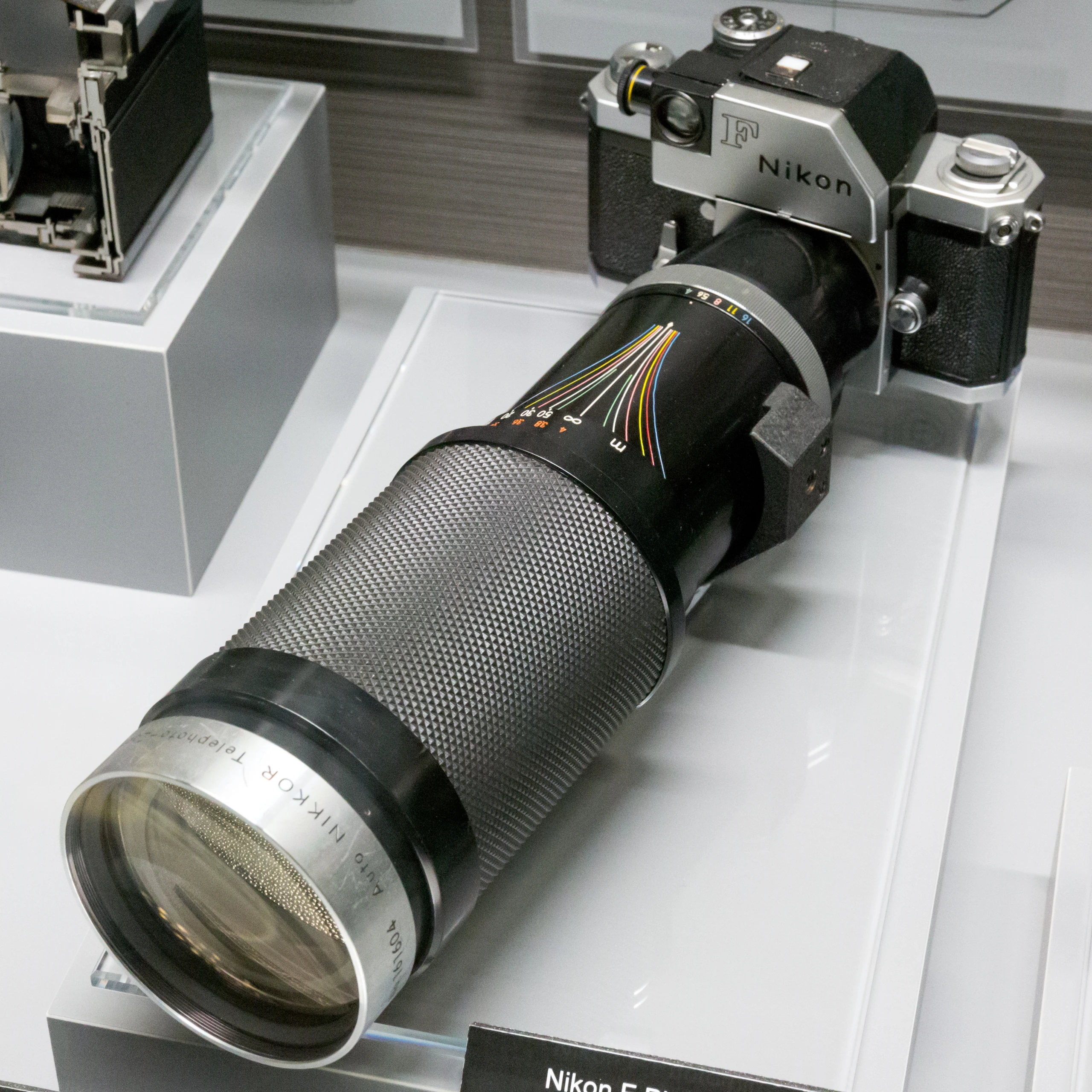
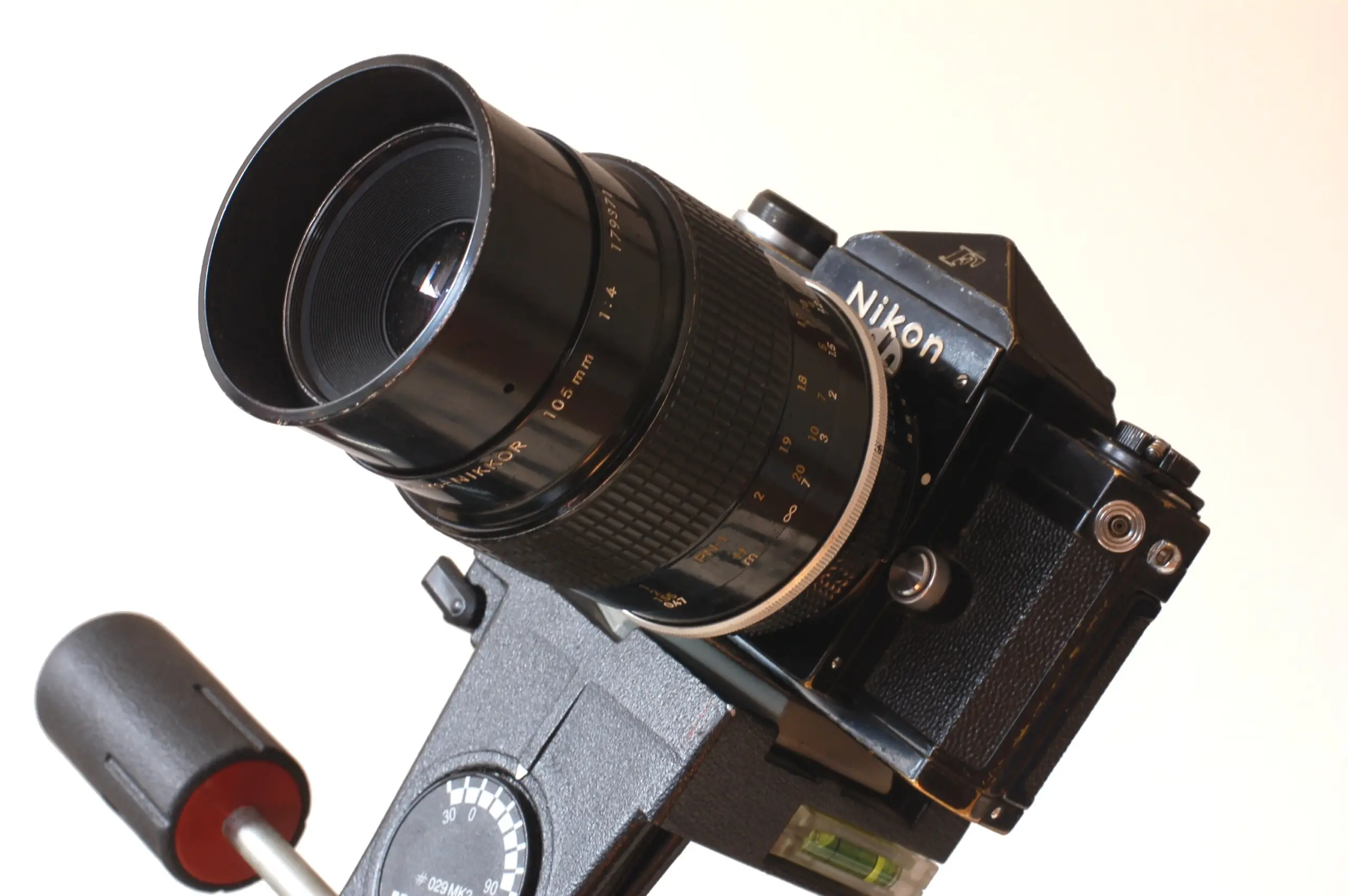
The early lens range included the NIKKOR-S Auto 35mm f/2.8, 50mm f/2, 105mm f/2.5 and 135mm f/3.5, among others. In December 1959 Nikon added the Auto NIKKOR Telephoto-Zoom 85–250mm f/4–4.5, which the company records as the first telephoto zoom lens for still cameras. The system rapidly expanded with ultra-wide and telephoto lenses, macro solutions, photomicrography equipment and accessories for scientific applications.
The Nikon F-250 arrived in August 1960 with a 250-exposure back and motor drive. The Nikon F Photomic followed in April 1962 with a meter built into the interchangeable prism, and the Photomic T added TTL metering in September 1965. Nikon did not force users to replace the whole body for each development: the modular design allowed the finder to be upgraded.
Its arrival in photojournalism and the Olympics
Nikon officially announced the F in March 1959 and released it in Japan in June, priced at 67,000 yen with a 5cm f/2 lens. Exports to the United States had begun in May, while its appearance at Photokina in 1960 increased its international visibility.
The camera arrived as smaller 35mm machines were beginning to replace large press cameras such as the Speed Graphic. The Nikon F offered rapid lens changes, precise through-the-lens framing and motorized film advance in a body that could follow photographers into the field. Nikon’s official history notably shows press photographers at the 1964 Tokyo Olympics using Nikon F bodies and large NIKKOR telephoto lenses.
A year earlier, in 1963, an American Everest expedition had acquired 20 Nikon F systems and photomicrography equipment. Sales exceeded 200,000 units in November 1965, when Nikon ceremonially presented camera number 200,000 to photographer David Douglas Duncan. Production continued until 1973.
From Apollo 15 to Skylab
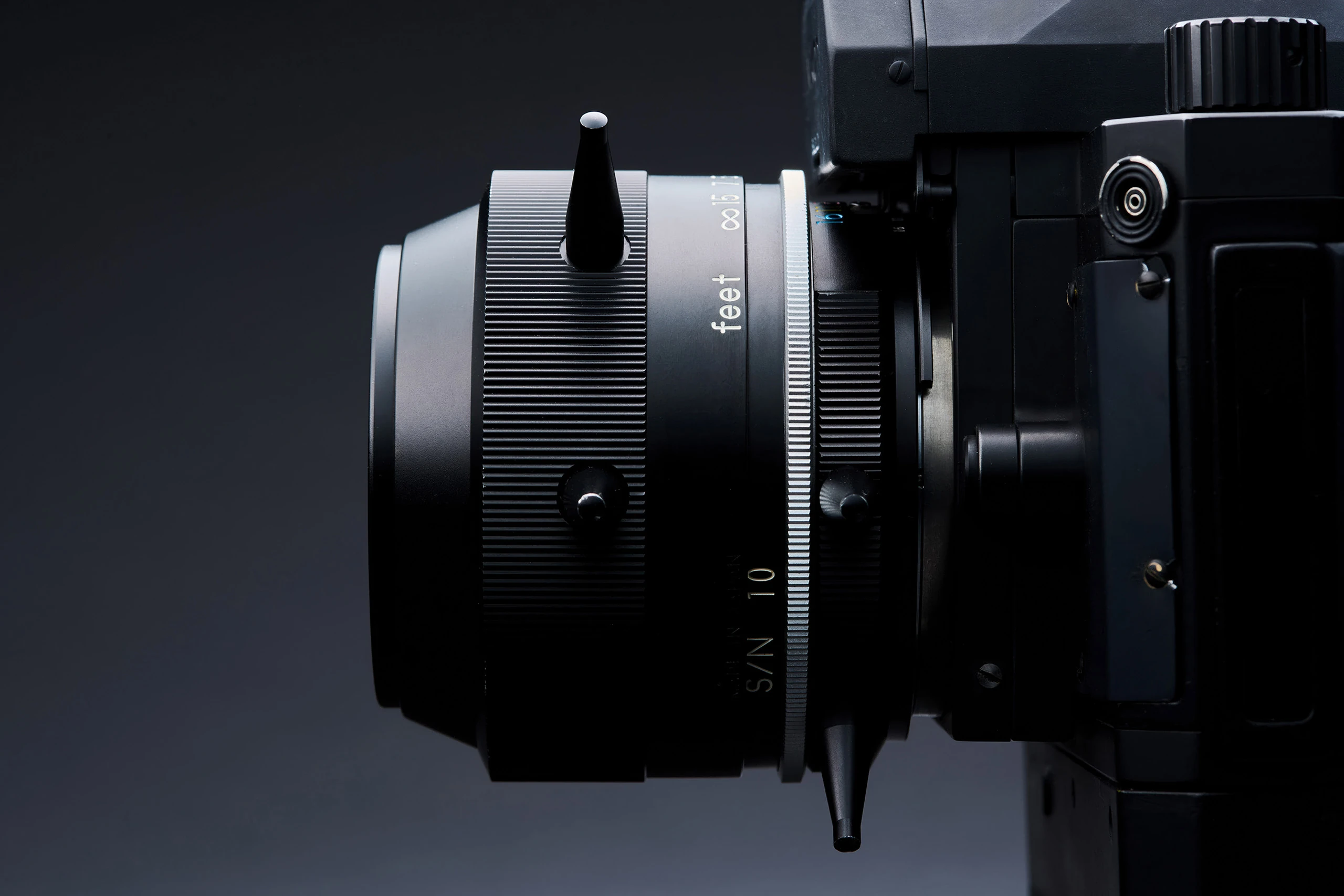
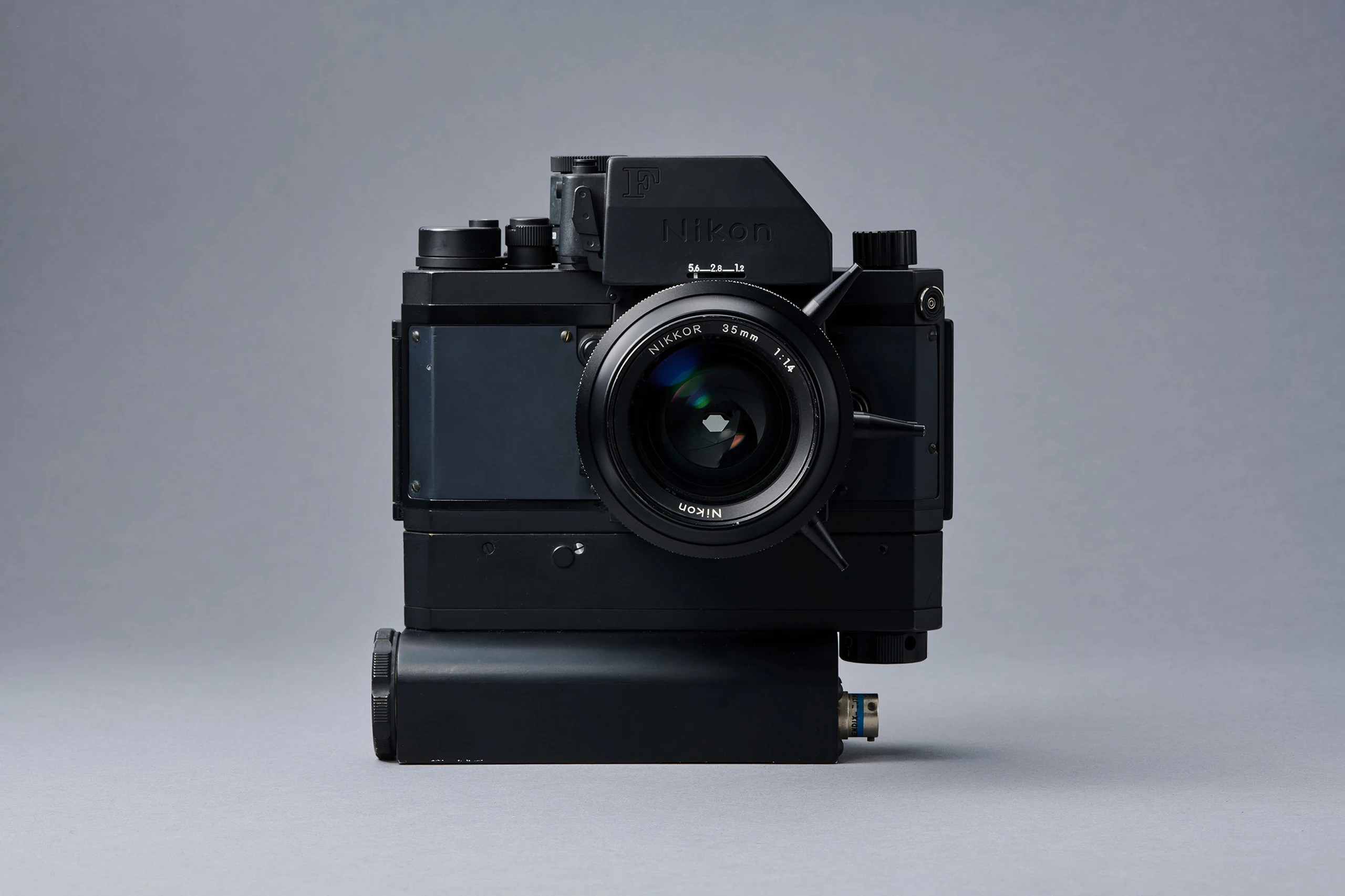
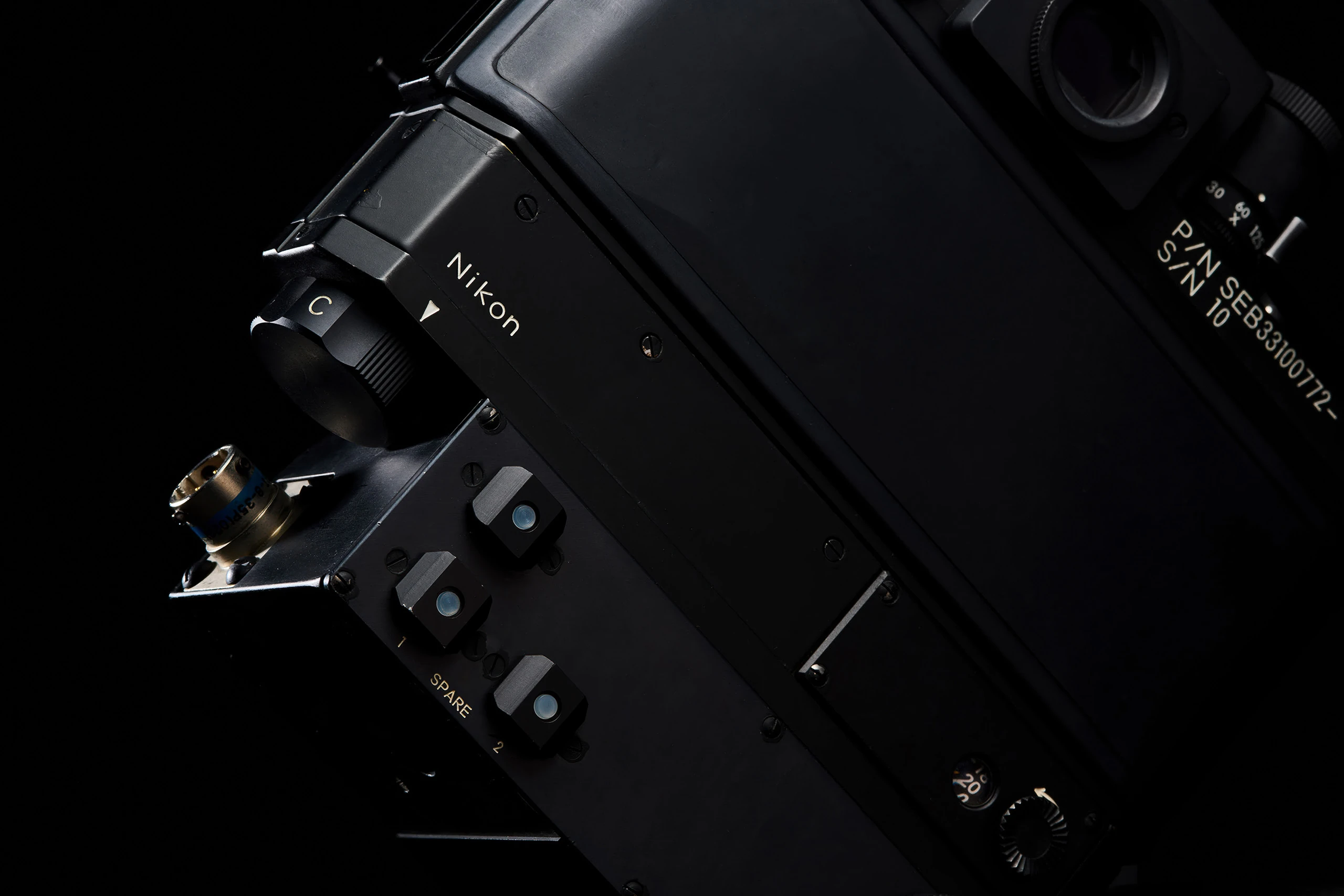
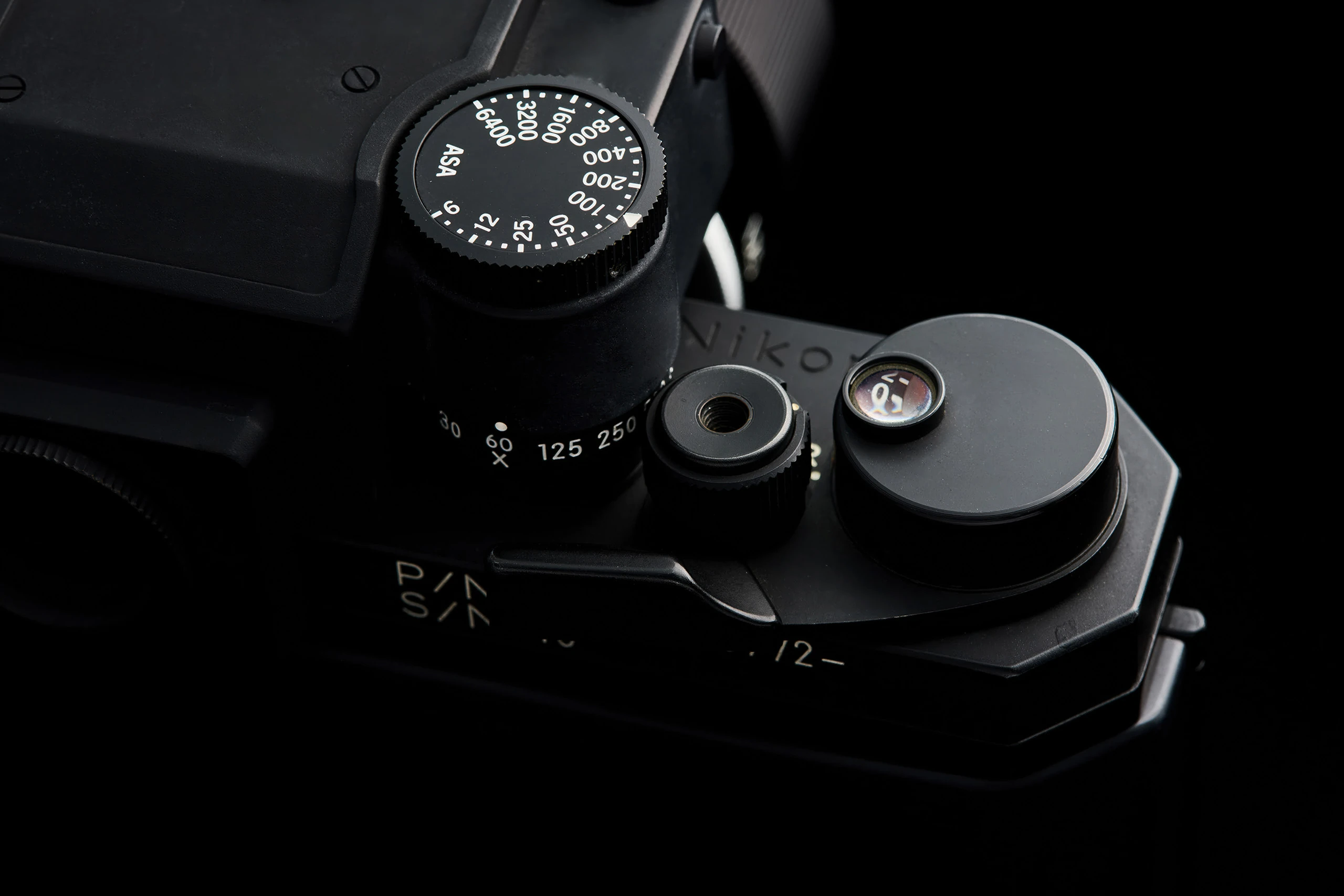
The Nikon F family’s relationship with space began when NASA selected the Nikon Photomic FTN, a version based on the Nikon F, in January 1971. Nikon had only five months to deliver nine specially modified cameras with 55mm f/1.2 lenses. The cameras received a matte-black finish to reduce reflections, special lubricants and materials, enlarged controls and changes for operation while wearing gloves.
Testing covered vacuum, high and low temperatures, humidity, acceleration and radiation. The cameras flew on Apollo 15, launched in July 1971, while models from the same development line were later used on Skylab. This path was the historical precursor to a collaboration that continued for decades and eventually reached the Nikon Z9 cameras sent to the International Space Station.
What we think
The Nikon F did not prevail because it single-handedly invented the modern SLR. It prevailed because it combined an accurate viewfinder, strong mechanical construction, a consistent mount and an unusually broad range of accessories in a tool that could evolve with a photographer’s needs. Its most enduring legacy is this concept of the professional system: the body as the center of an ecosystem rather than an isolated product.
Frequently asked questions
Was the Nikon F the first 35mm SLR?
No. 35mm SLRs had existed since the 1930s and several of their core technologies appeared before 1959. The Nikon F stood out by combining them in a durable, modular and complete professional system.
Why was it called the Nikon F?
The letter F came from the word Re-Flex. According to Nikon, R was considered difficult to pronounce in some languages, so F was chosen instead.
Which features made it important?
Its 100% viewfinder coverage, interchangeable prisms and focusing screens, instant-return mirror, automatic diaphragm, robust F mount and motor-drive support were among its most important features.
How long was the Nikon F produced?
The Nikon F was released in June 1959 and production continued until 1973, approximately 15 years. Sales had already exceeded 200,000 units by November 1965.
Was the Nikon F used on the Moon?
A specially modified Nikon Photomic FTN, based on the Nikon F, flew on Apollo 15 in 1971. Official sources associate it with photography inside the spacecraft, not with the cameras used for images on the lunar surface. Derivatives of the system were also used on Skylab.