

Summary
- Overall winner: “Window to the Wetlands” by Sritam Kumar Sethy.
- Eleven awarded images connect wildlife, field research, and planetary protection.
- Three themes: Relationships in Nature, Research in Action, and Protecting Our Planet.
- Overall winner: a window into the wetlands
- Overall runner-up: making space for frogs
- Relationships in Nature: conflict and collective defense
- Research in Action: the field as a laboratory
- Protecting Our Planet: human traces and conservation action
- Three highly commended images
- What these images tell us about science
- What we think
- Frequently asked questions
The winners of the 2026 BMC Ecology and Evolution and BMC Zoology photography competition have been announced, featuring 11 striking images that showcase scientific research and wildlife in action.
The Springer Nature competition is open to people affiliated with research institutions — ecologists, evolutionary biologists, zoologists, students, and field technicians among them. Judges consider both visual impact and the scientific story behind each frame. For 2026, they selected an overall winner and runner-up, winners and runners-up in three thematic categories, and three highly commended images.
Overall winner: a window into the wetlands
Window to the Wetlands by Sritam Kumar Sethy, a student at Berhampur University in India, turns an irregular hole in a leaf into a natural frame. Looking through it is an orange-tailed marsh dart damselfly, Ceriagrion cerinorubellum, photographed in a freshwater wetland in the Balasore district of Odisha.
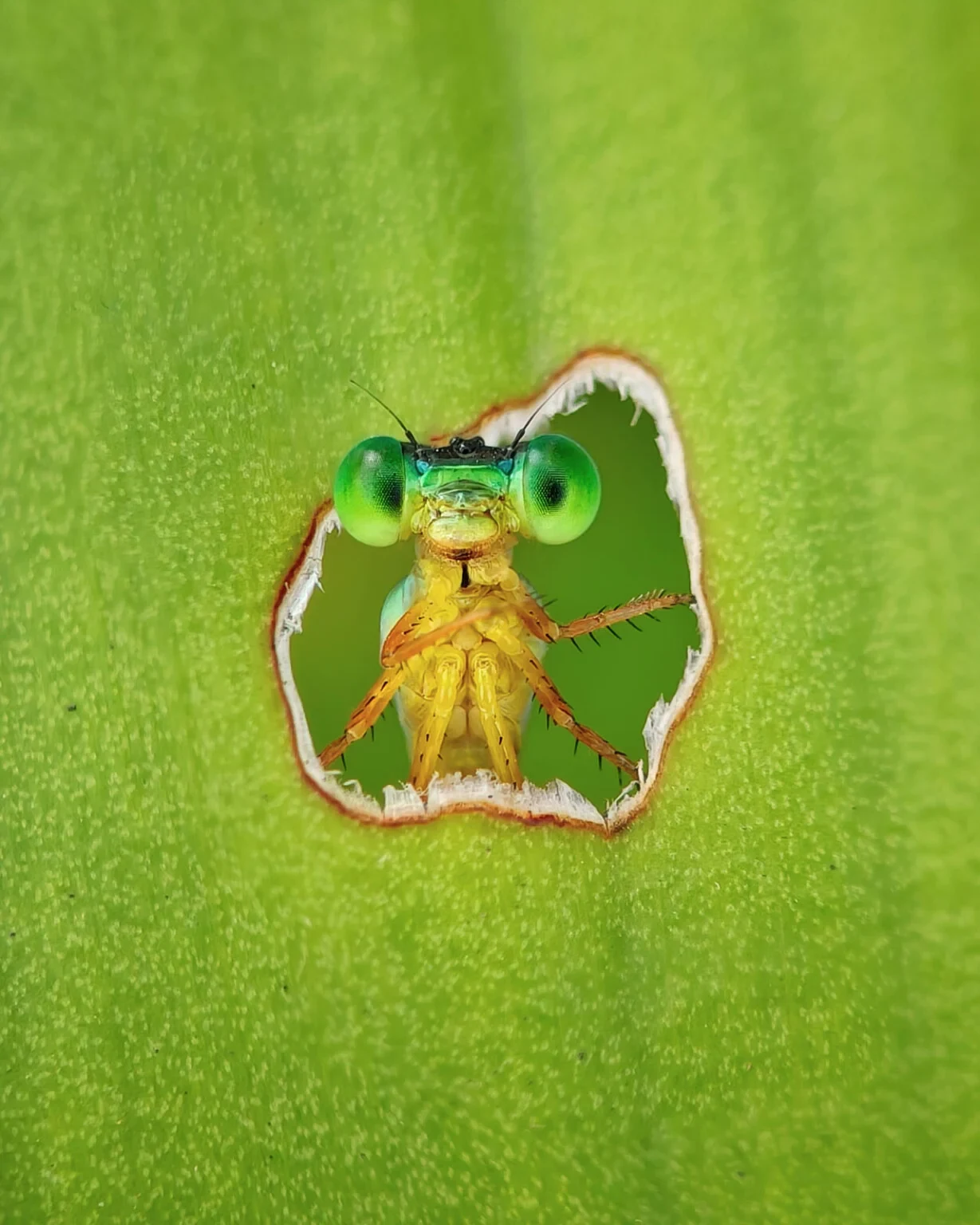
Damselflies depend on both aquatic habitat and surrounding vegetation and are sensitive to pollution, habitat loss, and climate change. That makes them useful bioindicators. The official results article notes that wetlands cover about 6% of Earth’s surface and support around 40% of plant and animal species, yet roughly 35% of wetland area has been lost over five decades. The tiny gaze at the center of Sethy’s frame therefore reads as both wonder and warning.
Overall runner-up: making space for frogs
In Ryan Wagner’s Space for Frogs, field science looks exactly as it often does: darkness, high-visibility vests, headlamps, and careful hands. Alyson Yates and Ally Rounds attach a small radio transmitter to a northern red-legged frog, Rana aurora, near Portland, Oregon.
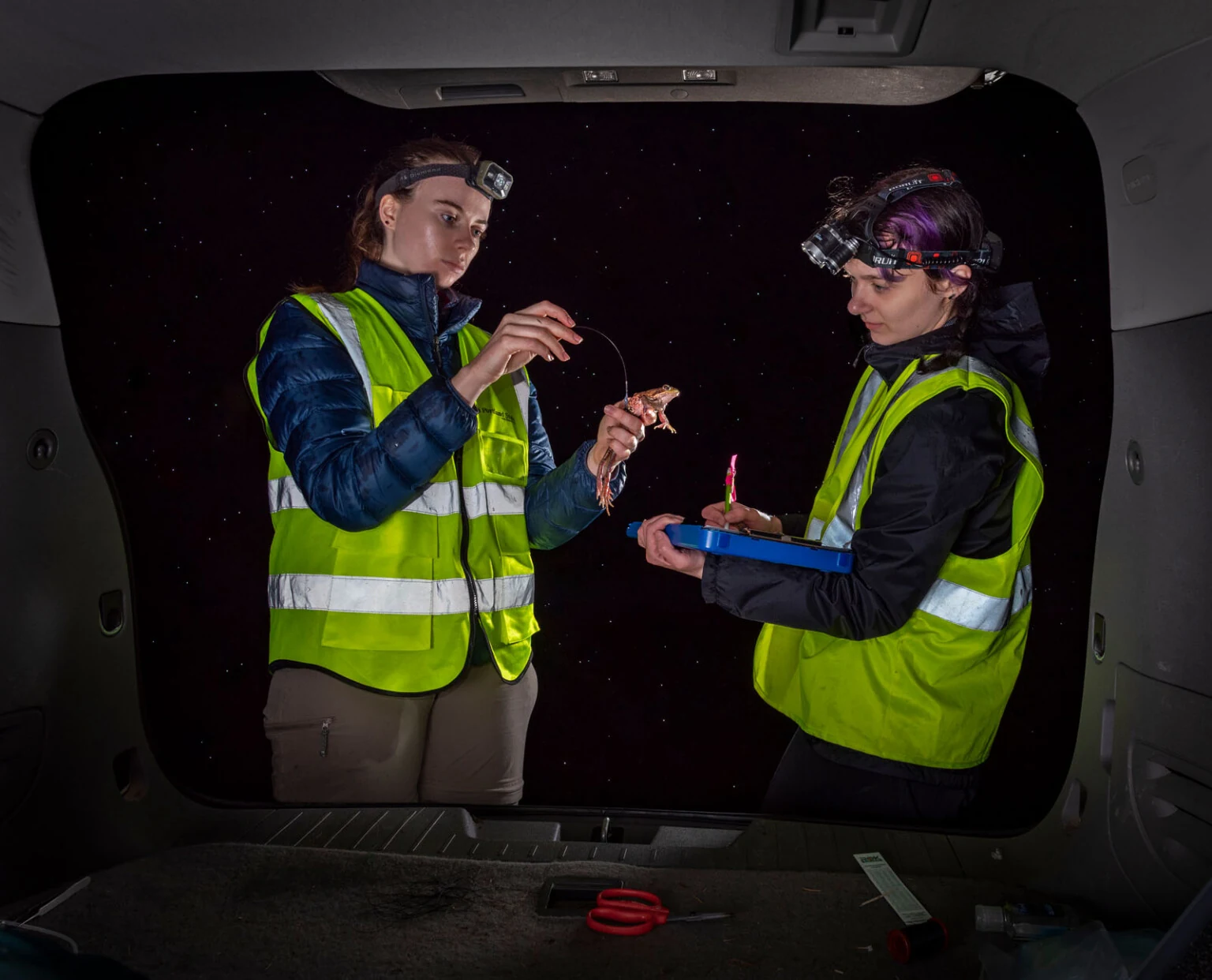
Radio telemetry lets the team follow the frogs’ movements and habitat choices. The data support a practical conservation effort: improving habitat connectivity and developing a frog underpass beneath Route 30, where thousands of animals are at risk each spring while migrating to seasonal pools.
Relationships in Nature: conflict and collective defense
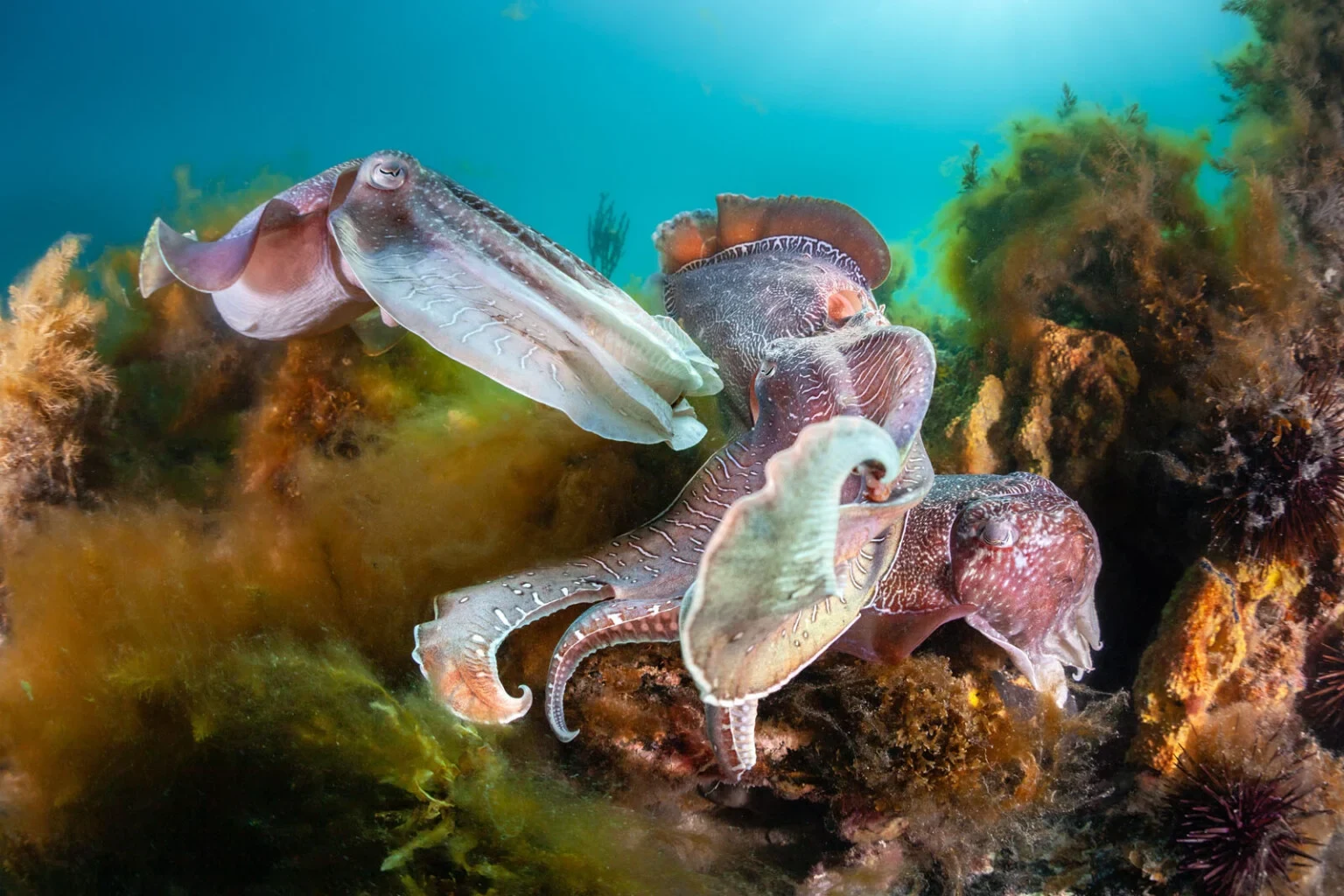
Giant Cuttlefish in Breeding Battle — Victor Huertas
Upper Spencer Gulf in South Australia hosts the only known mass breeding aggregation of the giant Australian cuttlefish, Ascarosepion apama. Tens of thousands gather there in winter. Victor Huertas photographed a dominant male blocking a rival attempting to approach a female. Shifting patterns, sharp contrast, and body posture become a complete visual language underwater.
Go Away — Alwin Hardenbol
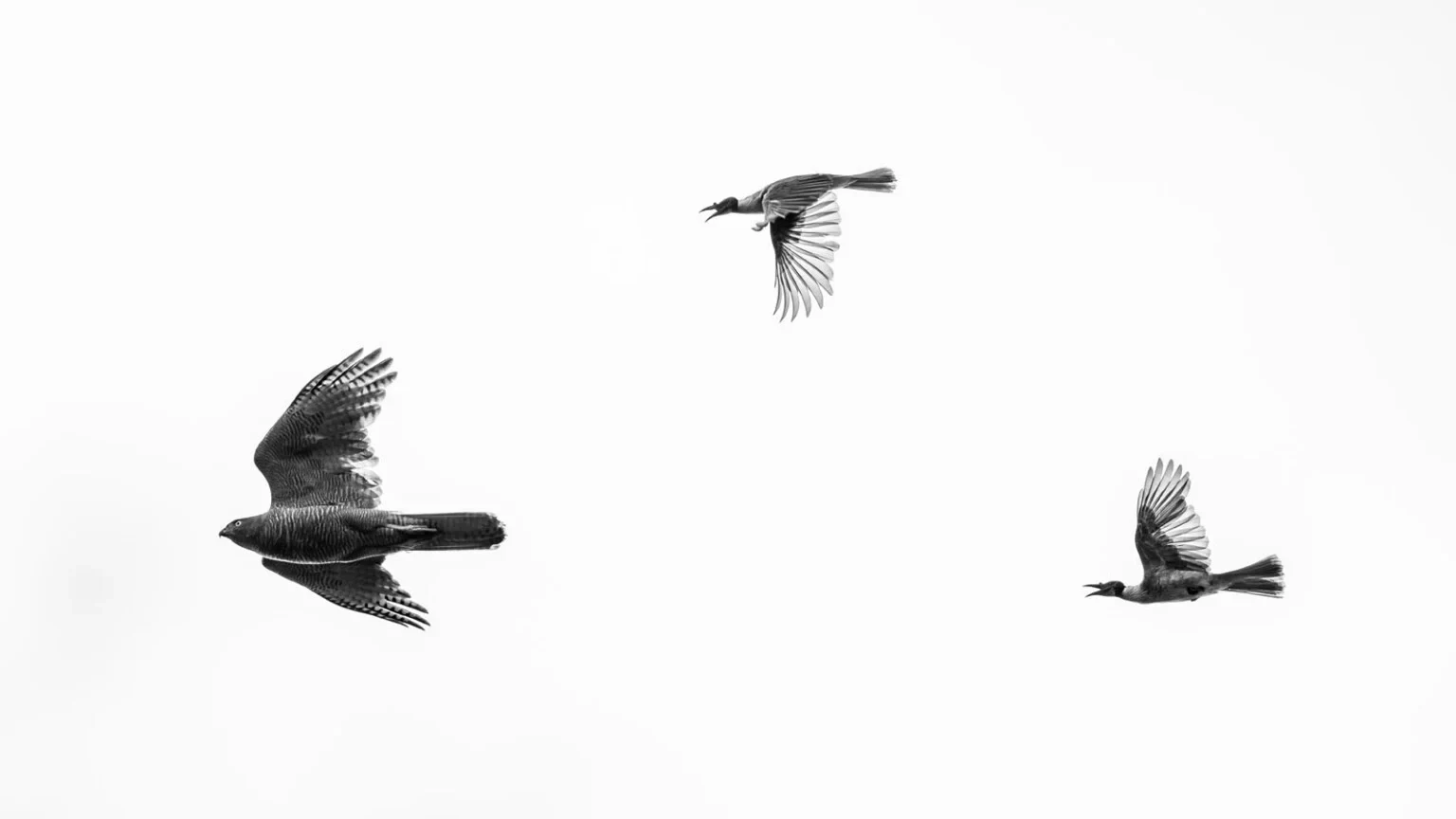
Alwin Hardenbol captured two noisy friarbirds, Philemon corniculatus, harassing a brown goshawk, Tachyspiza fasciata, at Mulligans Flat Woodland Sanctuary in Australia. The behavior, known as mobbing, is a collective anti-predator strategy in which smaller birds join forces to drive away a threat. It may also help young or reintroduced birds learn to recognize predators.
Research in Action: the field as a laboratory
Intertidal Education — Liam Brennan
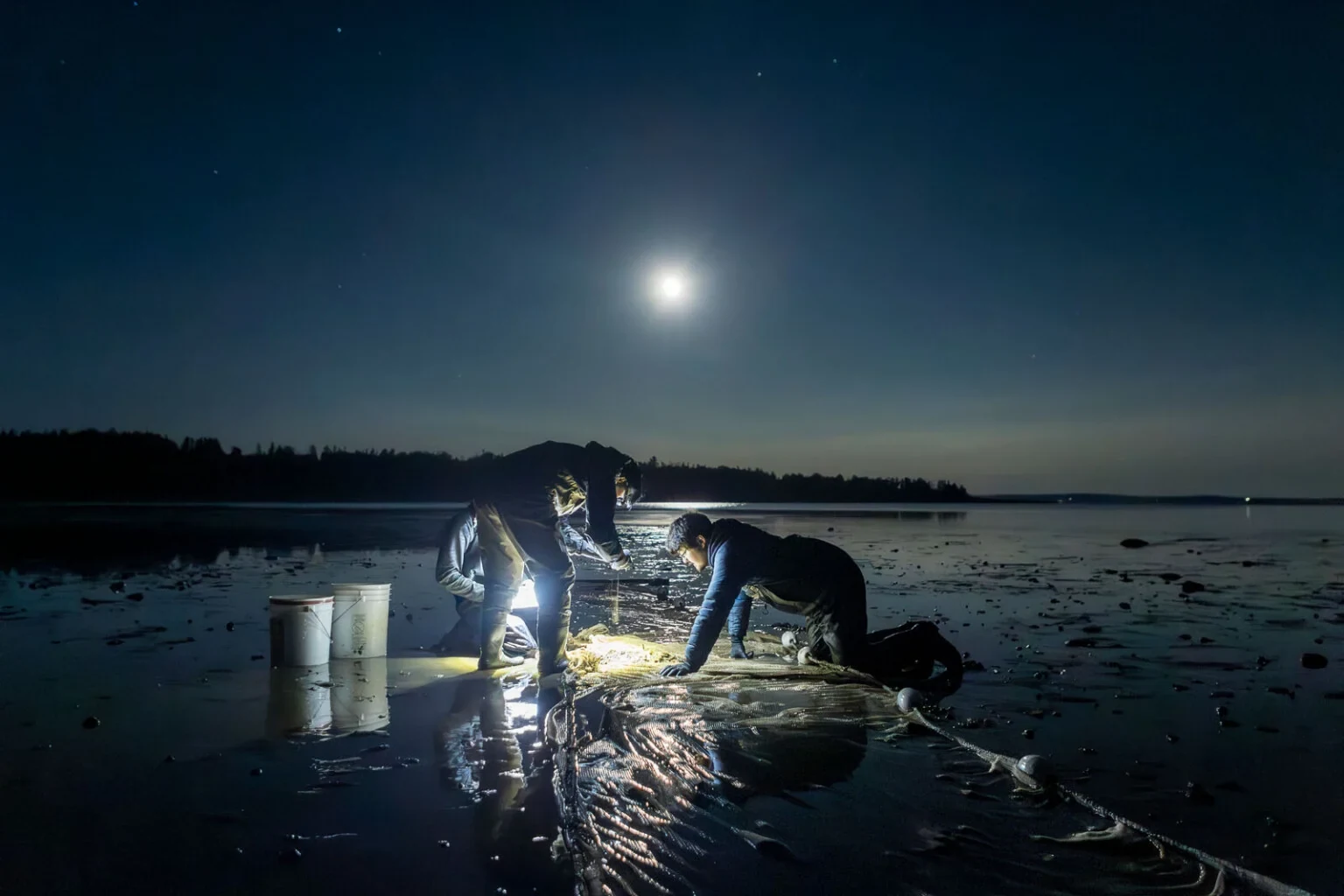
Three University of New Brunswick undergraduates sort the catch from a beach seine in shallow coastal water at night. They count fish and invertebrates, connecting the composition of the coastal community to season and environmental conditions. Liam Brennan is not simply photographing a class; he is showing the moment when theory becomes observation, measurement, and data.
Everglades Monitoring — Brandon Güell
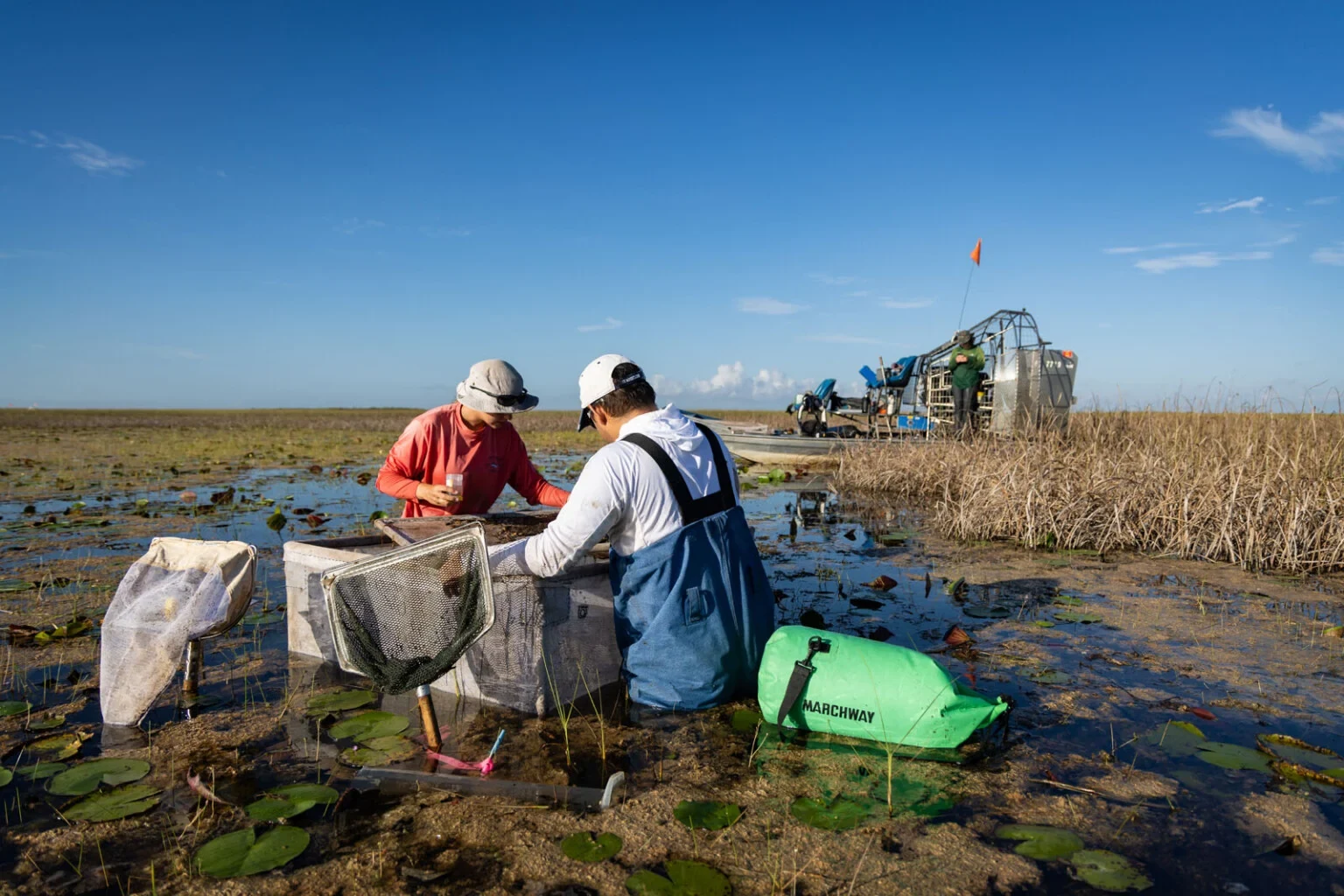
In Everglades National Park, field technicians use a standardized one-square-meter throw trap and seine to sample small fish and macroinvertebrates. Brandon Güell’s image reveals the method behind long-term ecological monitoring: consistent procedures repeated over time so animal communities can serve as indicators of hydrological change and of progress in the vast Everglades restoration effort.
Protecting Our Planet: human traces and conservation action
A Bridge Between Past and Present — Allen Tian
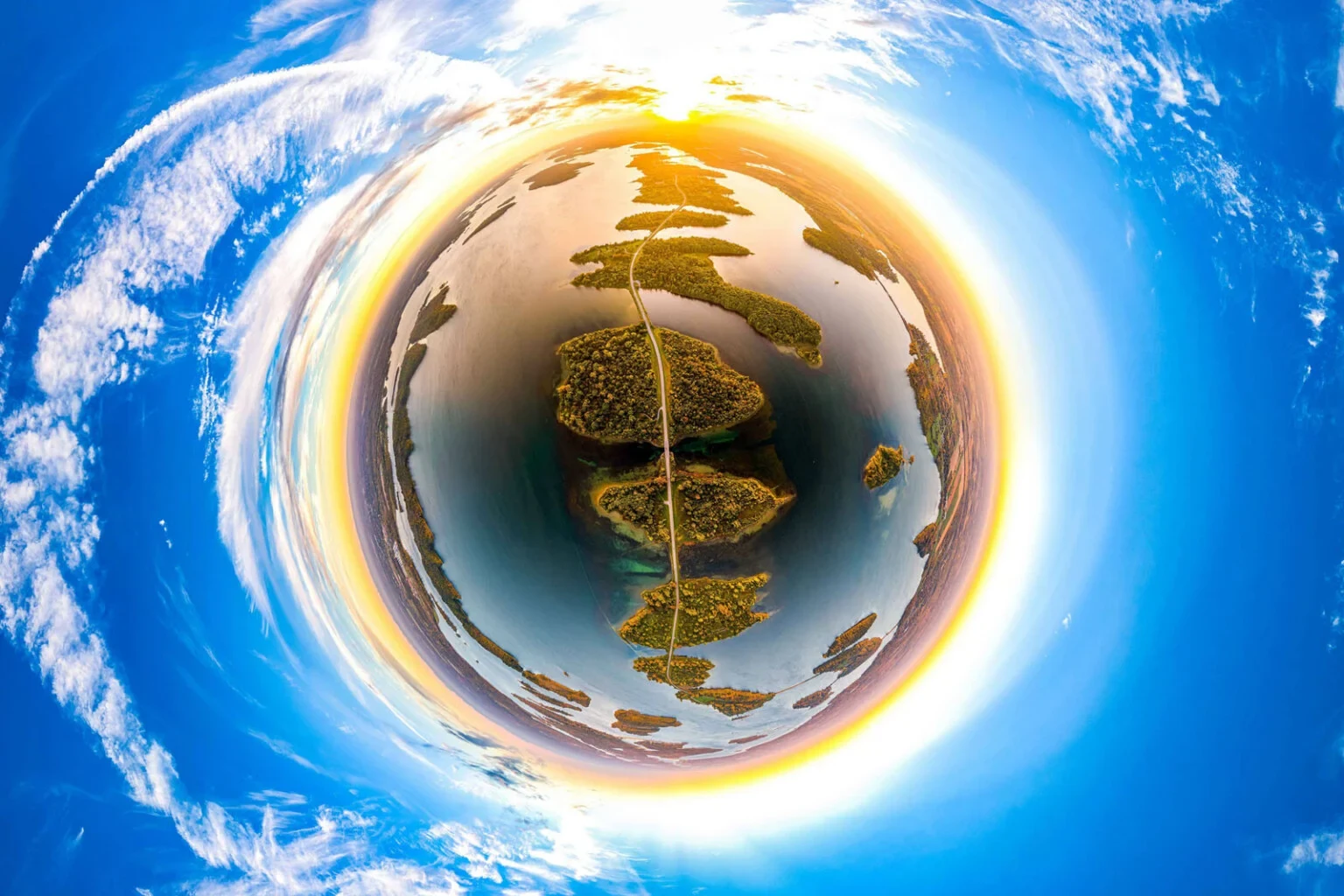
Allen Tian’s stereographic drone image turns the Long Sault Parkway into a tiny planet. The 10.1-kilometer road links 11 islands in Lake St. Lawrence. Those islands are hilltops left above water following construction of the Moses–Saunders Dam in the 1950s — a project that fragmented the landscape and displaced thousands of people. The area is now protected as a bird sanctuary. Tian’s team used drones and non-invasive environmental DNA sampling to survey biodiversity while minimizing disturbance.
Tide, Turtle, and Trust! — Abhijeet Bayani
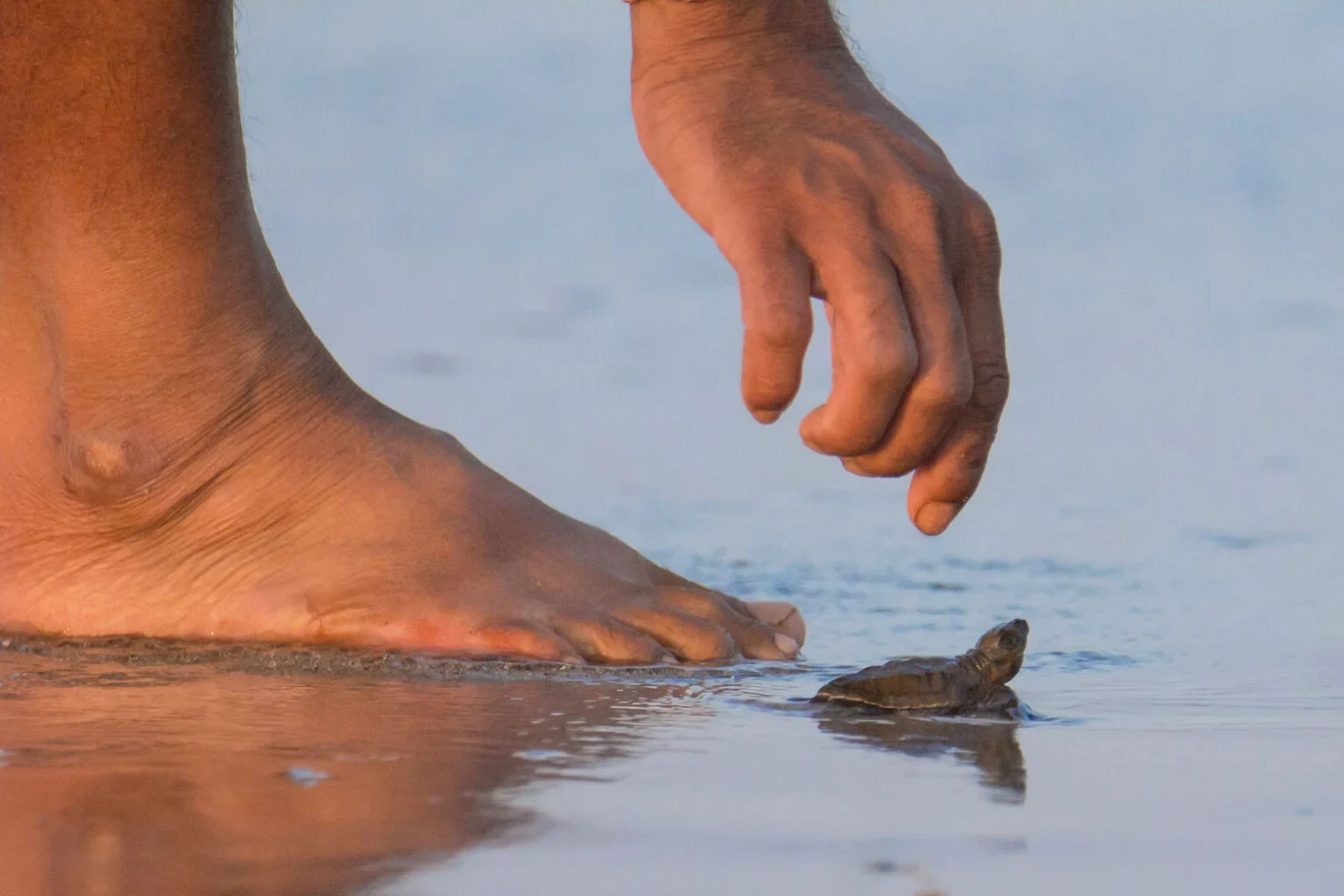
In Abhijeet Bayani’s image, an olive ridley hatchling, Lepidochelys olivacea, pauses between a human hand and the sea. The photograph documents community-led nest protection on India’s western coast. In an area where the species generally nests alone rather than in mass arribadas, guarding nests and releasing hatchlings safely can improve hatching success.
Three highly commended images
Manatees — Brandon Güell
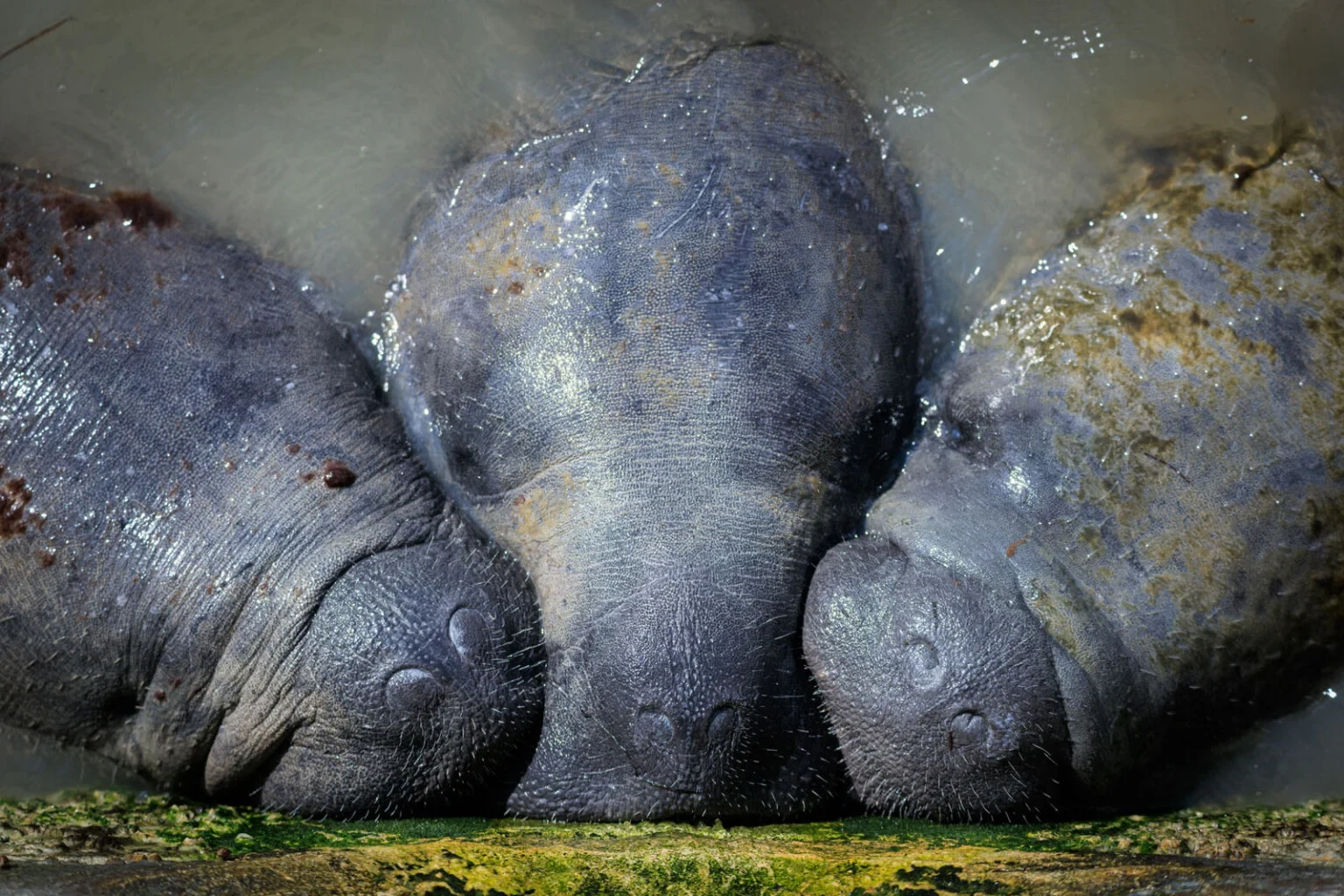
Three Florida manatees, Trichechus manatus latirostris, press their snouts to the edge of a drain at the Flamingo Visitor Center in the Everglades to drink freshwater. In a landscape with shifting salinity, access to freshwater is essential. The frame shows how deeply human infrastructure can influence everyday wildlife behavior.
Into the Bear’s Realm — Vineet Kumar
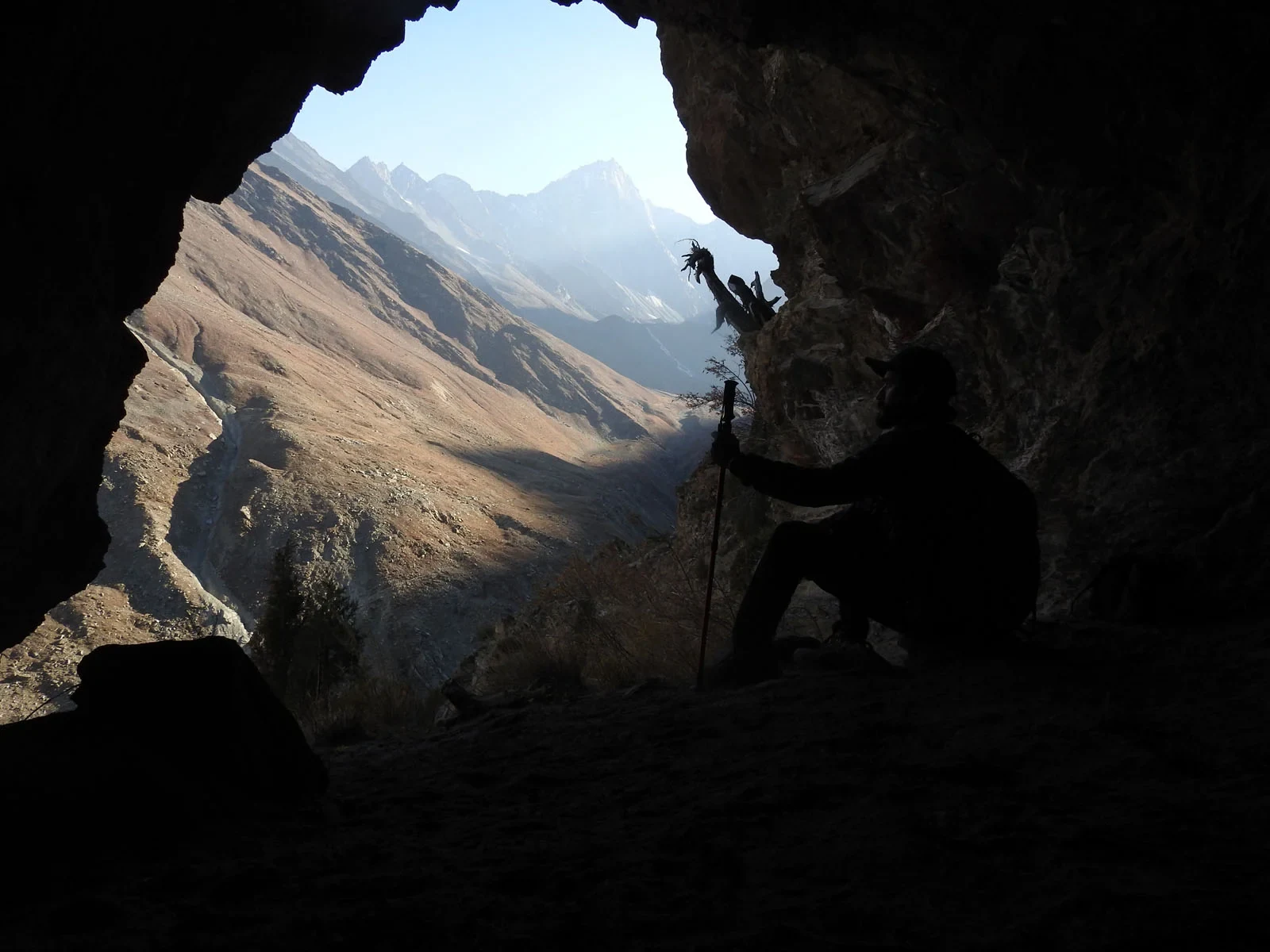
After a three-hour climb in the western Himalayas, a Zoological Survey of India team approached a large cave believed to be a possible den for the endangered Himalayan brown bear, Ursus arctos isabellinus. Instead, they found nomadic shepherds using it as shelter. Vineet Kumar’s photograph condenses one of conservation’s most difficult realities: wildlife habitat and human livelihoods are often the same place.
Barking Up the Right Tree — Luke Jeffrey
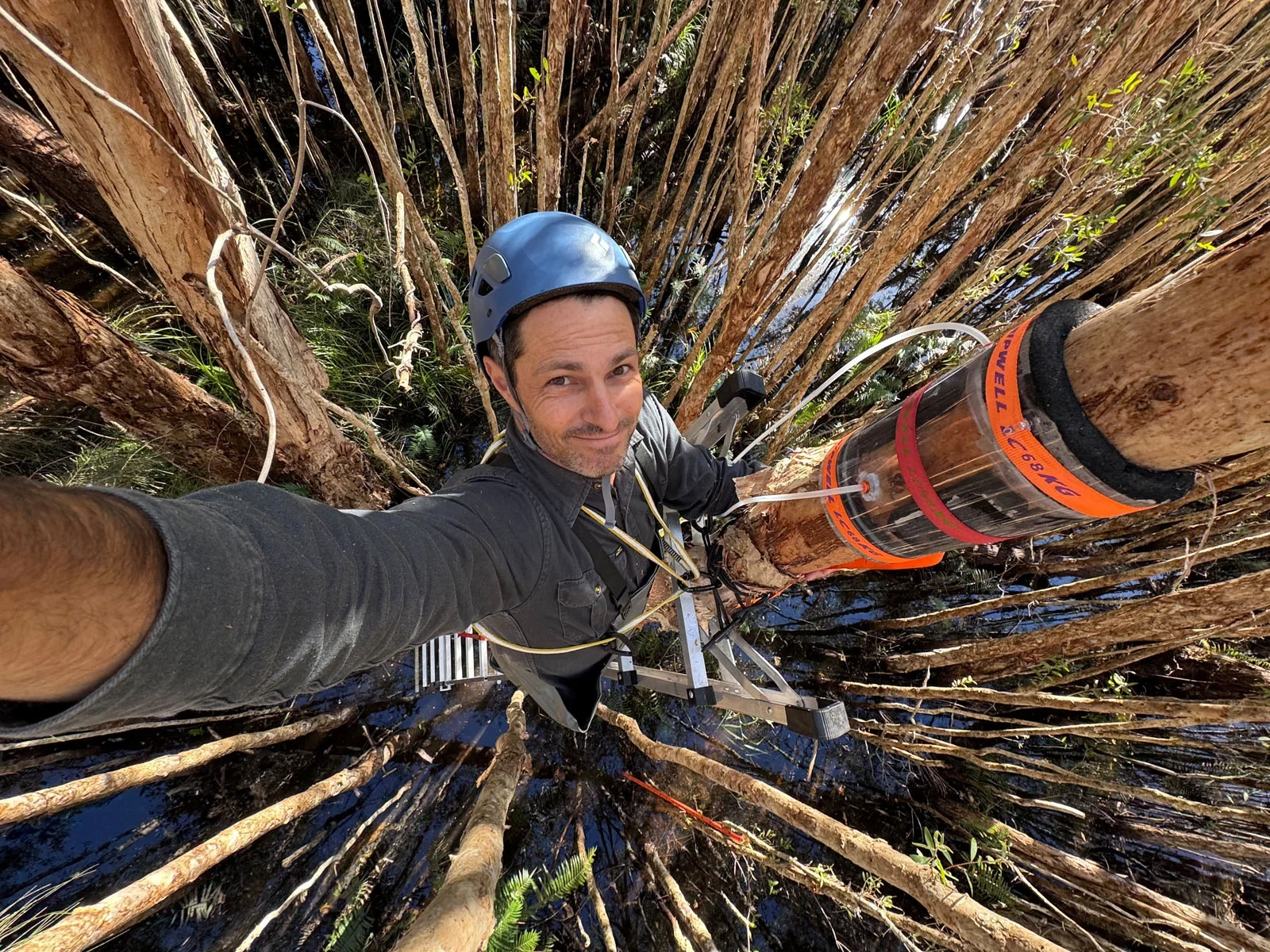
Several meters above the flooded floor of a Melaleuca forest in Australia’s Northern Territory, a researcher samples microbial communities living on tree bark. These organisms may influence methane and nitrogen exchanges between trees and the atmosphere. Luke Jeffrey’s image reminds us that every tree is also an ecosystem — and that protecting or restoring a forest preserves interactions invisible to the naked eye.
What these images tell us about science
The winners do not share one visual style. Some frames are poetic, others documentary, and several turn the camera toward the researcher. What connects them is process: observation, hypothesis, measurement, comparison, and ultimately care for a living world in motion.
On pttl.gr, see also the winners of Nature Scientist At Work 2026, the Evident Image of the Year 2026, and the Current Archaeology Photo Competition 2026.
What we think
The strength of this selection is that photography is not used to decorate science. It becomes part of the explanation. A hole in a leaf speaks about wetland vulnerability, a radio transmitter reveals a frog’s journey, and a ladder in floodwater points toward an unseen microbial world. The strongest frames do not merely answer “what are we looking at?” They make us ask “how do we know, and why does it matter?”
Frequently asked questions
What is the BMC Ecology and Evolution and BMC Zoology Photo Competition?
It is the annual joint photo competition run by the two Springer Nature journals. It recognizes images that combine visual impact with a clear story in ecology, evolution, or zoology.
Who can enter?
Entrants must be affiliated with a research institution. They include scientists, students, field technicians, and other researchers working in relevant disciplines.
How are the winners selected?
Editors and senior members of the journals’ editorial boards judge the images for both visual quality and the scientific story carried by each photograph.
What were the 2026 categories?
The three themed categories were Relationships in Nature, Research in Action, and Protecting Our Planet. The judges also selected an overall winner, an overall runner-up, and three highly commended images.
Where can I find the full results?
The complete results were published on August 20, 2026, in BMC Ecology and Evolution, volume 26, article 64, DOI 10.1186/s12862-026-02566-0.