

Summary
- The 2026 Audubon Photography Awards presented 17 winners across parallel contests for the United States/Canada and Chile/Colombia.
- The 15 photographs and two videos span behaviour, landscape and urgent conservation issues.
The 2026 Audubon Photography Awards present 17 winners from across the Americas: 15 photographs and two videos combining bird behaviour, landscape, sustained observation and conservation stories.
Two parallel contests across the Americas
Audubon published the results on 2 September 2026, continuing the model introduced in 2025: one contest for photographers and videographers in the United States and Canada, and a second for Chile and Colombia. The judging panels reviewed thousands of anonymous submissions and awarded separate sets of prizes in the two geographic competitions.
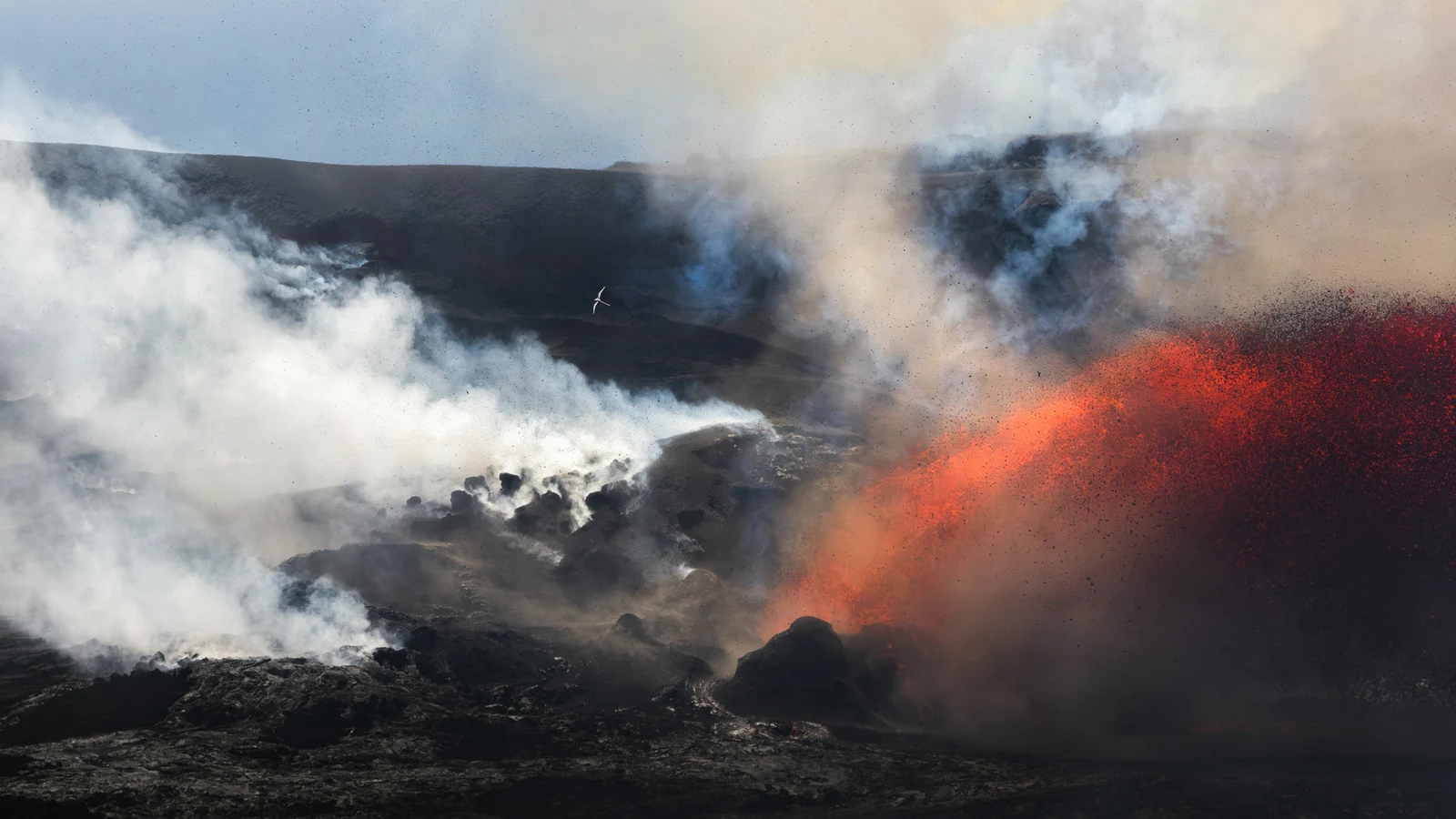
This year’s selection ranges from broad, dramatic scenes to small behavioural moments. A bird crosses the active Kīlauea caldera, an Oilbird is frozen in flight inside a cave, and two underwater videos reveal movement that usually remains unseen. No Greek distinction appears in the official winners list.
The two Grand Prize winners
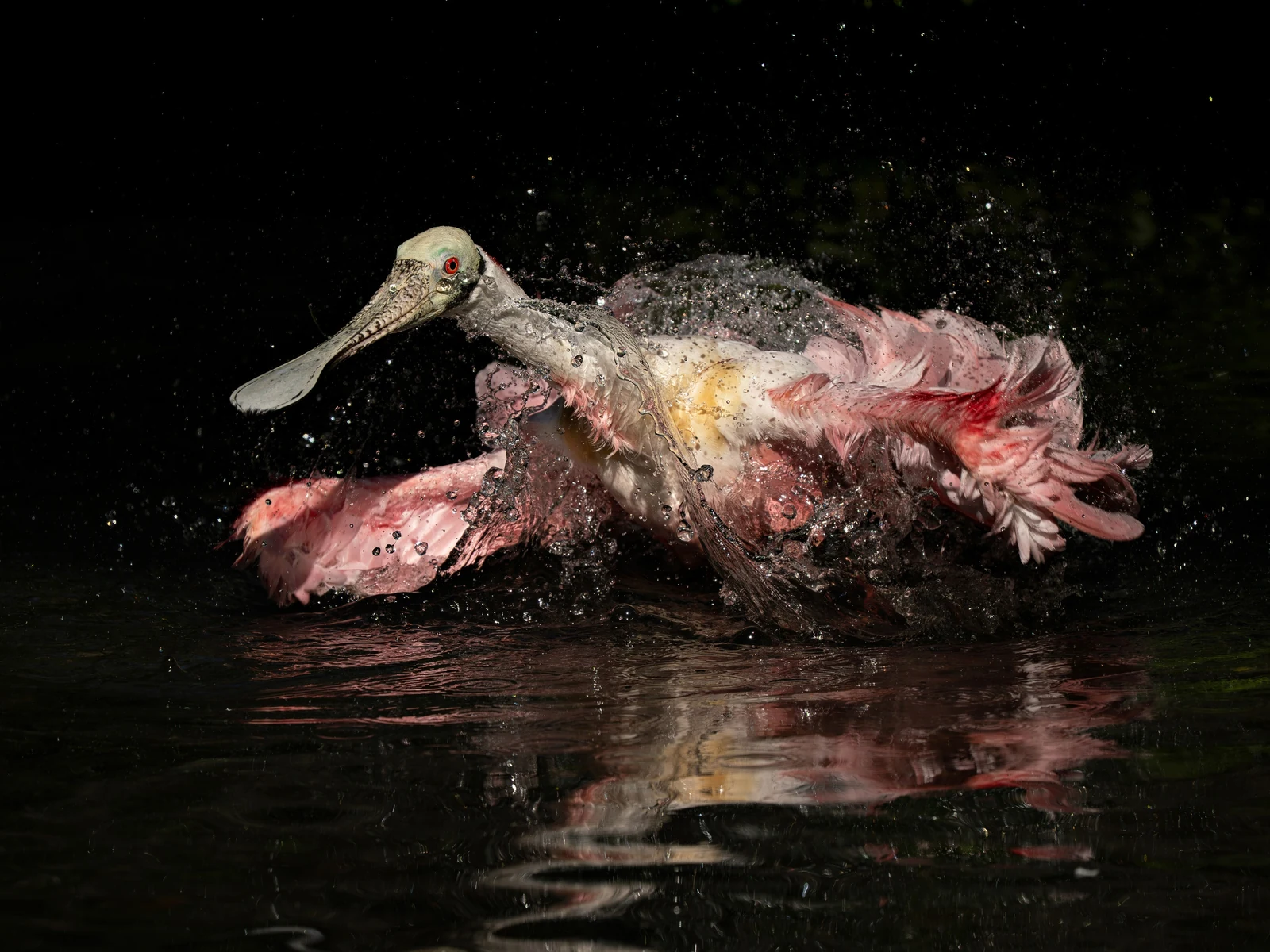
Jacqueline Burke won the United States and Canada Grand Prize with a Roseate Spoonbill bathing at St. Augustine Alligator Farm Zoological Park in Florida. She noticed a dark cove beneath dense vegetation and waited until a narrow shaft of light illuminated the bird’s pale head and pink wings. The image was made with an OM System OM-1 and M.Zuiko Digital ED 150-400mm F4.5 TC1.25X IS PRO at 1/4000 sec, f/4.5 and ISO 250.
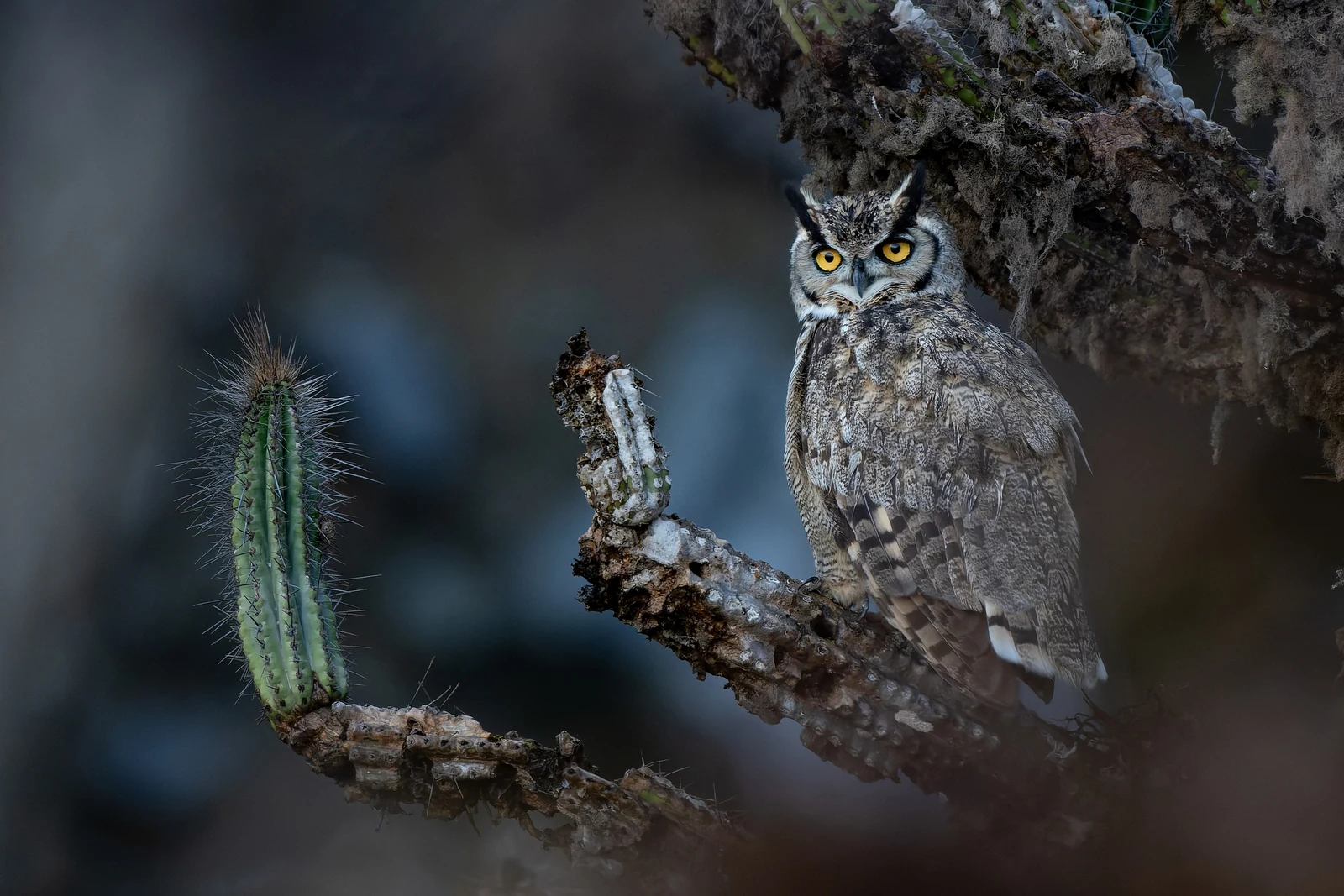
In the Chile and Colombia contest, the Grand Prize went to Francisco Castro Escobar. After hiking for hours in Paposo Natural Preserve in Antofagasta, he found a Lesser Horned Owl perched on a cactus in a desert landscape where sea mist supports cacti and bright wildflowers. He used a Sony Alpha 7 IV with the FE 200-600mm at 600mm, 1/800 sec, f/7.1 and ISO 2000.
Birds placed inside the landscape
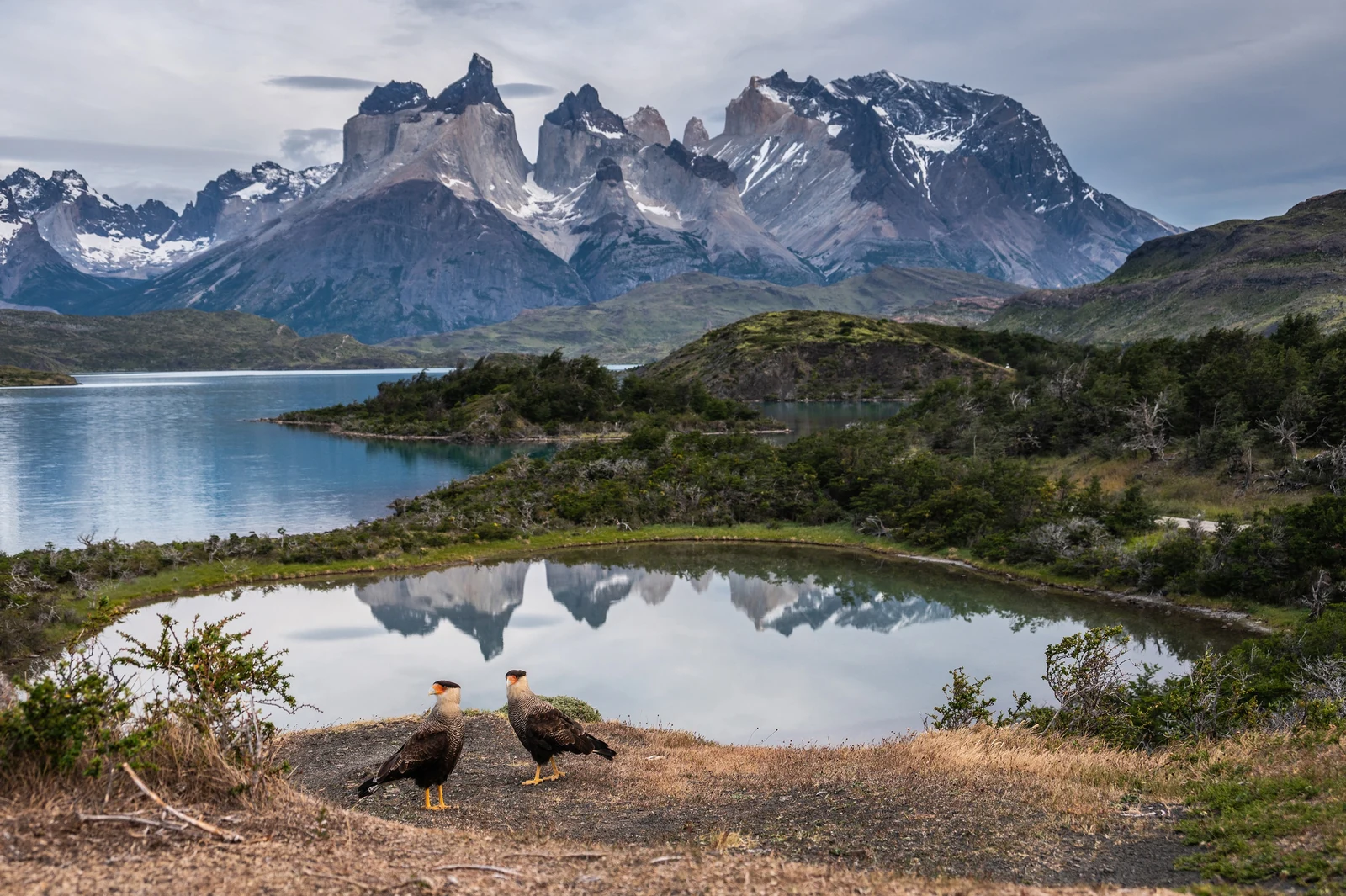
At Torres del Paine, Timothy Dhalleine photographed two Crested Caracaras as if they were observing the monumental peaks and their reflection in the lagoon. The relatively wide 41mm focal length gave the landscape a leading role and earned the image the Birds in Landscapes prize for Chile.
Liron Gertsman spent ten days at Kīlauea’s Halemaʻumaʻu Crater. His photograph records a White-tailed Tropicbird among water vapour, carbon dioxide, sulphur dioxide, volcanic ash and glowing red lava. The birds nest in cracks in the caldera wall and use thermals generated by the volcano’s heat to gain lift.
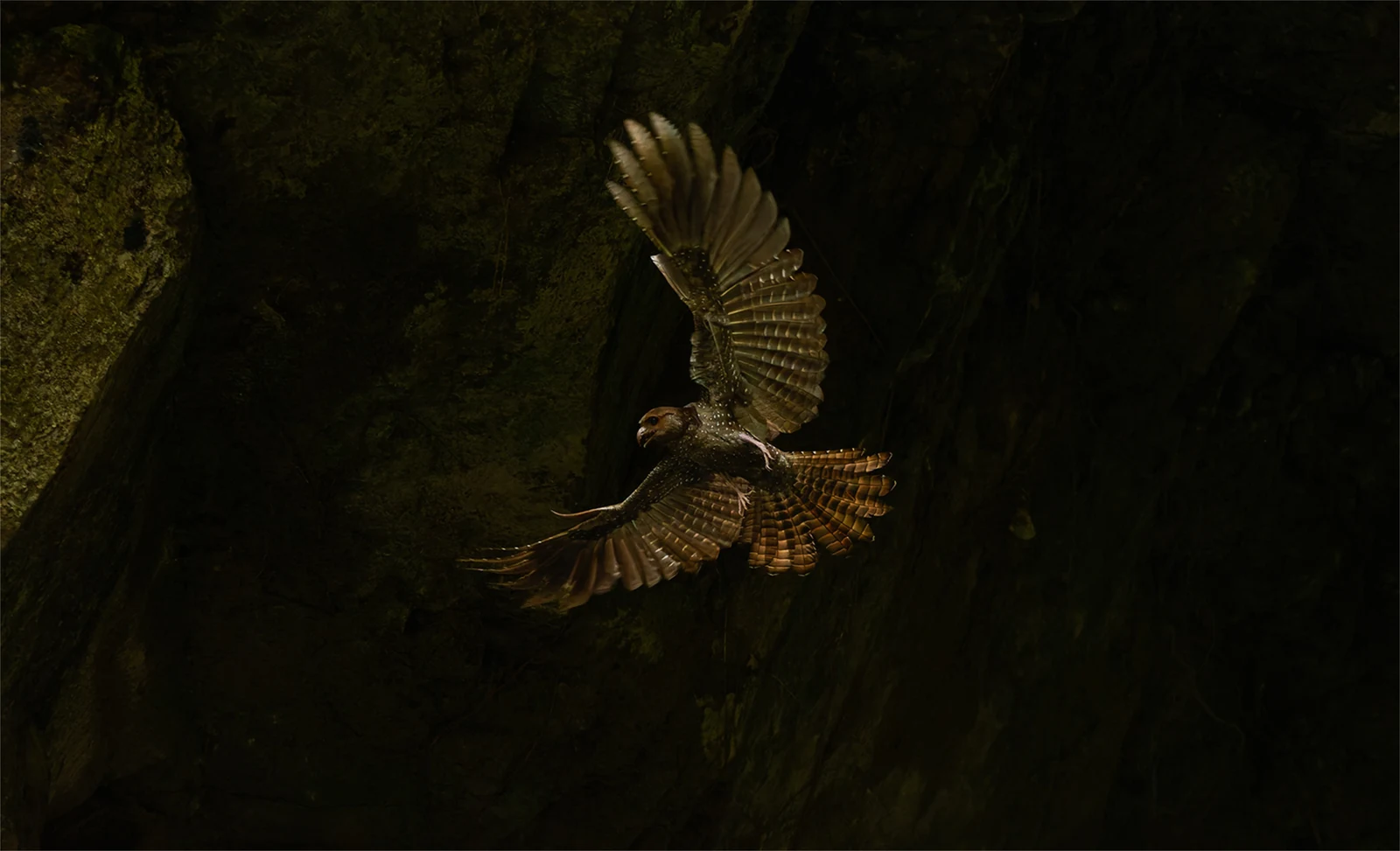
In Colombia, Faber Mosquera Álvarez used ISO 8000 and a shutter speed of 1/1250 sec to freeze an Oilbird in flight inside Cañón de los Guácharos without flash. The species lives in cave colonies, emerges at night to feed on fruit and uses echolocation to navigate in total darkness.
Behaviour, intimacy and unexpected perspectives
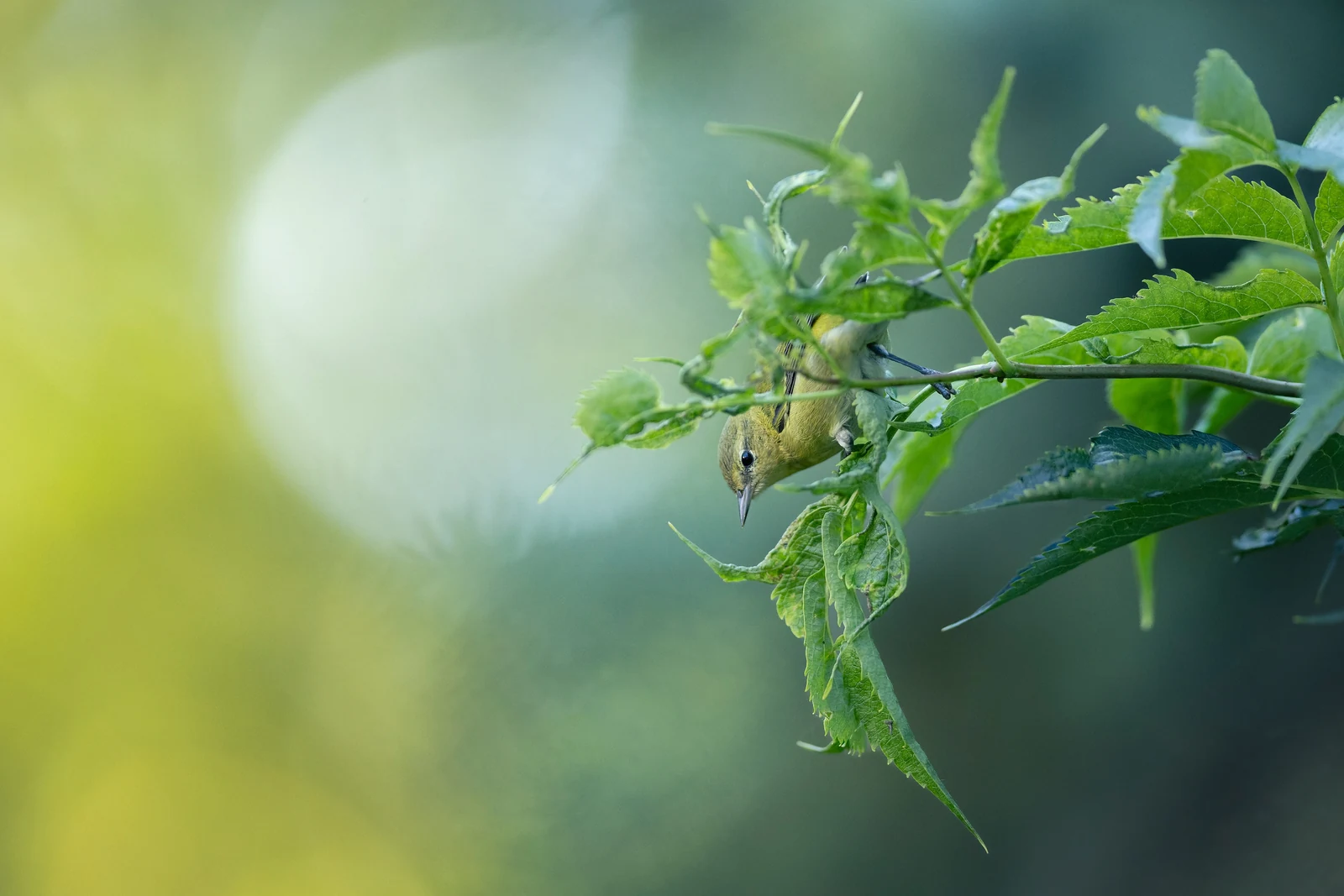
Nick Parayko found his subject in his backyard in St. Albert, Alberta. A migrating Tennessee Warbler stayed for more than a week after finding a mass emergence of flying ants, and the photographer captured it balancing at the end of an elderberry branch.
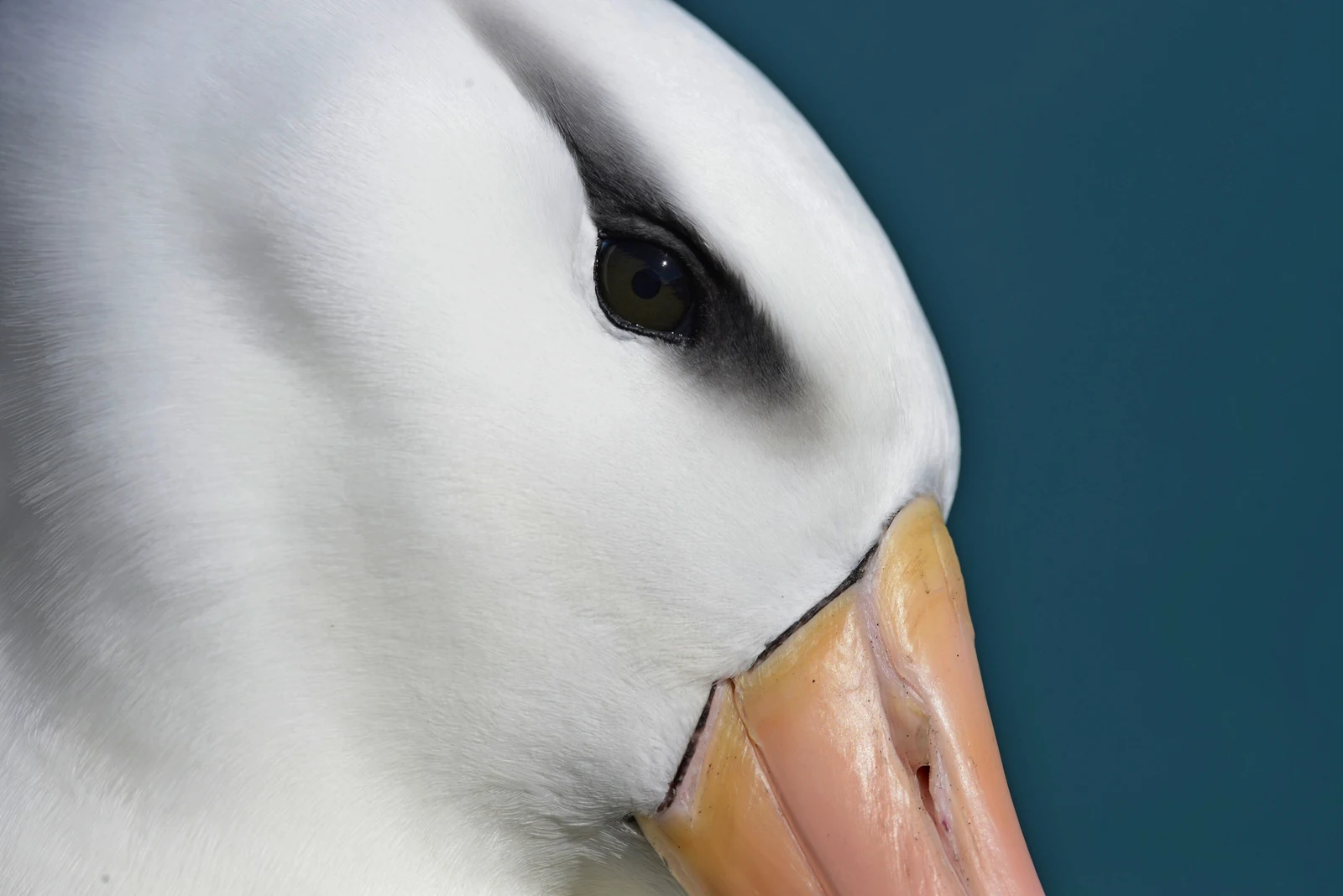
Rodrigo González Pairoa filled the frame with the face of a Black-browed Albatross at Chile’s remote Albatross Islet. The plain blue background lets the dark eye line, bill and feather texture direct the viewer’s attention.
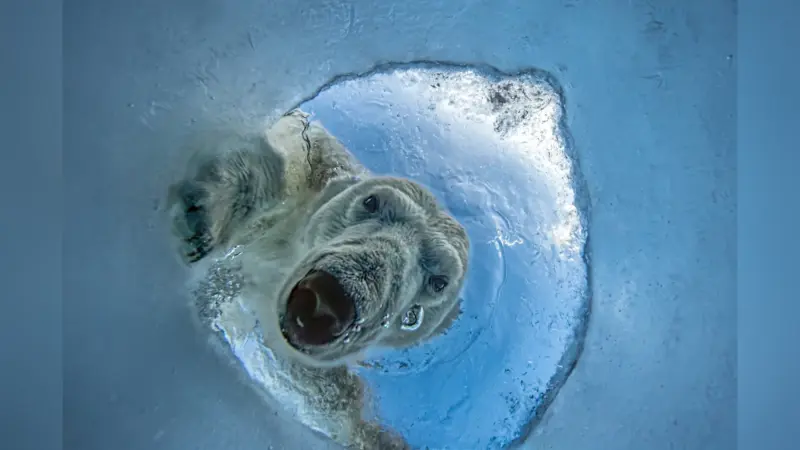
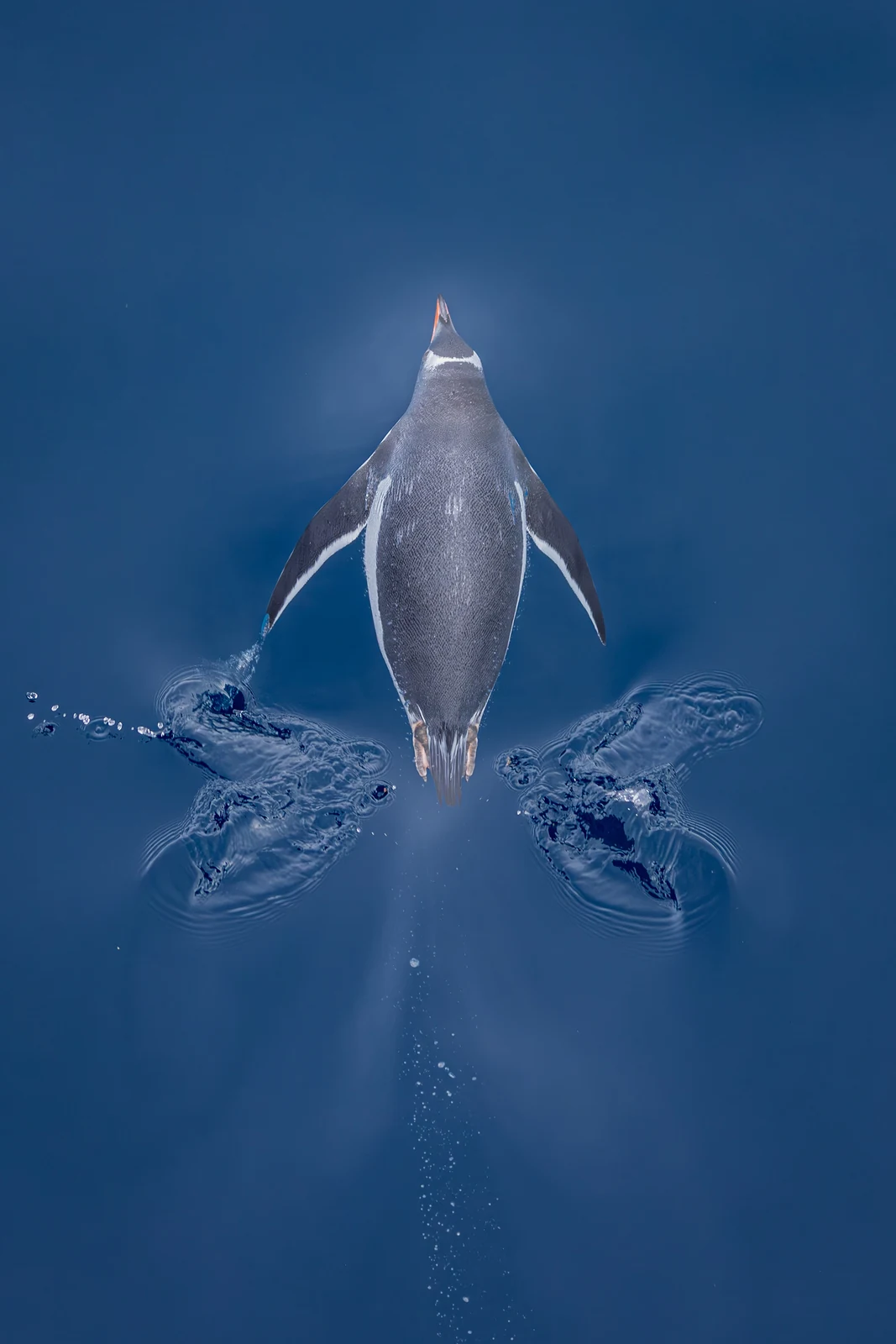
From a height of about 40 metres aboard a Chilean Navy vessel, Gonzalo Bertolotto Quintana photographed a Gentoo Penguin vertically from above. Bubbles and two water vortices reveal how the bird’s wings work like flippers beneath the surface.
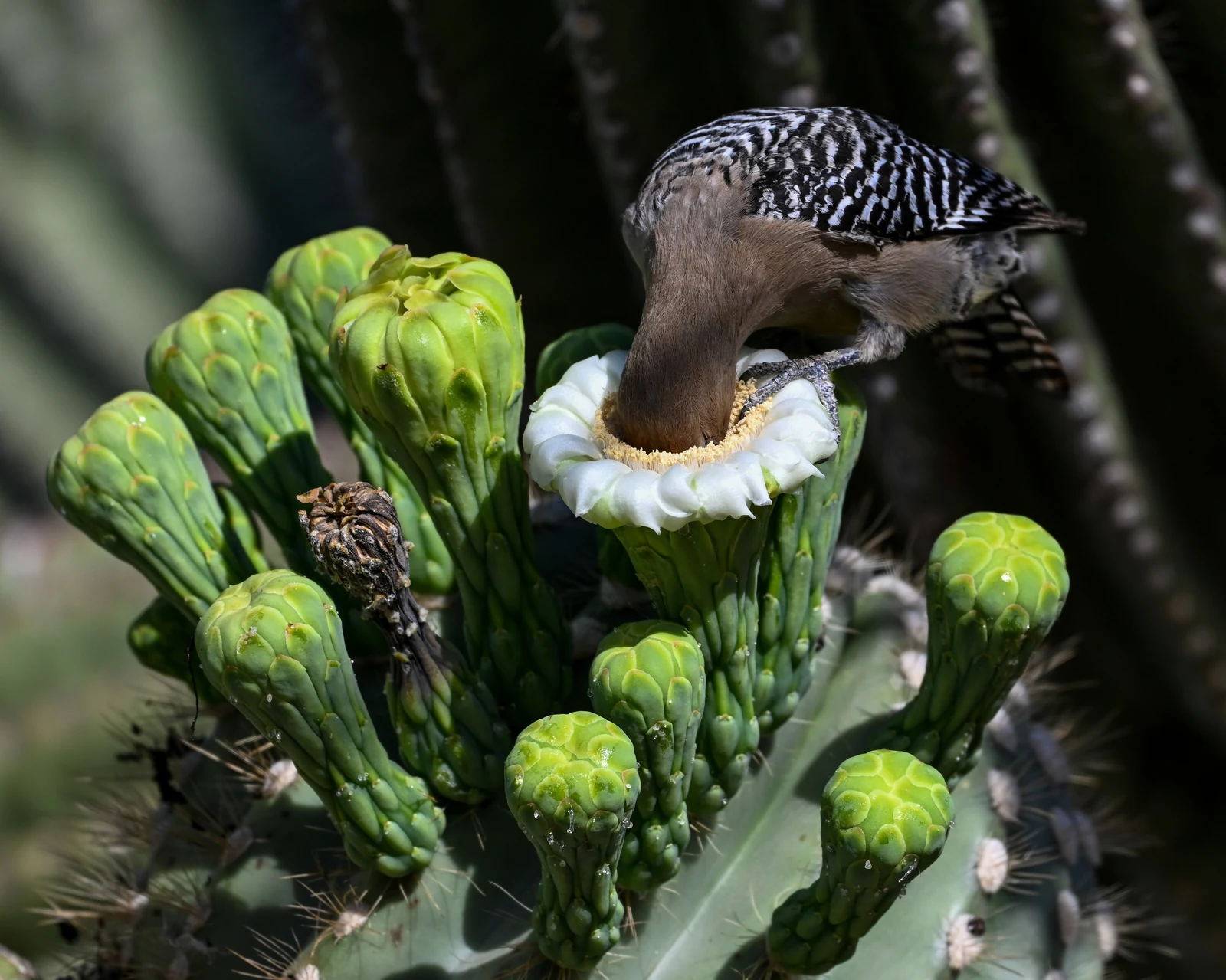
Mike Henry returned each morning to wait for the short-lived flowers of a saguaro cactus in Arizona to open. When they did, a female Gila Woodpecker pushed its entire head into a blossom for nectar, showing the species’ close relationship with the plant.
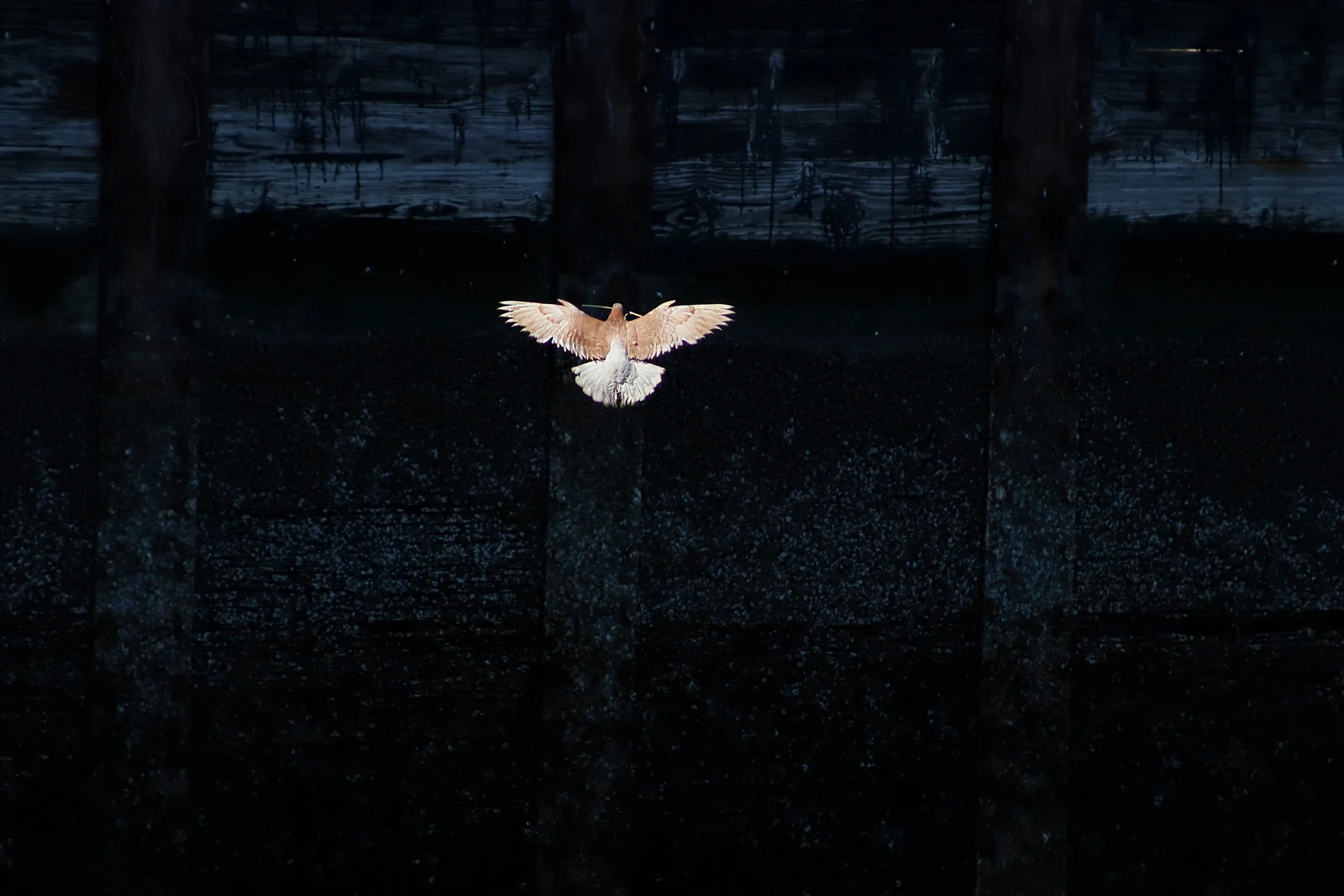
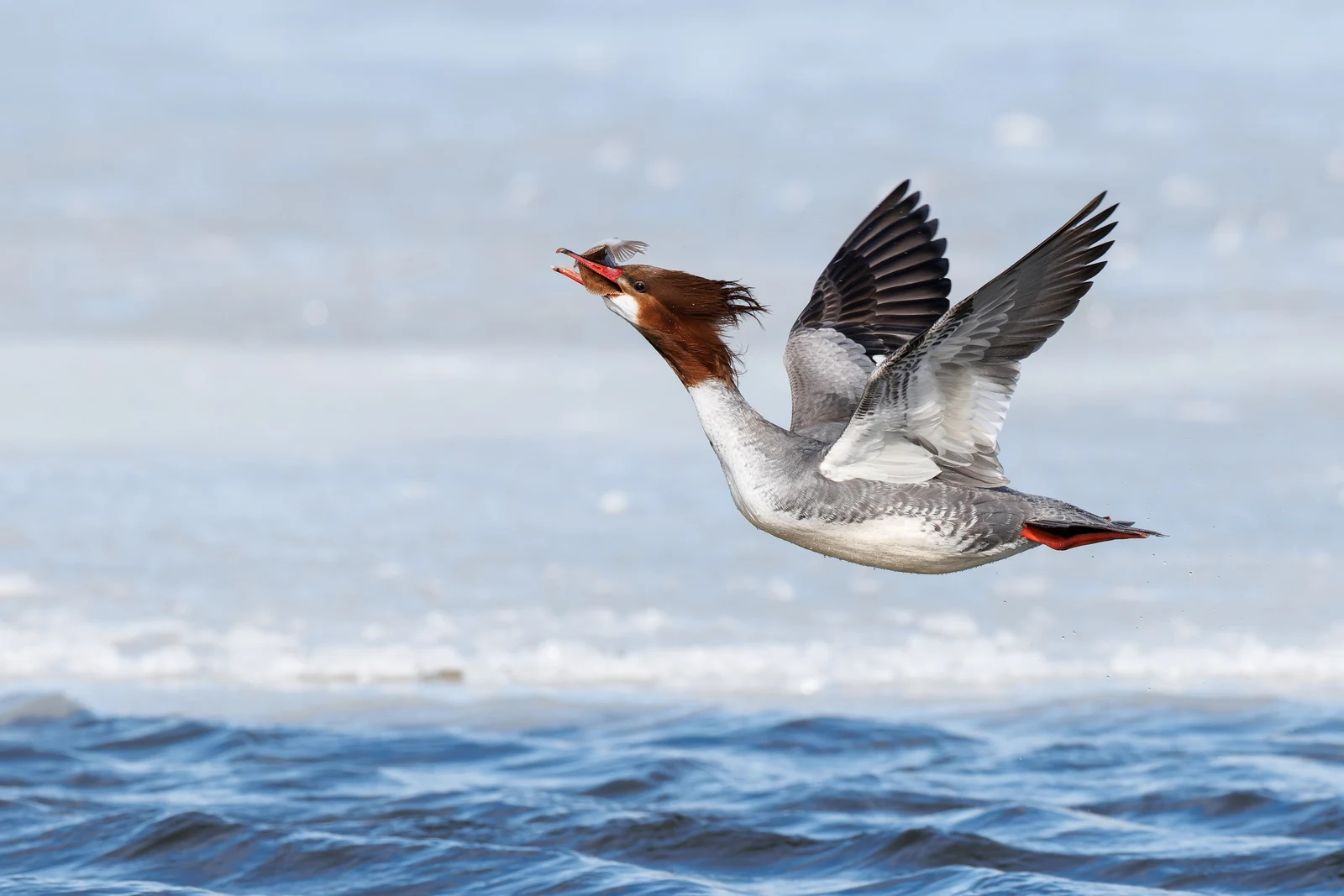
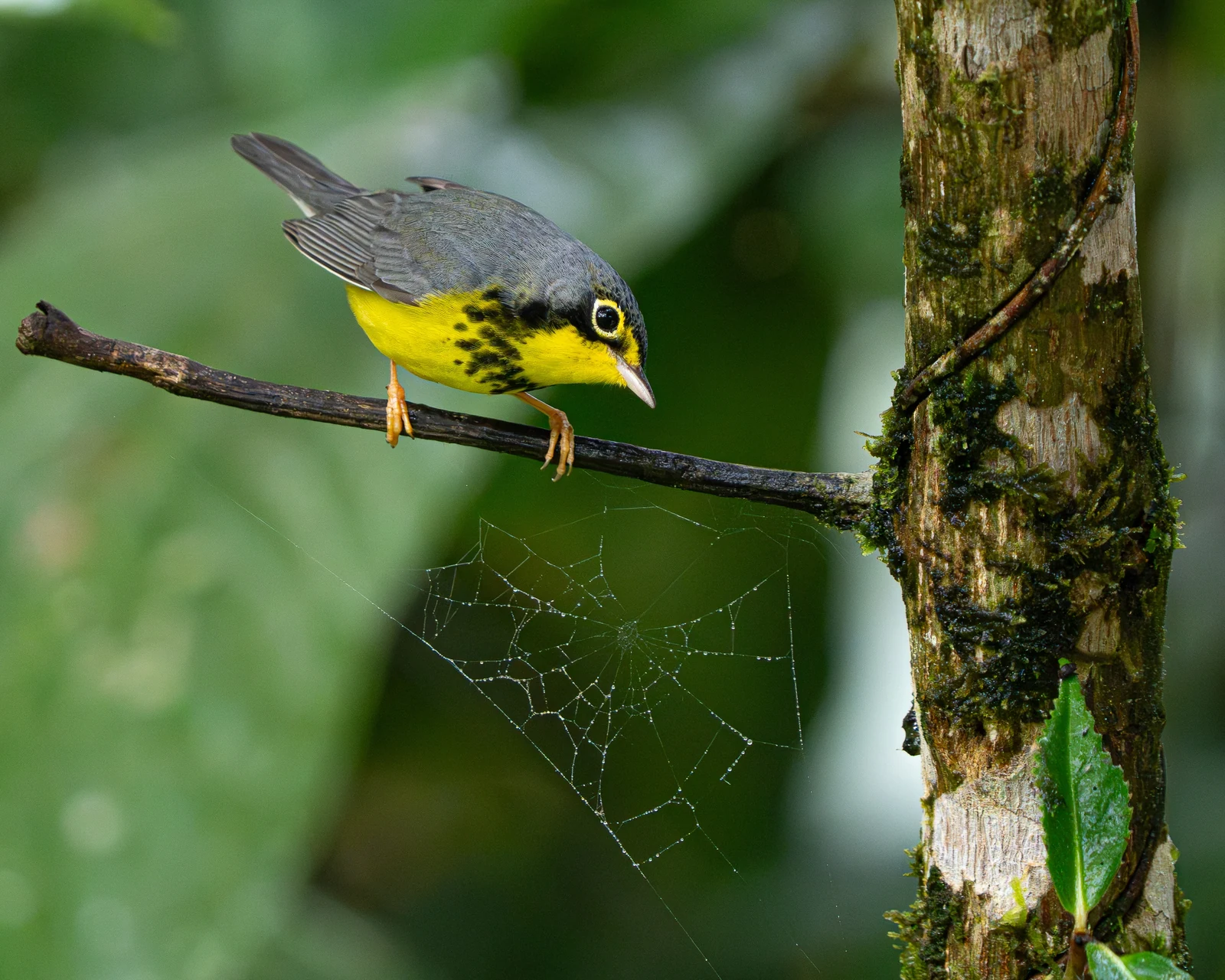
Youth winner Ian Shultz transformed a familiar Rock Pigeon into a geometric study of flight beneath a Seattle pier. In Nova Scotia, Gail Bisson caught a female Common Merganser taking off with a fish in its bill, while in Colombia Juan David Camacho Márquez photographed a Canada Warbler apparently studying a dew-covered spider web.
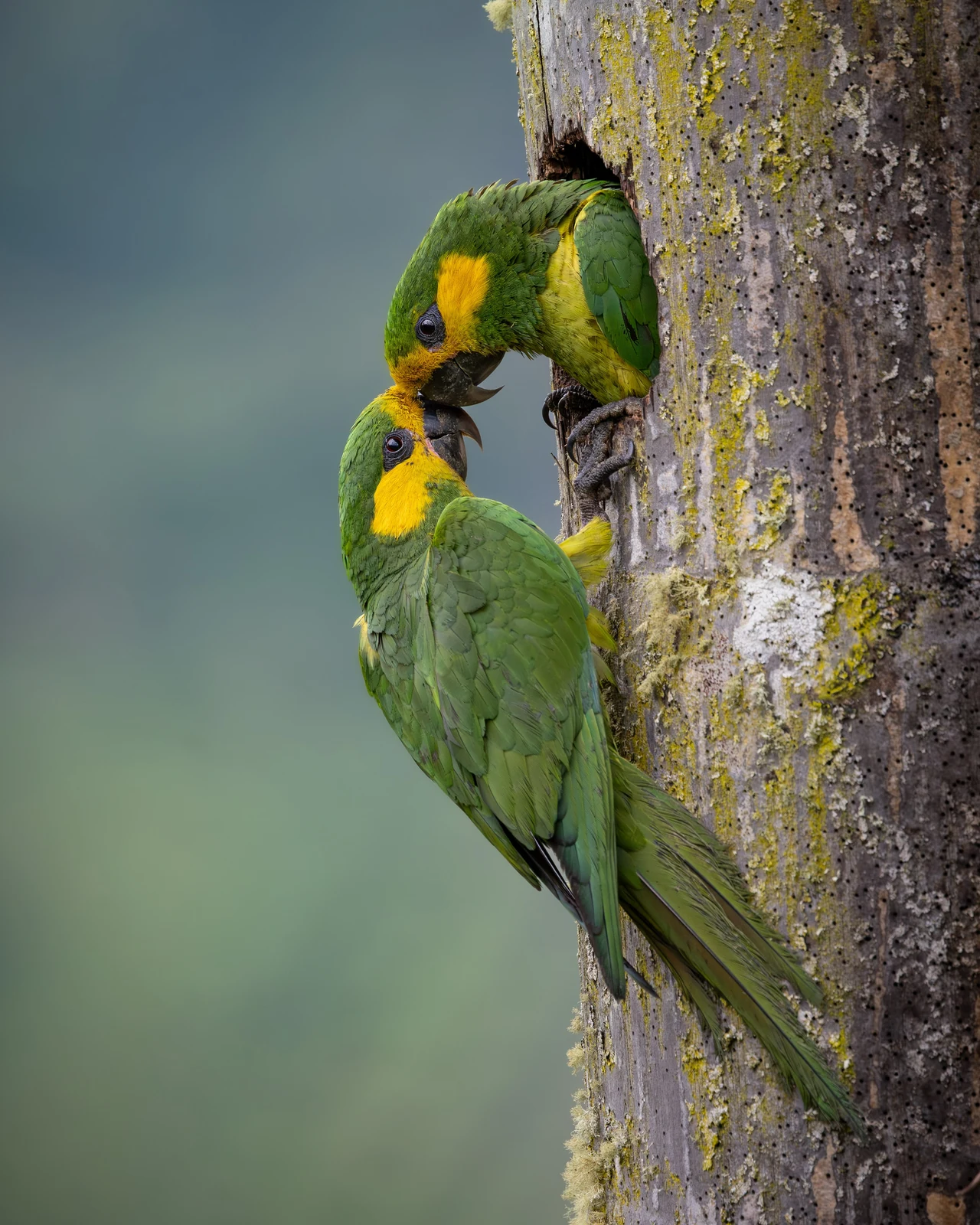
Finally, Santiago Giraldo waited for more than eight hours under Tolima’s wax palms for a pair of Yellow-eared Parrots. Instead of the nest entrance he expected, he recorded the two birds preening each other at the cavity.
The conservation stories
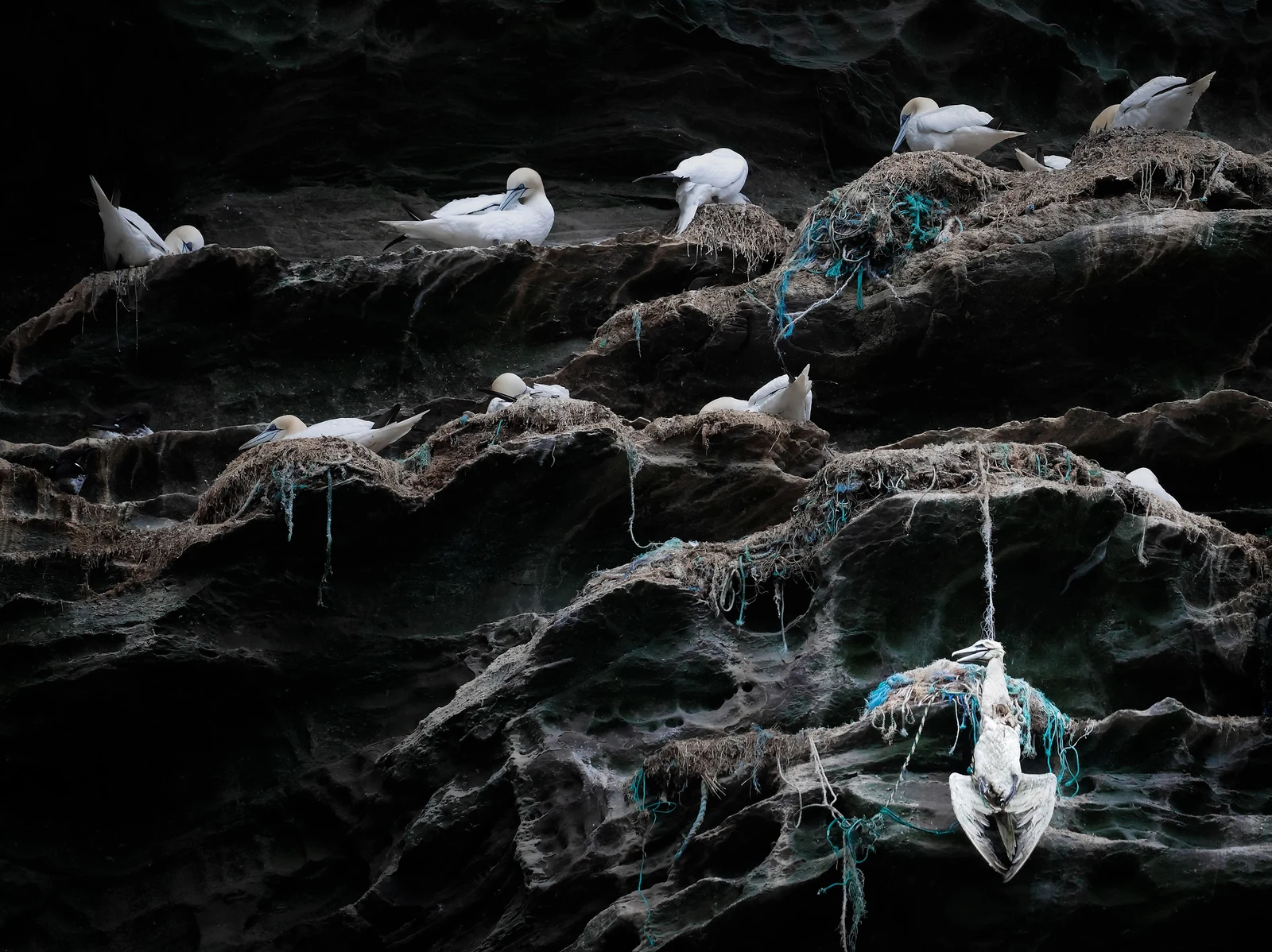
Josh Galicki’s image is the hardest to look at. A dead Northern Gannet hangs from fishing line below a living colony on the Isle of Noss in Shetland. The contrast between nesting and death condenses the cost of synthetic fishing material, which can entangle birds or even become incorporated into their nests.
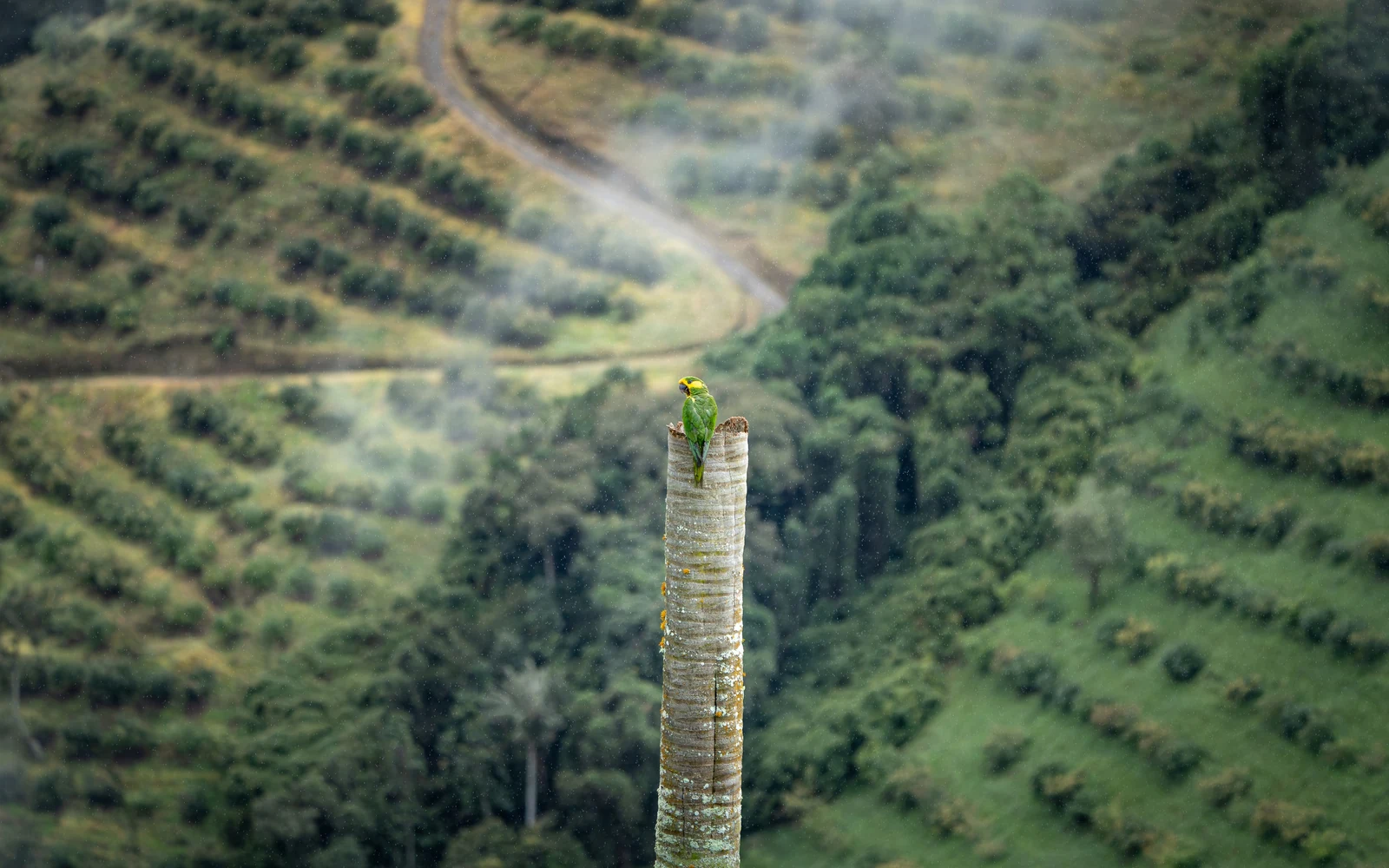
Santiago Pérez Rincón photographed a Yellow-eared Parrot on a dead wax palm, with Hass avocado crops forming geometric patterns in the background. The species had fallen to about 80 individuals by the late 1990s, and recent estimates have exceeded 2,000 following intensive protection. The recovery remains fragile because the bird depends on wax palms for food and nesting.
The two video awards
Piper VanOrd placed GoPro HERO11 cameras below the Allegheny River’s surface every morning and evening, seeking an underwater view of Great Blue Heron feet. The decisive moment arrived on the 963rd day of observation: a bird struck at small fish and landed with its feet in the centre of the frame.
At Isla Chañaral Marine Reserve, Nicolás Muñoz García submerged a GoPro HERO12 in clear water as Black-browed Albatrosses approached a research vessel. One bird dived to investigate the camera, providing a slow-motion look at its eyes, webbed feet and underwater movement.
What we think
The 2026 selection works best when technical skill serves a precise observation. The results do not depend only on rare species or expensive equipment: several images emerged from backyards, piers and familiar habitats after persistent watching. The strongest thread is the bird’s relationship with its environment — from an active crater and a dark cave to a plantation and fishing line turned into a trap.
The parallel presence of photography and video also shows how nature storytelling is changing. A photograph condenses a moment into composition and light, while video reveals movement and behaviour that a single frame cannot easily describe.
Frequently asked questions
How many winners are in the 2026 Audubon Photography Awards?
The official list contains 17 winners: 15 photographs and two videos.
How was the competition divided?
There were two parallel contests, one for the United States and Canada and one for Chile and Colombia, with separate prize categories and awards.
Who won the Grand Prizes?
Jacqueline Burke won for the United States and Canada, and Francisco Castro Escobar won for Chile and Colombia.
Was there a Greek winner?
No Greek distinction appears in the official 2026 winners list.
Where can the official results be found?
On the official Audubon winners page.