Summary
- The Taraia Object in satellite imagery was thought to be possible wreckage from Amelia Earhart’s plane.
- An expedition to Nikumaroro found that it was most likely a collection of trees.
- Its shine came from a natural carbonate coating.
- The 1937 disappearance remains unsolved.
A satellite image raised fresh hopes of locating Amelia Earhart’s missing aircraft, but the expedition that reached Nikumaroro concluded the suspicious object was most likely a collection of large trees.
The October 19, 2026 announcement by the Archaeological Legacy Institute, Purdue Research Foundation and Purdue University rules out this particular lead, not the enduring mystery of Earhart’s 1937 disappearance.
Why the satellite image looked like an airplane
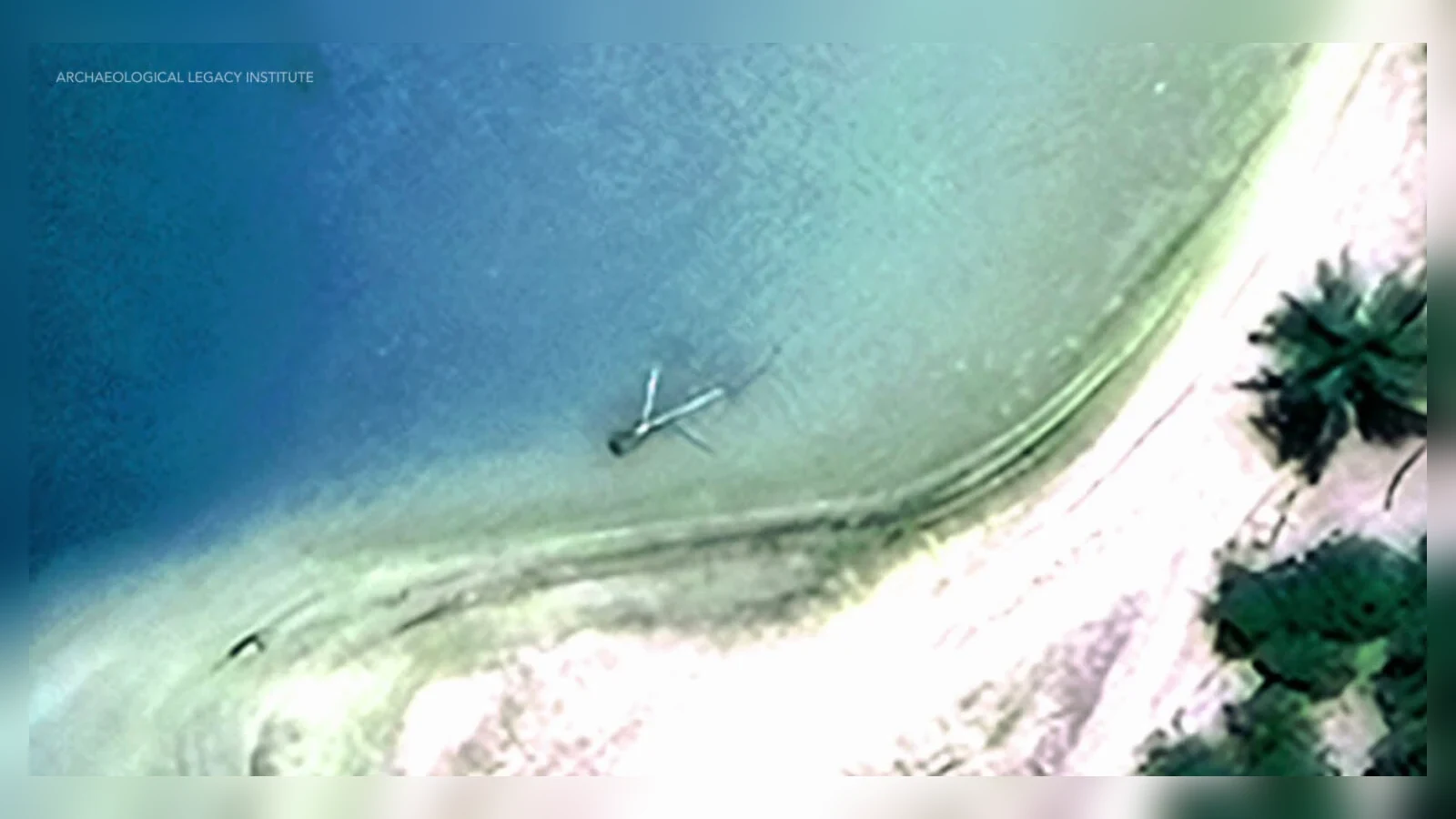
The so-called Taraia Object appeared as an anomaly in satellite imagery of the island’s lagoon. Its elongated outline and reflective surface inspired speculation that it could be part of the Lockheed Electra 10-E.
The expedition to inspect the Taraia Object was organized to test that interpretation on site, using direct observations and survey instruments rather than satellite imagery alone.
What the expedition actually found
By the time researchers reached the site, much of the material had broken apart and washed away. A smaller Y-shaped segment remained, far less substantial than the object visible in earlier imagery.
According to Purdue, the material was most likely large trees deposited along the Taraia Peninsula sandspit. What had appeared to be a metallic reflection was instead a carbonate coating on the debris.
The team conducted field and underwater surveys but found no conclusive evidence linking this object to Earhart. Other items were collected, including a roughly 30-inch steel tube for further study; it has not been identified as aircraft wreckage.
Earhart’s disappearance remains unresolved
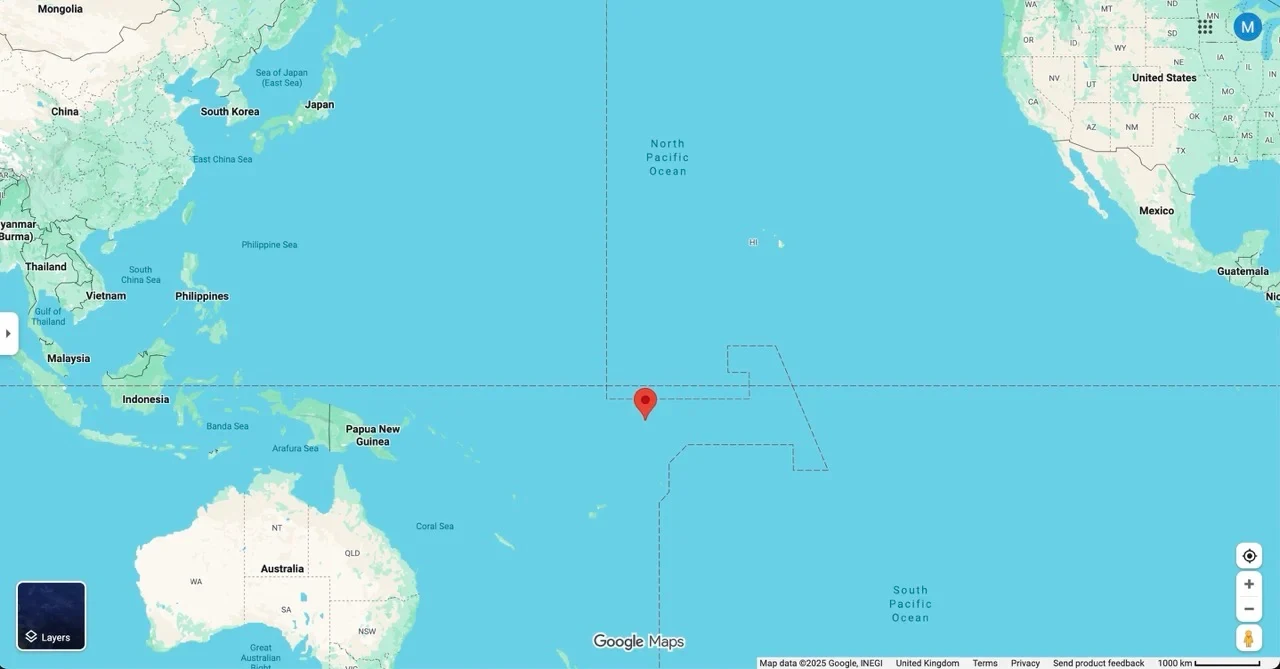
Amelia Earhart and navigator Fred Noonan disappeared on July 2, 1937 while attempting to reach Howland Island during their round-the-world flight. Neither the crew nor their Lockheed Electra has been conclusively located.
The expedition team continues to consider the theory that the aircraft landed on the Nikumaroro reef and the pair were stranded there. Earlier discoveries of bones and 1930s objects, as well as radio evidence, have been cited in support, but none has conclusively established that Earhart reached the atoll.

What we think
For photographers and image researchers, the revealing part of this story is how persuasive an ambiguous picture can become when viewers are already looking for a particular object. A wing-like shape and a bright reflection can justify a hypothesis, but they cannot establish an identification.
Fieldwork matters precisely because it can overturn a compelling interpretation. The researchers did not find the aircraft, but they established a plausible explanation for the shape in the pixels and the natural coating that resembled metal.
Satellite images are powerful tools for locating and mapping potential evidence. Yet they need to be checked against physical reality, particularly when the object in question carries the weight of a nearly 90-year-old mystery.
Frequently asked questions
Has Amelia Earhart’s airplane been found?
No. The expedition did not find confirmed wreckage of the Lockheed Electra 10-E.
What was the Taraia Object?
On-site observations suggest it was most likely a collection of large trees with a reflective carbonate coating.
Does this disprove the Nikumaroro theory?
No. It rules out a particular interpretation of the satellite anomaly, while the broader theory remains unproven.