


Summary
- A new expedition will investigate the remote island of Nikumaroro in October 2026.
- Its main objective is to inspect the Taraia Object seen in a 2016 satellite image.
- The object may be part of an aircraft or a fallen coconut tree.
- The team will use sonar and magnetometers to survey the lagoon.
- Amelia Earhart’s airplane has not been found since her disappearance in 1937.
A new expedition to the remote island of Nikumaroro will investigate whether a disputed object seen in a satellite image is Amelia Earhart’s missing airplane or simply a fallen coconut tree.
Purdue University has announced an expedition to Nikumaroro, primarily intended to inspect the so-called Taraia Object, which appears inside the island’s lagoon in a 2016 satellite image.
The investigation is significant because, 89 years after Earhart and navigator Fred Noonan disappeared, the Lockheed Model 10 Electra they were flying has never been found, despite numerous expeditions and theories.
The object seen in the satellite image
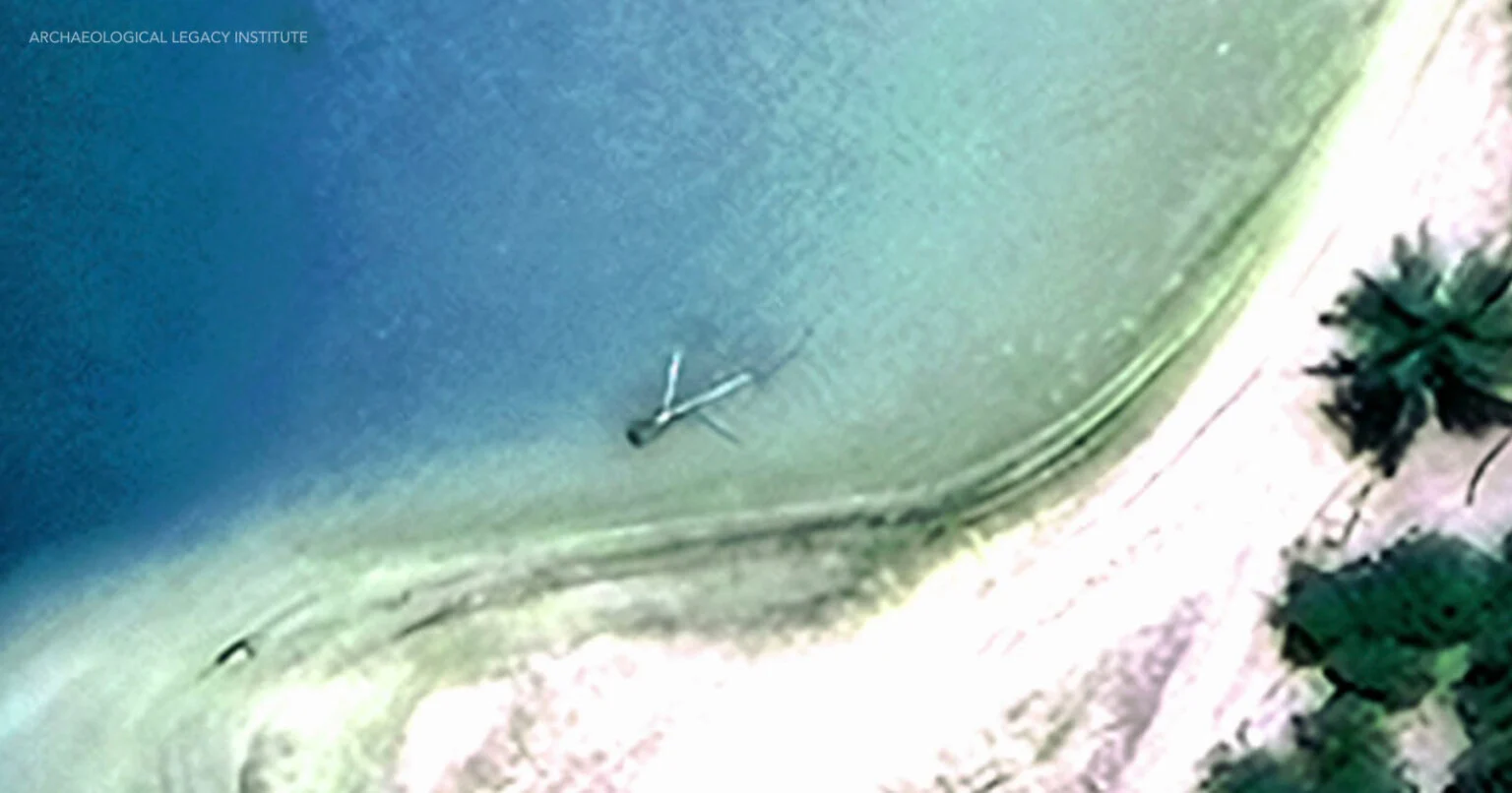
The renewed interest centers on a satellite photograph captured in 2016, after a storm shifted sand inside Nikumaroro’s lagoon. The image shows an elongated object that researchers believe resembles part of an aircraft.
The feature has been named the Taraia Object. One possible explanation is that it is simply a fallen coconut tree. Expedition leader Richard Pettigrew, however, believes the possibility that it is part of Earhart’s airplane cannot be ruled out.
An inspection on the ground is considered essential because satellite imagery alone does not provide enough detail to identify the object with certainty.
The difficult journey to Nikumaroro
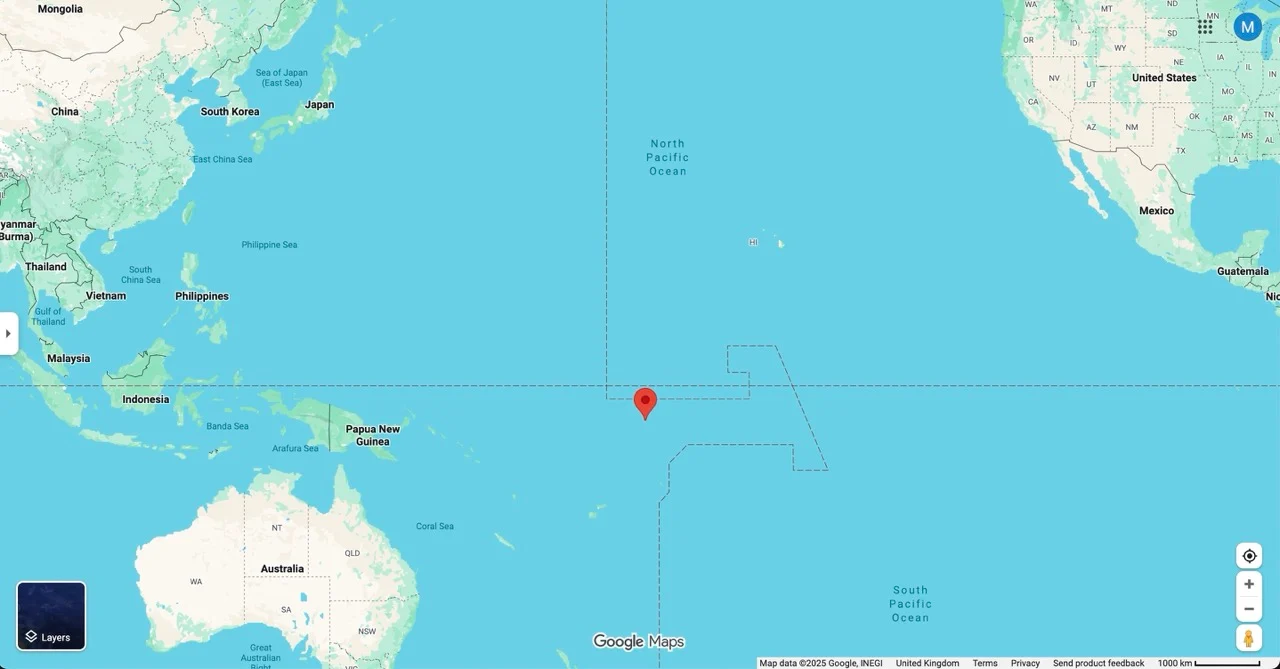
Nikumaroro is a remote island in the western Pacific Ocean, near the area where Earhart’s final desperate radio messages were recorded.
The team plans to depart on October 7, 2026. Reaching the island will require an approximately 830-nautical-mile boat journey from Tarawa, Kiribati, expected to take six days. The researchers intend to remain on Nikumaroro for several days.
The island’s isolation, limited infrastructure, and challenging sea conditions make the expedition particularly demanding.
Sonar and magnetometers in the search
The expedition will use sonar technology and magnetometers to survey the lagoon and surrounding areas for metal objects or other evidence that could be linked to the Lockheed Model 10 Electra.
Sonar can reveal the shape of the seafloor and objects that are not visible from the surface, while magnetometers detect changes in the magnetic field that may be caused by metal wreckage.
Even if the Taraia Object proves unrelated to the airplane, a systematic survey could provide new information about the area and help eliminate some possible scenarios.
Earlier discoveries on the island
The satellite photograph is not the only evidence behind the theory that Earhart may have made an emergency landing on Nikumaroro.
A human skull and bones were discovered on the island in 1940. The remains were later lost, but an analysis published in 2018 concluded that the available measurements were strongly consistent with those of a woman.
Other objects found on Nikumaroro include a woman’s shoe, a compact case, a jar of freckle cream, and a medicine vial. The artifacts date from the 1930s, although no conclusive evidence has established that they belonged to Earhart or Noonan.
The disappearance of Amelia Earhart
Amelia Earhart and Fred Noonan disappeared on July 2, 1937, during their attempt to fly around the world.
The most widely accepted official explanation is that the aircraft ran out of fuel and crashed into the Pacific near Howland Island. The alternative Nikumaroro hypothesis suggests that the crew may have landed on a reef or beach and survived on the island for some time.
No wreckage has yet been conclusively identified as part of the Electra.
Previous false alarms
The history of the search for Earhart includes several discoveries initially presented as possible solutions to the mystery but later disproved.
In 2024, an underwater drone recorded an airplane-like shape on the floor of the Pacific Ocean. A subsequent investigation established that it was a natural rock formation rather than the missing Electra.
The incident demonstrates how easily an unclear visual trace can be interpreted as an artificial object. Identifying the Taraia Object will therefore require physical inspection, accurate measurements, and documentation using multiple instruments.
What we think
The new expedition has a clear and testable objective: determining what the 2016 satellite image actually shows. The Taraia Object may indeed prove to be a fallen coconut tree or another natural feature, so expectations should remain measured. Nevertheless, the use of sonar, magnetometers, and direct observation provides a meaningful opportunity to evaluate the hypothesis through evidence rather than image interpretation alone.
Frequently asked questions
What is the Taraia Object?
It is an elongated object seen in a 2016 satellite image of Nikumaroro’s lagoon. Researchers have not established whether it is aircraft wreckage or a natural object such as a fallen coconut tree.
When will the expedition take place?
The team is scheduled to depart on October 7, 2026. The sea journey from Tarawa to Nikumaroro is expected to take approximately six days.
Why do researchers connect Nikumaroro with Amelia Earhart?
The island lies near the area associated with her final radio messages, and human bones and objects dating from the 1930s have been discovered there. None of this evidence, however, has been conclusively linked to Earhart.
What technology will be used?
The team will use sonar to map the seafloor and magnetometers to detect possible metal objects.
Has Amelia Earhart’s airplane ever been found?
No. Despite numerous searches and occasional reports of possible discoveries, no object has been conclusively identified as part of the Lockheed Model 10 Electra.