Summary
Ricoh is already using AI to turn footage from 360-degree cameras into detailed 3D building models, with processing taking around half a day.
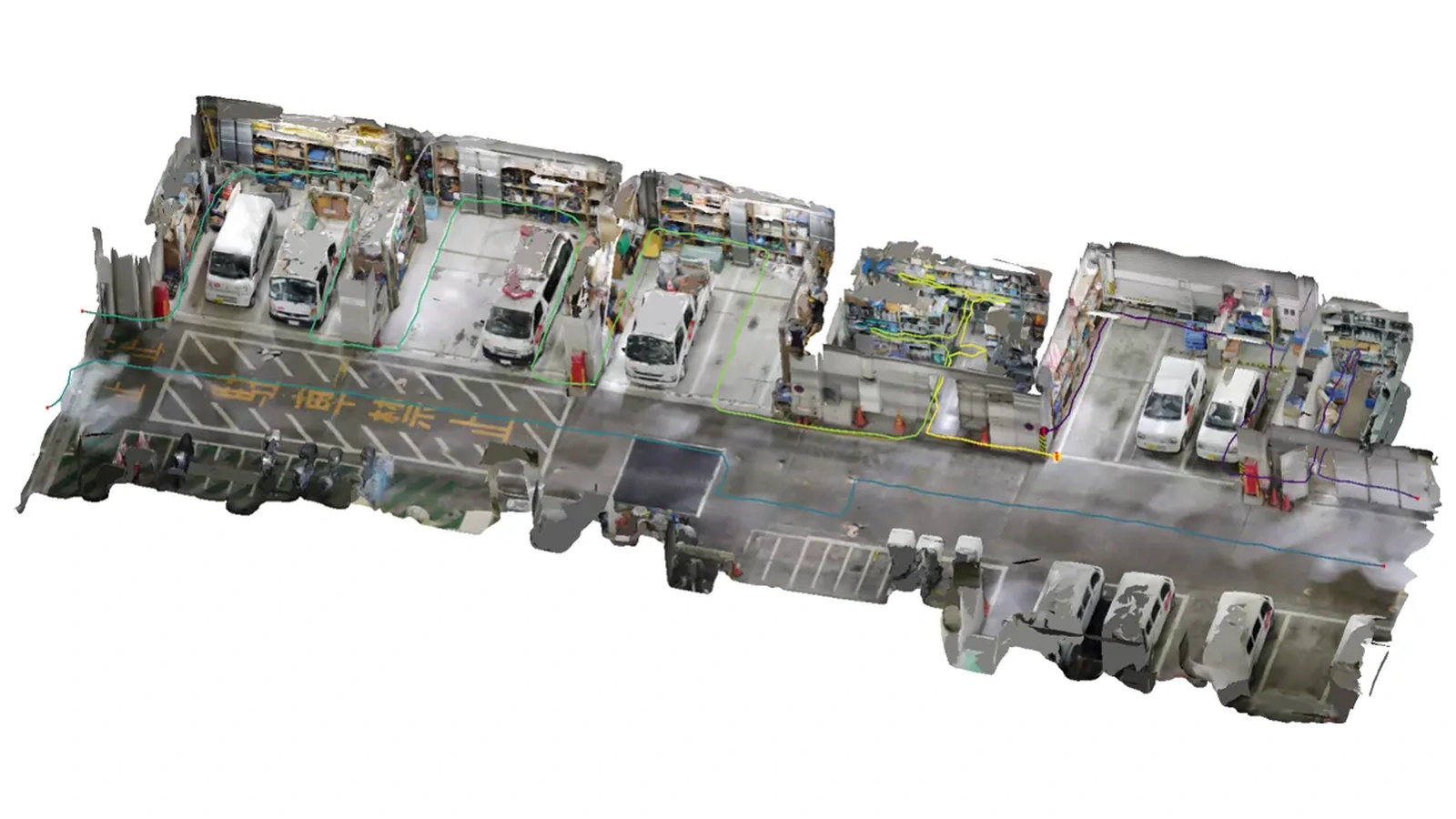
Announced on October 26, 2026 by Ricoh and Ricoh Japan, the technology is now in operation within Tokyo Electric Power Grid’s building maintenance work. This is more than a laboratory demonstration: the Japanese power-grid operator is using the models to monitor its facilities and track changes over time.
How Ricoh builds 3D models from 360-degree video
A camera operator moves through a space recording 360-degree video. The system estimates camera positions and uses AI to reconstruct the surrounding geometry. Plain white walls, floors and other low-texture surfaces are a major challenge for conventional reconstruction: there are too few visual features to reliably infer their shape, leaving large missing areas.
Ricoh’s approach considers how walls and floors connect and the overall room layout, filling in geometry where the video offers limited visual cues. In its published comparison, the new method reconstructs most of a room’s surfaces, while the earlier approach leaves large gaps.
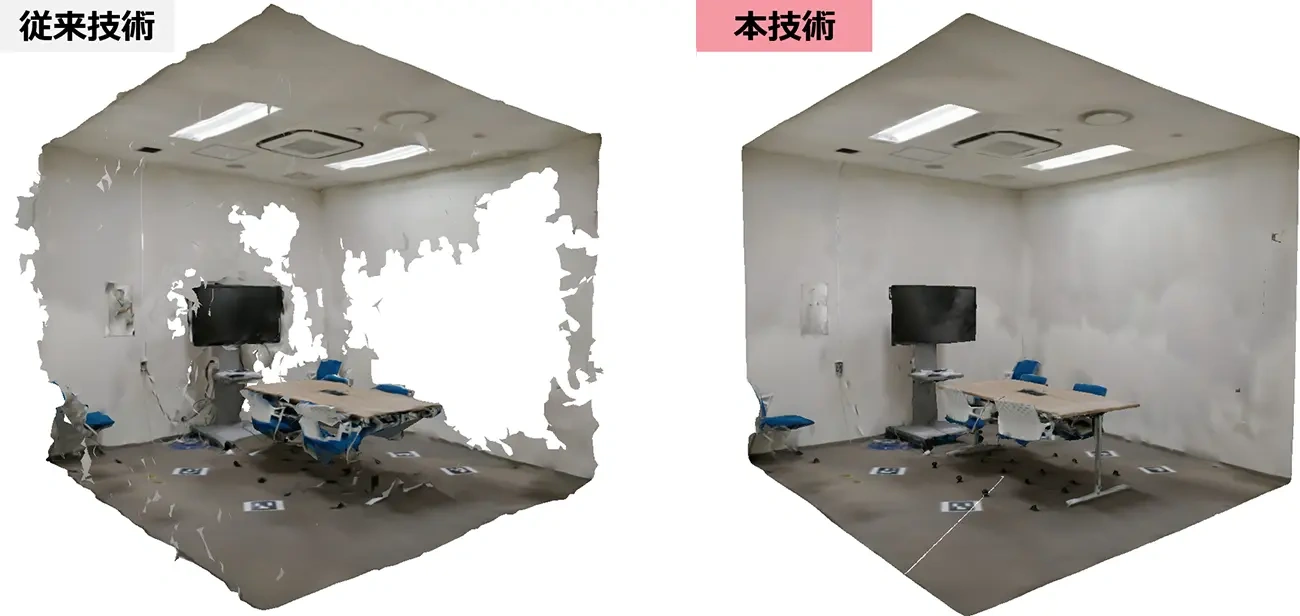
The output is a mesh-based 3D model: actual surfaces describe the geometry of the space. Ricoh distinguishes this from a primarily visual 3D Gaussian Splatting representation. A geometric model can support distance and area measurements, cross-sections and interference checks.
Ricoh describes its performance as among the world’s best, based on its own September 2026 comparison of commercial technologies using only 360-degree video. Its test defines a missing region as one differing by at least 100 millimeters from reference laser-scan data. The ranking is not an independently validated result.
From days to half a day
Users upload their footage to RICOH Digital Twin Workplace, where Ricoh says a detailed 3D model can be generated in roughly half a day. It compares this with specialist scanning workflows using equipment such as laser scanners, which can take several days from capture to model generation. Independent speed benchmarks across different building types have not been published.
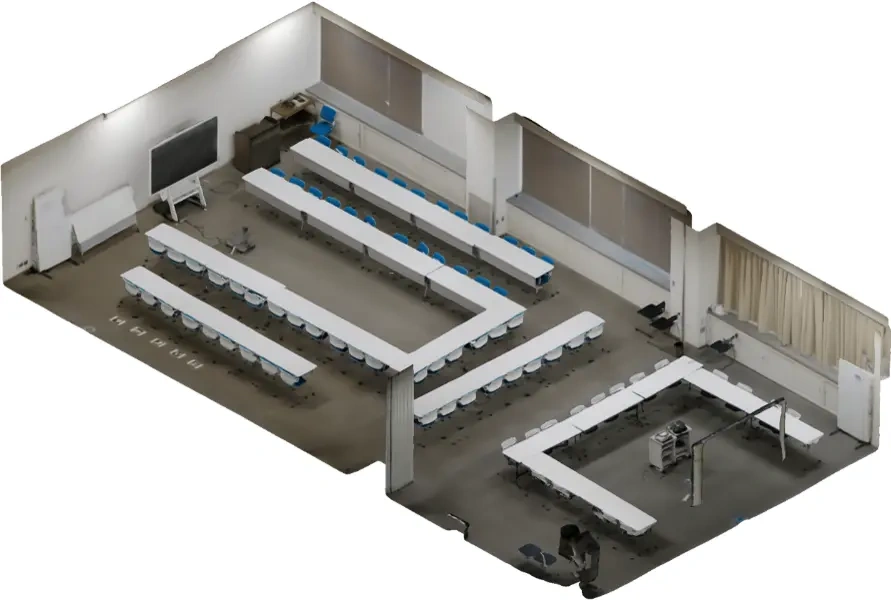
The platform provides remote viewing on a computer or tablet, annotations, measurements and links between 3D spaces and building information. More information here.
Already being used in real buildings
Tokyo Electric Power Grid began testing digital twins in June 2026, mainly across office buildings. It has now incorporated 360-video-based 3D model generation to keep the digital record up to date after construction work or equipment changes. Information such as building names, floor numbers and room identifiers is linked to each space, making inspections possible without always visiting the site.
Ricoh supplies the 3D model-generation technology, while Ricoh Japan provides the platform and implementation support. The companies envisage applications in construction, manufacturing and facilities management. The announcement does not identify the specific 360-degree camera model used at the site.
What we think
For photographers and filmmakers, the compelling part is that 360-degree footage can become much more useful than a virtual tour. A crew could document a location, return months later and have a spatial reference for what changed, without bringing bulky scanning equipment on every visit.
The toughest photogrammetry problems often sit in the most ordinary-looking places: a blank wall or an unmarked floor. Ricoh’s comparison makes a good case for why filling those surfaces matters. For technical documentation, though, we would also want accuracy measurements across a variety of real environments, not just a reduction in visible holes.
It is also good to see 360-degree imaging finding this kind of practical use. From earlier consumer cameras such as the Ricoh Theta SC2 to today’s digital-twin workflows, the same form of capture gains a different value when software can interpret the surrounding space.
Frequently asked questions
What is a building digital twin?
It is a digital representation of a real space that can be connected to facility information and updated as the location changes. Ricoh’s implementation combines geometric 3D models with building management data.
Does the process require a particular Ricoh camera?
The announcement refers to 360-degree camera video but does not specify the camera model used at Tokyo Electric Power Grid or provide a complete compatibility list.