Summary
- The 7Artisans AF 10mm f/4 launched on October 29 for Sony E and Fujifilm X APS-C cameras.
- It weighs about 71g, measures 33mm in length and provides a 108° field of view.
- It has STM autofocus, nine optical elements in seven groups and a minimum focus distance of 20cm.
- The reported Chinese launch price is 669 yuan, with a regular price of 699 yuan and no confirmed Greek price.
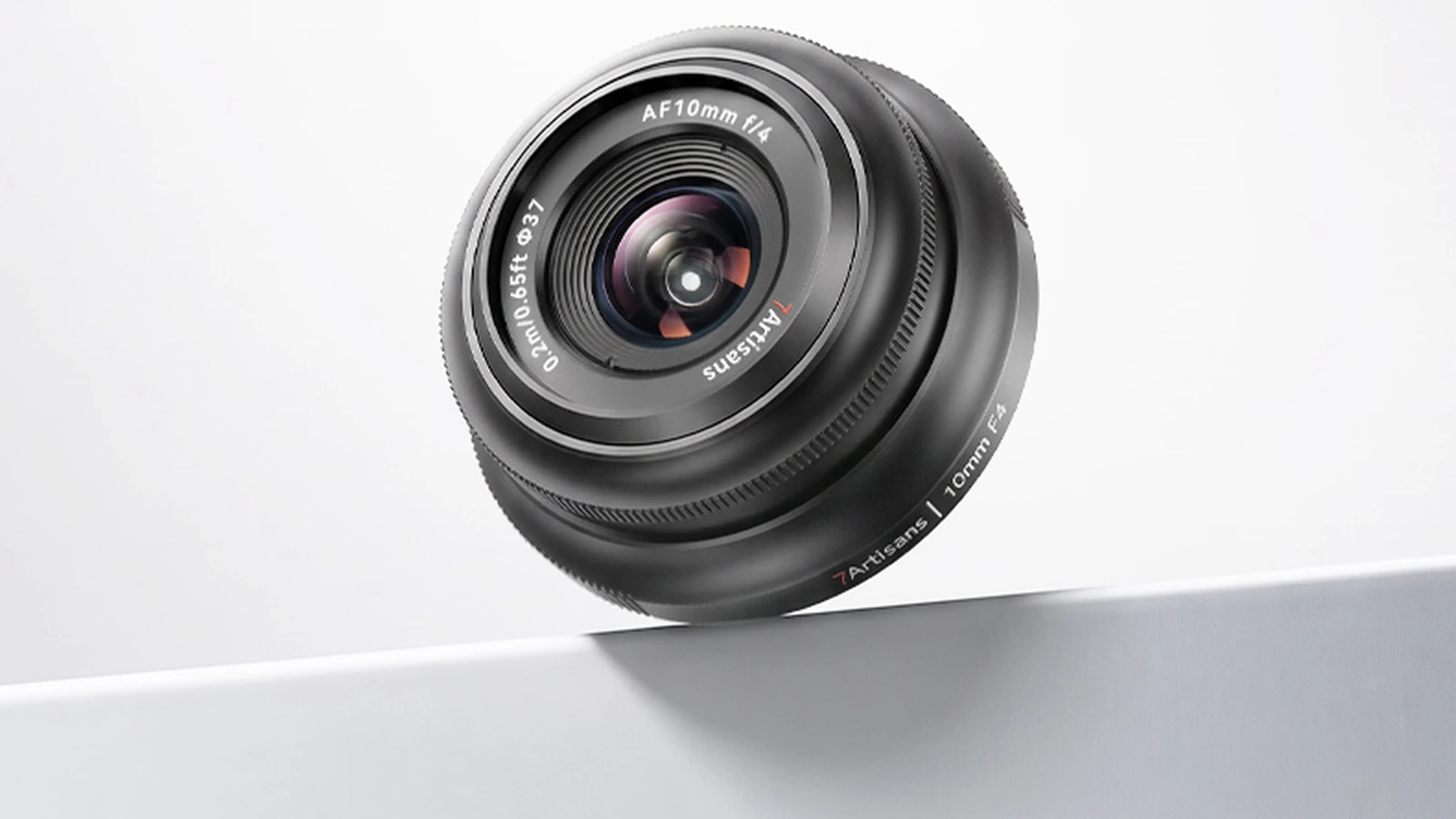
At just 71 grams, the new 7Artisans AF 10mm f/4 puts an ultra-wide view and autofocus into an unusually small lens for APS-C mirrorless cameras.
7Artisans launched the lens on October 29, 2026, initially for Sony E and Fujifilm X. Its 10mm focal length provides a 108° angle of view, roughly equivalent to a 15mm lens on full frame, making it attractive for travel, interiors and architecture.
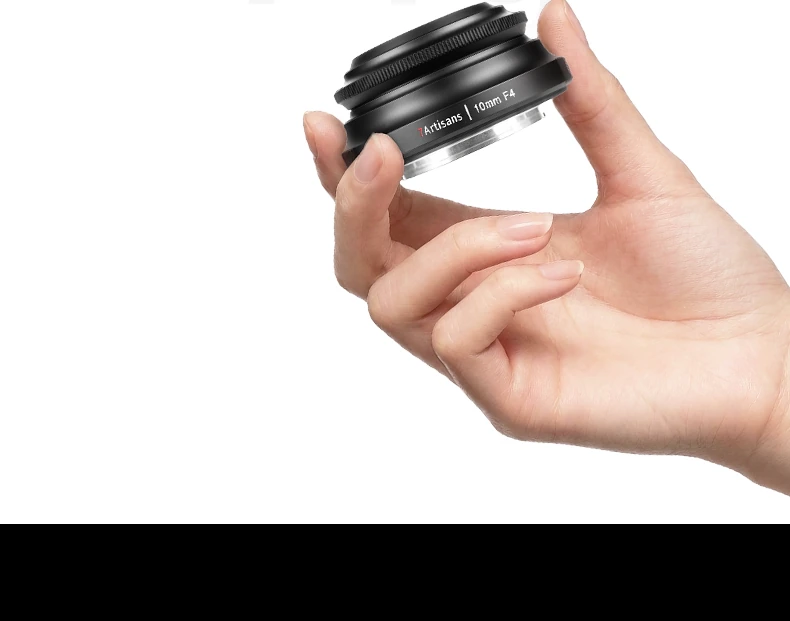
71 grams and a 33mm-long body
The lens measures just 33mm in length and about 63mm in diameter. This pancake-style design helps keep an APS-C camera compact enough to carry without a large dedicated bag. It also accepts 37mm screw-in filters.
For context, the 7Artisans AF 18mm f/2 is another tiny APS-C autofocus prime, but it provides a more natural field of view of about 27mm equivalent. The new 10mm serves photographers who want significantly more of the scene in the frame, with the stronger perspective that comes with an ultra-wide lens.
STM autofocus and optical construction
The AF 10mm f/4 uses an STM stepping motor for autofocus and can focus as close as 0.2m. That can help with subjects close to the camera or moving within a wide composition, even though a 10mm focal length already offers considerable depth of field in many shooting situations.
Its optical formula contains nine elements in seven groups, including one extra-low-dispersion ED element, one high-refractive-index element and two aspherical elements. The maximum f/4 aperture makes most sense for daylight and well-lit interiors; it is less flexible than a faster ultra-wide lens for astrophotography or low-light scenes.

For architecture, the wide field of view helps include buildings and confined spaces without stepping too far back. Camera tilt still matters: straight lines and nearby objects can take on a very pronounced perspective. The official sample images illustrate the look of the lens, not an independent measurement of sharpness or distortion.
Price and availability
The lens launched in China with a reported introductory price of 669 yuan and a regular price of 699 yuan. Sony E and Fujifilm X versions were announced together. No official euro price or Greek release date has been confirmed.
What we think
We like the idea of an ultra-wide lens that you can simply leave on a compact APS-C camera. At 71 grams, carrying the camera for a walk, a trip or a few spontaneous street shots becomes easier. You are less likely to leave the extra lens at home because of its size or weight.
Autofocus can still be useful at 10mm. When you move in to 20cm from a subject or shoot people moving through the frame, checking focus manually every time interrupts the flow. For video creators setting up a wide shot quickly, that convenience has real value.
The f/4 aperture is the meaningful trade-off. For street photography in decent light, buildings and travel shots, it makes sense to us. If you regularly shoot at night or photograph the stars, a faster lens is the better choice, even if it adds size. This one has a clear purpose: minimal weight, a huge field of view and an affordable way into ultra-wide photography.