

Summary
- Samba and Tango will reenter the atmosphere about 24 hours apart over the South Pacific.
- ESA will fly a specially equipped aircraft from Tonga carrying 30 scientific instruments.
- The measurements will help improve satellite-breakup models and space-debris risk estimates.
- The reentries will not be visible from Greece.
The final two satellites of ESA’s historic Cluster mission will enter the atmosphere about 24 hours apart, while a flying laboratory waits for their luminous breakup over the South Pacific.
Samba is expected to reenter on 31 August 2026 at 23:41:54 Central European Summer Time, with an uncertainty of about ten minutes, followed by Tango on 1 September at 23:33:20, also within a roughly ten-minute window. In Greece, those times correspond to 00:41:54 on 1 September and 00:33:20 on 2 September EEST. Their orbits have been shaped so that destruction takes place above a remote area of the South Pacific.
The campaign matters because satellite reentry is fast, bright and difficult to observe precisely. Data from two nearly identical spacecraft, over the same region on consecutive nights, gives scientists a rare opportunity to test how accurately models predict atmospheric drag, heating and structural breakup.
Two reentries on consecutive nights
Samba and Tango are the last two members of the four-spacecraft Cluster mission. Together with Rumba and Salsa, they were launched in 2000 and studied Earth’s magnetosphere in formation for almost a quarter of a century, recording how the solar wind interacts with the planet’s magnetic field. Scientific operations ended in 2024, but the final phase was designed so that disposal could generate useful data rather than being left to chance.
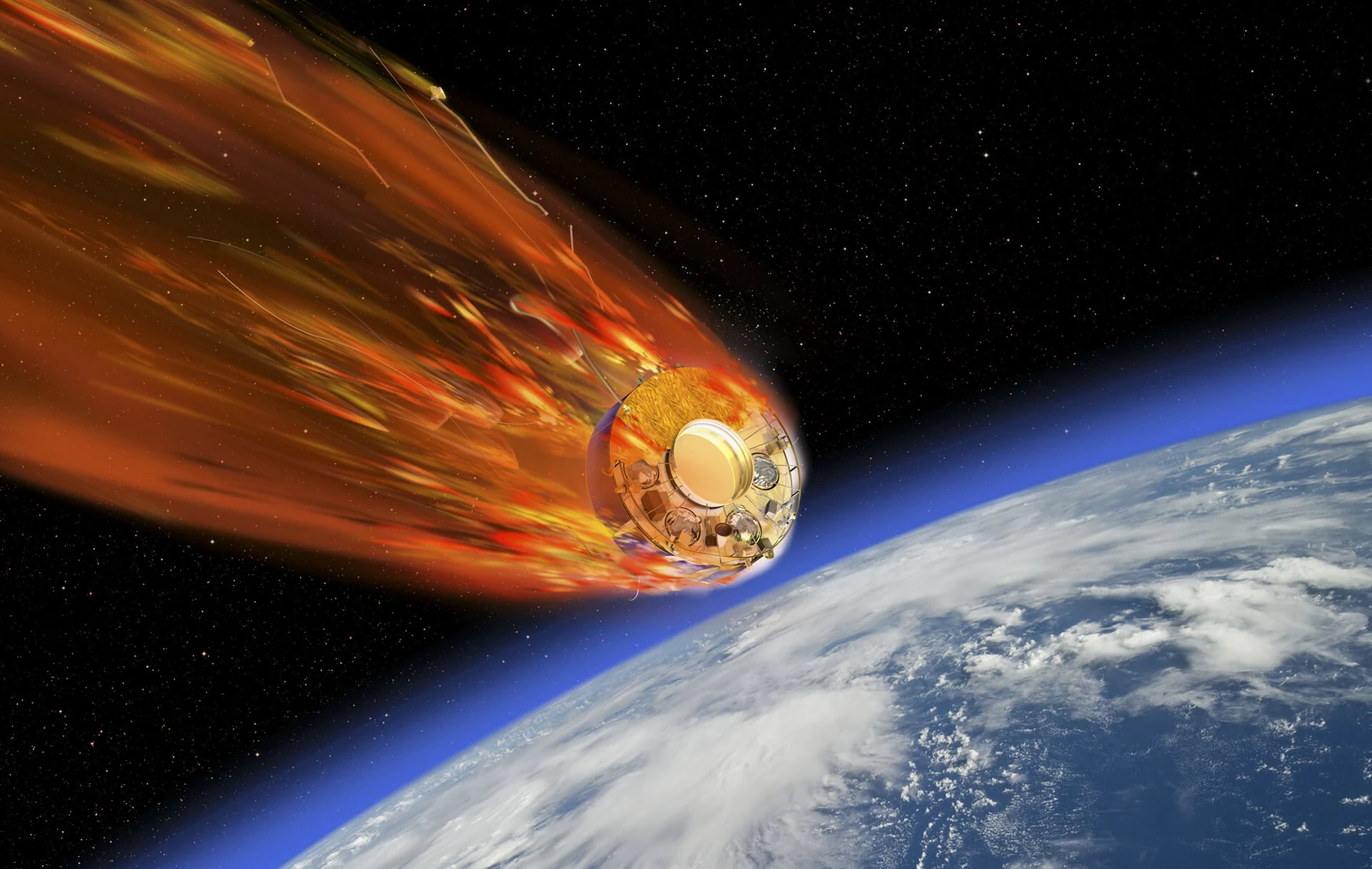
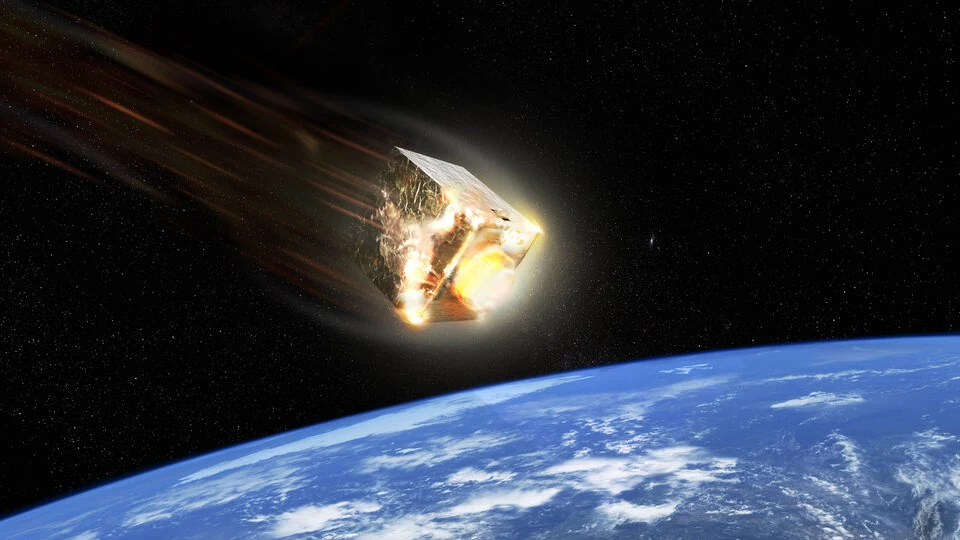
A Cluster spacecraft during its luminous descent through the atmosphere. Credit: ESA.
ESA teams gradually lowered the perigees so that each satellite would be guided into a targeted, but not fully controlled, reentry. Unlike a descent in which a spacecraft remains actively controlled until the end, the timing and region are constrained by earlier orbital manoeuvres. The result is a narrow ground footprint over the ocean, away from densely populated areas.
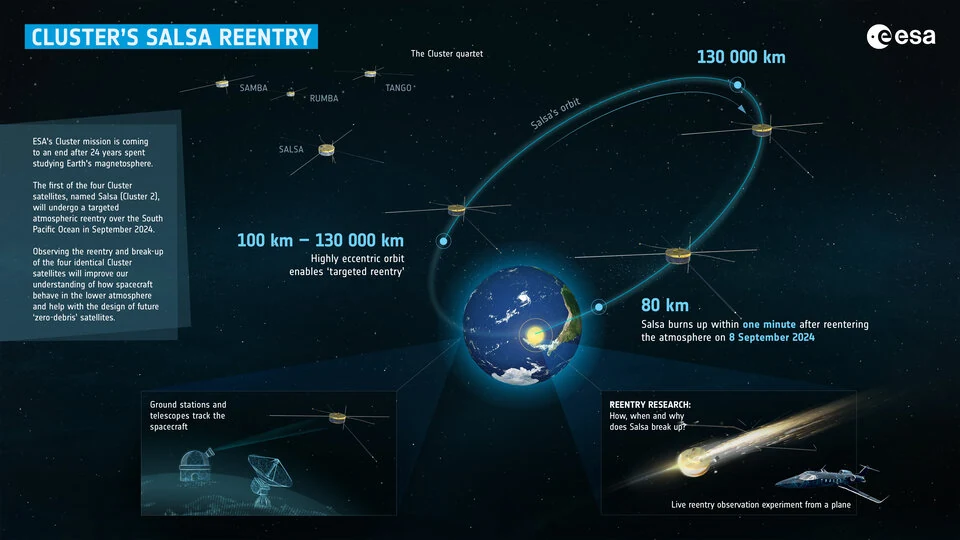
The targeted-reentry geometry ESA uses for the Cluster spacecraft. Credit: ESA.
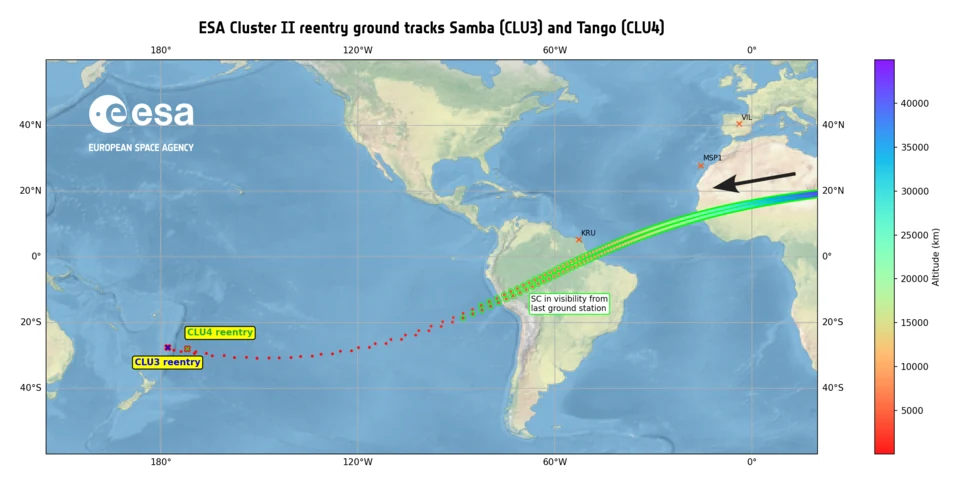
The predicted ground tracks of the two final reentries over the South Pacific. Credit: ESA.
The aircraft waiting above the ocean
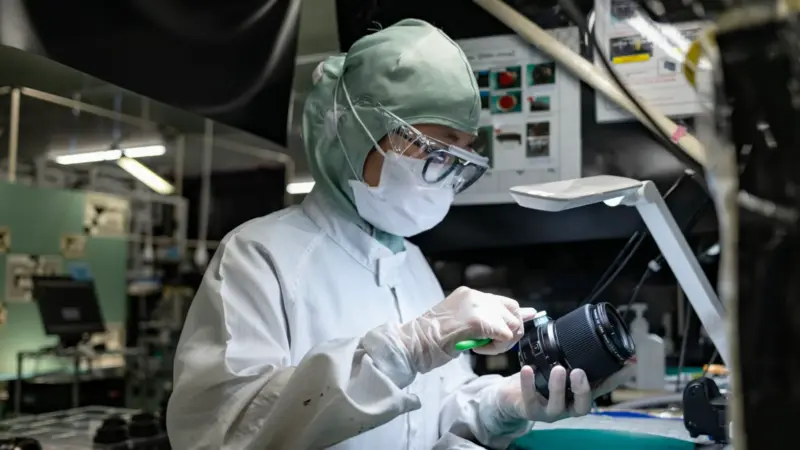
ESA issued the final “go” for an airborne observation campaign operating from Tonga. The specially configured aircraft will fly inside the expected viewing zone carrying about 30 instruments: optical and infrared cameras, spectrometers and sensors able to record brightness, colour, temperature and the sequence of the breakup.
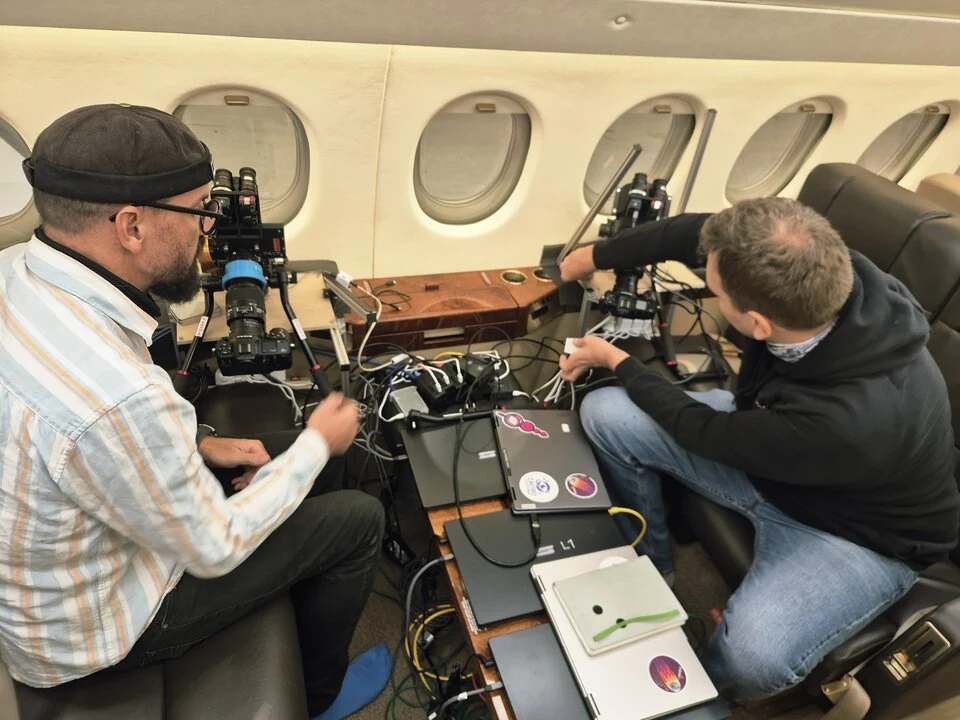
Part of the instrument suite for the airborne Samba and Tango observation campaign. Credit: ESA.
The observing position depends on more than the orbit. Teams must account for cloud, illumination, flight safety and the small timing margin. The satellites will be moving at more than 10 kilometres per second, and the crucial sighting may last only a few minutes. The aircraft therefore works as a mobile observatory where ground-based telescopes have no practical access.
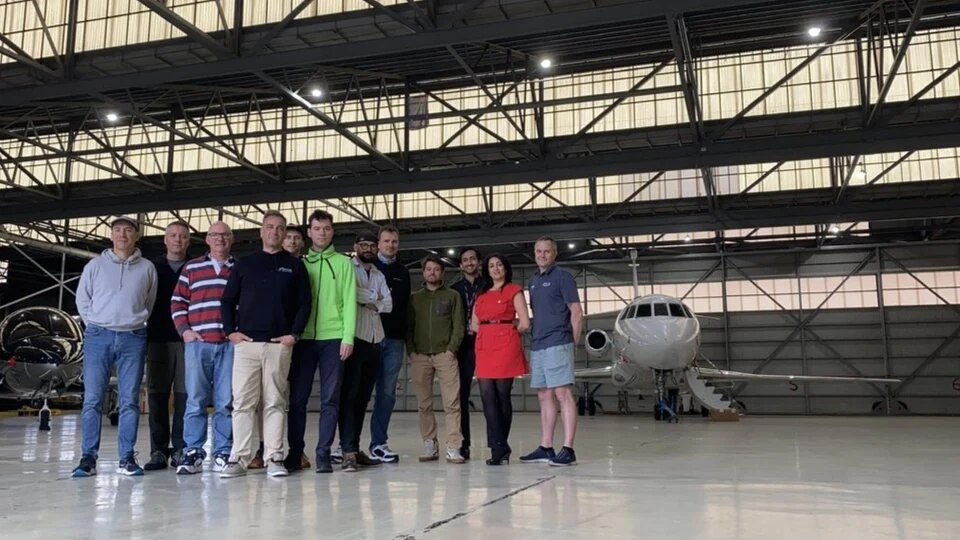
The observation team during preparations for the operation. Credit: ESA.
What Salsa taught the teams
The same approach was tested with Salsa, which reentered in September 2024. Airborne observations indicated that the spacecraft started breaking apart earlier than some models predicted. Actual conditions also revealed a difference of up to about 20% in estimated atmospheric density, a factor that directly affects when and where an object is lost.
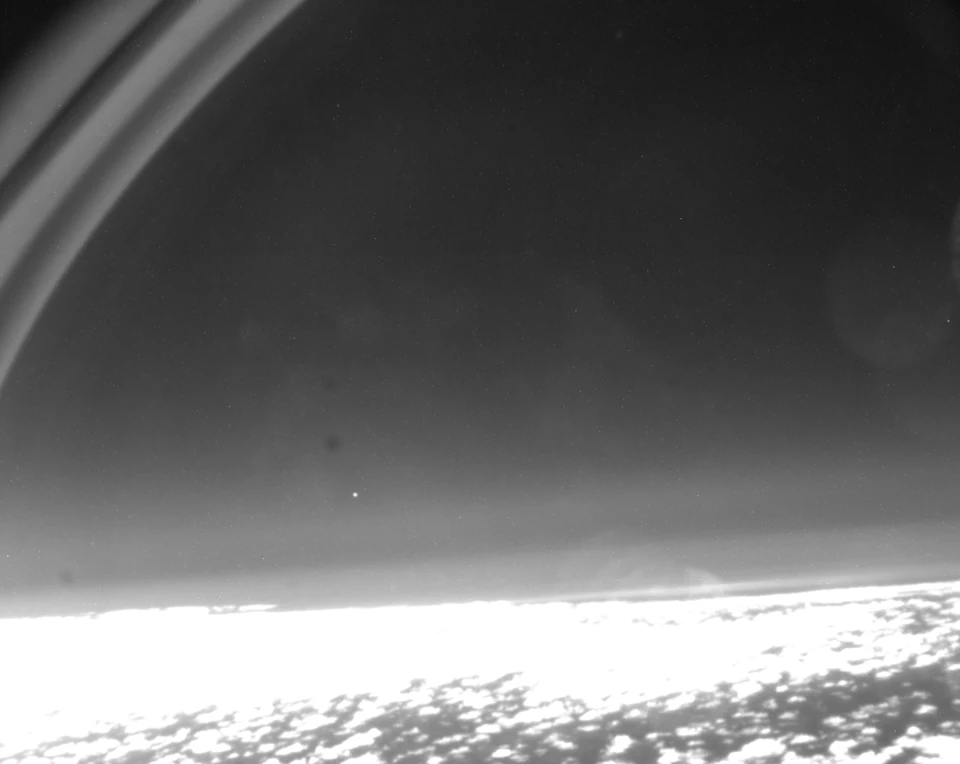
Salsa’s observed reentry in 2024, a rehearsal for the two final campaigns. Credit: ESA.
With Samba and Tango, engineers will also test operating techniques at extremely low altitude, near 110 kilometres, where the atmosphere already produces strong drag. ESA even plans a power reboot to see whether a spacecraft can recover after a shutdown in such demanding conditions. The data will inform future missions that must be disposed of more predictably and safely.
DRACO will continue the systematic study of how spacecraft break apart in the atmosphere. Credit: ESA.
What can be seen from Greece
Nothing with the naked eye from Greek territory: both tracks are over the South Pacific and below Europe’s horizon. ESA is expected to release images and scientific findings after the data have been collected and processed. Updates are available in ESA’s official page for the airborne campaign.
What we think
The two reentries are a rare full-scale natural experiment. The spectacle is only the surface; the real value lies in comparing two similar objects and in measurements that can reduce uncertainty around space debris. With more satellites in orbit, safe and verifiable disposal is becoming a fundamental part of mission design.
Frequently asked questions
When will Samba and Tango reenter?
Samba is predicted to reenter on 31 August 2026 at 23:41:54 CEST and Tango on 1 September at 23:33:20 CEST, with about ten minutes of uncertainty in each prediction.
Will the reentries be visible from Greece?
No. The predicted tracks are over the South Pacific and cannot be seen from Greece or the rest of Europe.
Why is an aircraft being used?
The aircraft can carry many instruments and position itself near the best possible viewing line in a remote ocean region without suitable ground stations.
Is there a danger to populated areas?
The orbits were shaped so the reentries occur above a remote part of the South Pacific. Some prediction uncertainty remains, but the design reduces the risk to populated areas.