

Summary
- The Dutch GP defines any camera with a detachable lens as professional equipment
- DSLR and mirrorless cameras are not permitted for ordinary spectators without official accreditation
- Smartphones and small personal devices are permitted for private use
- There are no lockers inside or around the event site
- The 2026 Dutch Grand Prix takes place from August 21 to 23
- This year's event is the final Dutch Grand Prix at Zandvoort
- The rule is simple: detachable lens means “professional” camera
- Smartphones and small personal devices are allowed
- There are no lockers — making the rule much more important
- The 2026 ticket conditions confirm the restriction
- Why is Zandvoort so strict?
- Accredited photographers operate in a different world
- The final Dutch GP begins today
- The irony of modern sports photography
- What we think
- Frequently asked questions
The final Formula 1 Dutch Grand Prix at Zandvoort starts today, but photography fans planning to bring a DSLR or mirrorless camera need to know about one particularly strict rule.
The Dutch GP’s official regulations classify any device with a detachable lens as professional photographic equipment, meaning DSLRs and mirrorless cameras are not permitted for ordinary spectators without prior permission and official accreditation. The official Dutch Grand Prix House Rules page goes even further in its summary for visitors, stating that cameras and recording equipment are not allowed and advising fans to leave cameras at home because there are no lockers at the venue.
The rule is particularly notable because photography is such a major part of the experience. Zandvoort hosts Formula 1, F1 Academy and Porsche Supercup over a three-day weekend beginning on August 21 and ending on August 23, 2026, with this year’s event also marking the final Dutch Grand Prix in the current Formula 1 chapter at the circuit.
The rule is simple: detachable lens means “professional” camera
The most interesting detail appears in Circuit Zandvoort’s full regulations.
Under prohibited items, the rules state that professional photographic, video or audio equipment is not allowed without approval and accreditation. They then define the criterion clearly:
a detachable lens is what determines whether equipment is considered professional.
That means the rule does not depend on whether a camera costs €500 or €7,000, whether its owner is a professional or amateur, or whether it carries a tiny pancake prime instead of a huge 600mm lens.
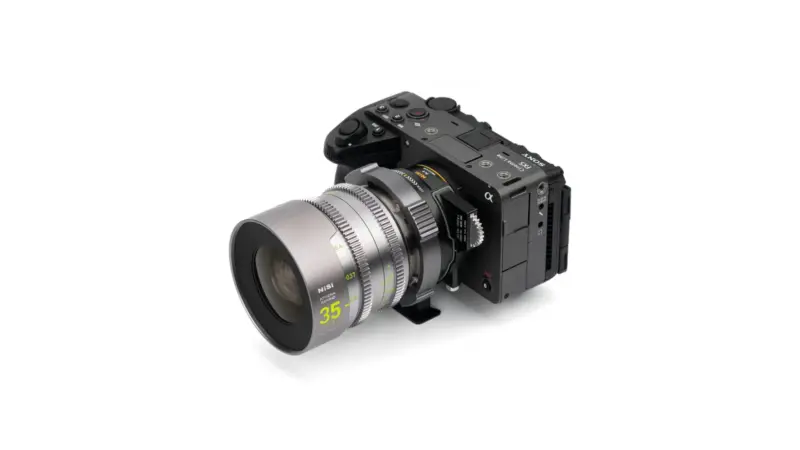
A small APS-C mirrorless body with a kit lens still has a detachable lens and therefore falls under the same restriction.
The same naturally applies to DSLRs, full-frame mirrorless cameras and any other interchangeable-lens system.
Smartphones and small personal devices are allowed
There is an important detail here.
The short version of the rules on the official website broadly says “no cameras”, but the full House Rules document clarifies that smartphones and small personal devices are permitted for private use.
So the practical distinction is not “no photography at all.”
Spectators can capture personal photos and videos with a smartphone or permitted small device, but they cannot enter with an interchangeable-lens camera system without the required accreditation.
Photos and videos are permitted only for personal purposes. Commercial use requires permission or media accreditation.
There are no lockers — making the rule much more important
For someone who arrives at the gate with a mirrorless camera in a bag, there is another problem: there are no lockers inside or around the event grounds.
The official website makes that clear and specifically tells visitors to leave cameras at home.
Bags are also restricted to A4 size and a maximum thickness of 10 centimetres.
For fans travelling specifically for the race, that means bringing a camera “just in case” is not a sensible plan if they expect to simply store it at the entrance when challenged.
The 2026 ticket conditions confirm the restriction
The restriction does not appear only in Circuit Zandvoort’s general rules.
The official General & Booking Conditions for Dutch GP 2026 tickets also state that professional photo and video equipment cannot be brought into the event without explicit permission from the organisers and Formula One World Championship.
The same clarification appears there:
any removable lens is prohibited.
This is therefore not a vague security rule that may be interpreted differently at the gate. The organisers have chosen a specific and easily enforceable technical criterion.
Why is Zandvoort so strict?
The official documentation does not provide a detailed technical explanation specifically for interchangeable-lens cameras.
The restrictions sit within a broader framework involving safety, crowd management, commercial rights and control over professional recording.
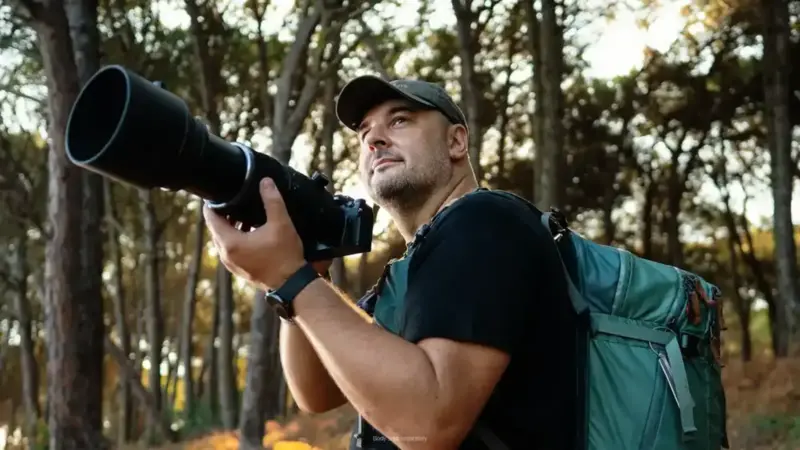
There is also a practical consideration. A 400mm or 600mm telephoto lens together with a large camera and bag occupies significantly more room in crowded grandstands than a smartphone. Instead of setting a maximum lens length, however, the event uses the much simpler detachable-lens rule.
The result is that compact interchangeable-lens systems are prohibited alongside large professional telephoto setups.
Accredited photographers operate in a different world
Professional photographers officially covering the event are naturally exempt from the same restriction when they have the required accreditation.
The difference between an ordinary spectator and an accredited Formula 1 photographer is substantial. Accreditation is not only permission to carry large camera bodies and telephoto lenses, but also provides access to specific shooting positions and protected zones around the circuit.
PTTL recently covered the unusual case of Czech President Petr Pavel photographing the Hungarian Grand Prix with official photo accreditation. He worked alongside Formula 1 professionals using regular Canon and Nikon photography equipment.
At Zandvoort, that distinction becomes particularly clear: interchangeable-lens camera for the accredited photographer, smartphone for the ordinary spectator.
The final Dutch GP begins today
The timing makes the restriction particularly relevant.
According to the official Formula 1 schedule, Friday, August 21 features the first Practice Session and Sprint Qualifying.
Saturday, August 22 includes the Sprint and regular qualifying, while the final Dutch Grand Prix race at Zandvoort begins on Sunday, August 23 at 15:00 local time and runs for 72 laps of the 4.259-kilometre circuit.
The organisers are calling the 2026 event “The Final Lap”, as it is the final Dutch Grand Prix, and Saturday and Sunday tickets have already sold out.
The irony of modern sports photography
There is an interesting contradiction.
Spectators have never carried such capable cameras in their pockets. Modern flagship smartphones include telephoto lenses, burst shooting, RAW capture, 4K video and, in some cases, even 8K recording.
Yet a fan can enter with a smartphone costing more than €1,000 and containing multiple cameras, while a small mirrorless body with a basic kit lens is not permitted.
The distinction is not based on final image quality or actual shooting capability.
It is based on whether the lens comes off.
From the organiser’s perspective, this creates an easy rule that can be applied quickly to tens of thousands of spectators. From a photographer’s point of view, however, it is difficult not to see it as extremely broad.
What we think
The need for safety rules and a clear distinction between spectators and accredited media at a Formula 1 event is entirely understandable.
However, the Dutch GP’s definition of “professional equipment” is extremely broad. A detachable lens does not automatically make a camera large, dangerous or professional. A small mirrorless camera with a compact prime may occupy less space than some fixed-lens superzoom cameras.
On the other hand, the advantage of such a simple rule is that it removes endless debates at the entrance over lens length, intended use or camera value.
For photographers attending Zandvoort, the practical takeaway is straightforward: if your camera takes interchangeable lenses and you do not have official accreditation, the safe option is to leave it outside the event.
Frequently asked questions
Can I bring a mirrorless camera to the 2026 Dutch GP?
Not as an ordinary spectator under the official rules. A detachable lens is the criterion used to classify equipment as professional, requiring permission and accreditation.
Are DSLRs allowed?
DSLRs use detachable lenses and therefore fall under the same restriction.
Can I take photos with a smartphone?
Yes. The detailed rules allow smartphones and small personal devices for private use.
Are there lockers where I can leave my camera?
No. The organisers state that there are no lockers inside or around the venue and advise visitors to leave prohibited cameras at home.
When is the 2026 Dutch Grand Prix?
The weekend runs from August 21 to 23, 2026. Sunday’s race starts at 15:00 local time and runs for 72 laps.