


Summary
- Greece ranks seventh in the EU for paid film, series or sports streaming subscriptions
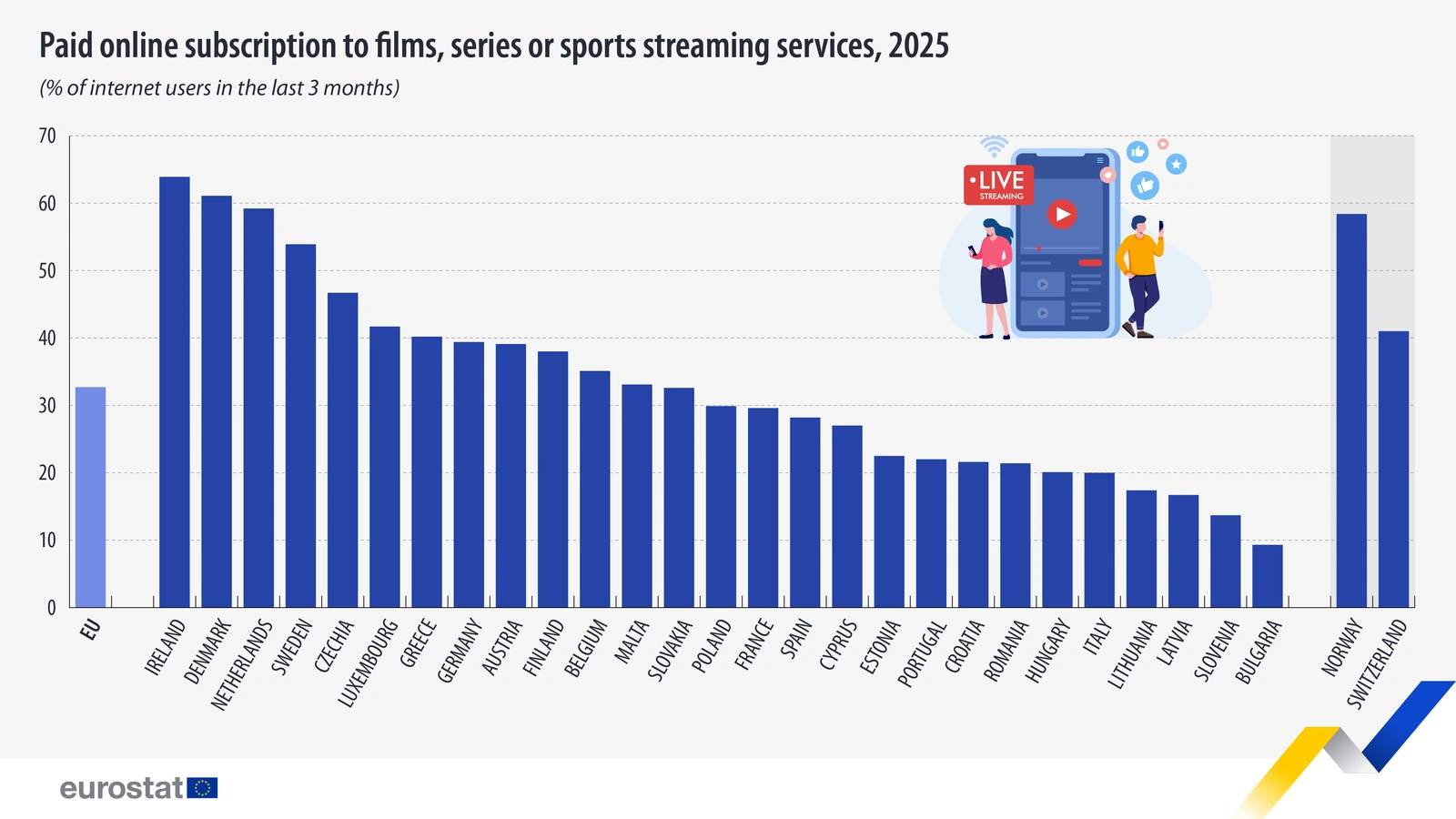
- Greece reached 40.2% in 2025, compared with an EU average of 32.7%
- Ireland leads at 63.9%, while Bulgaria ranks last at 9.3%
- Video and sports streaming is the EU’s most popular category of paid online subscription
- The survey covers internet users aged 16 to 74
Greece ranked seventh in the European Union for paid film, series or sports streaming subscriptions in 2025, with 40.2% of internet users reporting such a subscription.
Greece was 7.5 percentage points above the EU average of 32.7%. Ireland led at 63.9%, followed by Denmark at 61.1% and the Netherlands at 59.2%, according to data published by Eurostat.
The ranking is notable because paid streaming use in Greece is clearly more widespread than across the EU as a whole. At the same time, the wide gap between European countries shows how unevenly digital subscriptions have become part of users’ everyday lives.
Greece in the European top 10
The exact figure for Greece was 40.18%, rounded by Eurostat to 40.2%. Only Ireland, Denmark, the Netherlands, Sweden, Czechia and Luxembourg ranked higher. Germany, Austria and Finland followed immediately below Greece.
A wide gap between countries
The difference between first and last place is striking. Ireland’s 63.9% is 54.6 percentage points higher than Bulgaria’s 9.3%. Slovenia at 13.7%, Latvia at 16.7% and Lithuania at 17.4% are also among the countries with the lowest rates.
Greece trails Ireland by 23.8 percentage points but stands 30.9 points above Bulgaria. The figures measure the share of users who had a paid subscription, not how many subscriptions each person used, monthly spending or viewing time.
Video subscriptions lead by a clear margin
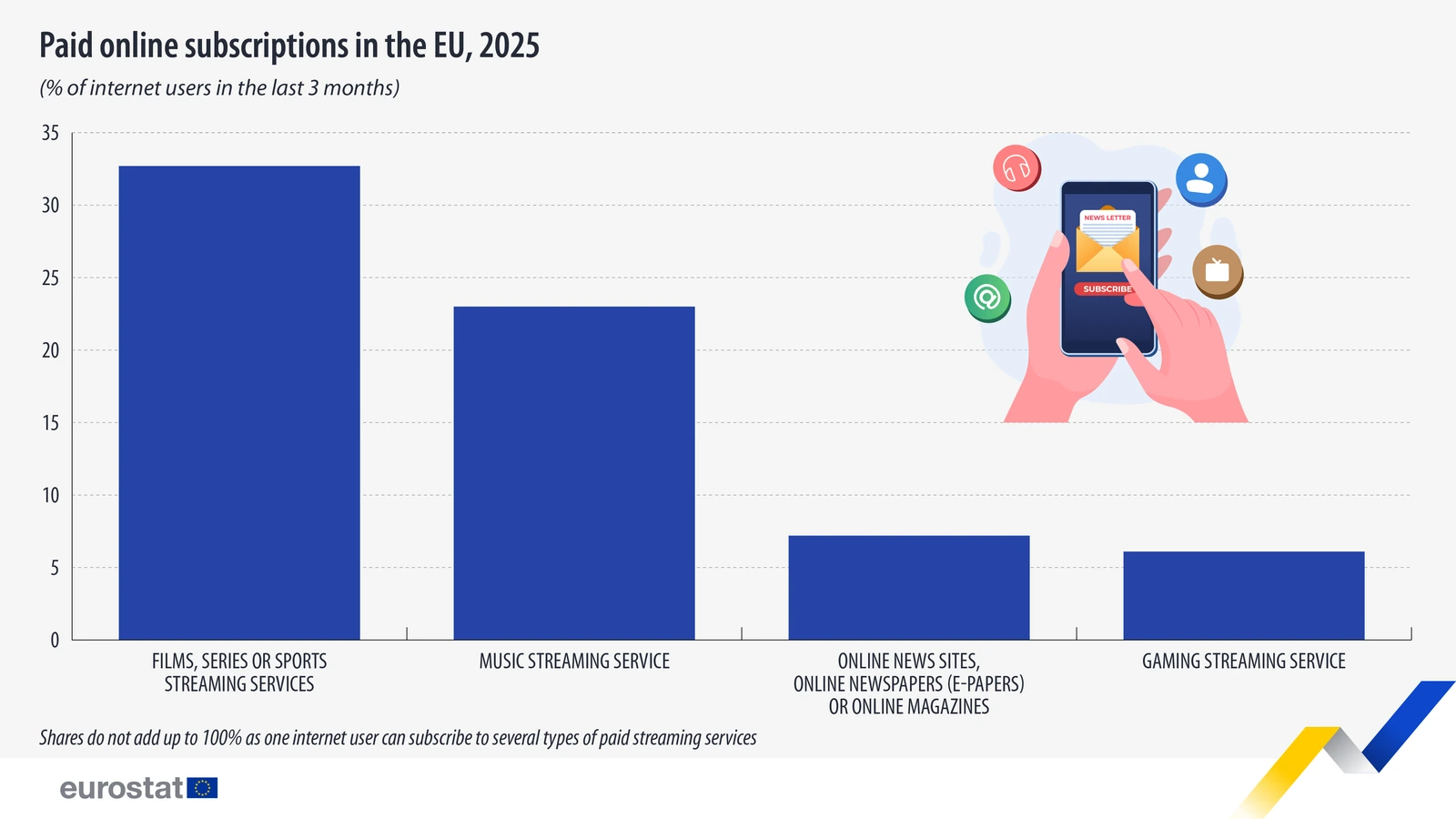
Across the EU, film, series or sports streaming was the most popular of the four paid online subscription categories examined by Eurostat. A total of 32.7% of internet users had such a subscription, while 23.0% paid for a music streaming service.
Paid subscriptions to online news sites, e-papers or online magazines were much less common at 7.2%, while gaming streaming services stood at 6.1%. These shares do not add up to 100% because the same user may subscribe to more than one category.
What the survey measures — and what it does not
The data come from the EU survey on the use of information and communication technologies by households and individuals. Internet users are defined as people aged 16 to 74 who had used the internet during the three months before the survey was conducted in their country.
The 40.2% figure therefore does not mean that four in ten Greek households pay for streaming, nor that each subscriber uses only one service. The indicator measures individuals within the defined age group and internet-user sample; it does not identify their chosen platform, how much they paid or whether a subscription was shared with other household members.
What we think
Greece’s seventh-place ranking suggests that paid streaming has moved beyond a specialist service to become a fairly widespread everyday choice. The more useful signal, however, is not just the ranking but Greece’s distance above the EU average and the considerable variation between countries. A fuller assessment of the market would require further data on cost, subscriptions per user and frequency of use.
Frequently asked questions
What share of internet users in Greece pays for streaming?
In 2025, 40.2% of internet users in Greece had a paid subscription to film, series or sports streaming.
Where does Greece rank in the EU?
Greece ranks seventh among the EU’s 27 countries.
Which country has the highest rate?
Ireland leads at 63.9%, followed by Denmark at 61.1% and the Netherlands at 59.2%.
Which other paid online subscriptions does Eurostat measure?
The survey also covers music streaming services, subscriptions to online news, e-papers or magazines, and gaming streaming services.