

Summary
- Miki Zohar asked authorities to examine revoking the citizenship of Yuval Abraham and Rachel Szor.
- NAZA won the Venezia 83 Special Jury Prize and draws on testimony from 24 Israeli soldiers and intelligence personnel.
- The documentary examines target-selection systems, AI use and anticipated civilian casualties in Gaza.
- A UN Commission of Inquiry has concluded that Israel committed genocide in Gaza, a finding Israel rejects.
- The ICJ has not yet issued a final merits judgment in South Africa v.
- Israel.
Israel’s Culture and Sports Minister Miki Zohar has asked authorities to examine revoking the Israeli citizenship of Yuval Abraham and Rachel Szor, only hours after the international recognition of their documentary NAZA.
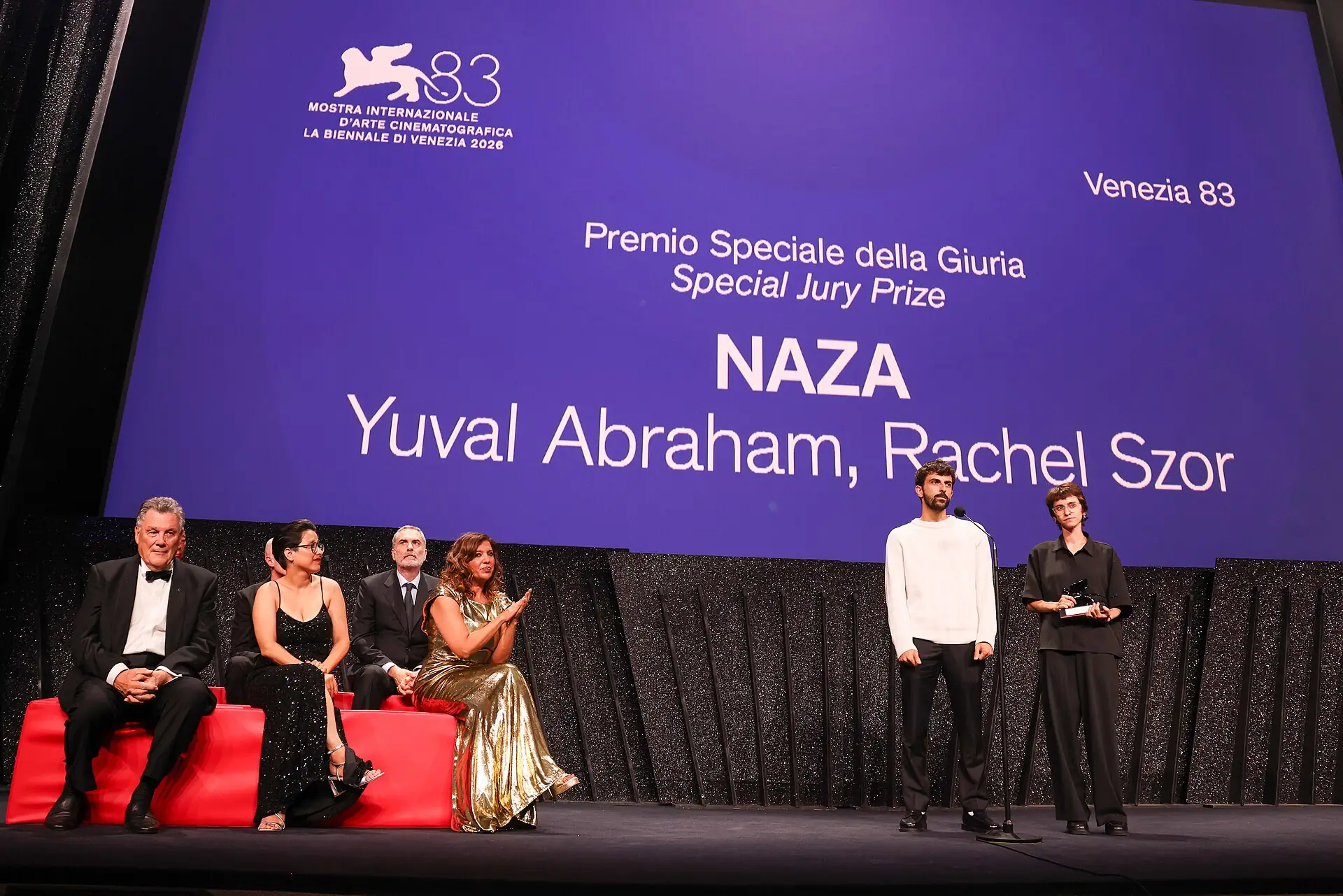
The move followed NAZA’s Special Jury Prize in the Venezia 83 competition. On Monday, September 14, Zohar said he had contacted the director general of the Population and Immigration Authority and the director general of the Interior Ministry, asking them to examine whether the two filmmakers’ citizenship could be revoked. He also called for an investigation into how the film’s material was obtained and whether acquiring or publishing it could violate wartime law.
NAZA is an 80-minute UK production by The Guardian and JW Films, directed by Yuval Abraham and Rachel Szor. It is built around testimony from 24 Israeli soldiers and military-intelligence personnel and examines target-selection procedures, the use of artificial-intelligence systems and anticipated civilian casualties in Israeli attacks on Gaza.
From the Venice award to the threat of citizenship revocation
Zohar initially wrote that he would act “immediately” to revoke the filmmakers’ citizenship, accusing them of “treason against the state.” A day later he described the concrete step he had taken: he asked the relevant authorities to examine the possibility of revocation and the origin of the film’s material. The accusations of treason are statements by the minister, not a judicial finding.
Israeli law provides procedures for revoking citizenship in certain cases involving breaches of loyalty to the state. A Knesset briefing describes a route under which the interior minister can ask a court to revoke citizenship for conduct falling within the statutory categories. That does not establish that those conditions have been met in the case of Abraham and Szor. As of September 16, 2026, no decision revoking their citizenship has been announced.
What NAZA reveals
Much of the film was shot secretly at night on Tel Aviv rooftops in order to protect the identities of its sources. The 24 testimonies come from soldiers and intelligence personnel who describe from inside the system how targets are selected in Gaza and how computational tools are used to generate potential targets.
In one of the film’s most serious allegations, a source says a strike had been approved even though anticipated civilian deaths could reach 500 people in order to kill one Hamas member. The Associated Press reports that the Israeli military acknowledges using artificial intelligence to assist in identifying targets, but says a human makes the final decision before a strike. The military rejects key claims in the documentary and has criticised its reliance on anonymous testimony.
Abraham and Szor say the testimonies were verified as part of a multi-year journalistic investigation. Many of the findings are connected to reporting previously published by The Guardian in collaboration with +972 Magazine and Local Call.
Gaza, civilians and the genocide finding
The context in which the NAZA dispute is unfolding extends far beyond the claims of a single film. In September 2025, the UN Independent International Commission of Inquiry concluded that Israel had committed genocide against Palestinians in Gaza. In June 2026, the same Commission said Israeli authorities and security forces continued to commit genocide and other atrocity crimes, including what it described as deliberate targeting of Palestinian children.
Israel rejects the genocide finding and says its military campaign is directed against Hamas. At the same time, the South Africa v. Israel case under the Genocide Convention remains before the International Court of Justice, which has not yet delivered a final judgment on the merits.
Almost three years of war have destroyed much of Gaza and caused tens of thousands of deaths. The Associated Press reports at least 73,789 Palestinian deaths based on figures from the Gaza Health Ministry, whose overall tally does not distinguish between civilians and combatants. The scale of civilian loss is at the centre of NAZA’s investigation.
The reaction in Israel
The Venice award triggered a fierce response from Israel’s political and military leadership. Prime Minister Benjamin Netanyahu described the film as “shocking incitement,” while military chief Eyal Zamir asked military prosecutors to examine possible leaks and legal measures. The Associated Press notes that several of the senior officials who publicly attacked the film acknowledged that they had not seen it.
The Guardian, one of the documentary’s producers, described the response as “authoritarian” and said it would defend the filmmakers and their confidential sources against censorship attempts. The case has also prompted support from film-industry figures and organisations inside Israel.
The controversy followed the film’s strong reception in Venice: NAZA had already received approximately 25 minutes of standing applause at its premiere before winning the Special Jury Prize two days later.
Why this matters directly to filmmakers and journalists
The case reaches into the core of investigative journalism and documentary filmmaking: protection of anonymous sources, verification of sensitive material and the ability to investigate the conduct of state institutions and military systems. A request to investigate who supplied the material and how it reached the filmmakers concerns not only the finished film, but the journalist-source relationship itself.
Potential legal issues involving classified material can be examined by the relevant authorities and courts. That is a separate question from public political condemnation of a work, accusations of treason and threats to revoke citizenship before any related judicial finding has been made.
What we think
Three levels need to remain clearly separate in this case: what the documentary reveals and documents, the responses of Israeli authorities, and political or legal measures directed at the filmmakers and their sources. Accusations of treason are not a court judgment, and Zohar’s request is not the same thing as an actual revocation of citizenship.
Likewise, the debate over Gaza cannot be presented as if it rests only on NAZA’s allegations. An independent UN commission has formally concluded that Israel committed genocide, a finding Israel rejects, while the ICJ case remains pending. For journalism, accurately distinguishing those levels is essential — without treating documented findings and political statements as equivalent forms of evidence.
Frequently asked questions
Have Yuval Abraham and Rachel Szor lost their citizenship?
No. Miki Zohar asked relevant authorities to examine the possibility of revoking their citizenship. As of September 16, 2026, no judicial or administrative decision doing so has been announced.
What is NAZA?
It is an 80-minute UK documentary directed by Yuval Abraham and Rachel Szor and produced by The Guardian and JW Films. It won the Special Jury Prize in the Venezia 83 competition.
What is the documentary based on?
It draws on testimony from 24 Israeli soldiers and military-intelligence personnel, as well as years of investigative reporting into target-selection procedures and civilian casualties in Gaza.
Has the UN described what is happening in Gaza as genocide?
Yes. The UN Independent International Commission of Inquiry concluded in 2025 that Israel had committed genocide in Gaza and said in 2026 that it was continuing. Israel rejects that conclusion, while the International Court of Justice has not yet issued a final merits judgment in South Africa v. Israel.