

Summary
- These 12 images combine wildlife, human presence, science and conservation
- The new Ocean Unseen: Hidden Worlds category focuses on the ocean’s overlooked miniature life
- The winners will be announced on September 10, 2026
The Ocean Photographer of the Year 2026 finalists bring rare behaviour, human contradictions and the pressures facing the marine world to the surface.
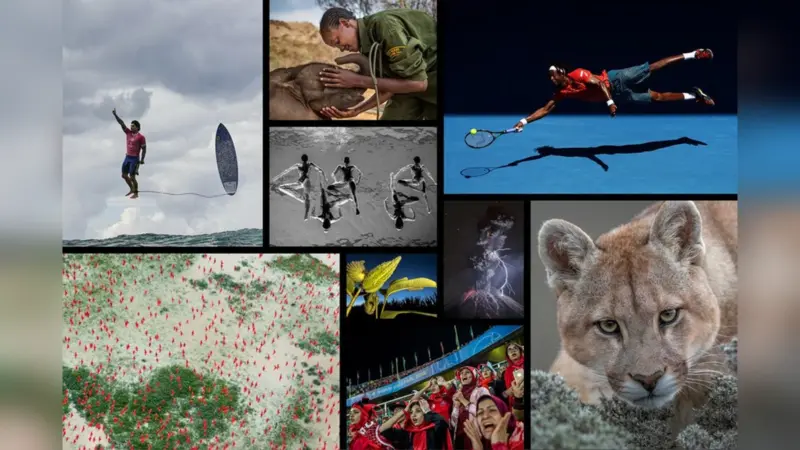
This year’s final selection was announced on August 13 and brings together images made across the planet. The 12 photographs presented here include a fur seal tearing apart its prey, a giant ocean sunfish beside a diver, dolphins among surfers, and far more difficult stories about captivity and humanity’s relationship with the sea.
The selection matters precisely because of this contrast: the photographs are not merely striking wildlife moments, but also visual evidence of scientific research, species conservation and the effects of human activity. These are finalists, not winners; the results will be announced on September 10, 2026.
From hunting to coexistence
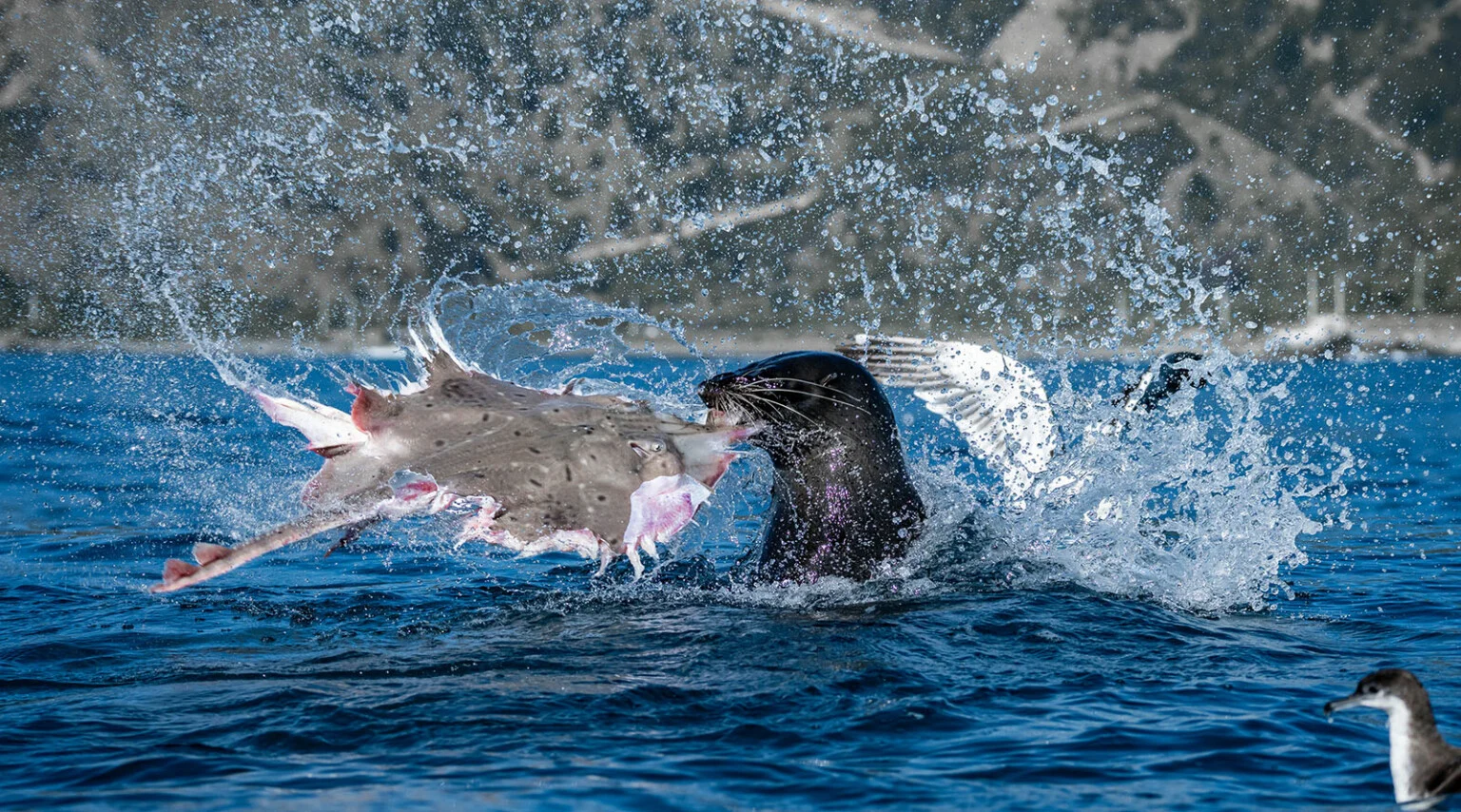
Allan Cronin photographed a New Zealand fur seal from a kayak as it repeatedly threw a rough skate to break it into smaller pieces. Seabirds waiting for scraps complete an entire food chain within a single frame.
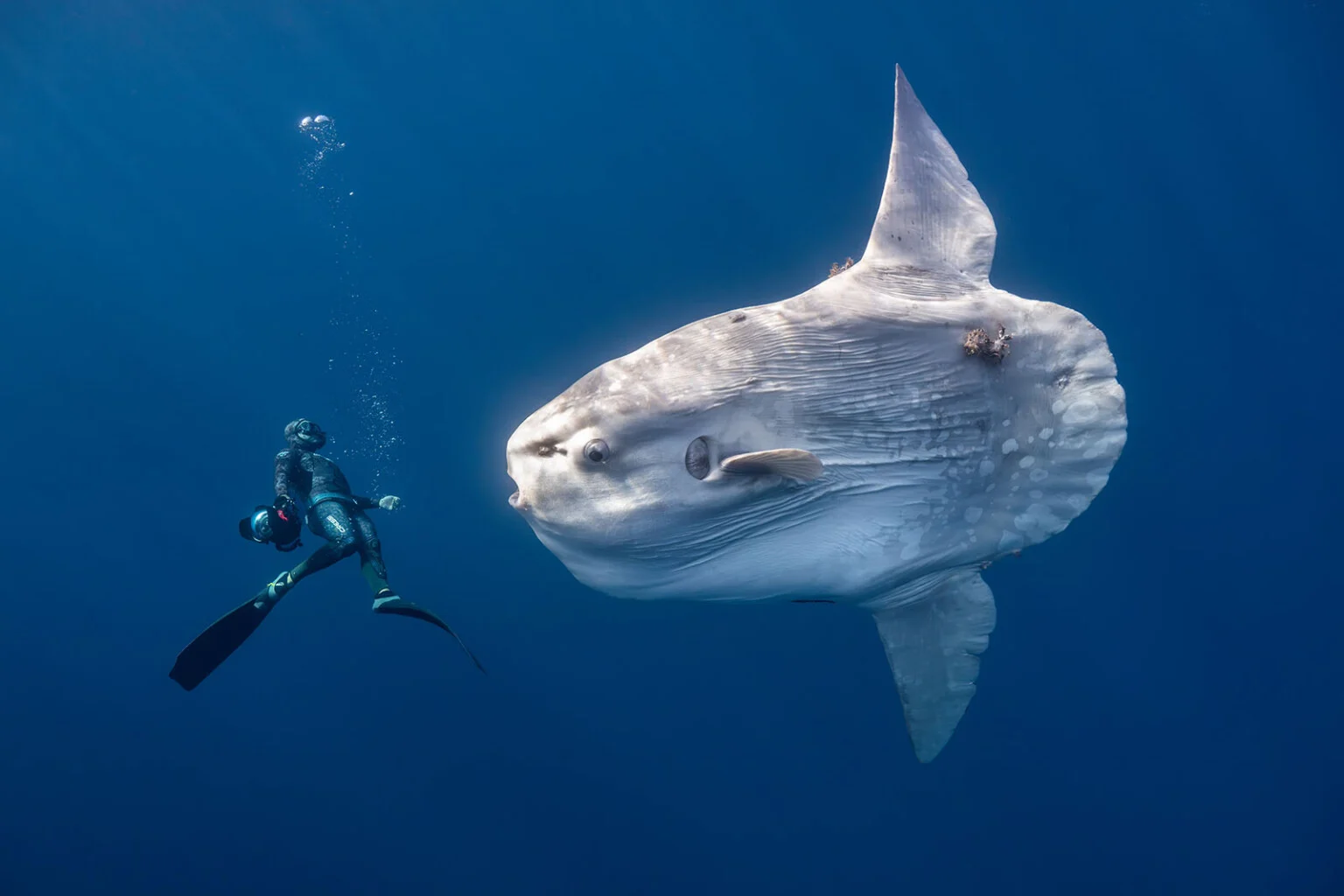
On Mexico’s Baja Peninsula, Anita Verde captured a diver beside a giant ocean sunfish, Mola mola. The difference in scale turns the encounter into a clear lesson in the species’ size and unusual morphology.
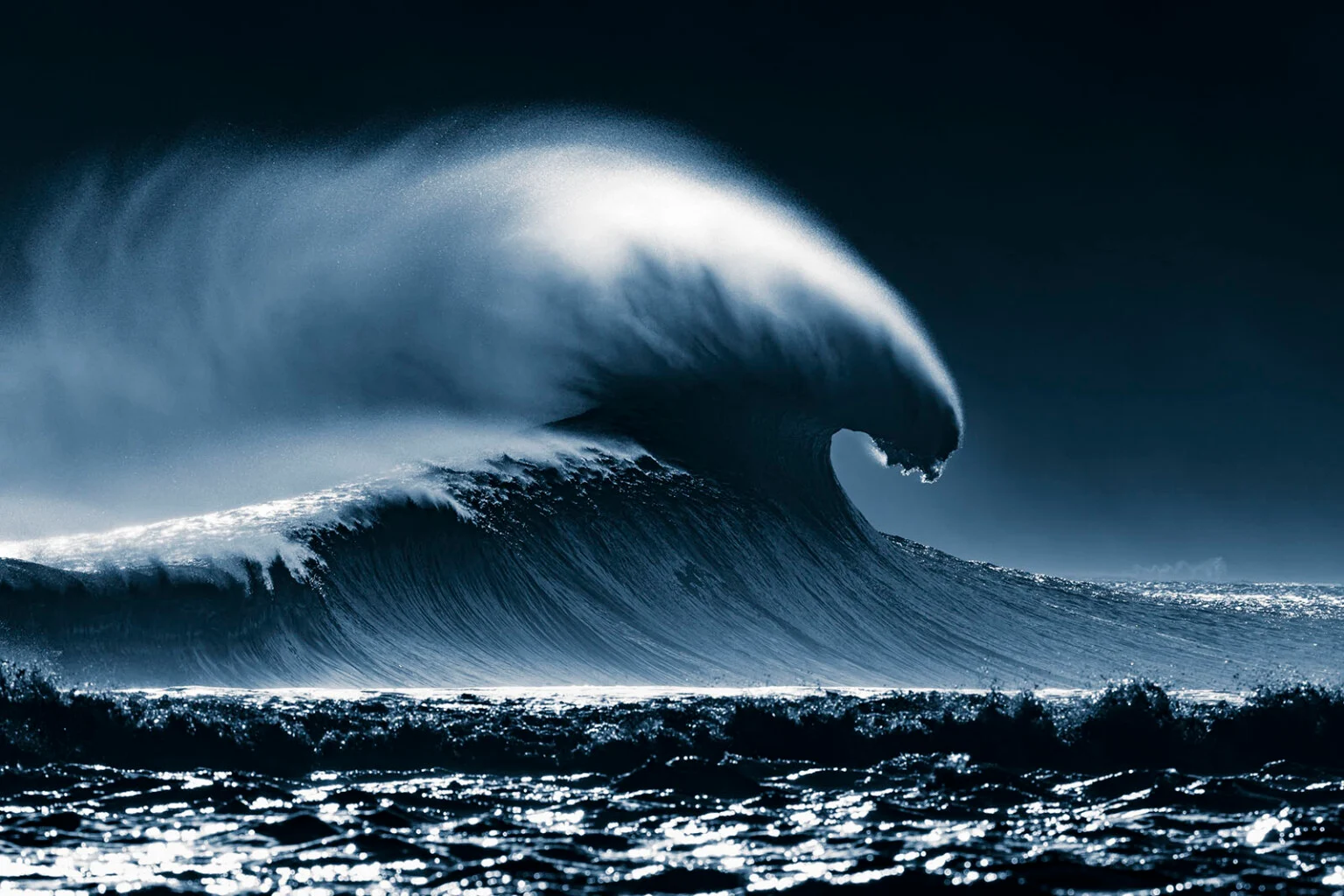
Ben Thouard treated a wave off Tahiti as a landscape. Shooting from a jet ski with a long telephoto lens, he used wind and light to turn the spray into a glowing veil, in a composition that recalls Hokusai’s The Great Wave off Kanagawa.
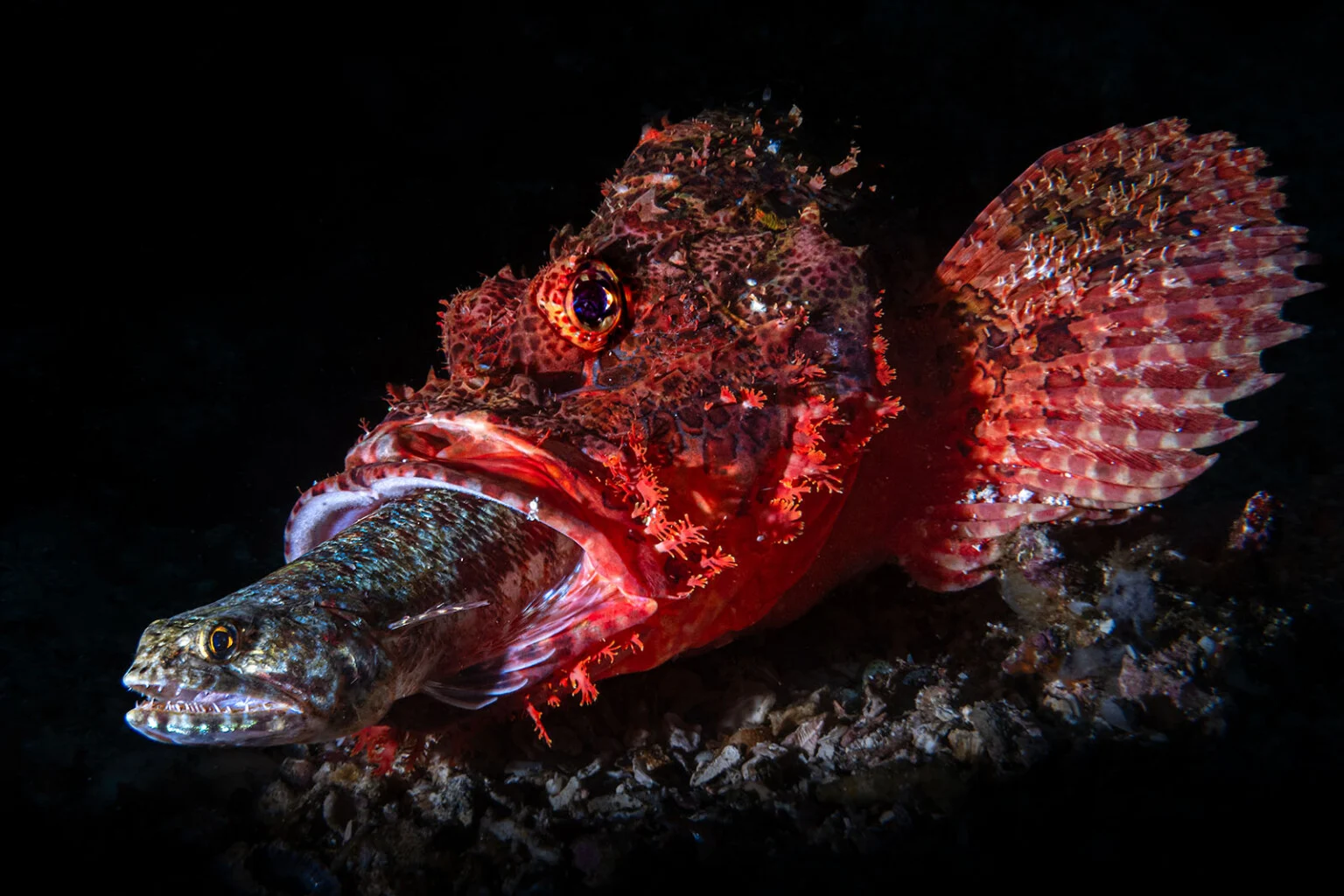
On the seabed, Andrea Michelutti used a snoot to isolate the moment a scorpionfish swallowed a lizardfish. The controlled light keeps the background dark and concentrates attention on the brief act of predation.
When humanity’s relationship with the sea becomes difficult
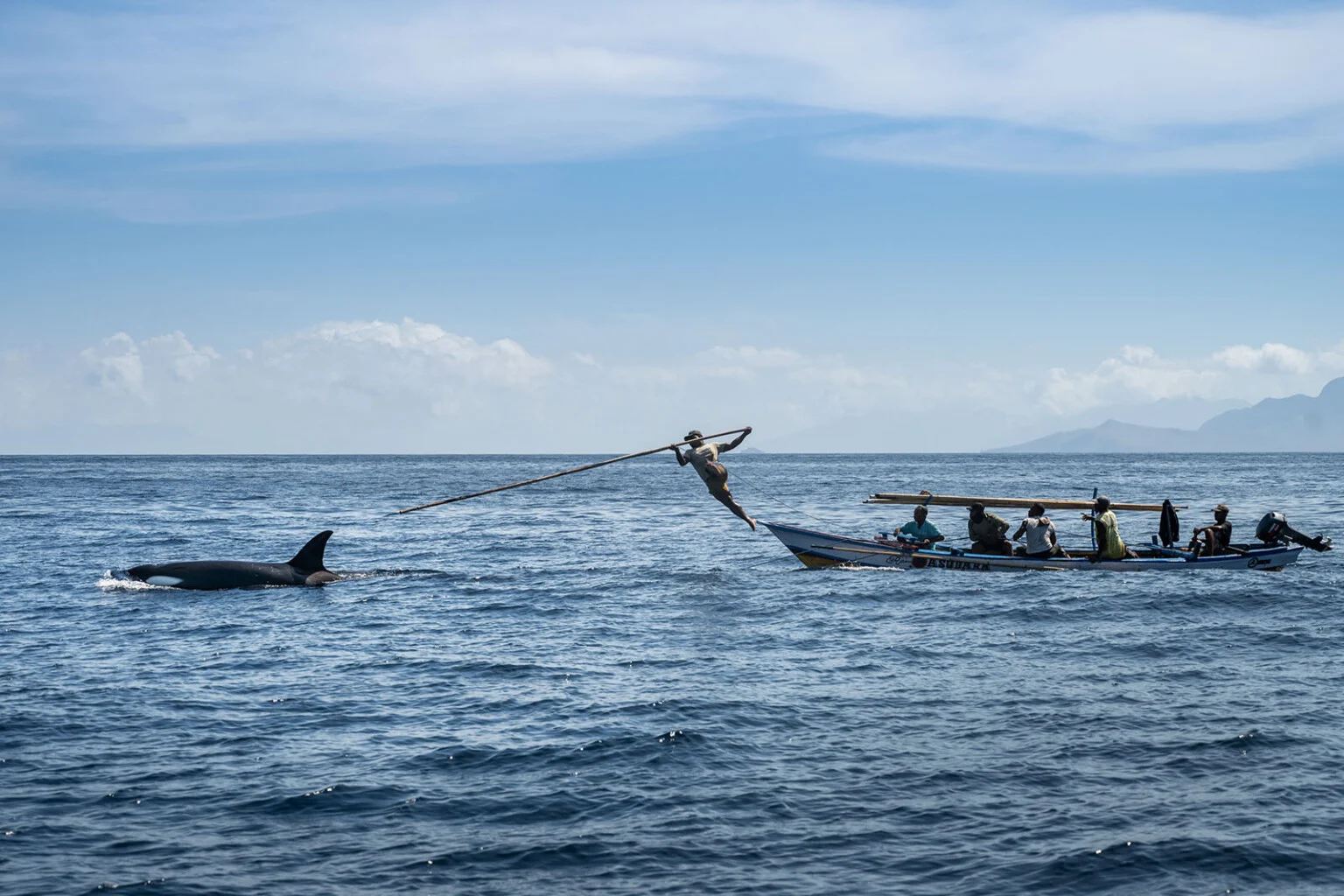
Sirachai Arunrugstichai’s image from Lamalera, Indonesia, is the hardest in this selection. A harpooner leaps from a boat towards an orca, which later died and capsized the vessel. The community has relied on hunting cetaceans for food for centuries, but the use of motorboats has intensified the debate around tradition, livelihoods and marine conservation.
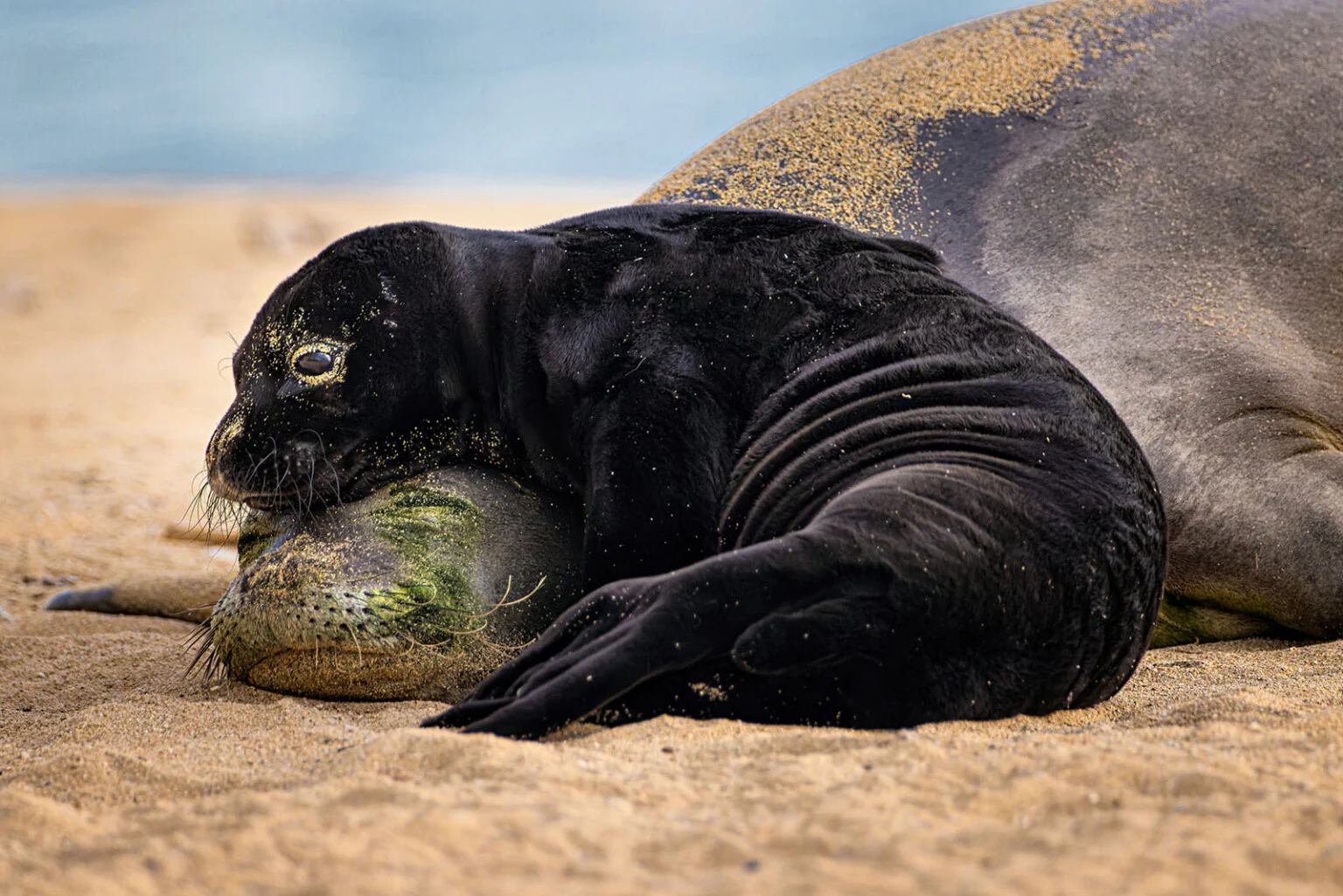
At the other end of the spectrum, Leighton Lum portrays a Hawaiian monk seal with her week-old pup on Kaimana Beach in Waikīkī. Mothers nurse for around six weeks without feeding and can lose up to one third of their body weight while the pup grows rapidly before becoming independent.
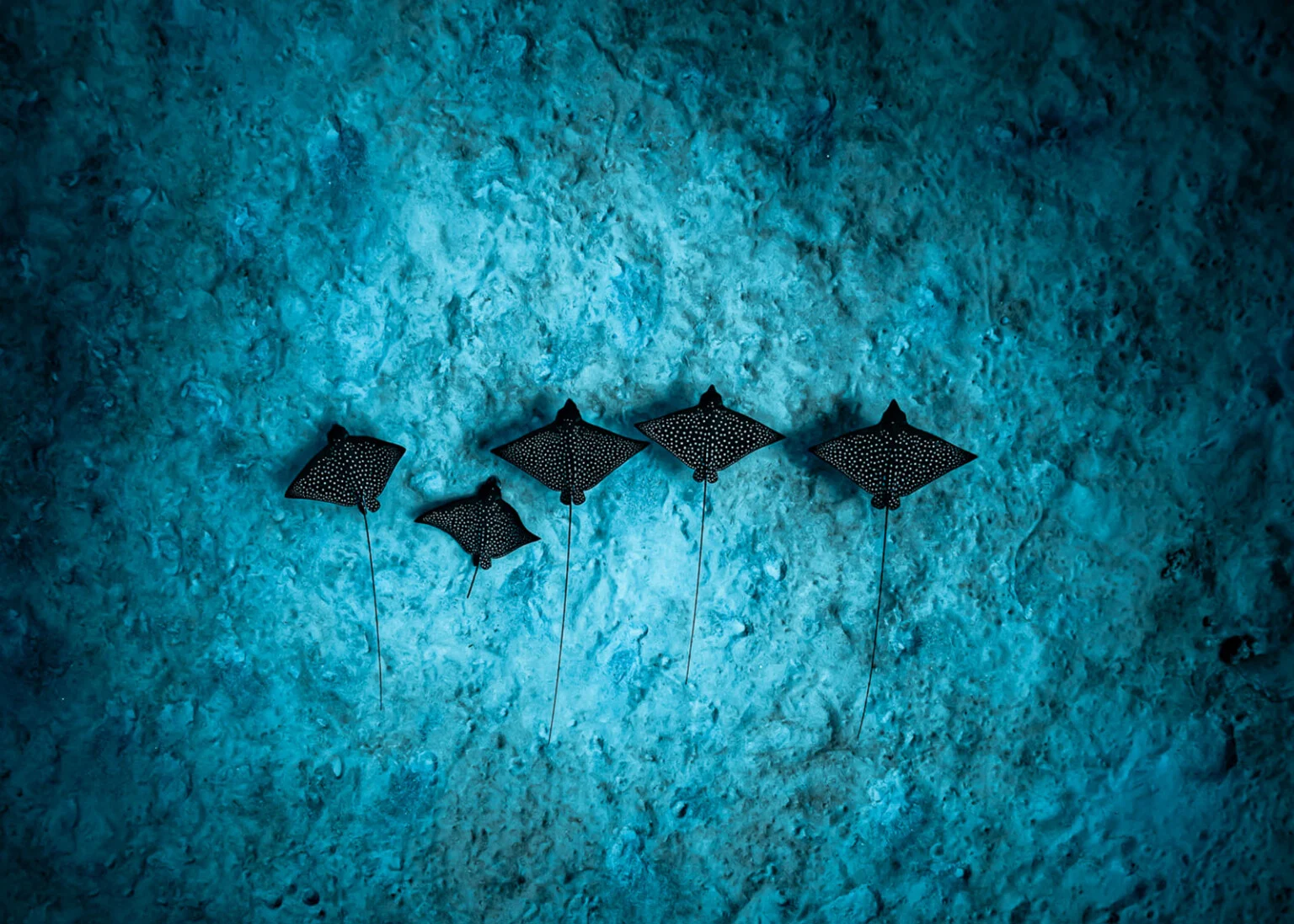
John Kowitz’s geometric image shows five spotted eagle rays above the sand. The animals often travel together while foraging and use electroreceptors to locate molluscs and crustaceans hidden beneath the seabed.
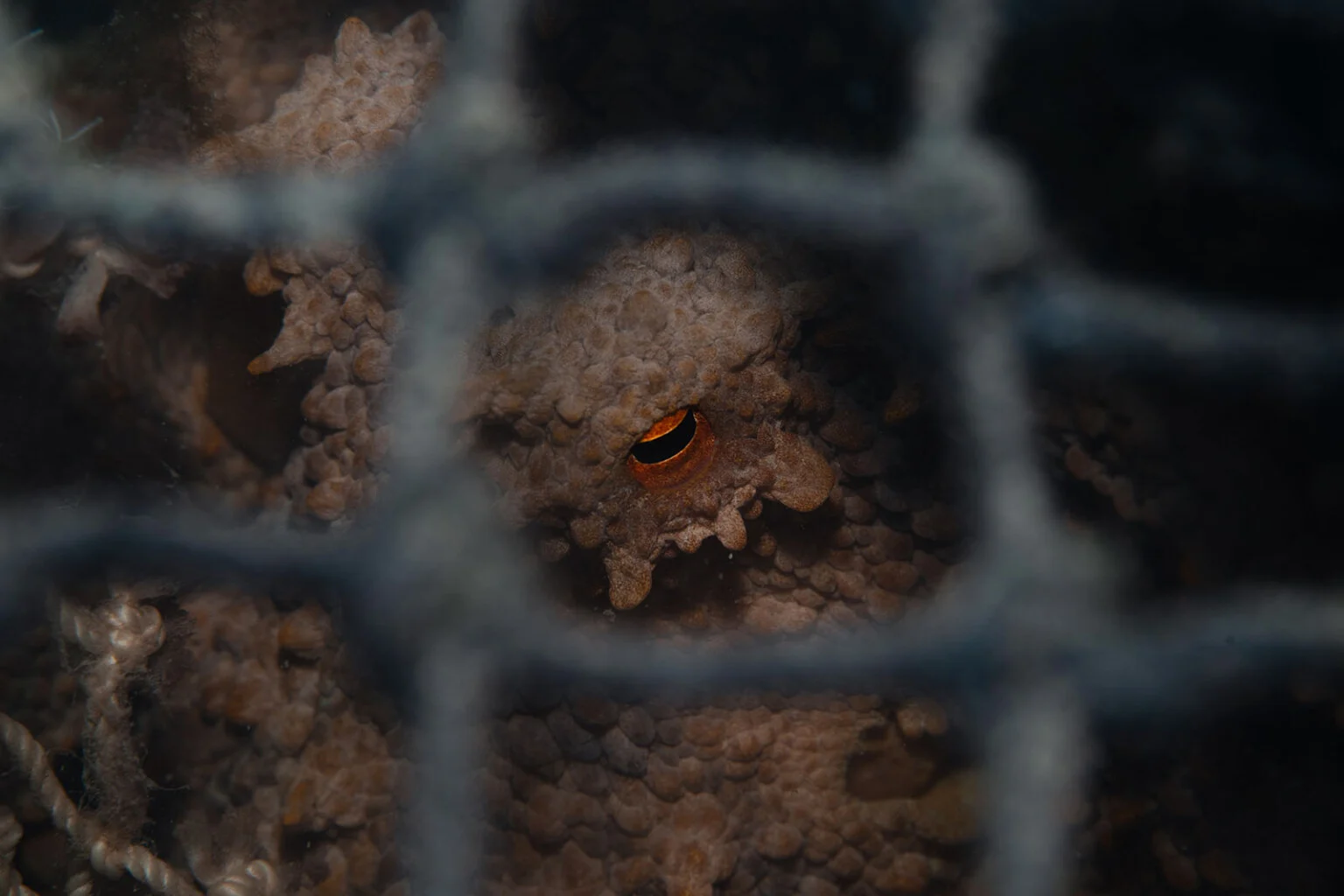
In Eduardo Santana de Vega’s photograph, an octopus peers from a lobster pot off southwest England. The first impression is that the animal is trapped, but octopuses often enter these pots to feed on crabs and lobsters before escaping again.
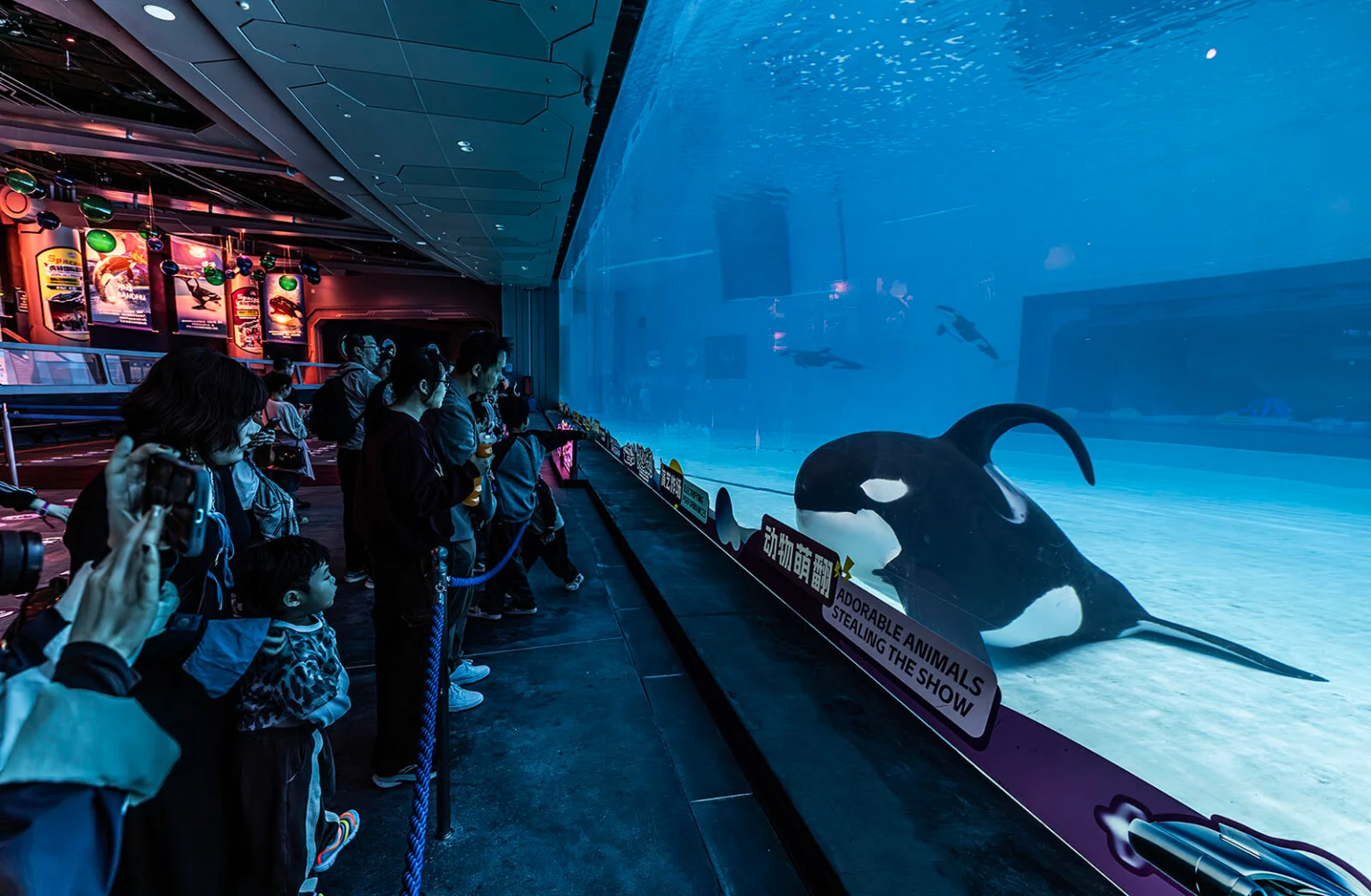
Jingyi Zhang records a male orca resting motionless on the floor of a concrete tank at Chimelong Ocean Kingdom in China. The severely collapsed dorsal fin and spectators behind glass make the consequences of prolonged captivity visible. According to the competition caption, the animal was caught in the wild in the Sea of Okhotsk as a juvenile and separated from its family group.
Science, adventure and the hidden miniature world
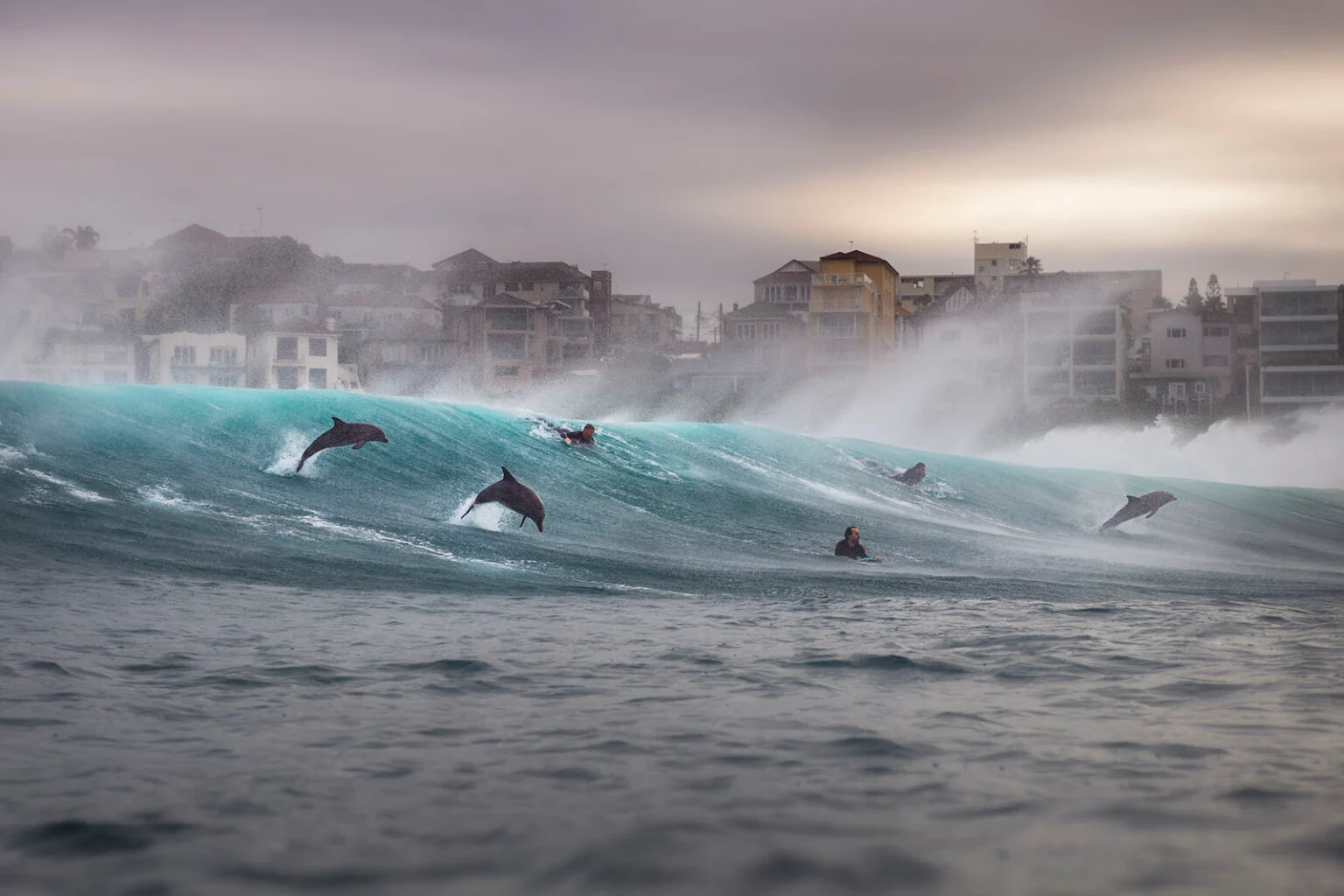
At Tamarama Beach in Sydney, Gergo Rugli watched a pod of dolphins move through the waves alongside surfers for more than an hour. The photograph belongs to the Adventure category, but its strength lies in how naturally humans and dolphins share the same swell.
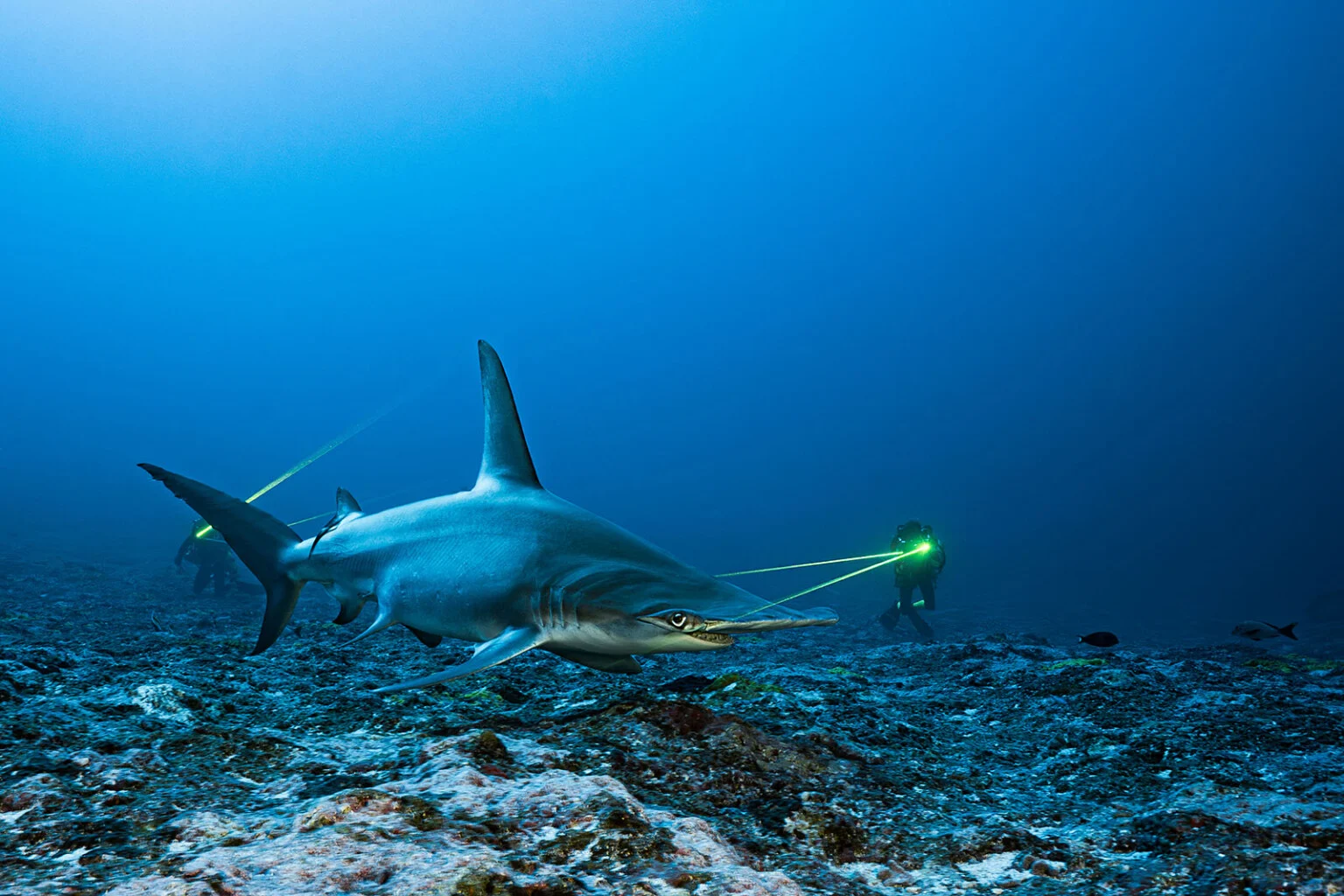
Thomas Pavy shows how photography can become a research tool. With photo identification and laser photogrammetry, scientists measure hammerhead sharks and track size, sex and population trends without bait or other attractants.
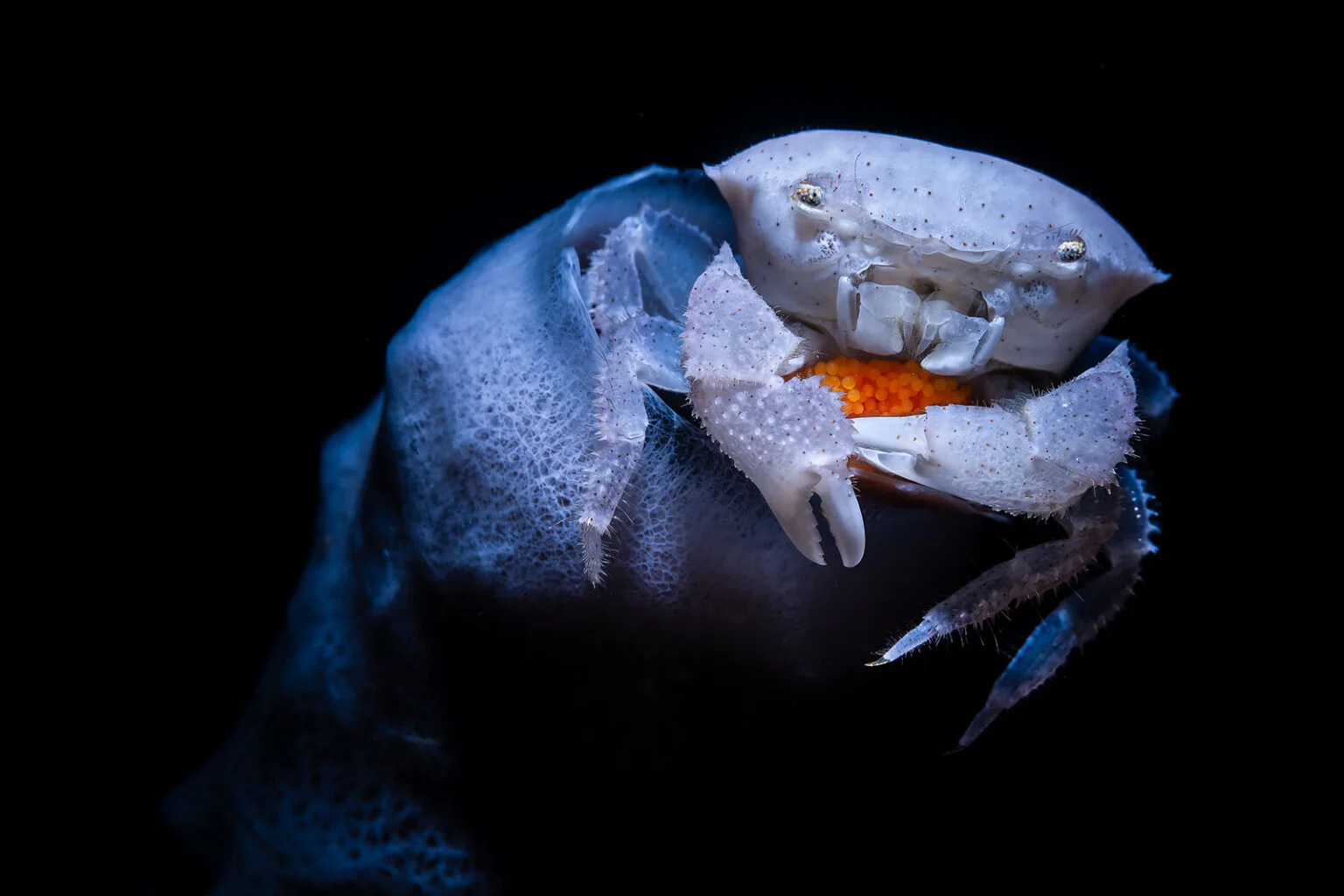
Andrea Michelutti also appears in the new Ocean Unseen: Hidden Worlds category, with a shrimp carrying eggs among coral branches. A snoot placed behind the coral creates the orange glow around the eggs, while front lighting reveals the animal without disturbing its fragile habitat.
Nine categories and a new view of miniature life
Ocean Photographer of the Year 2026 spans nine categories: Conservation (Hope), Conservation (Impact), Adventure, Wildlife, Fine Art, Portfolio, Young, Human Connection and Ocean Unseen: Hidden Worlds. The last of these was added this year to focus attention on small invertebrates and microscopic organisms that usually remain outside the frame.
The organisers say the competition recognises 118 ocean images each year. Entries are assessed by a panel of ocean photographers, editors and museum or gallery curators, with attention paid not only to aesthetics but also to the strength of the story carried by each photograph.
When the winners will be announced
The category winners and the overall Ocean Photographer of the Year 2026 will be revealed on September 10. The competition is presented by Oceanographic Magazine and Blancpain.
pttl has also covered previous editions: see the Ocean Photographer of the Year 2025 finalists and the 2025 winners, when Yury Ivanov claimed the overall title with a macro photograph of two tiny copepods.
What we think
This year’s selection becomes more meaningful when the images are read together rather than as isolated “spectacular” frames. Its strength lies in the shift between beauty, science and the difficult consequences of human choices. The new Hidden Worlds category appropriately widens the competition’s field of vision, reminding us that ocean health is not defined only by its largest and most recognisable animals.
Frequently asked questions
When will the Ocean Photographer of the Year 2026 winners be announced?
The winners of the nine categories and the overall winner will be announced on September 10, 2026.
Have the photographs in this article already won awards?
No. They are finalist photographs. The final ranking has not yet been announced.
How many categories are included this year?
The competition has nine categories, ranging from Wildlife and Fine Art to Conservation, Portfolio, Young, Human Connection and Adventure.
What is Ocean Unseen: Hidden Worlds?
It is a new category for 2026 that focuses on the ocean’s smallest and least-visible residents, including invertebrates and microscopic organisms.