

Summary
- Robin Williams’ children have reactivated his official Instagram account 12 years after his death
- The goal is to create a trusted archive of genuine photos, videos and stories
- Zelda Williams has repeatedly criticized AI videos that imitate her father
- Williams himself had imposed restrictions on the use of his likeness for 25 years after his death
- California now has specific legislation covering unauthorized digital replicas of deceased personalities
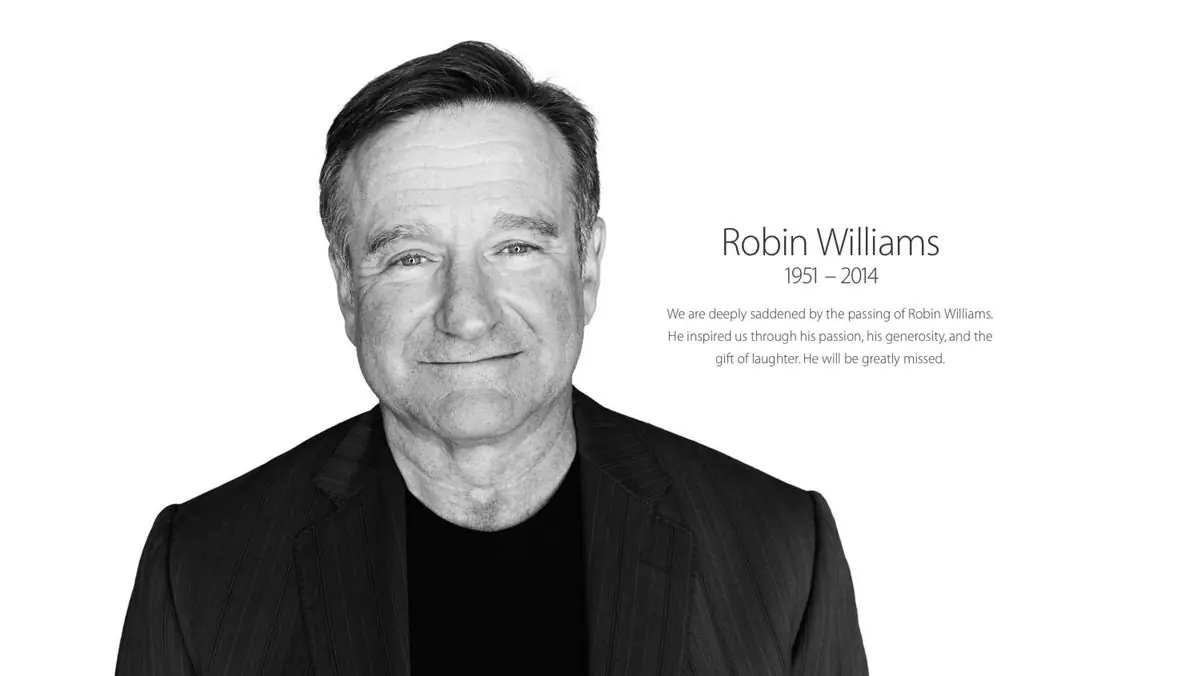
Robin Williams’ three children have reactivated their father’s official Instagram account, aiming to create a trusted home for authentic material amid the growing use of his voice and likeness by artificial intelligence systems.
Zak, Zelda and Cody Williams have taken charge of the actor’s account 12 years after his death in 2014. It is Robin Williams’ official Instagram account, @therobinwilliams, where the family intends to share genuine photographs, videos, stories and memories from his life and work.
The move matters because it is more than an attempt to preserve a digital archive. It comes at a time when artificial intelligence tools can create convincing representations of real people even after their death, while Zelda Williams has already spoken publicly against AI-generated content using her father’s voice and likeness.
Δείτε αυτή τη δημοσίευση στο Instagram.
An official archive in an age of AI content
In their joint announcement, the three siblings explained that as technology evolves, they want their father’s official account to serve as a safe and trusted place where material about him is shared with authenticity and care.
The choice of Instagram has practical significance. The @therobinwilliams account provides an immediately recognizable reference point where audiences can find material selected or published by the family rather than a synthetic version of the actor created by third parties.
An official account cannot eliminate deepfakes or control every AI video circulating online. It can, however, help establish a clearer distinction between genuine archival material and modern digital imitations.
Zelda Williams has spoken clearly about AI abuse
The family’s decision did not appear overnight. Zelda Williams had already taken a public stance against AI recreations of her father.
Following the reactivation of the account, she explained through Instagram that collecting authentic photos and clips is one of the ways the family has found to push back against widespread AI misuse of his voice and likeness.
In 2025, she had also asked users to stop sending her AI-generated videos featuring her father. Her position is that synthetic recreations should not automatically be confused with preserving or celebrating a real person’s work.
Her concerns had been expressed as early as 2023, when the use of digital replicas of actors became a major part of Hollywood’s wider debate over artificial intelligence and performers’ rights.
Robin Williams anticipated the issue long before generative AI
There is a particularly interesting detail in Robin Williams’ case: efforts to control the posthumous use of his likeness began long before today’s generative AI tools made digital impersonations accessible to almost anyone.
Documents related to the Robin Williams Trust that became public after his death showed that the actor had established restrictions on the use of his name, signature, photograph and likeness for 25 years after his death, through 2039.
When those provisions became known in 2015, the public discussion focused more heavily on holograms and digitally inserting deceased performers into new productions. Today the same issue exists on a much larger scale, because producing a synthetic face or voice no longer necessarily requires the infrastructure of a major film studio.
California now has a specific framework for digital replicas
The legal environment has also changed significantly.
In September 2024, California Governor Gavin Newsom signed AB 1836, amending the California Civil Code to provide specific protections concerning unauthorized digital replicas of deceased personalities.
The current provision states that a person who produces, distributes or makes available a digital replica of a deceased personality’s voice or likeness in an expressive audiovisual work or sound recording without the required consent may face liability equal to the greater of $10,000 or the actual damages suffered by the person controlling the relevant likeness rights.
The law does not mean every AI recreation of a deceased artist is automatically illegal. It includes exceptions for uses including news, criticism, scholarship, satire, parody and, under certain conditions, historical, biographical or documentary representations.
Authenticity is becoming the bigger issue
Robin Williams’ case highlights a problem that extends far beyond a single actor.
As synthetic content becomes more common, the provenance of a photograph, video or recording becomes increasingly important. The question is no longer only whether someone has the right to create a digital recreation, but whether audiences can recognize that what they are seeing is not an authentic recording.
For someone with a voice, expressiveness and improvisational style as distinctive as Robin Williams’, the distinction between a genuine archival clip and a synthetic imitation is meaningful.
That is why the reactivation of @therobinwilliams effectively creates an official digital reference archive. It does not stop AI content from being generated, but it gives audiences a reliable place to start when looking for genuine material.
What we think
The initiative by Robin Williams’ family demonstrates how the meaning of digital legacy is changing in the age of artificial intelligence. Protecting a creator is no longer only about copyright or commercial rights, but also about ensuring that the person’s real work remains distinguishable from material an algorithm can manufacture years after their death.
The official Instagram account is not a technical or legal solution to deepfakes. It does, however, provide something of increasing value: authentic material with clear provenance and an official place where audiences can find it.
Frequently asked questions
What is Robin Williams’ official Instagram account?
The official account is @therobinwilliams on Instagram. The actor’s children have reactivated it to share authentic photographs, videos and memories.
Why was Robin Williams’ Instagram account reactivated?
His family wants to provide a safe and trusted place for genuine material about his life and work, particularly as AI recreations of his image and voice become more common.
Who are Robin Williams’ children?
His three children are Zak, Zelda and Cody Williams, and all three are involved in the initiative surrounding his official account.
Did Robin Williams restrict use of his likeness after his death?
Yes. The Robin Williams Trust included restrictions on the use of his name, signature, photograph and likeness for 25 years after his death, through 2039.
Are all AI videos of deceased actors illegal in California?
No. California law covers certain unauthorized uses of digital replicas but also includes exemptions for news, criticism, scholarship, satire, parody and some historical or biographical uses.