

Summary
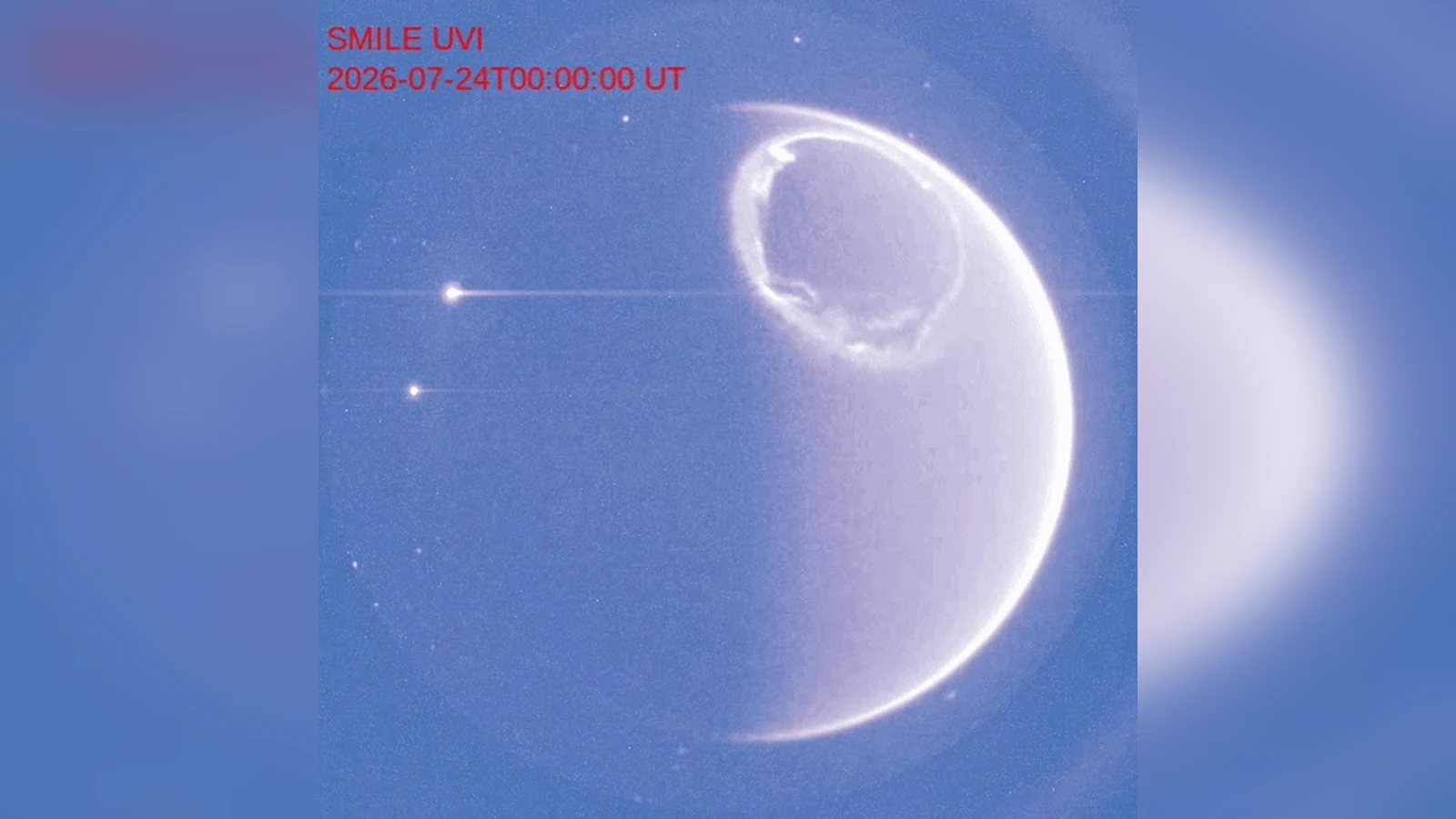
The European-Chinese SMILE mission has captured the complete ring of the northern aurora from space in ultraviolet light, revealing a view that cannot be seen from the ground.
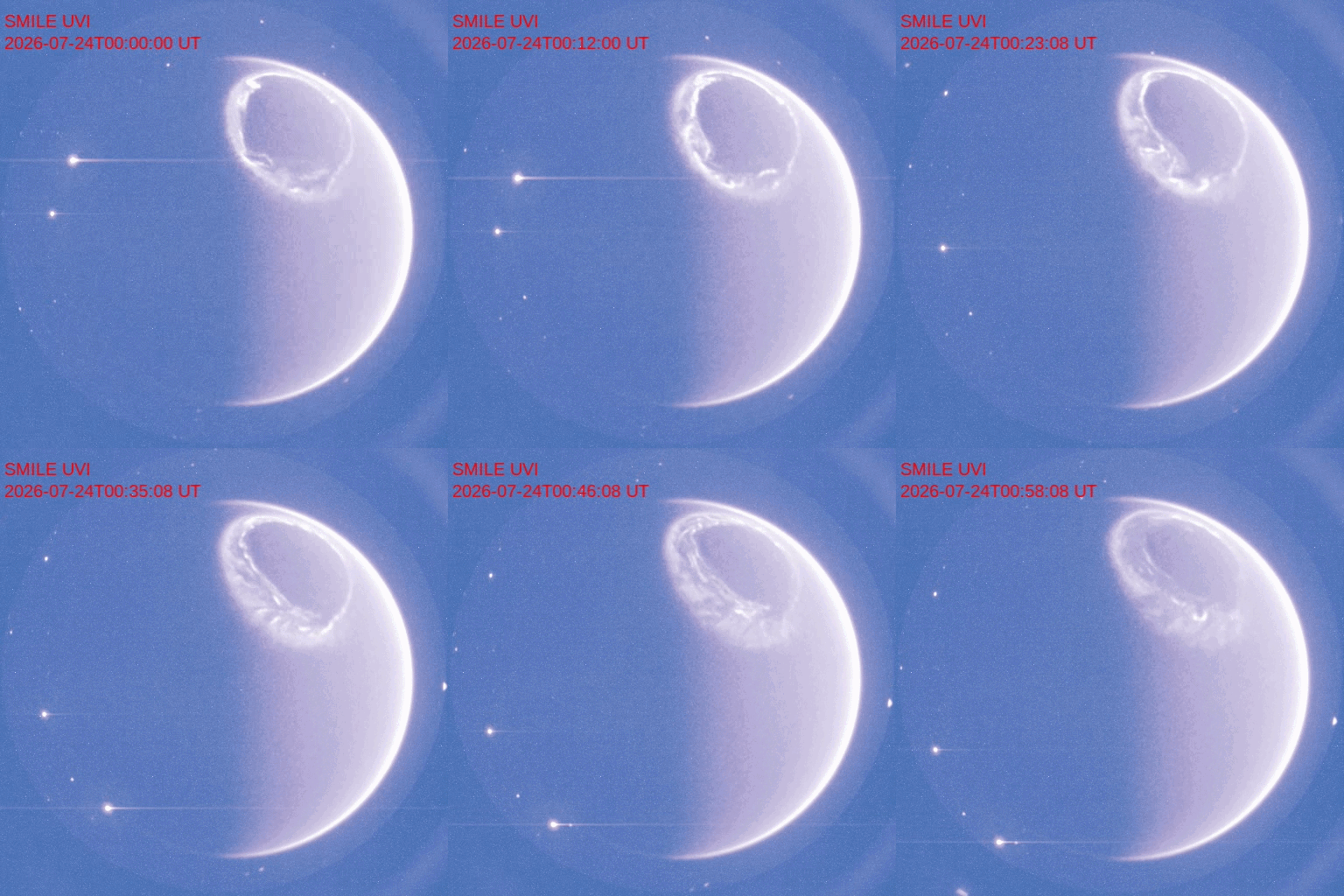
The footage comes from the UVI (Ultraviolet Imager) and covers roughly one hour, from 00:00 to 00:58 UT on 24 July 2026. The motion and changing shape of the luminous ring reveal an auroral substorm, a brief disturbance in Earth’s magnetosphere.
Why this view cannot be captured from the ground
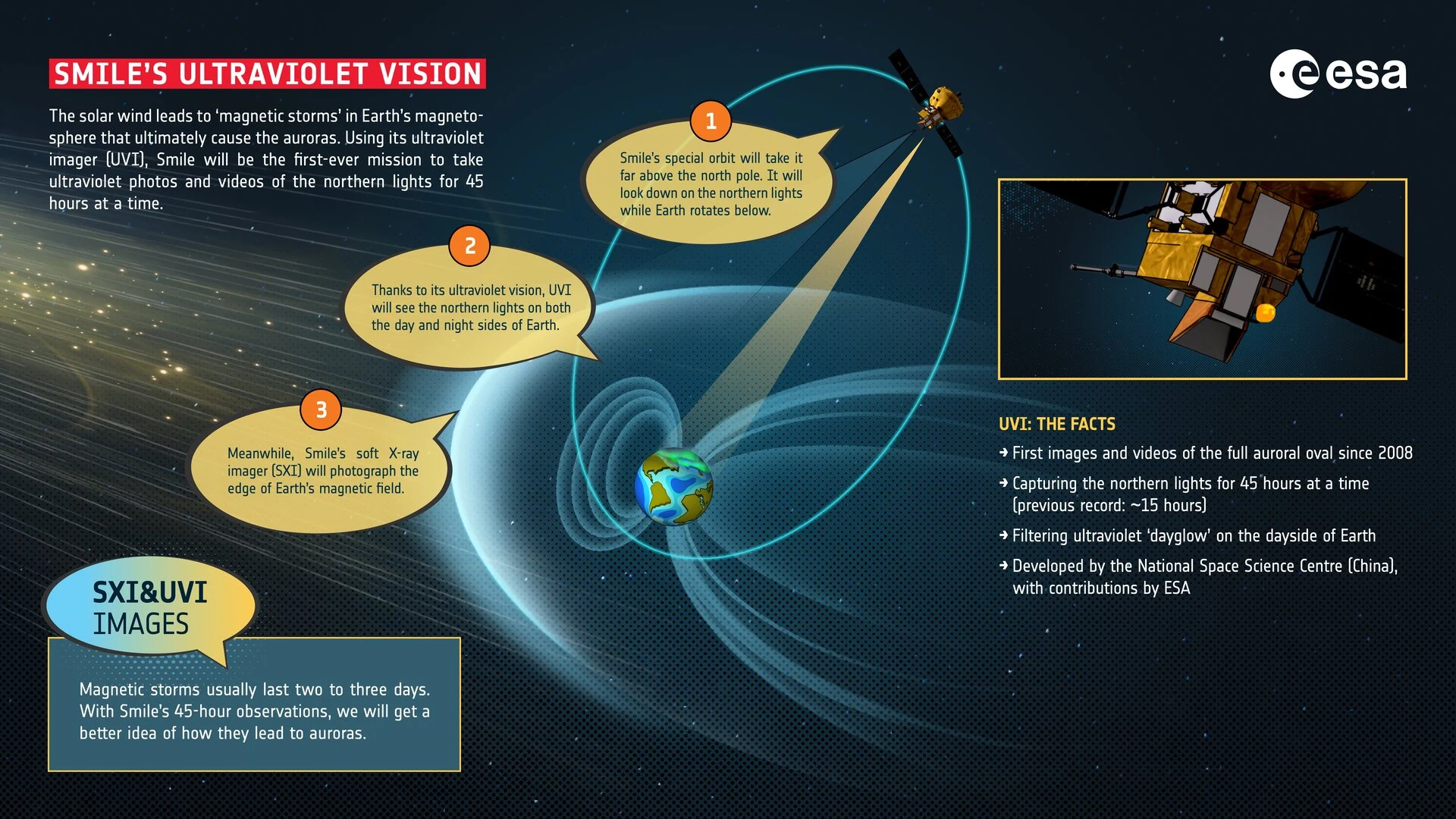
The aurora forms a vast ring around Earth’s magnetic pole. From the surface, we are too close to and within the geometry of the phenomenon to fit the entire auroral oval into a single view. SMILE observes Earth from high enough above the planet for UVI to capture the full structure.
The advantage of ultraviolet imaging
UVI is not trying to reproduce what the human eye would see. It records the aurora in ultraviolet light, allowing the auroral oval to be monitored even on Earth’s dayside.
In the timelapse, the bright points on the left are not part of the aurora but distant stars emitting ultraviolet light. Their apparent movement is caused by the changing camera view as SMILE moves in orbit.
What the timelapse records
The 24 July sequence shows the ring rippling and changing shape during a substorm. Such disturbances occur when the solar wind compresses Earth’s magnetic field and energetic particles are directed toward the polar regions.
ESA says UVI is the first camera since 2008 to capture the full ring of northern lights in ultraviolet. SMILE can observe the aurora for up to 45 hours at a time.
What we think
This observation shows how a camera working outside the visible spectrum can produce imagery that reveals the overall geometry of a phenomenon. For image makers, it is particularly interesting because it shows how dramatically visual storytelling changes when both wavelength and viewpoint change.
Frequently asked questions
What is an auroral oval?
It is the ring-shaped region around a magnetic pole where auroras most commonly occur.
Why can’t we see the entire ring from the ground?
The oval is far too large to be seen in full from a single point on Earth’s surface.
Why does UVI use ultraviolet light?
Ultraviolet imaging allows UVI to monitor the aurora on both Earth’s nightside and dayside.
When was the timelapse recorded?
The footage covers about 58 minutes on 24 July 2026, from 00:00 to 00:58 UT.