

Summary
- James Webb identified the host galaxy of an exceptionally distant fast radio burst.
- MeerKAT detected the signal in 2024.
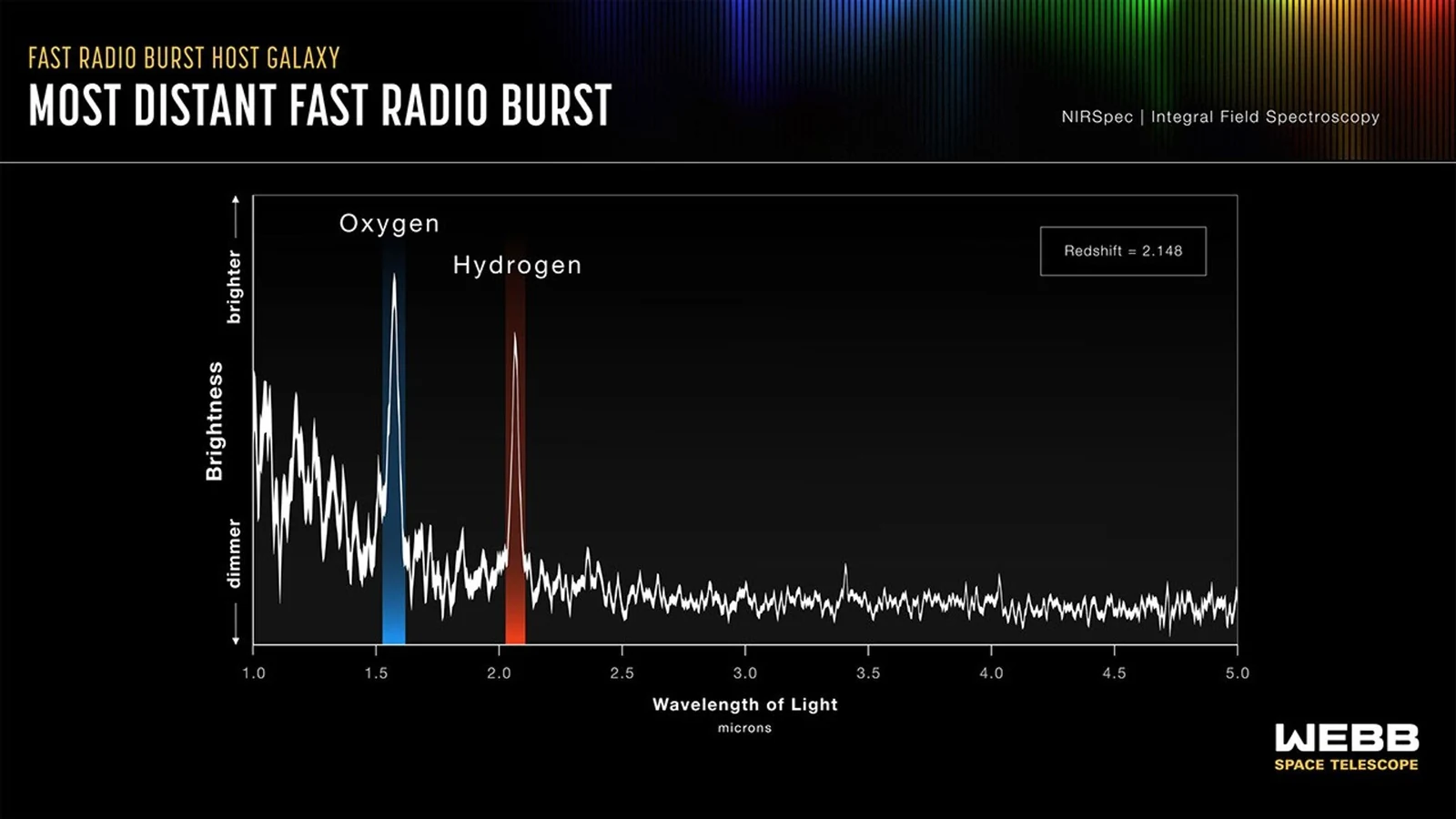
- NIRSpec spectroscopy measured a redshift of 2.148.
- The findings provide clues about the origins of these signals.
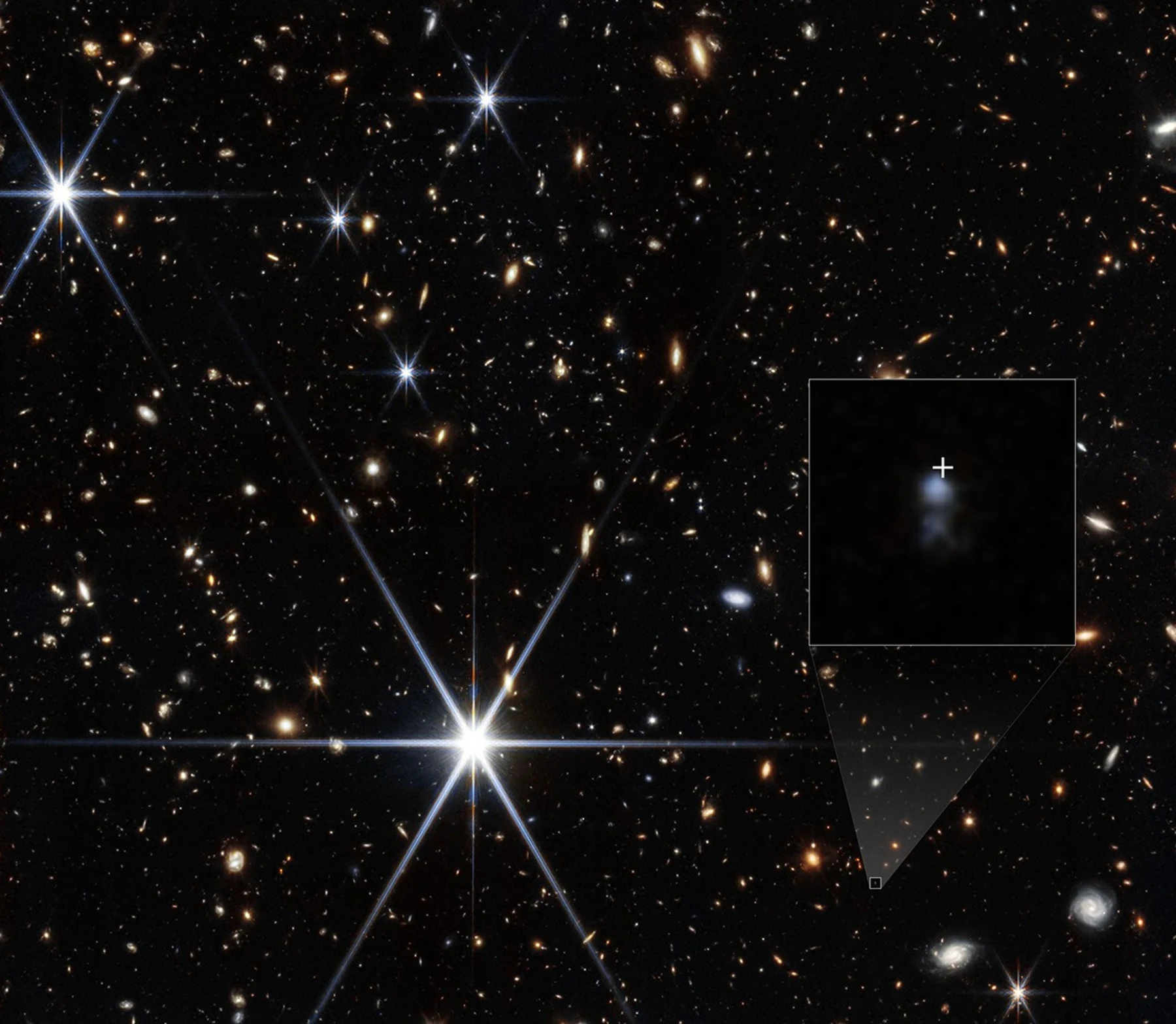
The James Webb Space Telescope has identified the host galaxy of the most distant known fast radio burst (FRB), a signal that traveled for more than 10 billion years before reaching Earth.
FRB 20240304B was detected on March 4, 2024, by MeerKAT in South Africa. Webb observations helped confirm the distance to its faint host galaxy.
How Webb confirmed the distance
NIRCam identified the faint galaxy, while NIRSpec measured a redshift of z = 2.148. We see the galaxy as it was when the universe was about 3 billion years old.
A small galaxy forming stars rapidly
The host is substantially less massive than expected yet has vigorous star formation. This environment may offer clues to the origins of FRBs.
What could have produced the burst?
One possible explanation for some FRBs involves magnetars, neutron stars with extremely powerful magnetic fields. These observations do not prove that this particular burst came from a magnetar.
What we think
Combining radio observations, infrared imaging and spectroscopy illustrates why astronomy depends on measurements across different wavelengths.
Frequently asked questions
What is a fast radio burst?
A brief, intense burst of radio waves from space.
Did Webb photograph the radio burst?
No. MeerKAT detected the radio signal, and Webb observed its host galaxy.
Do we know what caused it?
Not definitively. Magnetars remain one possible explanation.