

Summary
- Nikon is re-reviewing the 2026 Small World in Motion winning entry after questions about AI use.
- The competition's official post now describes the video as AI-assisted in post-processing.
- Ning Xu says AI did not generate the original movie, the cilia or their motion.
- Nikon has not yet announced a final decision changing the result.
Nikon is re-reviewing the winning entry of the 2026 Small World in Motion competition after scientists raised questions about the extent of artificial intelligence used in Dr. Ning Xu’s award-winning video.
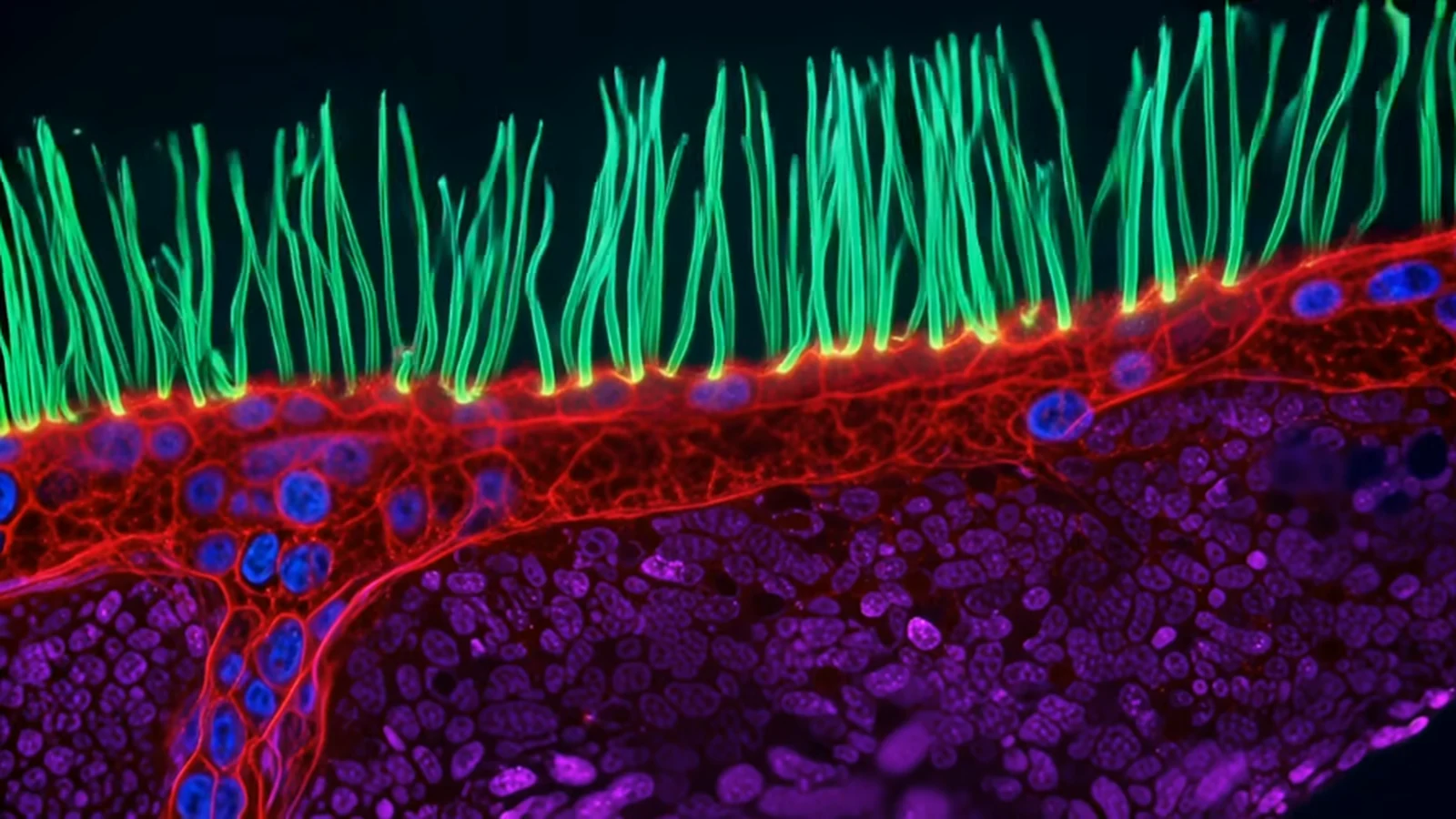
The work shows abnormal beating of airway cilia from a child with Primary Ciliary Dyskinesia (PCD) and was awarded first place in Nikon’s microscopy video competition.
Nikon is re-reviewing the entry
Nikon Small World’s official post announcing Xu’s win has now been updated with the wording “AI-assisted in post-processing.” Nikon has also publicly said it is re-reviewing the information provided during the initial vetting together with additional supporting material from the entrant.
Nikon says Xu is cooperating with the process and has supplied technical documentation covering the microscopy equipment, imaging methods and processing techniques used. No final decision changing the competition result has been announced so far.
What we know about the AI use
Xu has acknowledged that AI was used in post-processing, while maintaining that it was not used to generate the original experimental movie, the cilia or their motion. His explanation is that the processing was applied to reconstructed grayscale data to distinguish and color structures with similar morphology.
The official entry description lists diffractive super-resolution microscopy and a 100X objective lens. The video concerns a sample associated with PCD, a genetic disorder in which airway cilia do not move normally.
Why scientists raised concerns
Researchers who publicly examined the video questioned whether some of the colorized structures consistently correspond to real biological anatomy. Concerns included elements that appear to emerge or disappear between frames, as well as proportions or movements described as unusual.
A separate claim has also been made that the material contains a SynthID indicator that could be associated with AI-generated content. Nikon has not publicly confirmed that claim, and the review is still ongoing, so there is not yet a final basis for concluding that the entry violated the competition rules.
What the current competition rules say
The currently published rules for the next Small World in Motion cycle prohibit AI-generated videos and give Nikon the right to request the original video for verification. They also require entries to be captured with an optical light microscope and to use a microscope objective.
That wording alone does not decide the 2026 case: the key issue is how AI was used in the final workflow and how Nikon evaluates the source data and technical documentation it has received.
What we think
The case shows why scientific-imaging competitions need a clear distinction between AI that improves the presentation of captured data and AI that creates or reconstructs visual information. For photographers and video creators, retaining source files and documenting every processing step is increasingly important when authenticity is part of the entry rules.
Frequently asked questions
Has Nikon disqualified Ning Xu?
No. As of October 2, 2026, Nikon has announced a re-review of the entry but has not published a final decision changing the ranking.
Was AI used in the winning video?
The official competition post now says “AI-assisted in post-processing.” Xu maintains that AI did not generate the original movie, the cilia or their motion, but was used at a later visualization stage.
What does the video show?
It shows abnormal beating of airway cilia from a child with Primary Ciliary Dyskinesia, with Nikon listing diffractive super-resolution microscopy and a 100X objective lens.
Does Nikon ban AI-generated videos?
Yes. The currently published rules for the next Small World in Motion cycle explicitly say AI-generated videos are not permitted and that Nikon may request the original video for verification.