Summary
- Frank Hurley photographed and filmed Shackleton’s Antarctic expedition.
- In 1915 he saved around 120 glass negatives and destroyed roughly 400 others.
- His surviving Paget plates record Endurance in authentic early colour.
- The 2024 documentary Endurance connects the historical expedition with the discovery of the wreck.
- From Australia to the Endurance
- Glass plates, motion-picture film and pioneering colour photography
- How Hurley photographed the ship in the ice
- 9 November 1915: 120 negatives saved, roughly 400 destroyed
- The pocket Kodak he carried onward
- Composite photographs and the limits of documentary truth
- Hurley’s original footage: South (1919)
- The Endurance documentary on Disney+
- What we think
In 1915, as Antarctic ice crushed the Endurance, photographer Frank Hurley had to decide which images to rescue and which to destroy forever.
On 9 November, Hurley and Ernest Shackleton selected roughly 120 glass negatives. About 400 more were smashed on the ice to reduce the burden on the surviving crew. It was an extraordinary decision for a man who had travelled to the edge of the world to make photographs.
His work survives not simply because those negatives were saved, but because it lets us experience Shackleton’s expedition through both black-and-white images and remarkably early photographs taken in actual colour.
From Australia to the Endurance
James Francis “Frank” Hurley was born in Australia in 1885. He had already gained experience photographing in polar conditions as part of Douglas Mawson’s Australasian Antarctic Expedition (1911–1914).
In October 1914, he joined Shackleton’s Imperial Trans-Antarctic Expedition as its official photographer and filmmaker. The plan was to complete the first land crossing of Antarctica, but in January 1915 the Endurance became trapped in Weddell Sea ice.
Glass plates, motion-picture film and pioneering colour photography
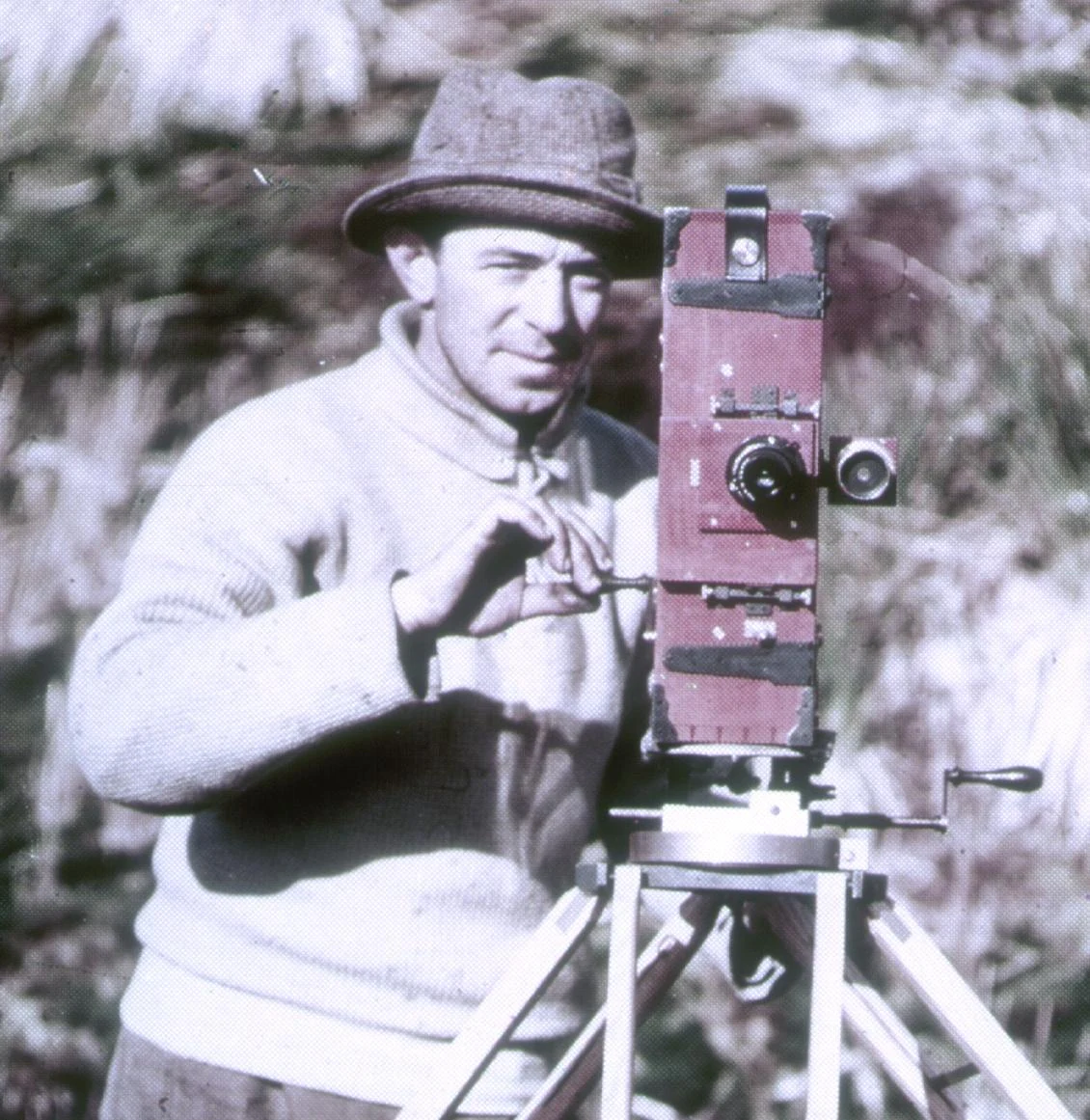
Hurley worked with large plate cameras, smaller Kodak cameras and 35mm motion-picture film. He built a darkroom aboard the ship, where developing and washing glass plates became exceptionally difficult in sub-zero temperatures.
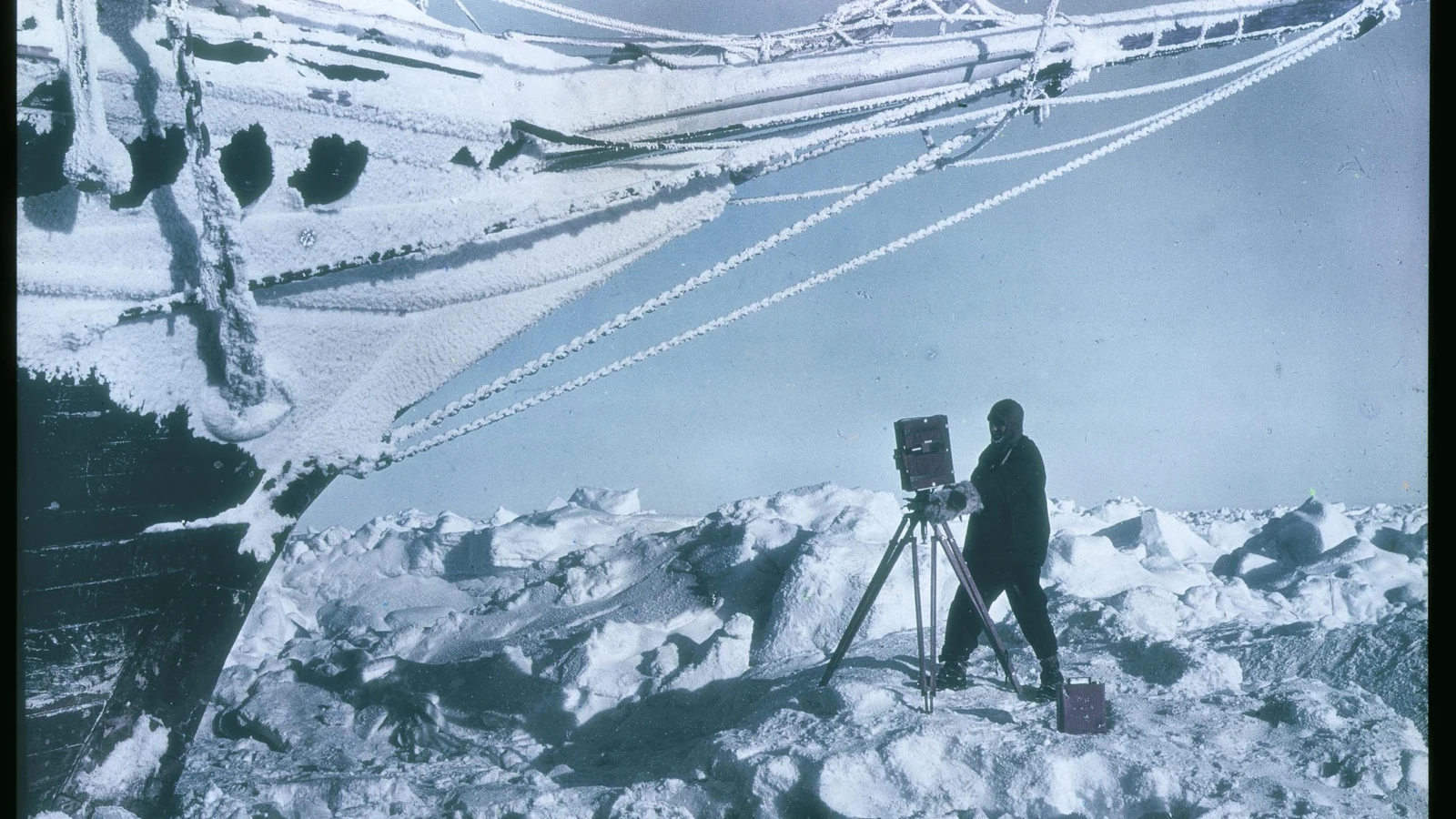
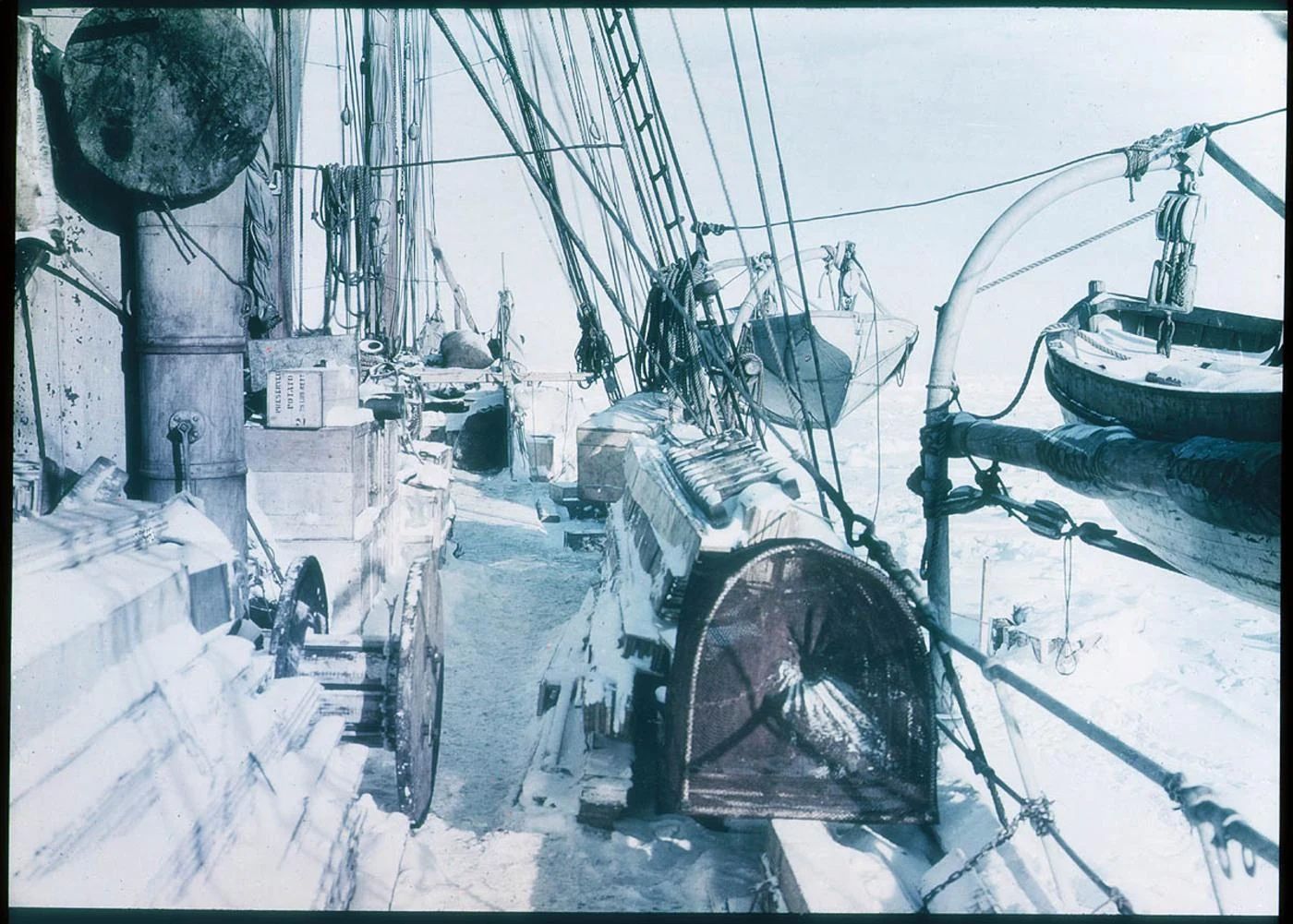
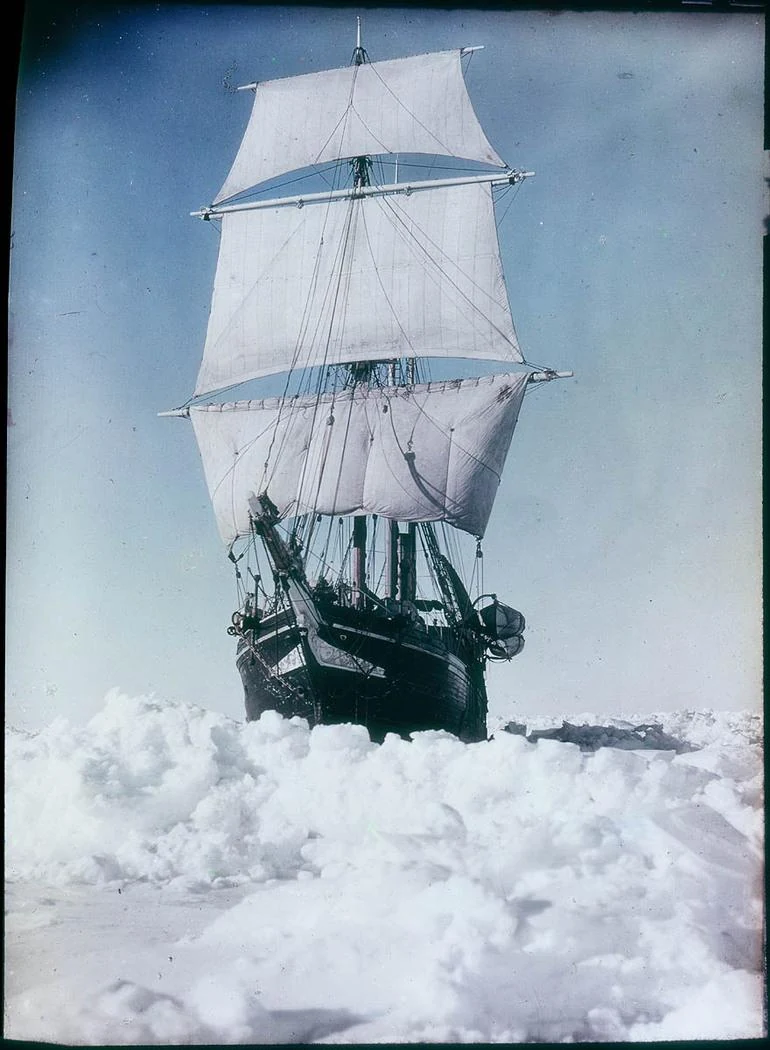
The Endurance pictures accompanying this story have another unusual quality: they were made using the Paget colour process, rather than being digitally colourised from old black-and-white originals. The process used a special colour screen in conjunction with a photographic plate; the resulting transparencies were processed later in England.
The State Library of New South Wales holds 32 surviving Paget plates by Hurley from the expedition period. Seventeen relate to the Endurance voyage, and another 15 were taken on South Georgia in 1917. They offer a rare glimpse of early colour photography in an era dominated by black and white.
How Hurley photographed the ship in the ice
Hurley sought unusual angles and height, climbing the rigging or placing his camera on dangerous ice. His compositions play with the contrast between the dark hull, the geometry of masts and rigging, and the immense white landscape.
For his well-known night picture The Endurance in the Garb of Winter, Hurley used magnesium flashes to illuminate the vessel in darkness. His control of light, patience and camera position show just how elaborate an Antarctic photograph could be in 1915.
9 November 1915: 120 negatives saved, roughly 400 destroyed
The crew abandoned Endurance on 27 October 1915 after increasing ice pressure made it unsafe. The ship finally sank on 21 November. Before it disappeared, Hurley recovered glass plates and motion-picture material from inside the damaged vessel.
The crucial edit took place on the ice on 9 November. Weight and limited space in the lifeboats made it impossible to carry the entire collection. Hurley and Shackleton kept around 120 glass negatives and smashed about 400 others, partly to remove the temptation of going back for them later.
For photographers today, that choice is difficult to imagine. The importance of what is preserved — and what is lost — remains familiar whenever an archive of tens of thousands of historic negatives reveals images that never appeared in print.
The pocket Kodak he carried onward
Most of the cumbersome equipment was left behind. Hurley continued with a small pocket camera and just a few rolls of film. In April 1916 the men reached Elephant Island in lifeboats after months stranded on drifting ice.
Shackleton and five companions made a dangerous voyage to South Georgia to find help. On 30 August 1916 the 22 men who had remained on Elephant Island were rescued. The chosen photographs had survived alongside them.
Composite photographs and the limits of documentary truth
Hurley did not always restrict himself to a single exposure. Later, most notably as a First World War photographer, he also combined different negatives into composite images to convey greater dramatic intensity.
That practice sparked debate over where visual interpretation ends and the alteration of a documentary record begins. It echoes ongoing questions about authorship and authenticity in historic photographs, where the original negatives can be essential evidence.
Hurley’s original footage: South (1919)
Hurley was not only a still photographer. His expedition film material was assembled into the silent documentary South (1919), preserved and restored by the British Film Institute (BFI). It includes scenes showing the final moments of Endurance in the ice.
The official BFI extract below contains Hurley’s original footage of the ship’s destruction. These are images filmed on the expedition itself, not contemporary recreations.
The restored South film on BFI Player provides a fuller record of the expedition on film.
The Endurance documentary on Disney+
The story has also reached contemporary cinema through Endurance (2024), a National Geographic documentary directed by Elizabeth Chai Vasarhelyi, Jimmy Chin and Natalie Hewit. Running 1 hour and 44 minutes, the film connects Shackleton’s expedition with the modern search that located the wreck in the Weddell Sea in 2022.
For documentary filmmakers, the combination of Hurley’s historical images and the new underwater expedition footage makes it especially relevant. The official Endurance page on Disney+ offers film details and viewing information.
What we think
What stays with us is not simply that Hurley worked in extraordinary cold. It is that he had to decide which of his own negatives deserved space on the journey, knowing the rest would be lost forever. A glass plate could compete with supplies the crew needed to stay alive.
The Paget colour plates are equally striking. These are not old photographs colourised a century later: they preserve the colour Hurley was trying to capture in 1915. If you work in photography or documentary film, that changes how close the past feels.
There is also a practical lesson here. A photograph does not secure its place in history the moment the shutter is pressed. Selection, safe transport, accurate captions and long-term archives matter too. Without that work, we might have no idea what many moments aboard Endurance looked like.