


Summary
- A new monkey species has been officially described in the Democratic Republic of the Congo.
- The species was confirmed through years of fieldwork and genetic analysis.
- Its distinctive orange facial markings make it easily recognizable.
- Researchers believe the species may already be endangered.
A previously unknown monkey species has been officially identified after nearly two decades of scientific investigation.
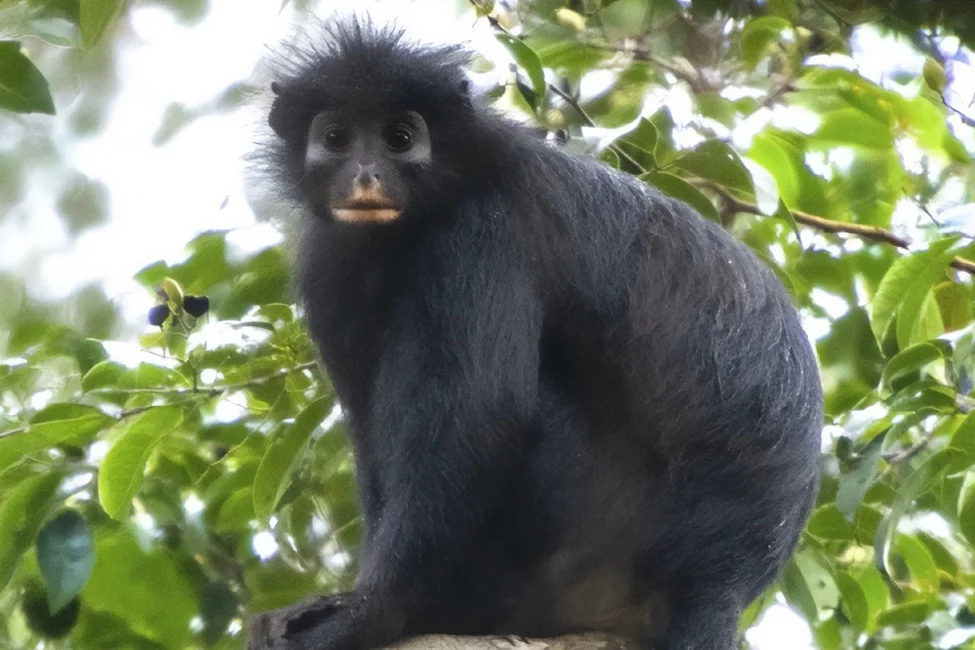
Researchers have described Colobus congoensis, locally known as Likweli, a small black colobus monkey distinguished by striking orange-cream markings around its mouth and nose. Although first photographed in 2008, years of field observations and genetic studies were required before scientists confirmed it as a distinct species.
The discovery is especially significant because it represents only the fifth new African monkey species formally described in the past 75 years, highlighting how much biodiversity remains undocumented in the Congo Basin.
A discovery that began with a blurry photograph
The story started in 2008, when conservationists captured a blurry image of an unusual monkey high in the forest canopy. The evidence was insufficient for identification, leaving the animal a mystery.
After another sighting in 2018, researchers launched an extensive field study that combined photography, sound recordings, skeletal comparisons and DNA analysis to confirm the new species.
What makes Likweli unique?
The monkey is characterized by:
- glossy black fur,
- bright orange-cream facial markings,
- a white rump patch,
- deep roaring and snorting vocalizations.
Genetic evidence indicates that it diverged from its closest known relative between 3.4 and 5.8 million years ago.
Conservation concerns
The species is currently known only from a small forest region between the Lomami and Lualaba rivers in the Democratic Republic of the Congo.
Because of its restricted range, habitat loss and hunting pressure, researchers recommend that the species be considered endangered.
What we think
The discovery of Colobus congoensis demonstrates that remarkable wildlife discoveries are still possible and reinforces the importance of protecting tropical forests before unique species disappear.
Frequently Asked Questions
What is the new species called?
Its scientific name is Colobus congoensis, while local communities know it as Likweli.
Where does it live?
It inhabits the forests of Lomami National Park in the Democratic Republic of the Congo.
Why is the discovery important?
It is only the fifth new African monkey species formally described in the last 75 years.
Is it endangered?
Researchers believe its limited range and ongoing habitat threats make it a strong candidate for endangered status.