

Summary
- Rubin’s new image contains more than 500,000 galaxies and 50,000 stars.
- It was produced by stacking hundreds of observations from the 3.2-gigapixel LSST Camera.
- The COSMOS field has been systematically studied since 2003 and provides a clear view of the distant Universe.
- The image is part of EDP2, the first scientific data release based on LSST Camera observations.
- Repeated observations will reveal fainter galaxies and transient astronomical events.
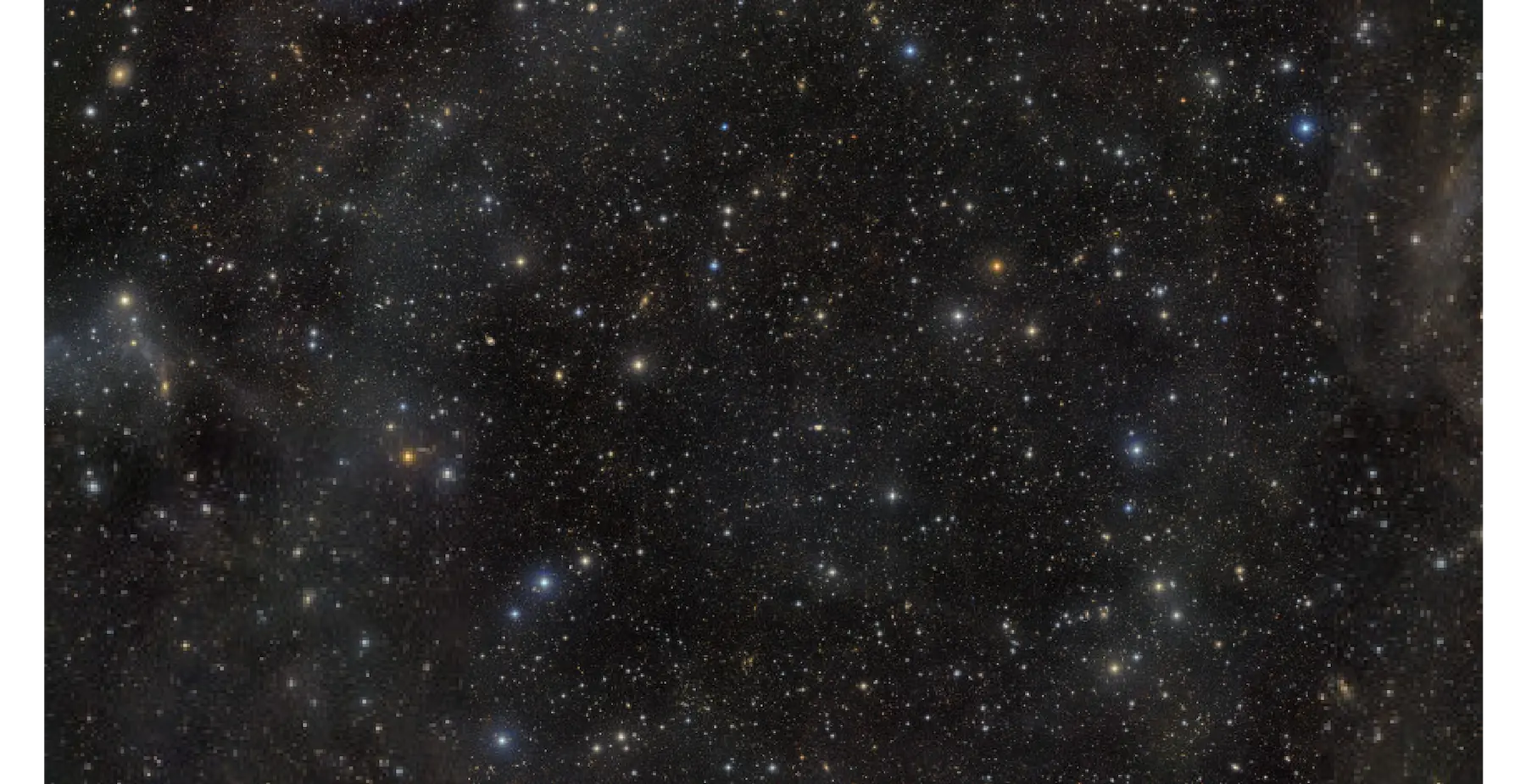
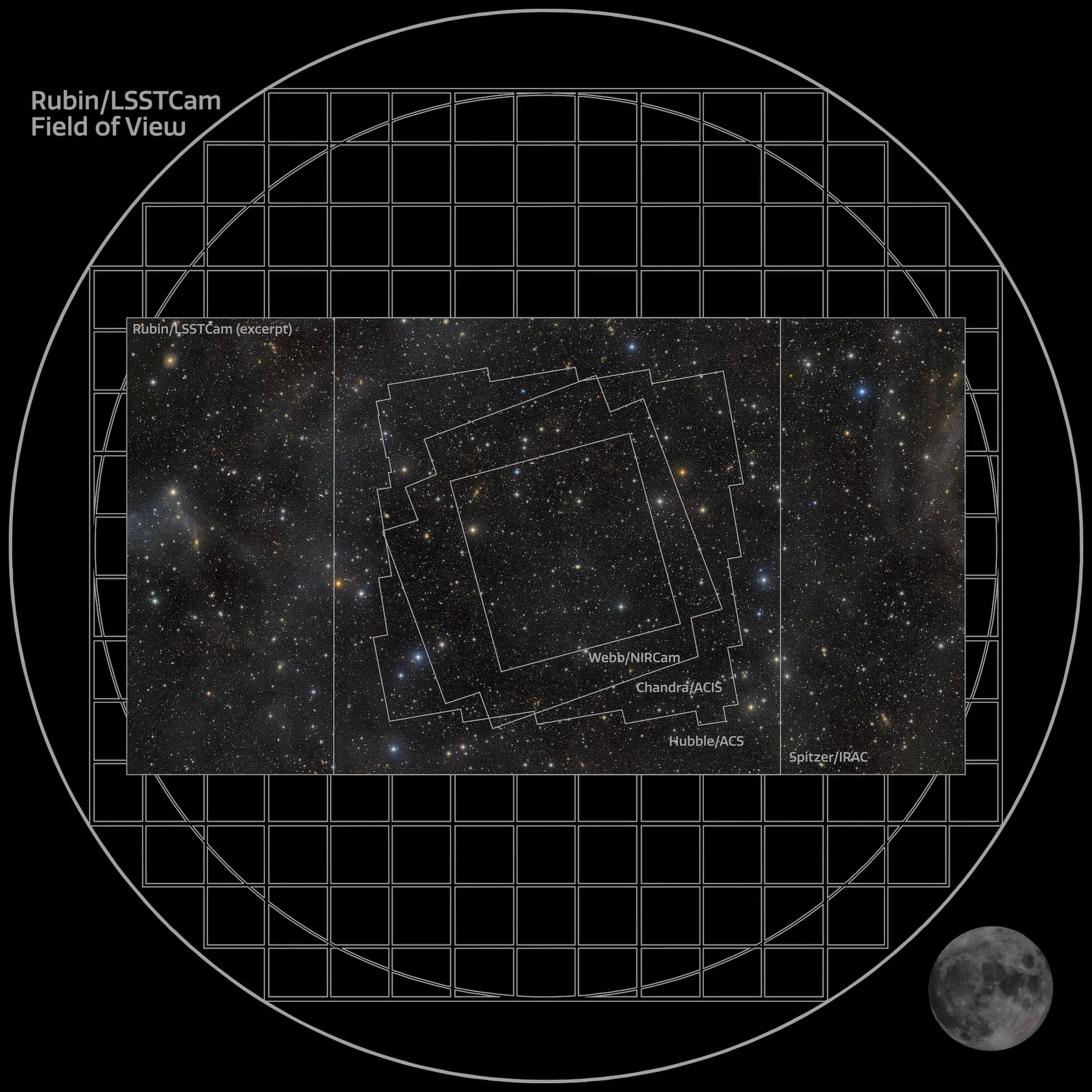
Vera C. Rubin Observatory has released an exceptionally deep image of the COSMOS field containing more than 500,000 galaxies and 50,000 stars.
The final image was produced by combining hundreds of observations from the 3.2-gigapixel LSST Camera and marks the first scientific image and catalog release based on data from this camera.
The release is particularly significant because COSMOS is one of the most extensively studied regions of the sky. Rubin adds a combination of depth, wide-field coverage, and repeated imaging to the wealth of previous observations, allowing scientists to examine both the structure of galaxies and changes in the sky over time.
What the image reveals
The field contains spiral galaxies with clearly visible arms, smooth elliptical galaxies, distorted or merging systems, and faint red galaxies from extremely distant regions of the Universe.
In contrast, there are relatively few bright foreground stars from the Milky Way. This is because COSMOS lies away from the crowded plane of our galaxy, where stars and clouds of interstellar dust can obstruct observations of distant objects.
The technology behind the image
The image was captured with the LSST Camera, the largest digital camera built for astronomical observations. It has a 3.2-billion-pixel sensor and is mounted on the 8.4-meter Simonyi Survey Telescope at Cerro Pachón in Chile.
The final view is not a single photographic exposure. It was created by stacking hundreds of observations, allowing faint light signals to accumulate while reducing random noise. Galaxies that are nearly invisible in an individual exposure can therefore appear much more clearly in the combined result.
Why the COSMOS field is so important
COSMOS is located in the constellation Sextans and has been systematically studied for more than two decades. The first detailed observations were conducted with the Hubble Space Telescope in 2003, followed by data from many of the world’s leading ground- and space-based observatories.
The region has been examined across a wide range of wavelengths, from radio waves to X-rays. Optical observations reveal the shapes and colors of galaxies, infrared light allows researchers to study star-forming regions hidden behind dust, and X-rays record energetic activity around supermassive black holes.
Because the light from the most distant galaxies took billions of years to reach Earth, observing them provides a view of earlier stages in the evolution of the Universe.
The first scientific LSST Camera data release
The image was released as part of Early Data Preview 2, known as EDP2. It is Rubin’s first data preview based on LSST Camera observations and includes science-validation data collected between April 2025 and January 2026.
EDP2 includes a deep, combined image covering a total of 3,000 square degrees of the night sky, equivalent to approximately one-sixth of the visible Southern Hemisphere sky.
The data do not yet come from the complete ten-year LSST survey, which began on June 30, 2026. However, they form a scientifically valuable dataset in their own right, allowing researchers to test tools, validate data products, and prepare for the main volume of survey observations.
What comes next
Because of its scientific value, COSMOS will be observed more frequently than many other regions included in the LSST. Repeated imaging will create an increasingly deep view, revealing fainter galaxies and details that cannot yet be seen in the first result.
Continuous monitoring is also expected to detect large numbers of variable and transient phenomena, including supernovae and other explosive events that can be followed up by additional telescopes.
The second phase of EDP2 is expected between October and December 2026. It will include processed images from individual visits, difference images that isolate detected changes, and reference templates used for comparisons with new observations.
Who can access the data
The first phase of EDP2 is available to researchers in the United States and Chile, as well as authorized international holders of Rubin data rights.
Under the observatory’s data-access policy, these products will become freely available to the public after a two-year proprietary period.
A dedication to the people of Chile
Rubin Observatory dedicated the image to the people of the Coquimbo region affected by recent devastating storms, as a gesture of gratitude for their long-standing support of astronomy and the AURA observatories in Chile.
What we think
The COSMOS image stands out not only because of the extraordinary number of galaxies it contains. Its real value lies in the fact that it represents the beginning of a systematic and repeatedly updated record of the sky. The combination of a wide field of view, high resolution, and continuous observations can transform familiar regions such as COSMOS into dynamic laboratories for studying the evolution of the Universe.
Frequently asked questions
How many galaxies are visible in the image?
The final image contains more than 500,000 galaxies and over 50,000 stars.
What is the COSMOS field?
It is an extensively studied region of the sky in the constellation Sextans. Its position away from the crowded plane of the Milky Way provides a clearer view of distant galaxies.
Which camera produced the image?
The image was produced with the 3.2-gigapixel LSST Camera, mounted on the 8.4-meter Simonyi Survey Telescope.
Is this a single photographic exposure?
No. The image was created by combining hundreds of separate observations, a process that strengthens faint signals and reduces noise.
Are the data publicly available?
They are initially available to researchers and authorized data-rights holders. Public access is planned after a two-year proprietary period.