

Summary
- 87.5% of the 32 used cameras with a clear price movement on Minna Camera became more expensive
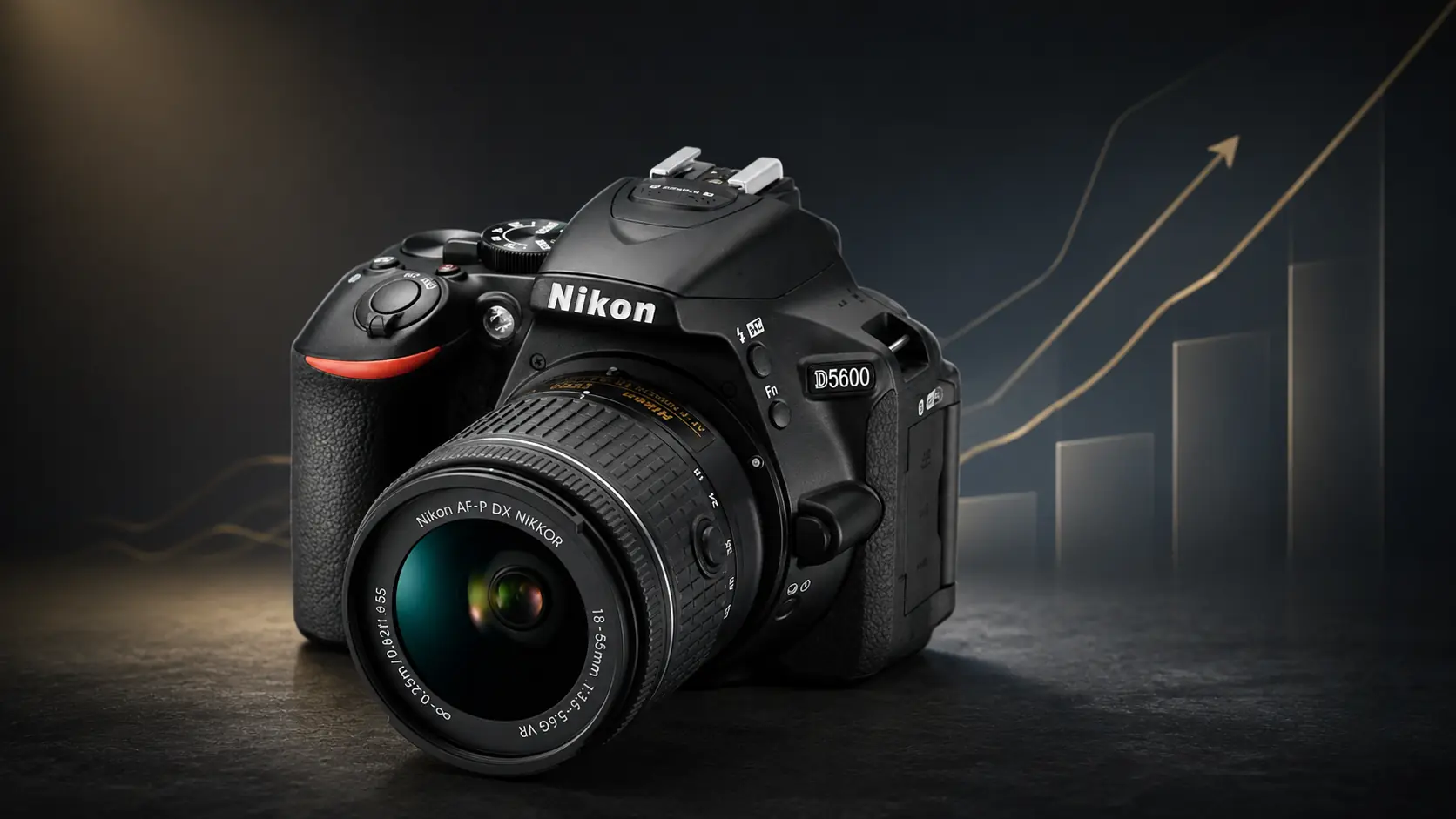
- The Nikon D5600 recorded the largest increase at 24.1%
- Sony α7 IV and Ricoh GR III followed with increases of 11.9% and 10.9%
- Models released in 2016 or earlier recorded an average increase of 7.1%
- Cameras priced below 50,000 yen showed the largest average increase at 14.2%
- The data covers a single Japanese marketplace and does not represent the entire global used-camera market
- The Nikon D5600 made the biggest jump
- Sony α7 IV and Ricoh GR III follow
- The 10 biggest price increases
- The older the camera, the larger the average increase
- Cheaper cameras are rising faster too
- Why a discontinued camera can become more expensive
- DSLRs are getting a second life
- The Ricoh GR shows what is happening with compact cameras
- Important caveat: This does not represent the entire global market
- What this means if you are shopping for a used camera
- What we think
- Frequently asked questions
A used camera no longer automatically means a “cheap camera,” as new data from Japan shows rising prices across DSLRs, mirrorless models and compacts — with older cameras recording the largest average increases.
New figures from Japanese used-camera marketplace Minna Camera show that of 32 models with a clear price movement during the first half of 2026, 28 — or 87.5% — became more expensive. The Nikon D5600 from 2016 leads the ranking with a 24.1% increase, while the Sony α7 IV, Ricoh GR III, Sony α6000 and Canon EOS R6 also recorded significant gains.
The trend is particularly interesting following renewed demand for compact and older digital cameras. For years, the used market was the obvious way to buy a capable camera at a substantially lower price. The new figures suggest that equation is beginning to change for certain popular or discontinued models.
The Nikon D5600 made the biggest jump
The largest increase in the study belongs to a DSLR that is almost a decade old.
The average transaction price of the Nikon D5600 on Minna Camera increased from 34,188 yen during January–March to 42,442 yen during April–June.
That represents an increase of 24.1%. Using the August 20, 2026 exchange rate, those figures are approximately €184 and €229 respectively.
The D5600 was introduced in 2016 as a 24.2MP APS-C DSLR and is no longer in production. PTTL covered the end of the Nikon D3500 and D5600 and effectively Nikon’s entry-level D3xxx and D5xxx DSLR lines in 2022.
What makes the result particularly interesting is that the largest percentage increase was not recorded by a fashionable premium compact or a modern full-frame mirrorless camera, but by an old entry-level DSLR.
Sony α7 IV and Ricoh GR III follow
The Nikon is not an isolated case.
In second place is the Sony α7 IV, whose average price increased by 11.9%, from 188,140 to 210,541 yen — approximately €1,015 to €1,136 at the current exchange rate.
Next is the Ricoh GR III, up 10.9%, from 170,953 to 189,607 yen, or approximately €922 to €1,023.
The top five is completed by:
Sony α6000 at +10.0%
Canon EOS R6 at +9.8%
The top ten also includes the Canon EOS R50, OM System Tough TG-7, Panasonic Lumix TZ99, Fujifilm X-S20 and Nikon Z9.
This is therefore not a trend restricted to a single type of camera. The top ten includes six mirrorless cameras, three compacts and one DSLR, representing seven different brands.
The 10 biggest price increases
According to Minna Camera’s figures for the first half of 2026:
Nikon D5600 — +24.1%
Sony α7 IV — +11.9%
Ricoh GR III — +10.9%
Sony α6000 — +10.0%
Canon EOS R6 — +9.8%
Canon EOS R50 — +8.9%
OM System Tough TG-7 — +8.6%
Panasonic Lumix TZ99 — +8.1%
Fujifilm X-S20 — +7.9%
Nikon Z9 — +7.8%
Even the tenth camera on the list therefore increased by nearly 8%.
The older the camera, the larger the average increase
Perhaps the most interesting part of the study is not the top ten, but the comparison by product age.
Minna Camera divided the models according to their release year and calculated the average change in price.
For models released in 2016 or earlier, the average increase was 7.1%.
For models from 2017–2020, it was 4.0%.
For models from 2021–2023, the increase fell to 2.8%.
And for cameras released in 2024 or later, the average change was just +0.6%.
The data suggests that, at least on this particular marketplace, older cameras are not necessarily losing value in the way traditionally expected from electronic products.
Cheaper cameras are rising faster too
A similar pattern appears when the figures are divided by price.
Cameras below 50,000 yen recorded an average increase of 14.2%.
In the 50,000–100,000 yen category, the average rise was 3.4%, falling to 2.5% for 100,000–200,000 yen cameras and just 0.9% above 200,000 yen.
That makes sense from a market perspective. When an older but capable body starts from a low price, a relatively small increase in absolute cost can translate into a large percentage movement.
Minna Camera itself points this out in relation to the D5600: its low starting price contributes to the striking 24.1% figure.
Why a discontinued camera can become more expensive
Several factors can help explain the trend.
The first is stable or increasing demand combined with finite supply. Once a model is no longer manufactured, no new units can enter the market. If more users begin searching for it, the available used examples can become more valuable.
The second is renewed demand for older digital cameras. Compacts and previous-generation models have attracted a new audience, particularly users looking for a photographic experience that differs from the smartphone.
PTTL recently examined why a good used compact can still be a meaningful alternative to smartphone photography, from larger sensors and genuine optical zoom to physical controls and RAW capture.
There is now an important addition to that argument: good used cameras cannot be assumed to remain cheap forever.
DSLRs are getting a second life
The DSLR result is particularly notable.
Sales of new DSLRs continue to collapse internationally, but that does not mean demand for existing bodies has disappeared.
Figures from the same Japanese market had already shown strong interest in used Nikon DSLRs even as worldwide shipments of new DSLRs fell below 700,000 units in 2025.
There is a practical reason. An older DSLR can offer a large APS-C or full-frame sensor, optical viewfinder, excellent battery life and access to an enormous selection of affordable used lenses.
For someone primarily interested in still photography rather than advanced video or the newest autofocus system, the value of these cameras does not disappear simply because production has ended.
The Ricoh GR shows what is happening with compact cameras
The GR III’s third-place position is equally revealing.
Premium compacts have moved from a category many believed smartphones had effectively doomed to one of the most interesting parts of today’s camera market.
Small bodies, large sensors, fixed lenses and a distinctive photographic character have created demand that can, in some cases, exceed supply.
That means buying an older compact no longer works exactly as it once did: a popular model can stop depreciating and, in some cases, begin moving in the opposite direction.
Important caveat: This does not represent the entire global market
There is an important limitation.
The data comes exclusively from transactions on Minna Camera in Japan and is not a comprehensive index of the worldwide used-camera market.
The company itself notes that the first quarter coincided with the early operating period of the service, when transaction numbers were lower. Some of the difference may therefore also reflect changes in the mix of individual items sold.
Nor does it mean every used camera is becoming more expensive.
Of the 32 models with a clear price movement, four declined. Different markets — Greece, the rest of Europe, the United States or Japan — can also have very different levels of supply and demand.
Nevertheless, the fact that 28 of 32 models moved higher, while the overall index of products traded every month rose from 100 in January to 103.1 in June, makes the trend worth watching.
What this means if you are shopping for a used camera
The main practical takeaway is that the assumption “I will wait and the price will fall further” does not work for every model.
When a camera has been discontinued, develops a loyal following or belongs to a category becoming popular again, its price can stabilise or even rise.
That does not mean buyers should rush.
It does mean that before buying, it is worth checking price history, availability, the condition of the specific unit and the price of a newer alternative. A “rare” used camera can easily become expensive enough that a current model offers better value.
What we think
Rising second-hand prices are another indication that the camera market is changing in ways that would have been difficult to imagine only a few years ago.
The smartphone eliminated a huge part of the mass market, but the dedicated cameras that remain seem to be acquiring a different kind of value. An old DSLR can become an affordable entry into serious photography, while a previous-generation compact can turn into a sought-after product.
We would not describe cameras as an “investment.” Prices can change quickly, and these particular figures cover only one Japanese marketplace.
They do, however, point to something practical: the era when we could assume every older digital camera would simply become cheaper and cheaper may be over for certain models.
Frequently asked questions
Which used camera increased the most in price?
In Minna Camera’s data for the first half of 2026, the Nikon D5600 recorded the largest increase at 24.1%.
Are all used cameras becoming more expensive?
No. Of the 32 models with a clear price movement, 28 increased and four declined. The data also covers only one Japanese marketplace.
Why can an old camera become more expensive?
Possible factors include discontinued production, limited supply, renewed demand for older digital cameras and the popularity of specific models.
Is buying a used camera still worthwhile?
It can still offer excellent value, but buyers should compare current new-camera prices and carefully inspect the condition of the individual unit. The word “used” does not automatically mean “bargain.”