

Summary
- Xiaomi 17 Ultra's Supermoon added lunar-looking texture to images of the Sun during the August 12 eclipse
- Similar reports appeared from users of other Xiaomi models
- Xiaomi officially confirms that the Xiaomi 17 Ultra includes Supermoon Auto
- Users report that the additional lunar detail disappears when Supermoon is disabled
- Xiaomi has not publicly explained the exact technical mechanism behind this specific processing
- What the controversial photographs showed
- Xiaomi 17 Ultra against other flagship smartphones
- Why the solar filter appears to have confused the system
- Supermoon is an official Xiaomi 17 Ultra feature
- What we know — and what we do not know — about the processing
- The case strongly recalls the Samsung Moon controversy
- The real issue is trust in photography
- What we think
- Frequently asked questions
The August 12 total solar eclipse dramatically revealed what can happen when a smartphone’s computational photography system misidentifies what is in front of the lens.
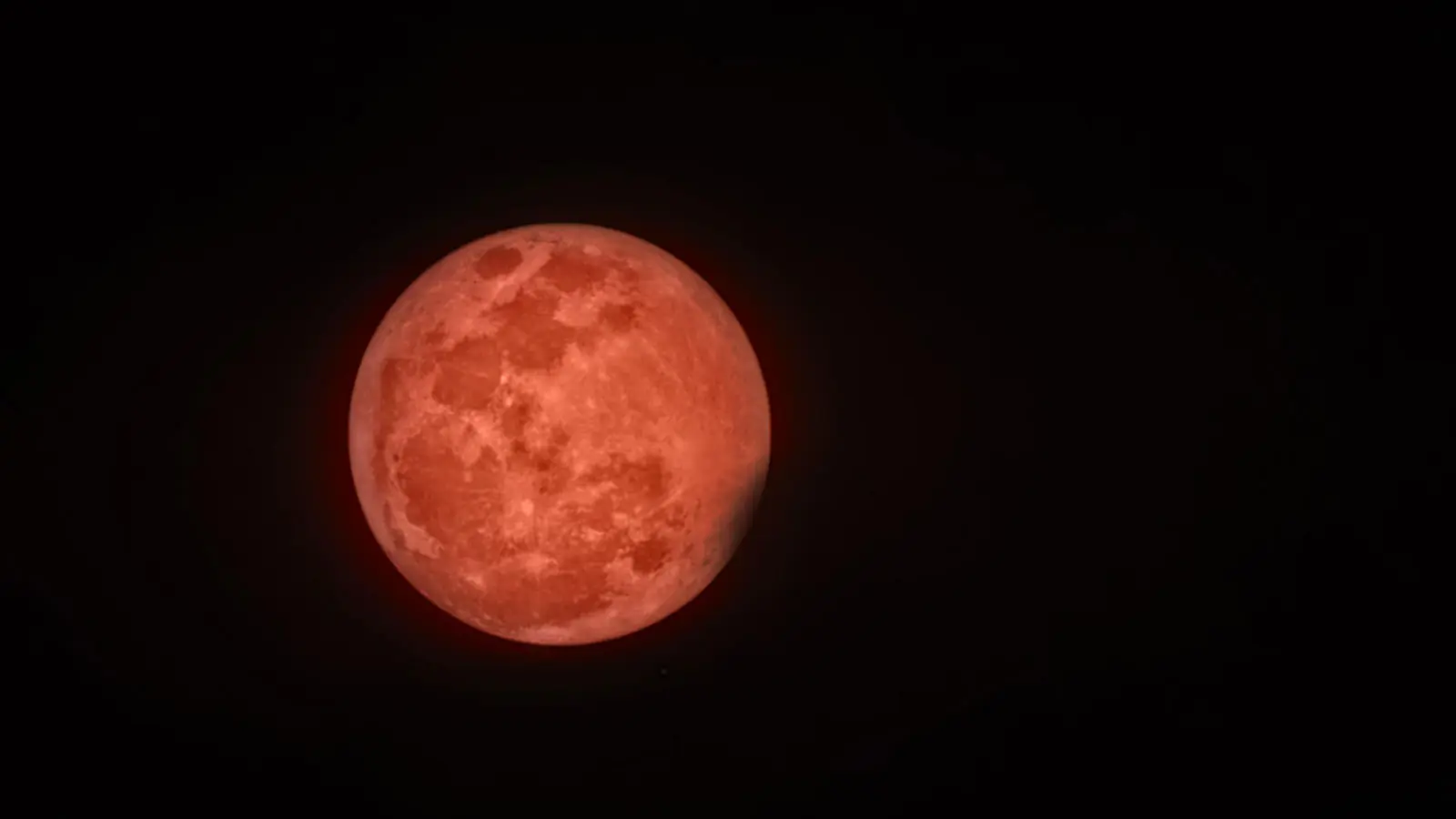
During the eclipse, Xiaomi smartphone owners published images in which the filtered Sun appeared with features resembling the lunar surface. The effect was linked to Supermoon mode, with notable reports involving the Xiaomi 17 Ultra and Xiaomi 17 Pro, while a comparison test showed the same problem on the 17 Ultra when the feature was activated on the Sun.
The incident matters for reasons that go well beyond a simple photographic glitch. It touches on one of the most important issues in modern mobile photography: when does software enhance data captured by the camera, and when does it begin adding visual information that a photographer may reasonably assume was actually present in front of the lens?
What the controversial photographs showed
In one report from a Xiaomi 17 Ultra owner, a solar filter was used to photograph the eclipse before Supermoon mode was activated. The final image displayed detail on the Sun that resembled the lunar surface. The same user also posted a photograph without Supermoon in which the effect was absent.
Another report, this time from a Xiaomi 17 Pro owner, described the phone sometimes switching into Moon mode during the eclipse and, at one particular stage of the event, adding Moon-like features to the Sun.
This matters because it shows that the story was not based simply on a single strange photograph circulating without context. Similar results were recorded by multiple users and on more than one Xiaomi model, although this does not mean that every device or every Supermoon photograph will behave in exactly the same way.
Xiaomi 17 Ultra against other flagship smartphones
The problem became even clearer in a comparison test presented by French technology site Frandroid and reported by Creative Bloq. Xiaomi 17 Ultra, Samsung Galaxy S26 Ultra, Oppo Find X9 Ultra and Google Pixel 10 Pro XL were tested using the same solar filter and a common testing protocol.
On the Xiaomi 17 Ultra, Supermoon activated and the resulting image gained lunar-looking texture across the Sun. The other smartphones in that particular comparison did not show the same obvious result. This is not a comprehensive assessment of the photographic performance of the four devices, but it is a particularly clear example of how scene recognition can lead to incorrect processing.
Why the solar filter appears to have confused the system
The August 12, 2026 total solar eclipse was visible along a path crossing northern Russia, Greenland, Iceland, Spain and a small part of Portugal. In Spain, totality occurred shortly before sunset, producing unusual lighting conditions.
During the partial phases of an eclipse, an appropriate solar filter is required for safe viewing and photography. The filter dramatically reduces the Sun’s brightness and can turn it into a darker, often orange or reddish disk in a photograph. NASA states that cameras, binoculars and telescopes should not be pointed at the Sun without a suitable solar filter placed in front of their optics, except during the brief moments of complete totality.
That unusual appearance appears to have created ideal conditions for misidentification: a round, darker celestial disk at high magnification could be interpreted by the system as the Moon. This is a reasonable explanation consistent with the recorded images, but it is not an official technical analysis from Xiaomi of this specific incident.
Supermoon is an official Xiaomi 17 Ultra feature
There is no uncertainty about the feature itself. Xiaomi’s official Greek specifications for the Xiaomi 17 Ultra explicitly list Supermoon (Auto) among its photography modes, while the company’s official FAQ also confirms that the camera supports Supermoon.
The Xiaomi 17 Ultra is also one of the company’s most photography-focused smartphones. It features a 50MP Leica main camera with a 1-inch sensor, a 200MP Leica telephoto camera covering 75–100mm and a 50MP ultra-wide camera, while digital zoom extends up to 120x.
PTTL previously covered the Xiaomi 17 Ultra and its camera system at the global launch, when its indicative European price was reported at €1,499.
What we know — and what we do not know — about the processing
The visible result is clear: under specific conditions, Supermoon produced images of the Sun containing additional texture resembling the lunar surface. User reports also show that when Supermoon was disabled, the particular effect did not appear.
What should not be presented as established fact is the exact technical mechanism used to create that detail. Reports describe the feature as AI-enhanced or computational photography, but Xiaomi’s official documentation confirming Supermoon does not explain whether it uses generative AI, a trained detail-enhancement model, predefined data or another combination of techniques.
At the time of writing, no official Xiaomi technical explanation specifically addressing the eclipse incident has been identified. It is therefore more accurate to describe the case as additional computational processing that created non-real lunar detail, without presenting an undisclosed mechanism as fact.
The case strongly recalls the Samsung Moon controversy
The debate did not begin in 2026. In 2023, a major controversy emerged around Moon photographs produced by the Samsung Galaxy S23 Ultra after a test using a deliberately blurred image of the Moon showed that the smartphone could restore detail that was no longer present in the original input.
PTTL covered both the experiment involving the controversial Galaxy S23 Ultra Moon photographs and, one day later, Samsung’s official response explaining how its Moon photography processing worked.
The two cases are not technically identical and should not be presented as such. In Xiaomi’s case, however, the eclipse provided an unusually effective test: the system treated an entirely different celestial body as the Moon, making the additional lunar appearance much easier to identify.
The real issue is trust in photography
Modern smartphones rely on computational photography for almost every image. Multi-frame HDR, noise reduction, sharpening, face recognition, subject detection and the combination of different exposures are now fundamental parts of the process.
The critical boundary appears when processing stops improving data from the scene and begins creating recognisable features that were not there. For the average user, the resulting image is still presented as a “photograph” they have just captured with their camera.
That becomes even more important in the era of generative artificial intelligence, when the distinction between capture, processing and synthesis is becoming increasingly difficult to recognise. The answer is not to remove computational photography, but to provide clear information whenever a feature can substantially change the content of an image.
What we think
The Xiaomi 17 Ultra incident is far more interesting than another failed AI meme circulating online. The eclipse acted as a rare real-world test that made visible a process that is much harder to identify in ordinary Moon photographs.
There is no reason to conclude that all Xiaomi 17 Ultra photographs are “fake” or that every form of computational photography alters reality. There is, however, a strong case for manufacturers to be completely clear about what features such as Supermoon do and whether they create detail that does not originate from the actual capture.
The more a smartphone decides on behalf of the photographer, the more important it becomes for users to know when they are looking at the scene that was captured and when they are looking at a reconstruction of it.
Frequently asked questions
What happened to the Xiaomi 17 Ultra during the eclipse?
In solar eclipse images captured with Supermoon active, lunar-looking surface texture appeared on the Sun. Similar incidents were reported by other Xiaomi users.
Does the Xiaomi 17 Ultra officially have Supermoon mode?
Yes. Xiaomi lists Supermoon (Auto) in the model’s official specifications and also confirms support in its official FAQ.
Is it confirmed that Supermoon uses generative AI?
No. Reports describe the processing as AI-enhanced, but Xiaomi does not explain the exact mechanism used to produce additional detail in its official Supermoon documentation.
Can Supermoon be disabled?
Yes. Users report that Supermoon can be disabled and that the artificial lunar-looking detail seen in the affected images was absent when the feature was not used.
Is it safe to photograph an eclipse with a smartphone?
During the partial phases, a suitable solar filter must be placed in front of the optics. NASA warns against pointing cameras, telescopes or binoculars directly at the Sun without appropriate protection.