

Summary
- A German historian identified the Nazi executioner shown in one of the Holocaust's most iconic photographs.
- Artificial intelligence was used alongside archival research and family photographs.
- The victim's identity remains unknown and the investigation continues.
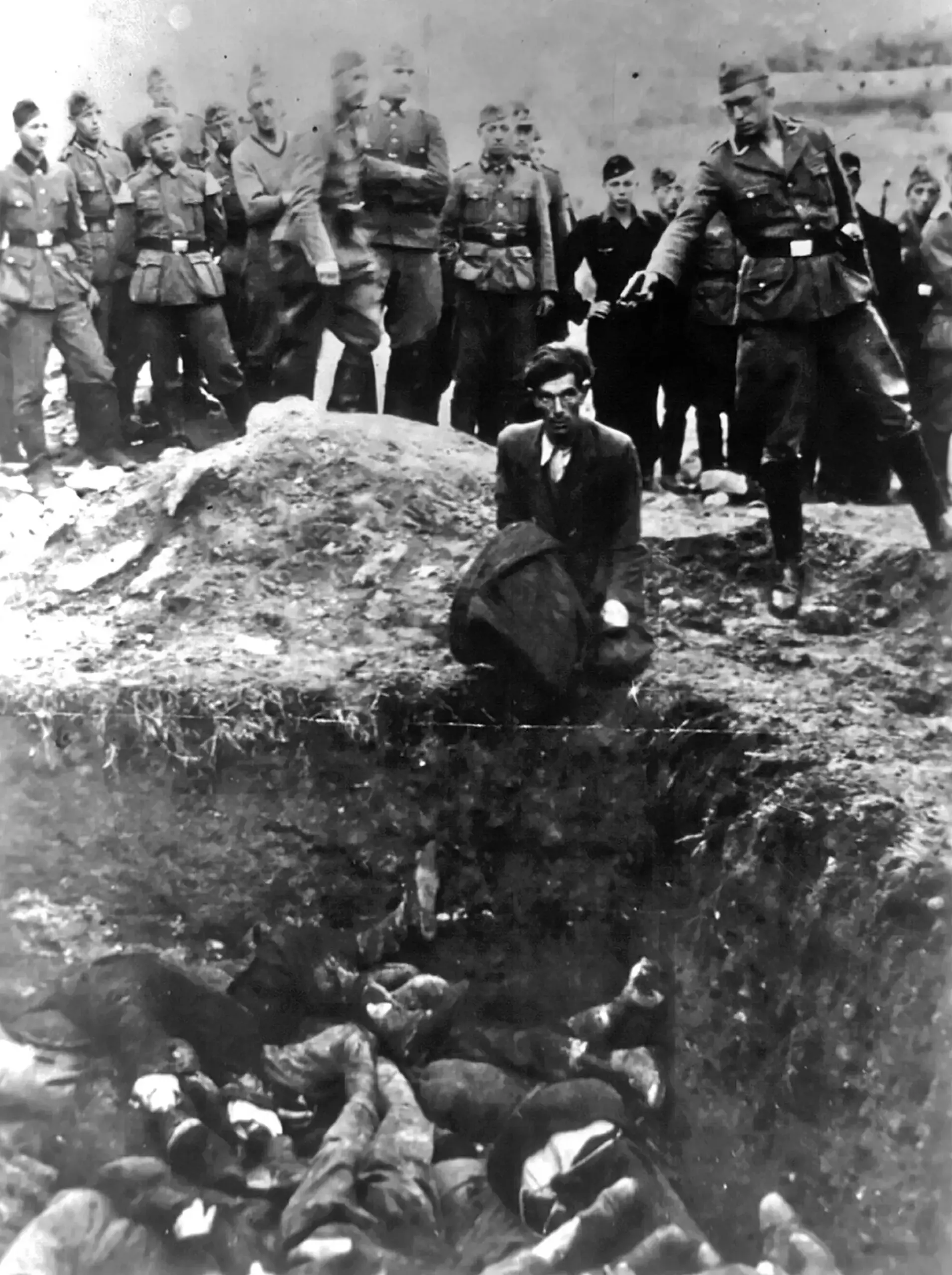
Artificial intelligence has helped historians solve one of the Holocaust’s longest-standing mysteries by identifying the executioner shown in an iconic 1941 photograph.
More than 80 years after the image was taken, German historian Jürgen Matthäus announced that he had identified the Nazi soldier pointing a pistol at a kneeling man before a mass grave. According to his research, the gunman was Jakobus Onnen, a former German schoolteacher who joined the Nazi Party and later served in Einsatzgruppe C, a unit responsible for mass executions in occupied Soviet territories.
The photograph
The image became widely known as “The Last Jew of Vinnitsa.” However, new research concludes that the execution actually took place on July 28, 1941, in Berdychiv, Ukraine.
How the identification was made
The breakthrough came after a reader recognized similarities between the gunman and a family member. Researchers compared historical photographs with family images using AI-assisted forensic image analysis alongside traditional historical research.
The role of AI
Matthäus stresses that artificial intelligence was only one element of the investigation. Archival documents, witness information and human expertise remained essential throughout the research.
The investigation continues
Although the alleged executioner has now been identified, the victim shown in the photograph remains unknown. Researchers hope future work using Soviet archives and modern technology will eventually restore the victim’s identity.
What we think
This case demonstrates how artificial intelligence can support historical research when combined with rigorous scholarship. Rather than replacing historians, AI can help uncover evidence that might otherwise remain hidden.
Frequently Asked Questions
Who was identified?
Researchers concluded that the executioner was Jakobus Onnen, a member of Einsatzgruppe C.
Did AI solve the case alone?
No. AI supported the investigation, but archival research and human analysis were essential.
Why is this discovery important?
It demonstrates how modern technology can assist historical documentation and identification efforts.
Has the victim been identified?
No. The victim’s identity remains unknown and further research is underway.