Summary
- The earliest known photograph of Bogotá dates from 1842.
- It was made by Jean-Baptiste Louis Gros.
- The exposure lasted 47 seconds.
- The daguerreotype sold in Paris for €300,800.
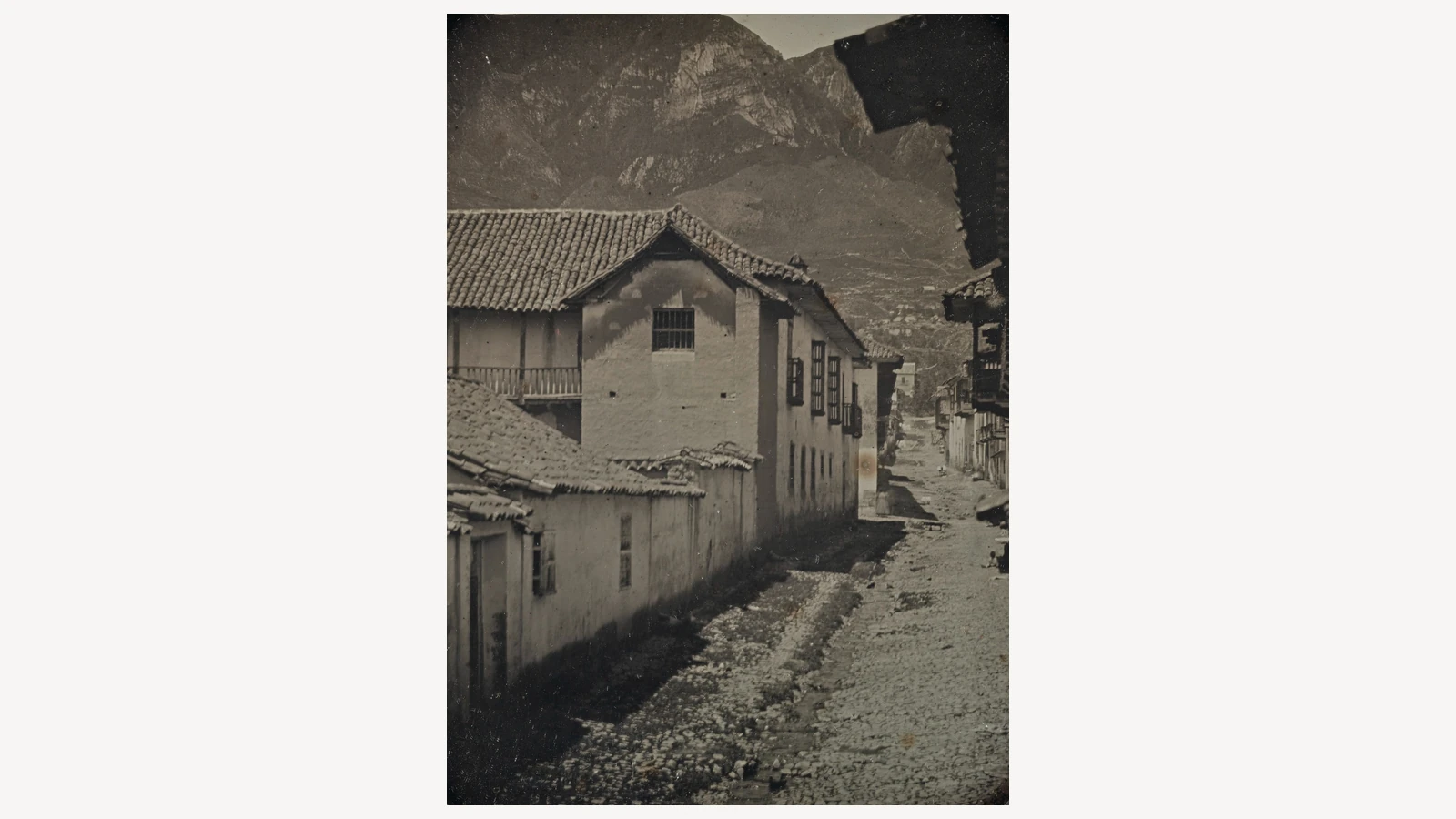
A view of Bogotá from 1842, regarded as the city’s earliest known photograph, has sold for €300,800 at a Christie’s auction in Paris.
The daguerreotype, “Rue de l’Observatoire à Bogotá,” was created by French diplomat, painter and photographer Jean-Baptiste Louis Gros (1793–1870). It sold on November 14, 2026, as part of the Roger Thérond collection, against a pre-sale estimate of just €60,000–€80,000.
A Bogotá street 184 years ago
The photograph shows a cobbled street lined with low tiled-roof buildings, wooden balconies and mountains in the distance. Rather than a formal studio portrait, this is an everyday urban scene from the period when present-day Colombia formed part of the Republic of New Granada.
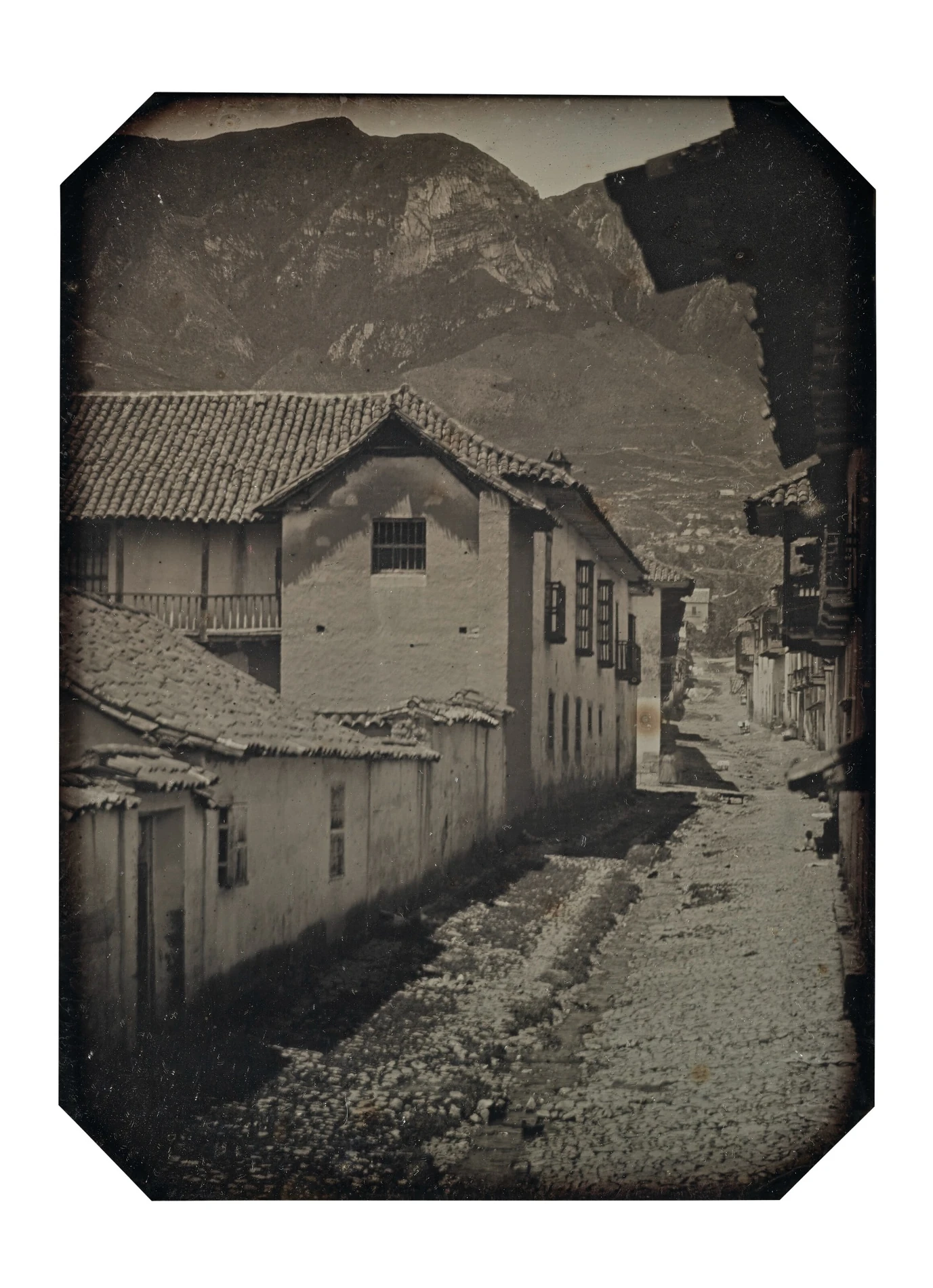
It is among the earliest known urban daguerreotypes produced outside Europe and the United States. Its importance goes beyond one city: the image documents how quickly photographic practice reached Latin America.
A 47-second exposure
The historical annotation associated with the work records a photograph taken at 11 a.m. with an exposure of 47 seconds. In photography’s early decades, a long exposure required a stationary camera and made moving people difficult to record. The street therefore looks almost deserted, even if there was activity at the time.
A daguerreotype creates a unique image on a treated metal plate rather than a negative from which unlimited prints can be made. The survival of each original plate is therefore important to the study of photographic history.
Another famous example is Louis Daguerre’s 1838 Boulevard du Temple photograph, in which a shoe shiner and his customer remained still long enough to register during the lengthy exposure.
The historical object and its sale
The original is described as a full-plate daguerreotype and survives with its historic framing. Photographs of the object reveal not just the street scene but the physical form in which the work has been preserved.
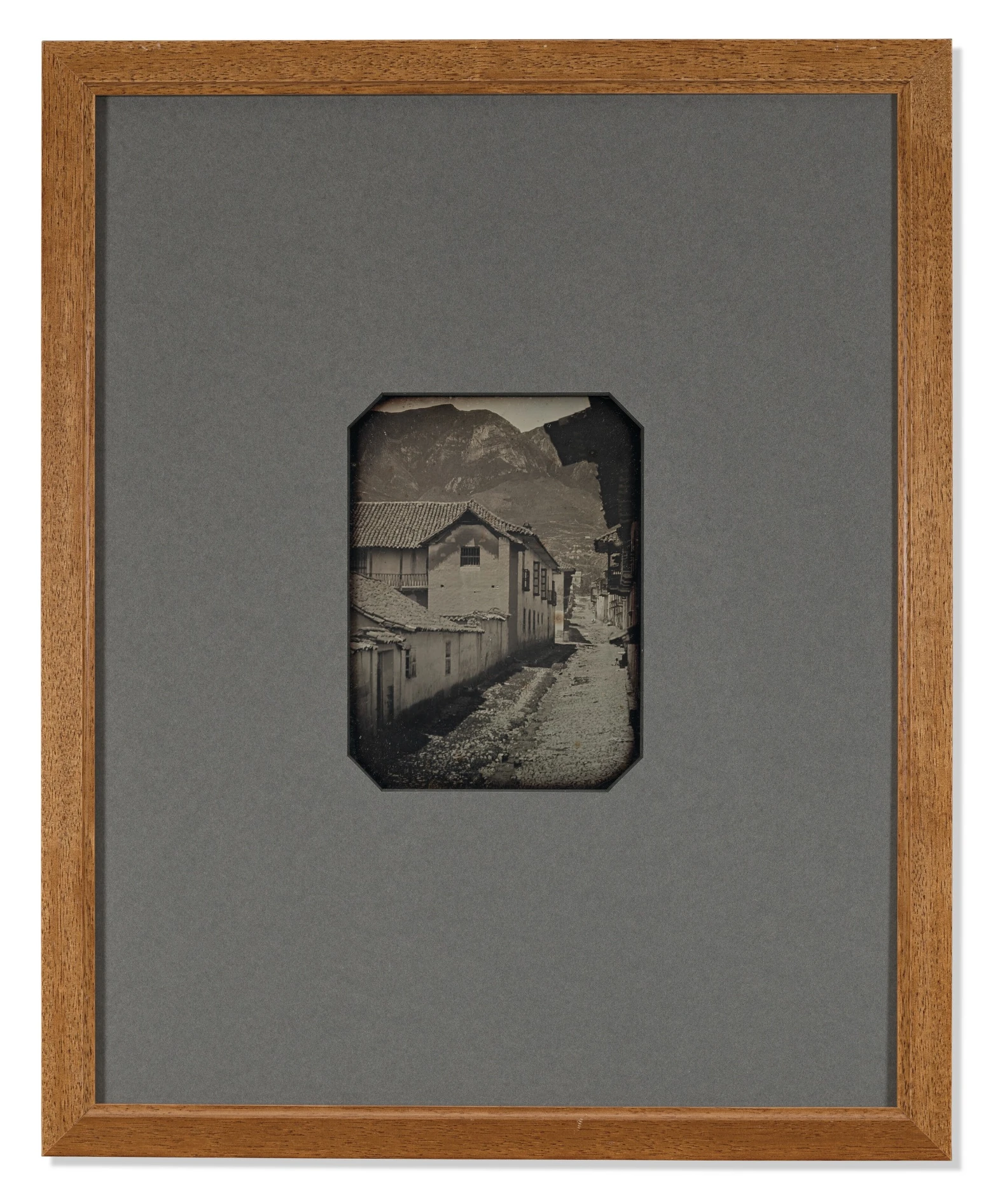
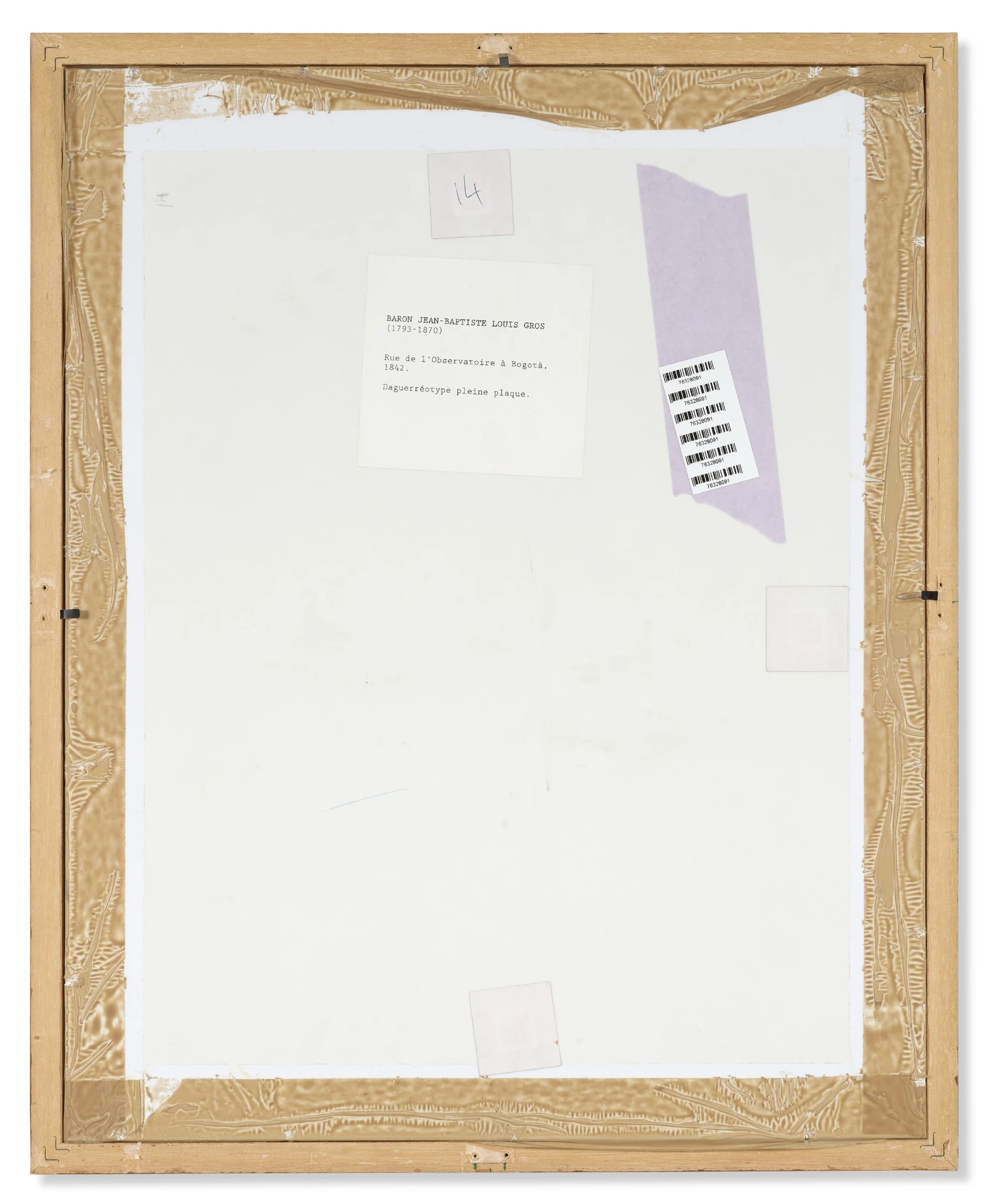
The final €300,800 price, approximately $331,600 at the exchange rate used in contemporary coverage, was several times the pre-sale estimate. Christie’s highlighted the sale among the notable results from the Roger Thérond collection.
What we think
There is something remarkable about looking at a street almost two centuries ago with no scene staged for the camera. The roofs, stones and mountain backdrop turn this image into a visual record of a city that has changed enormously.
For photographers, the 47-second exposure may be its most fascinating detail. Gros had a whole city in front of his lens, but the technology could clearly preserve mainly what stayed still. Today we freeze action in fractions of a second; here we can see how exposure time shaped the historical record itself.
The auction price makes headlines, but the photograph is what really deserves our attention. It reminds us why early photographic objects need careful preservation and documentation: nobody can photograph that same Bogotá street again in 1842.