

Summary
- Viking 1 achieved the first successful landing on Mars in 1976.
- It transmitted humanity's first image from the Martian surface.
- The mission operated for more than six years instead of its planned 90 days.
- Its success paved the way for every Mars rover that followed.
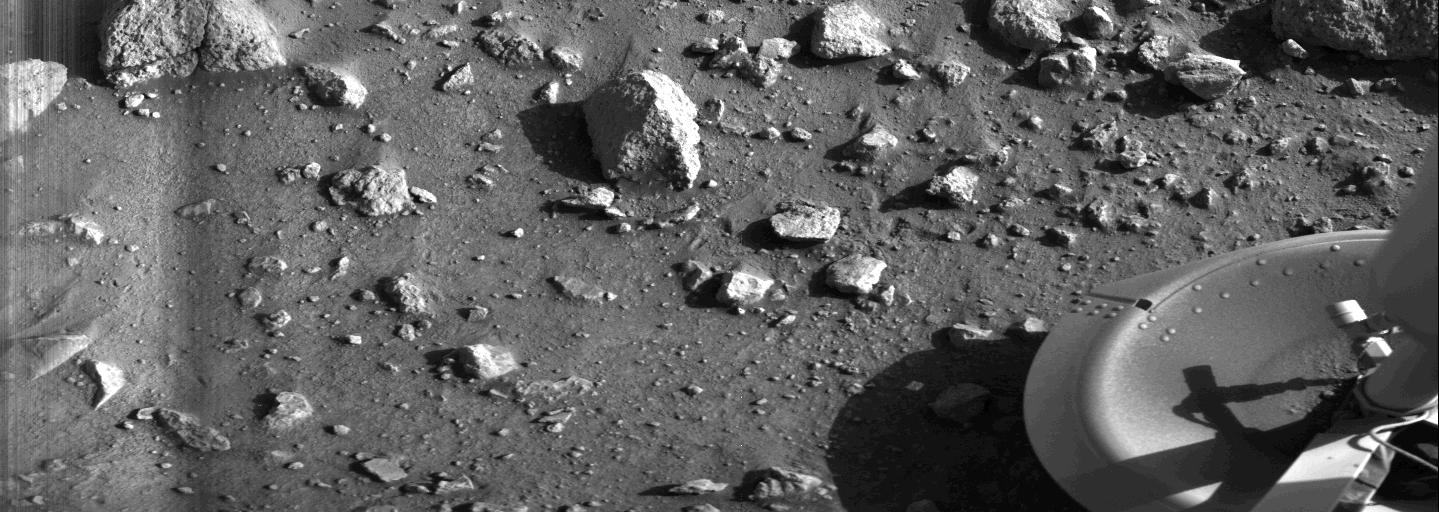
A simple black-and-white image of rocks and dust became humanity’s very first close-up view from the surface of Mars fifty years ago.
On July 20, 1976, NASA’s Viking 1 successfully landed on Mars, becoming the first spacecraft to operate successfully on the Red Planet. Shortly after touchdown, it transmitted the first-ever image from the Martian surface back to Earth.
The achievement was especially significant because earlier landing attempts had failed or survived only briefly. The Soviet Mars 3 landed in 1971 but lost contact within two minutes. Viking 1 far exceeded its planned 90-day mission, remaining operational for more than six years.
A Historic Moment
Although the image appears simple today, it represented humanity’s first real view from the surface of Mars.
It revealed a rocky, barren landscape and provided scientists with their first direct observations of the Red Planet.
The Viking 1 Mission
Beyond photography, Viking 1 analyzed Martian soil, studied the atmosphere and worked alongside its companion orbiter before being joined by Viking 2.
Its success laid the technological and scientific foundation for every Mars exploration mission that followed, including today’s Curiosity and Perseverance rovers.
Fifty Years of Exploration
Five decades later, Mars exploration has advanced dramatically, with sophisticated robotic missions studying geology, climate and the search for signs of ancient life.
Yet all of these achievements trace their origins back to the first image sent home by Viking 1.
What We Think
The first image from the Martian surface is remembered less for its visual quality than for its historical importance. It marked the moment when Mars became a world that humanity could truly explore.
Frequently Asked Questions
When was the first photo from the surface of Mars taken?
On July 20, 1976, immediately after Viking 1 landed.
Which spacecraft captured it?
NASA’s Viking 1 lander.
How long did Viking 1 operate?
It remained active for more than six years despite being designed for a 90-day mission.
Why is the image so important?
It was humanity’s first direct view from the surface of Mars and marked the beginning of successful Martian surface exploration.