

Summary
- Expensive cine lenses are built around consistency in real light transmission, colour, mechanics and focusing.
- Matched sets reduce rig changes and improve repeatability on set.
- Large image circles and lens data for VFX or virtual production add optical and electronic complexity.
- The price also reflects strict calibration, hand assembly and long-term service support.
- You are not simply paying for more sharpness
- T-stops: exposure has to be repeatable
- Matched sets and a consistent mechanical layout
- Focus, breathing and mechanical precision
- A large image circle makes optical design harder
- Lens data for VFX, tracking and virtual production
- Hand assembly, calibration and service
- Does every creator need a lens this expensive?
- What we think
- Frequently asked questions
A cinema lens can cost as much as a car because you are not only buying optical quality; you are buying a repeatable tool designed to fit into an entire professional workflow.
In high-end cine systems, the price is not explained by the glass alone. Real light transmission, matched-set consistency, mechanical precision, focus breathing, large image circles and lens data can directly affect both the shoot and post-production.
The scale of that cost is clear historically as well: when ZEISS introduced the first six Supreme Primes in 2018, the official set price it announced was $108,000. That figure was for a six-lens set, not a single lens, but it shows how quickly a high-end cinema lens system can reach six figures.
You are not simply paying for more sharpness
With a stills lens, excellent image quality may be the primary goal. In cinema, however, the lens also has to live inside a system where exposure, focus, mechanical layout and metadata remain predictable from take to take and from one focal length to another.
That means tighter manufacturing tolerances and more calibration work. The expensive part is not one spectacular specification; it is making the same behaviour repeat reliably across an entire professional lens set.
T-stops: exposure has to be repeatable
An f-stop is a geometric ratio, while a T-stop accounts for real light losses inside the lens. We have explained the difference between f-stops and T-stops in detail on PTTL. In practice, the T-stop gives a production a more direct indication of the light reaching the sensor and helps keep exposure predictable when lenses are changed.
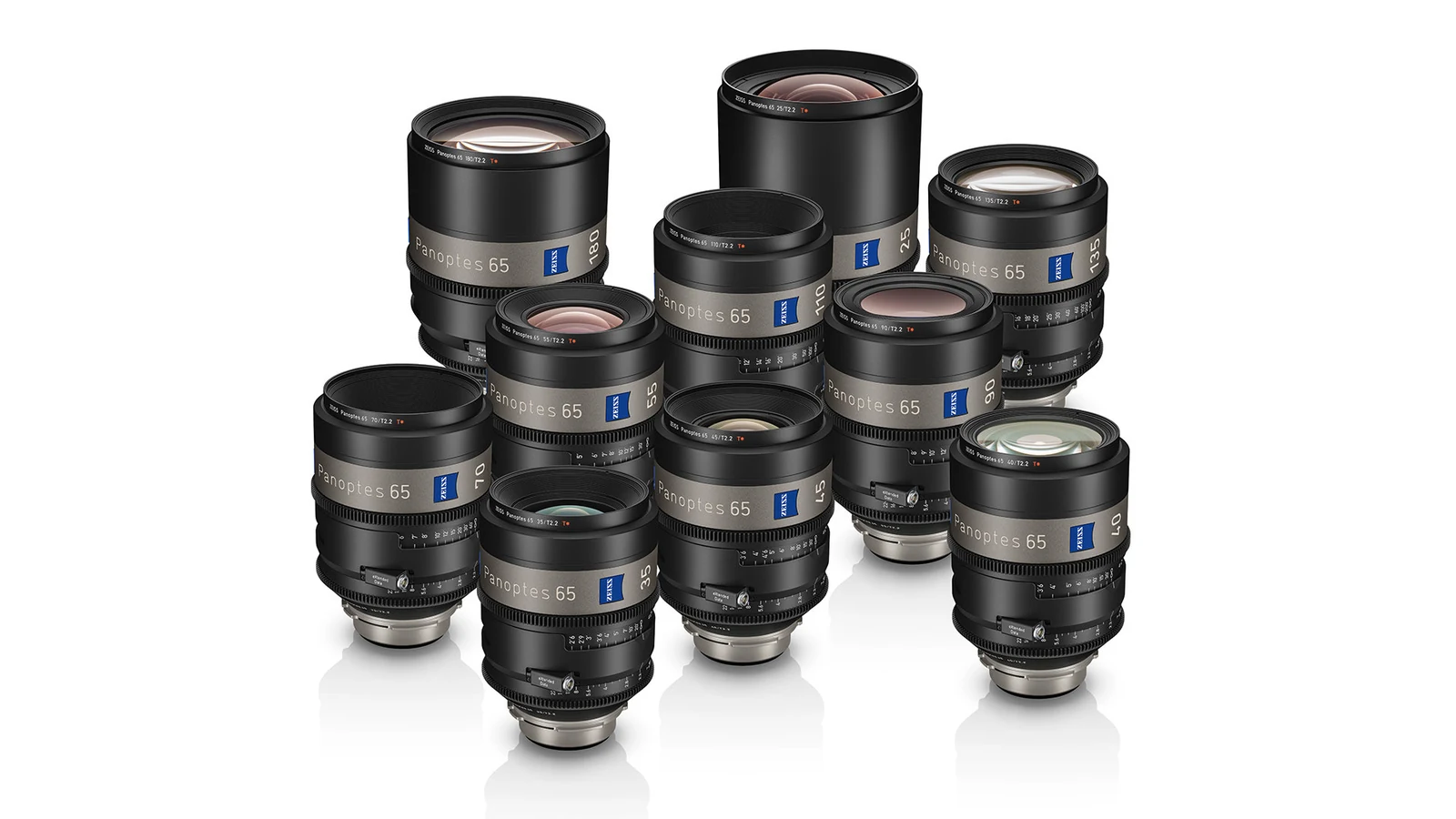
ZEISS, for example, designed all ten Panoptes 65 focal lengths from 25mm to 180mm with the same maximum T2.2 aperture. That is not simply about having a fast lens; it is part of the consistency expected from a matched set.
Matched sets and a consistent mechanical layout
Professional cine lens families are designed so that changing focal length does not mean rebuilding the setup from scratch. On the Panoptes 65 lenses, focus and iris positions are consistent across the range, while ZEISS uses standardized front diameters across groups of focal lengths to streamline equipment changes on set.
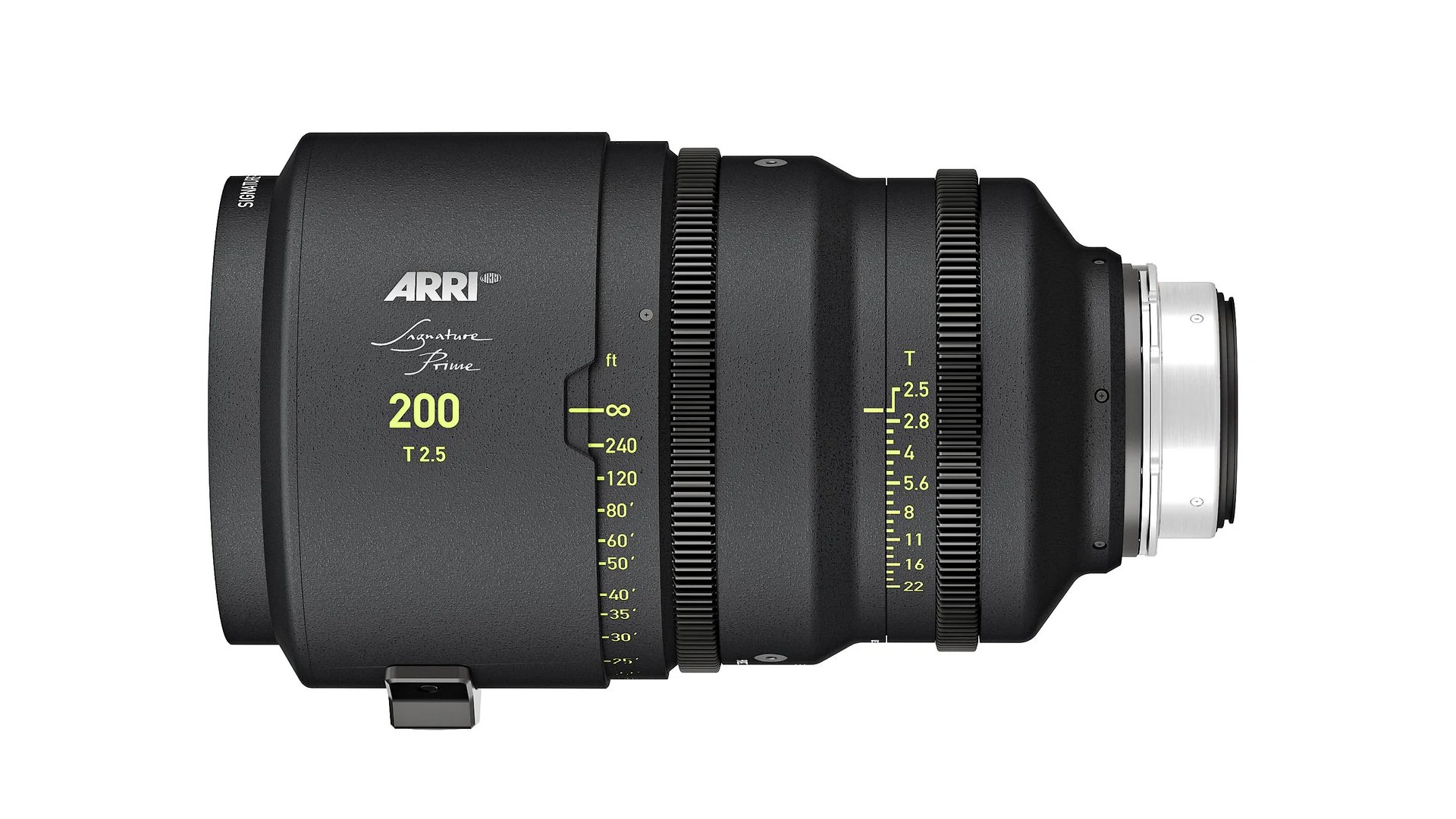
ARRI follows the same system-based logic with its Signature Primes, which span from 12mm to 280mm. ARRI lists LPL mounts and LDS-2 or Cooke /i support in the technical data, showing that these lenses are designed from the outset as part of a broader cinema platform.
Focus, breathing and mechanical precision
Mechanical focusing in a cinema workflow has to be precise and repeatable. ARRI documents calibrated focus and iris scales and support for external motors, while ZEISS emphasizes smooth focus rotation and consistent ergonomics across its professional lens families.
Focus breathing is not merely an aesthetic detail either. If the framing changes noticeably during a focus pull, that shift can become visible inside the shot. ARRI devotes a dedicated technical presentation to distortion, focus breathing and focus ramping in the Signature Primes and Zooms, which shows how central this behaviour is to cinema-lens design.
A large image circle makes optical design harder
The Panoptes 65 lenses have a 59.9mm image circle and are designed for modern 65mm cinema cameras. Covering that much sensor area while maintaining T2.2 across ten focal lengths requires performance to be controlled over a much larger image field than on a typical Super 35 lens.
The challenge is not simply to make a lens that illuminates a larger sensor. Aberrations, distortion, colour rendering and the overall character still need to remain controlled and consistent across the set.
Lens data for VFX, tracking and virtual production
A modern high-end cinema lens can provide more than focal length, focus distance and T-stop. The Panoptes 65 lenses use ZEISS eXtended Data, delivering frame-by-frame vignetting and distortion information in addition to the standard metadata supplied through the Cooke /i protocol.
ZEISS connects this data to VFX, camera-tracking and virtual-production workflows through its CinCraft ecosystem. When a physical camera has to match a digital environment, accurate lens information can reduce manual measurement and guesswork in post.
Hand assembly, calibration and service
The cost does not end with optical design. ZEISS says its Supreme Primes are manufactured in Germany, assembled by hand and engraved with individually calibrated scales. The company also emphasizes serviceability and a global network of authorized service stations.
That matters particularly to rental houses and large productions, where a lens may need to survive years of use, remain serviceable and return to a predictable state after maintenance.
Does every creator need a lens this expensive?
No. For solo creators, small crews or productions built around autofocus, a strong mirrorless lens or a more affordable cine set may be the more practical choice. The value of a high-end cinema lens rises when the shoot needs manual focus with a dedicated crew, fast lens changes, consistency across multiple camera bodies, lens metadata or a demanding VFX workflow.
A high price therefore does not automatically create a more “cinematic” image. What it primarily buys is precision, consistency and predictability in situations where production time and repeatability carry real financial value.
What we think
The biggest difference between a good stills lens and a high-end cine lens is not a magical increase in sharpness, but the consistency of the entire system. Most creators do not need all of that mechanical and data infrastructure, but on an organized production it can reduce real time and risk both on set and in post.
Frequently asked questions
What is the difference between an f-stop and a T-stop?
An f-stop describes aperture geometry, while a T-stop accounts for real light losses inside the lens. In cinema workflows, that helps make exposure matching between different lenses more predictable.
What is focus breathing?
Focus breathing is a change in angle of view or framing as focus distance changes. In cine lenses, controlled behaviour during a focus pull is an important part of optical design.
Why does lens data matter?
Lens data can describe the lens state and, in some systems, optical characteristics such as distortion and shading. For VFX, camera tracking and virtual production, that information can reduce manual measurement and improve workflow accuracy.
Does an expensive cine lens always produce a better image?
Not necessarily. Much of the premium pays for consistency, mechanical precision, serviceability and integration with professional workflows, not just resolution or sharpness.