

Summary
- The James Webb Space Telescope captured a new image of Centaurus A.
- The observation was made with the MIRI instrument.
- Dusty structures and hidden activity are revealed.
- The galaxy is about 11 million light-years from Earth.
- The observations help scientists understand how galaxies and black holes evolve together.
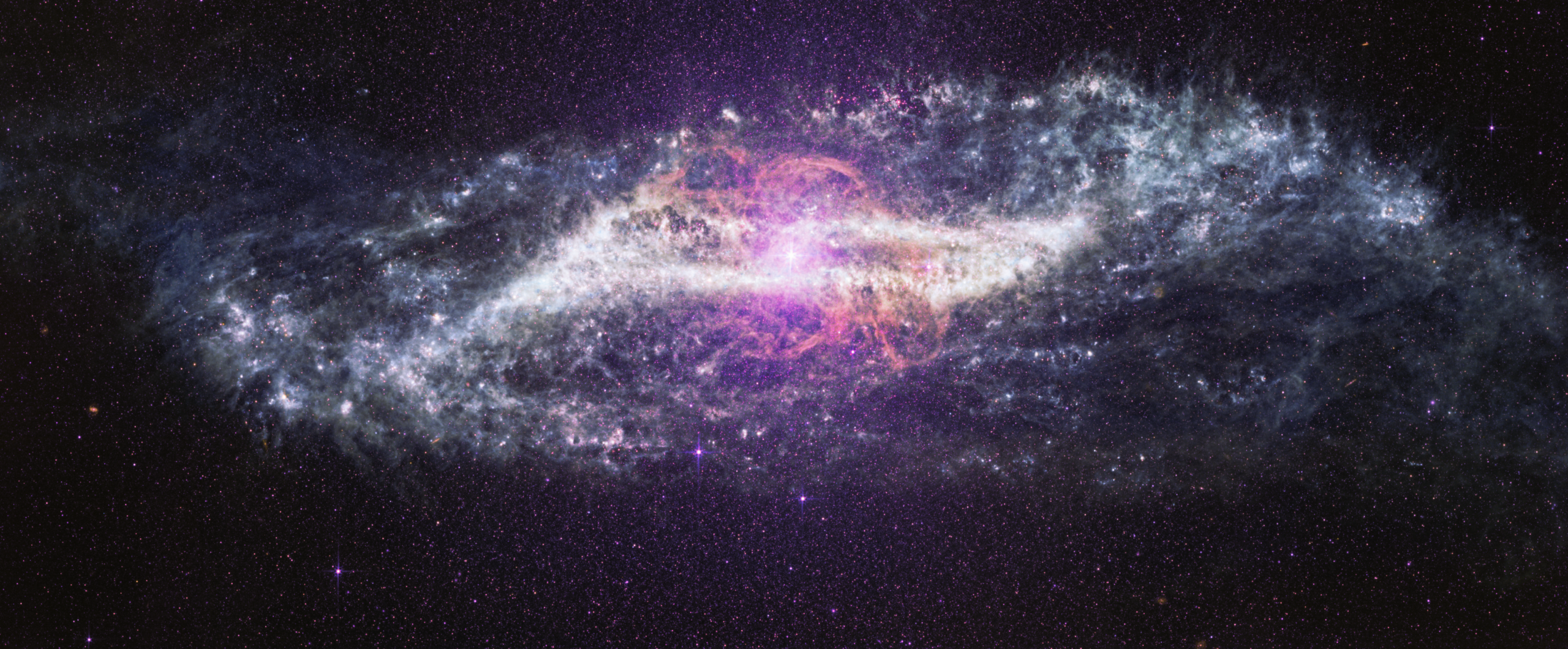
A new image from the James Webb Space Telescope reveals the dusty structures and hidden activity inside the galaxy Centaurus A.
NASA has released a new image of Centaurus A captured on July 6, 2026, by the Mid-Infrared Instrument (MIRI) aboard the James Webb Space Telescope. The observation exposes dusty structures and hidden activity within the galaxy.
The discovery is significant because Centaurus A is one of the closest active galaxies to Earth, making it an ideal laboratory for understanding how galaxies and supermassive black holes grow and evolve together.
A remarkably active galaxy
Centaurus A is located about 11 million light-years from Earth. Although relatively nearby, it is unusually active, making it an important target for astronomical research.
What Webb reveals
Operating in the mid-infrared, MIRI can peer through cosmic dust, revealing structures and activity that remain hidden in visible light.
Interactive exploration
NASA also provides an interactive map that allows users to explore different regions and features of the galaxy.
What we think
Centaurus A remains one of the best nearby laboratories for studying galaxy evolution. James Webb continues to deliver observations that expand our understanding of the Universe.
Frequently Asked Questions
What is Centaurus A?
It is an active galaxy located about 11 million light-years from Earth.
Which instrument captured the image?
The Mid-Infrared Instrument (MIRI) aboard the James Webb Space Telescope.
Why is this observation important?
It reveals dusty structures and hidden activity that cannot be seen in visible light, improving our understanding of galaxy and black hole evolution.