

Summary
- Samsung ISOCELL HPC is a new 200MP image sensor with 0.6 μm pixels and a 1/1.3" optical format.
- The new DeepPix architecture increases single-pixel Full Well Capacity by 60%.
- It supports single-frame 16-bit HDR and RAW output up to 16-bit.
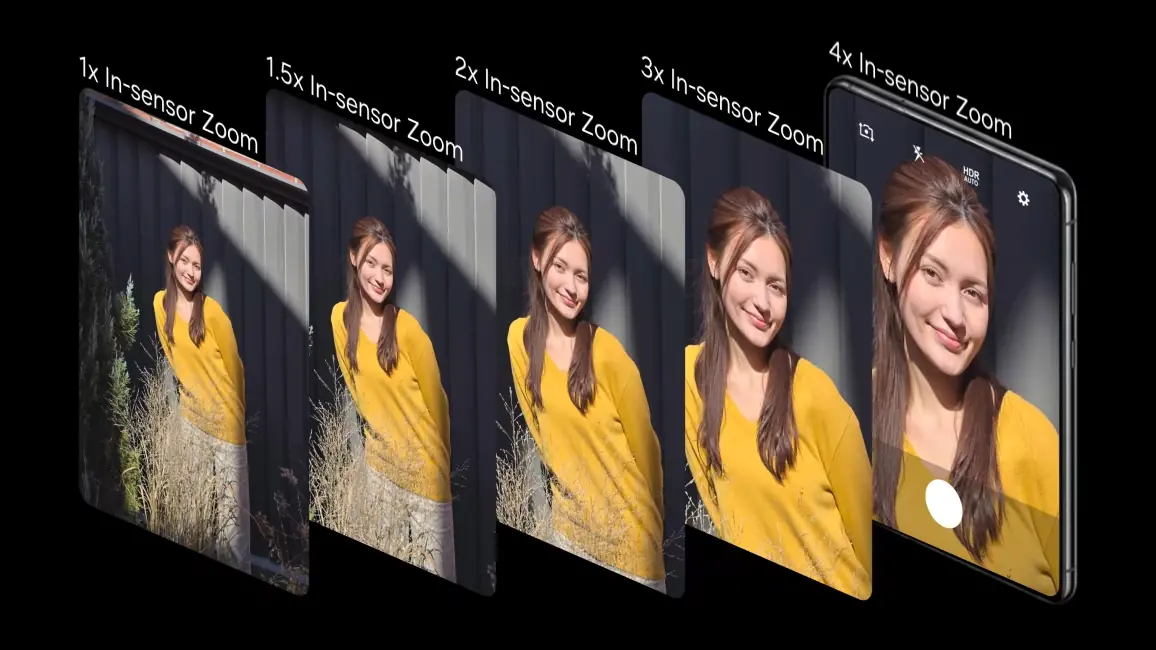
- HDR works at 1x, 1.5x, 2x, 3x and 4x in-sensor zoom.
- Video recording reaches 8K 30 fps, 4K 180 fps and FHD 360 fps without autofocus.
- The sensor is already in mass production, with no specific smartphone officially announced.
Samsung has introduced the ISOCELL HPC, a new 200MP image sensor for smartphones featuring the DeepPix architecture, single-frame 16-bit HDR, HDR across multiple zoom ratios and 4K video at up to 180 fps.
The ISOCELL HPC features an effective resolution of 16,384 x 12,288 pixels, a 0.6 μm pixel size and a 1/1.3″ optical format, while Samsung already lists its product status as “Mass production.” The sensor uses a Tetra²pixel RGB Bayer pattern and becomes the latest addition to Samsung’s 200MP image sensor range.
The significance of the new model lies less in its 200MP resolution and more in the changes Samsung has made to the pixel itself. The new DeepPix structure is designed to increase charge capacity, widen dynamic range and deliver cleaner signals without increasing pixel size.
DeepPix and 60% Higher Full Well Capacity
The biggest technological change in ISOCELL HPC is DeepPix, which Samsung presents as a new pixel architecture leveraging Front Deep Trench Isolation, or FDTI. The design increases both photodiode capacity and the capacity of the shared floating diffusion area.
According to Samsung, the Full Well Capacity of a single pixel increases by 60% compared with the previous generation. Higher FWC allows a pixel to handle more photo-generated charge before reaching saturation, helping preserve information in very bright areas and expanding dynamic range.
The architecture also combines Dual Vertical Transfer Gates, or D-VTG, for more efficient charge transfer with a shared floating diffusion structure offering greater capacitance. Samsung says these changes improve pixel-level charge handling without increasing pixel size.
Single-Frame 16-Bit HDR
The ISOCELL HPC supports single-frame 16-bit HDR. Instead of relying exclusively on combining several differently exposed frames, the sensor can capture high dynamic range information within a single frame, reducing potential issues when subjects move between exposures.
Samsung claims up to four times richer color expression compared with conventional HDR, with the goal of preserving natural tones and fine details in bright daylight and difficult backlit scenes.
Official specifications also list support for RAW10, RAW12, RAW14 and RAW16 output, together with Smart-ISO Pro and DSG HDR technologies.
HDR From 1x to 4x Zoom
Another notable feature is that single-frame HDR is not limited to the sensor’s standard field of view. ISOCELL HPC supports HDR at 1x, 1.5x, 2x, 3x and 4x in-sensor zoom.
Samsung uses in-sensor downscaling to maintain HDR functionality across these zoom ratios. This can be particularly useful for camera systems that use crops from a very high-resolution sensor to cover additional framing options without switching cameras.
8K Video, 4K at 180 fps and FHD at 360 fps
Official specifications list 8K video recording at 30 fps, 4K at up to 180 fps and Full HD at up to 360 fps without autofocus.
Samsung notes that with all-pixel PDAF enabled, the sensor supports 4K at up to 120 fps. Autofocus is handled by Super QPD phase detection.
For still-image capture, ISOCELL HPC can operate at up to 7.5 fps at full resolution, 30 fps at 50MP and 180 fps at 12.5MP.
High-P and High-T Improve Light Efficiency
In addition to the redesigned pixel structure, Samsung uses a High Precision Microlens, or High-P, based on high-refractive-index materials. It is designed to collect and focus more incoming light onto each photodiode.
High Transmittance ARL, or High-T, is designed to reduce light reflection and scattering before the light reaches the photodiode, improving quantum efficiency.
The combination of DeepPix, High-P and High-T shows that Samsung is focusing more on how much usable light reaches each pixel rather than simply increasing the sensor’s nominal resolution.
Key Technical Specifications
ISOCELL HPC is a 200MP sensor with an effective resolution of 16,384 x 12,288 pixels, 0.6 μm pixels and a 1/1.3″ optical format. It uses a Tetra²pixel RGB Bayer color filter, Super QPD autofocus and an electronic rolling shutter.
It supports Smart-ISO Pro and DSG HDR, RAW output from 10 to 16 bits and analog gain of up to 16x at full resolution and up to 160x in 12.5MP mode.
Samsung officially lists the sensor as being in mass production. So far, the official ISOCELL HPC product page does not name a specific smartphone that will use it.
What We Think
ISOCELL HPC is interesting mainly because Samsung is trying to improve a 200MP sensor without relying on larger pixels or even more megapixels. A 60% increase in Full Well Capacity, single-frame 16-bit HDR and HDR across multiple zoom ratios are technically more meaningful changes than another straightforward resolution increase.
Actual image quality will still depend on the lens, image processor and image-processing pipeline used by each smartphone manufacturer. Samsung itself notes that devices using the same image sensor can produce different results because of optics and processing.
Frequently Asked Questions
How many megapixels does the Samsung ISOCELL HPC have?
The sensor has an effective resolution of 200MP, or 16,384 x 12,288 pixels, with 0.6 μm pixels and a 1/1.3″ optical format.
What is DeepPix technology?
DeepPix is Samsung’s new pixel architecture incorporating technologies including FDTI, D-VTG and increased floating diffusion capacitance. It delivers 60% higher Full Well Capacity per pixel compared with the previous generation.
Does ISOCELL HPC support 16-bit RAW?
Yes. Official specifications list RAW10, RAW12, RAW14 and RAW16 output, while the sensor also supports single-frame 16-bit HDR.
What video capabilities does it offer?
It supports 8K at 30 fps, 4K at up to 180 fps and Full HD at up to 360 fps without autofocus. With all-pixel PDAF enabled, 4K reaches up to 120 fps.
Which smartphone will use it?
Samsung has not yet named a specific smartphone on the sensor’s official product page. ISOCELL HPC is already listed as being in mass production.