Summary
- A single stoat on Rousay triggered months of searching to protect native wildlife.
- By 22 September, 61 cameras were in use, including 25 AI-assisted units.
- A male stoat was found in a trap on 9 October 2026.
- The island will be monitored for two years before it can be declared stoat-free.
On a Scottish island, one small stoat prompted a search involving dozens of camera traps, artificial intelligence and an entire wildlife conservation team.
The animal was finally found in a trap near the Loch of Loomachun on Rousay, Orkney, on 9 October 2026. The search had begun following the first reports in April and spread across an island of roughly 4,500 hectares. Photography played an essential role in tracking its movements, but did not physically capture it.
What is a stoat, and why does it threaten wildlife in Orkney?
The stoat (Mustela erminea), also known as an ermine in its white winter coat, is a small carnivorous mammal related to weasels and polecats. It typically has a brown back, pale underside and distinctive black tail tip. In colder regions its coat can turn white in winter. It mainly hunts small mammals but also preys on birds.
Stoats are native to mainland Scotland, but not to Orkney. On these islands they threaten the endemic Orkney vole, a small rodent found nowhere else, along with ground-nesting birds. That is why the problem was never the stoat’s size; it was the risk that even a single new predator could pose to island wildlife.
61 cameras, 25 AI-assisted units and thousands of images to review
The stoat’s presence was confirmed photographically on 7 May, after the Orkney Native Wildlife Project reviewed camera-trap images taken near Muckle Water. The team added cameras and capture traps as further sightings and field evidence emerged over the following months.
By 22 September, the network comprised 61 cameras, including 25 AI-assisted cameras, along with 174 additional capture traps. These were the numbers reported on that date, not an unverified total for the day of the capture.
New Zeiss trail cameras captured individual digital stills and used recognition software to distinguish likely stoat appearances from other animals or objects. That helped the team assess promising images sooner. On 14 July, for example, an AI-assisted Zeiss camera alerted staff to a stoat near the Loch of Loomachun at 7:37 a.m.
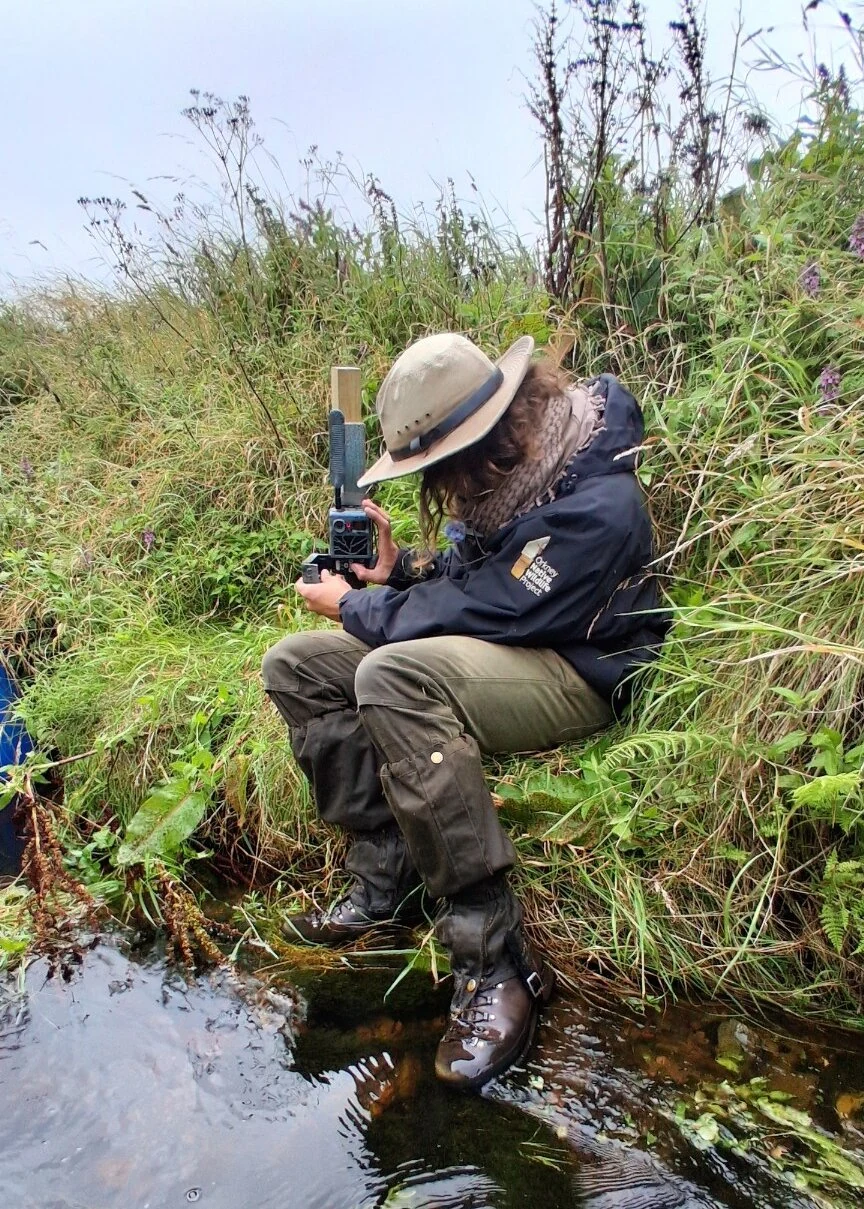
The advantage of automated filtering becomes clearer when you consider the volume: the project reported that a conventional trail camera could produce about 1,000 images per week on average. AI-assisted animal detection in camera traps is a wider technological trend, but here it served a specific field operation. Similarly, a camera-trap network in Bhutan illustrates another conservation and research application of the same basic approach.
The September photograph and the capture on 9 October
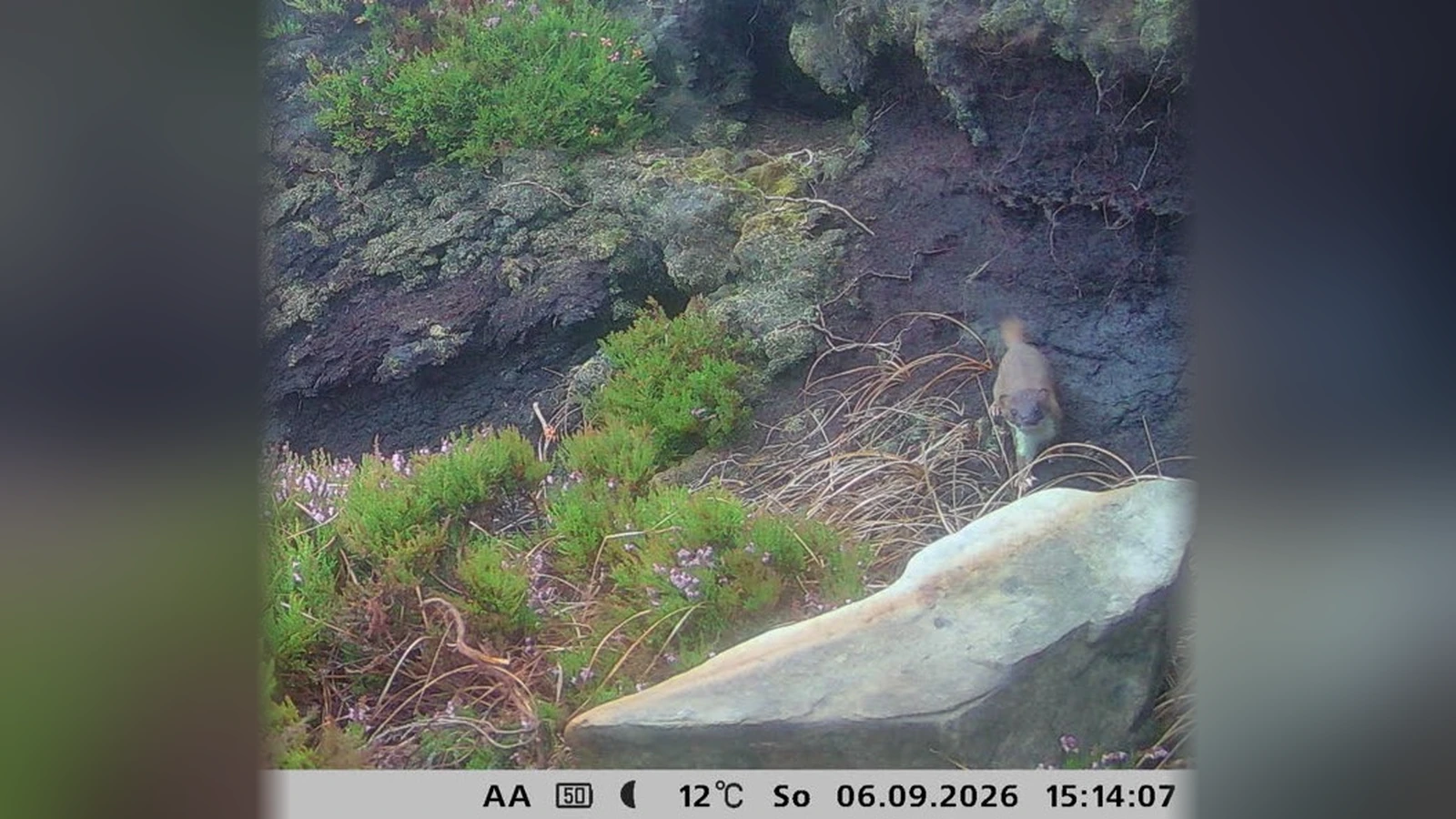
On 6 September, a camera on the north shore of Muckle Water recorded the stoat again. The actual camera-trap photograph is this article’s featured image: a tiny animal at the edge of a frame filled with rock and vegetation. It is not AI-generated imagery.
Specially trained dogs, volunteers and residents reporting possible sightings also supported the search. DNA analysis of droppings reinforced the team’s assessment that the animal was male. No evidence of a female or breeding group had been found, though that could not prove the island was completely clear.
On 9 October, following further camera sightings over the previous days and the night before, staff found the male stoat in a capture trap near the Loch of Loomachun. The cameras helped track its activity and guide the response. Neither a camera nor an AI system physically trapped the animal.
The work does not end with the capture. The project will continue checking for any other stoats, and even if no new evidence emerges, two years of monitoring from 9 October 2026 will be needed before Rousay can be declared stoat-free.
What we think
The most revealing part of this story is not the headline number of cameras deployed to find a small mammal. It is how photography became a continuous source of evidence: where the stoat appeared, when it moved and which ground warranted another search. A camera-trap image may never win an award, yet it can still inform a meaningful decision about an ecosystem.
AI had a clear and useful job here: reduce the delay between a photograph being taken and a relevant sighting being recognised in a flood of images. It did not establish how many stoats were on the island, replace the field team or make the actual capture. That distinction matters whenever artificial intelligence is presented as though it works independently of people and established methods.
There is a difficult conservation decision behind the images. Removing an individual wild animal may trouble wildlife enthusiasts, but the project’s priority on this island is to protect species that evolved without this introduced predator. The success of that effort will ultimately depend on the continued monitoring, not simply the photograph or the announcement made on 9 October.
Frequently asked questions
Are stoats and weasels the same animal?
No. The stoat (Mustela erminea) and least weasel (Mustela nivalis) are related but distinct species. The stoat’s black tail tip is one useful distinguishing feature.
Why are two years of checks needed after the capture?
Catching one male does not conclusively prove there are no other stoats present. Continued monitoring helps rule out further animals or breeding before the island is officially declared stoat-free.