

Summary
- Paul Goldstein is attempting to walk 1,000 miles, around 1,609 kilometres, across Britain while carrying a tiger structure weighing about 13kg.
- He has completed the first 500 miles, with the second leg from Southend to Land’s End scheduled from 20 August to 12 September 2026.
- The campaign aims to raise at least £50,000, around €58,350 at the 22 August exchange rate.
- The money supports a solar-lighting project in Bandhavgarh, India, and a network of around 150 camera traps in Bhutan.
- India’s official estimate stands at 3,682 wild tigers, representing roughly 70% of the global wild population.
- From Anglesey to Land’s End with a tiger on his back
- A target of more than €58,000
- Where the money will go in India
- The second project takes photography into science
- Tiger numbers have increased in India, but the danger has not disappeared
- Photography as a starting point, not the final product
- What we think
- Frequently asked questions
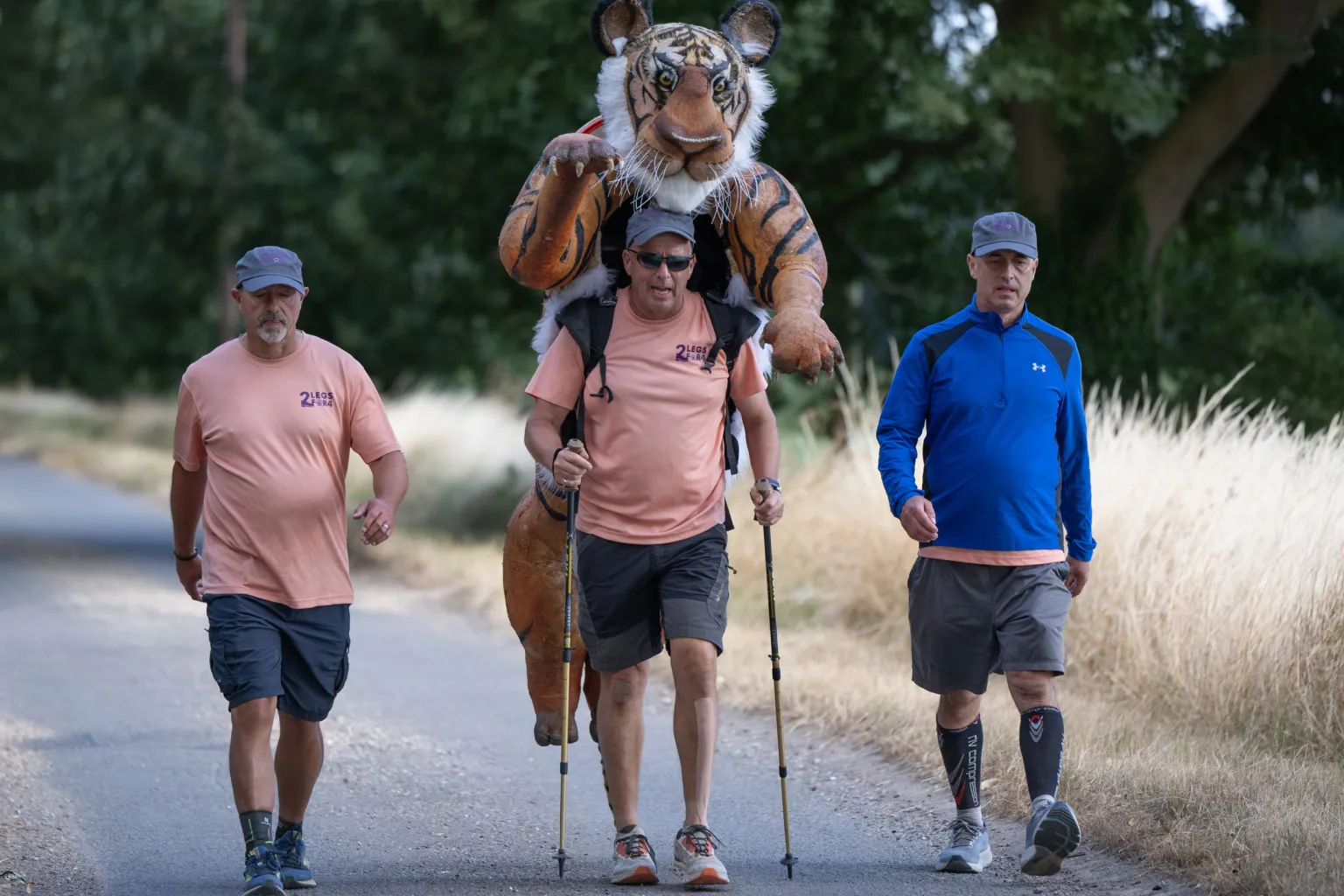
Wildlife photographer Paul Goldstein is attempting to walk 1,000 miles across Britain while carrying a giant 13kg tiger, raising money for specific wildlife conservation projects in India and Bhutan.
Goldstein has already completed the first leg of roughly 500 miles, from Anglesey in Wales to Southend-on-Sea, and according to the official schedule is now in the second half of the route towards Land’s End, which began on 20 August. The complete journey covers around 1,609 kilometres, while the striking tiger structure carried on his back measures around nine feet, or 2.7 metres.
The story stands out for more than the extreme physical challenge. The funds are linked to two specific initiatives: a solar-lighting programme around Bandhavgarh Tiger Reserve in India and a large-scale camera-trap network designed to monitor mountain mammals in Bhutan. In other words, wildlife photography is being used here as a starting point for action rather than an end in itself.
From Anglesey to Land’s End with a tiger on his back
The campaign is called 2 Legs for 4 and has been divided into two major stages. The first ran from 7 to 28 July 2026, from Anglesey to Southend-on-Sea. The second is scheduled from 20 August to 12 September, from Southend to Land’s End.
Daily distances frequently approach marathon length. On 22 August, for example, the official schedule lists a 42-kilometre route from Greenwich to Wimbledon, expected to take around eight to ten hours. Another 41 kilometres to Woking are scheduled for the following day.
Distance is not the only difficult element. Goldstein carries a tiger structure weighing around 13kg, based on one of his own photographs of a wild Bengal tiger. During the first half of the challenge he also had to deal with very high temperatures and, according to his own account, a chest infection.
A target of more than €58,000
The campaign aims to raise at least £50,000 for conservation work. At the exchange rate on 22 August 2026, that corresponds to approximately €58,350.
Goldstein is no newcomer to such challenges. Since 2010, he has repeatedly connected marathons and other endurance events with fundraising for tigers. In 2022 he completed the Everest Marathon in his trademark tiger suit, while in 2025 he covered the equivalent of 25 marathons in 25 days. His previous campaigns have raised hundreds of thousands of pounds for conservation projects.
Where the money will go in India
The first programme, Lighting Up Time, is being implemented around Bandhavgarh Tiger Reserve in partnership with The Corbett Foundation. Its goal is to install solar lighting in communities close to areas where people and wildlife regularly encounter each other, as well as at remote forest camps used by frontline staff.
If its separate $40,000 funding target is reached, equivalent to around €34,200 at the 22 August exchange rate, the plan is to install 90 solar-powered lighting units in villages and another 20 systems in forest camps inside the protected area. The reasoning is practical: better nighttime visibility for local residents and staff, together with a reduction in some of the risks created when people and wildlife share the same spaces after dark.
Bandhavgarh is one of central India’s most important Bengal tiger landscapes. Tiger conservation, however, cannot stop at the core zones of national parks. Coexistence with communities living around their boundaries is a critical part of the equation.
The second project takes photography into science
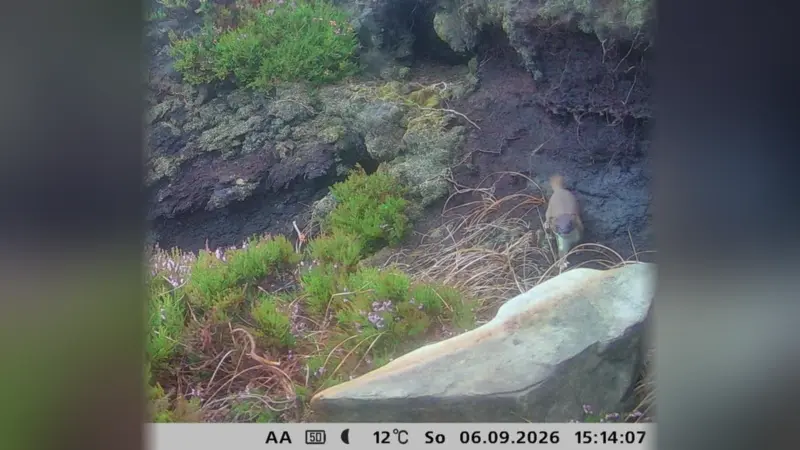
In Bhutan, Monitoring Mountain Mammalian Diversity, or M3D, has a different purpose. The Bhutan Ecological Society and School for Field Studies project plans to establish a network of approximately 150 camera-trap stations across roughly 1,500 square kilometres of the Paro-Thimphu basin.
The cameras will cover an exceptionally broad elevation range, from lower forests to alpine ecosystems. The aim is to create a long-term baseline for the presence and distribution of animals including tigers, snow leopards, clouded leopards and red pandas, while identifying wildlife corridors and potential human-wildlife conflict hotspots.
For photographers, the connection is particularly interesting: here the camera is not being used to produce a spectacular image, but as a scientific monitoring tool. An initial pilot project had already recorded 20 mammal species, and the expanded programme aims to create the first comparable landscape-scale dataset for the area.
Tiger numbers have increased in India, but the danger has not disappeared
India currently has the world’s largest wild tiger population. The latest complete official national estimate, for 2022, puts the figure at 3,682 tigers, with an estimated range of 3,167 to 3,925 animals. The country supports roughly 70% of the world’s wild tigers.
The increase is an important conservation success, but it does not mean the problem has been solved. Habitat loss and fragmentation, poaching, illegal wildlife trade and conflict with human communities remain significant pressures. That is why programmes combining wildlife protection with the safety and involvement of local communities can have considerably more practical value than awareness campaigns alone.
Photography as a starting point, not the final product
Goldstein has photographed tigers for decades and has worked as a wildlife photographer and photographic guide in different parts of the world. In this case, however, the most interesting aspect is how the image becomes a connection between the public and specific needs on the ground.
He has criticised the idea that simply posting striking wildlife photographs on social media automatically constitutes meaningful conservation work. His own response is considerably more physical: hundreds of kilometres on the road, a giant tiger on his back and a measurable fundraising target.
What we think
The sight of a photographer crossing Britain with a 13kg tiger on his back is unusual enough to attract attention, but the substance begins after the first striking image. The two projects linked to the campaign have concrete, measurable goals: lighting for communities and forest camps in India, and systematic scientific monitoring using camera traps in Bhutan. That is what turns an eccentric endurance challenge into an interesting example of photography, communication and nature conservation coming together in practical action.
Frequently asked questions
How far will Paul Goldstein walk?
The total target is 1,000 miles, or approximately 1,609 kilometres, split into two legs of roughly 500 miles each.
How much does the tiger he carries weigh?
The structure carried on his back weighs around 13kg and measures approximately nine feet, or about 2.7 metres.
Where does the campaign money go?
The campaign supports Lighting Up Time in Bandhavgarh, India, and Monitoring Mountain Mammalian Diversity in Bhutan.
When is the walk expected to finish?
The official schedule has the second leg ending at Land’s End on 12 September 2026.